
By Drew Costley
Associated Press
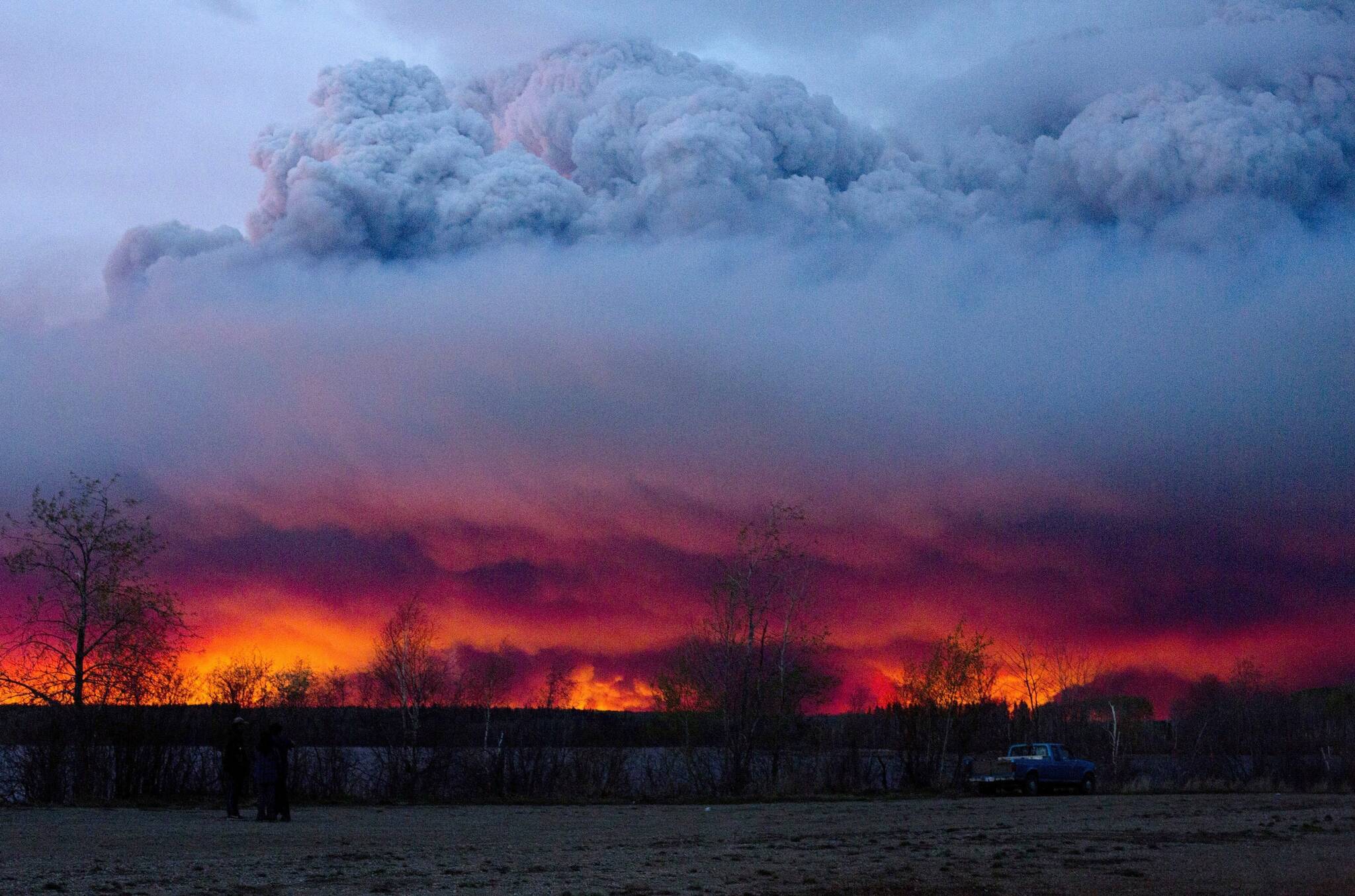
Phillip Meintzer was hours away by car from the largest fires raging in the forests of British Columbia and Alberta in summer of 2021, but the air was still thick with smoke from the Canadian infernos.
“The fires weren’t next door. It was a little ways away,” Meintzer, a conservation specialist with the Calgary-based environmental group Alberta Wilderness Association. “But we spent the whole month under a blanket of smoke.”
Fires like these in North American and Eurasian boreal forests created historic amounts of climate-changing carbon dioxide in 2021, according to a new study Thursday in the journal Science.
Smoke from these wildfires made up 23% of global fire emissions — the largest share from boreal forests since 2000, said findings presented at the annual meeting of American Association for the Advancement of Science. They usually only make up 10% of global fire emissions.
That summer was particularly dry and warm in Canada — even in the country’s boreal forests, the cold, carbon-dense ecosystems in the north. In one of them, the Marguerite River Wildland Provincial Park, over 69,000 acres of forest burned.
But such conditions will become more normal as the climate changes, leading to more intense fire seasons that could create more carbon emissions and reduce the amount of trees available for storing carbon, the study authors said.
“This warming that’s massing in the Arctic and boreal regions is going to continue,” said Steve Davis, a climate scientist at the University of California, Irvine. “So we’re what we’re worried about is that it’s not actually an anomaly. It’s like the new normal. And there’s going to be a lot of these boreal forests burning in the coming years.”
Much attention has been paid to wildfires in the western United States, tropical rainforests such as the Amazon and even the Australian bush. But boreal forests have received less attention, Davis said.
That’s concerning, he said, because there is a lot of carbon stored in these northern ecosystems, which are among the most rapidly warming on the planet, according to the U.N.’s panel on climate change.
In addition to the carbon dioxide added to the atmosphere from boreal forest fires themselves, the loss of trees and soil from more frequent and intense wildfires could mean Earth is losing a major source of carbon storage. The danger scientists say, is that boreal forests could tip further toward emitting more carbon than they absorb.
“One very important but complicated piece of the puzzle …. is what happens to the carbon balance of boreal landscapes after large and severe fires,” said Park Williams, a climate hydrologist at UCLA who was not involved in the study.
One question with global warming, he said, is whether a longer growing season would stimulate new growth in boreal forests and pull carbon out of the atmosphere or whether warming and burning would create new sources of emissions, such as permafrost thawing.
“We don’t know what end of that ledger will be, whether we’ll be in the red or in the black,” said Dan Thompson, a fire research scientist with the Canadian Forest Service who was not involved in the study. “It is a little bit uncertain.”
The study attributed the 2021 record for boreal forest fire emissions to dry and warm conditions in both North America and Eurasia, not just one or the other.
To reach their findings, researchers examined satellite data from 2000 through 2021 to measure how much carbon monoxide has been created in the world’s boreal forests and found a steady increase over the last two decades. Then they used the amount of carbon monoxide, which is more easily detectable by satellite than carbon dioxide and is created along with it during fires, to figure out how much carbon dioxide was emitted.
Study co-author Davis pointed out that burning fossil fuels such as oil, natural gas and coal remains the greatest source of carbon dioxide emissions by far. But he said that, if boreal forest fires continue to become more frequent and intense, it’s more likely that the forests can’t sequester as much carbon as they have historically.
“If we see more and more of these fires,” he said, “it could be that all of these forests are no longer helping us so much as they’re a new source of emissions to just pile on to the human emissions and make our climate challenge even greater.”
