
When the Black Lives Matter protests broke out last spring and summer after the death of George Floyd — a Black Minneapolis man who died after a white police office kneeled on his neck for nine and a half minutes — journalists took to the streets to document the historic moment. Their video content, written work and photographs have been shared over and over again, on social media and through the news cycle.
Anchorage photographers and journalists who were front and center for some of the biggest demonstrations in the state shared their experiences during an Anchorage Museum panel discussion, “In the Moment: Covering Alaska’s Black Lives Matters Protests,” hosted earlier this month.
Thomas McIntyre
For Thomas McIntyre — a photographer, filmmaker and the senior culture and content strategist at Thompson & Co. in Anchorage — Black Lives Matter is, put simply, necessary.
“I think the belief … everything about it is extremely necessary,” he said in an interview with the Clarion. “Especially the collective ideology.”
McIntyre said the movement affects him both directly and indirectly, and additionally, it impacts people of all different races and backgrounds.
“For me, Black Lives Matter is a better future,” he told the Clarion.
Last summer, as protests ignited by Floyd’s death spread around the world, McIntyre headed down the streets of Anchorage to chronicle the demonstrations.
His favorite photo, the one he presented at the Anchorage Museum panel, captures the moment a large crowd gathered on 4th Avenue downtown.
The subject stands, elevated, with his back to the camera in the foreground of the picture, speaking into a bullhorn. Below him on the street, a crowd extending to the vanishing point of the frame listens to his words, many wearing face masks and wielding handmade signs.
“I think it’s just a unique moment,” McIntyre said of his photo during the panel. “I was happy I was able to capture it.”
The crowd is diverse, made up of people of various races and ages. McIntyre said all the different faces looking toward the camera’s lens reveal the complexity and diversity of the movement.
“It’s going to take more than just Black people,” he said during the panel.
McIntyre shot the frame on a film camera, which gives the final product a sort of foggy, aged look. He said the imperfections are what make it outshine the other photos he took.
“It doesn’t feel really rooted in a certain time,” he told the Clarion.
McIntyre is currently working with a team at Thompson & Co. on the “Open Doors Initiative,” a project to amplify voices of Black, Indigenous and people of color throughout the state by helping clients create workplace activism and diversity programs, as well as offering counsel on inclusion in media sources and messaging.
Before George Floyd’s murder and the wave of subsequent global protests, McIntyre said a project like this might not have come to fruition. Although just a year is a small sample size in the broader picture of history, he said he thinks society has progressed in the fight for racial equity.
“I think we’re moving in the right direction overall,” he told the Clarion. “You see a lot more movement at the top (of institutionalized systems) now.”
Jovell Rennie
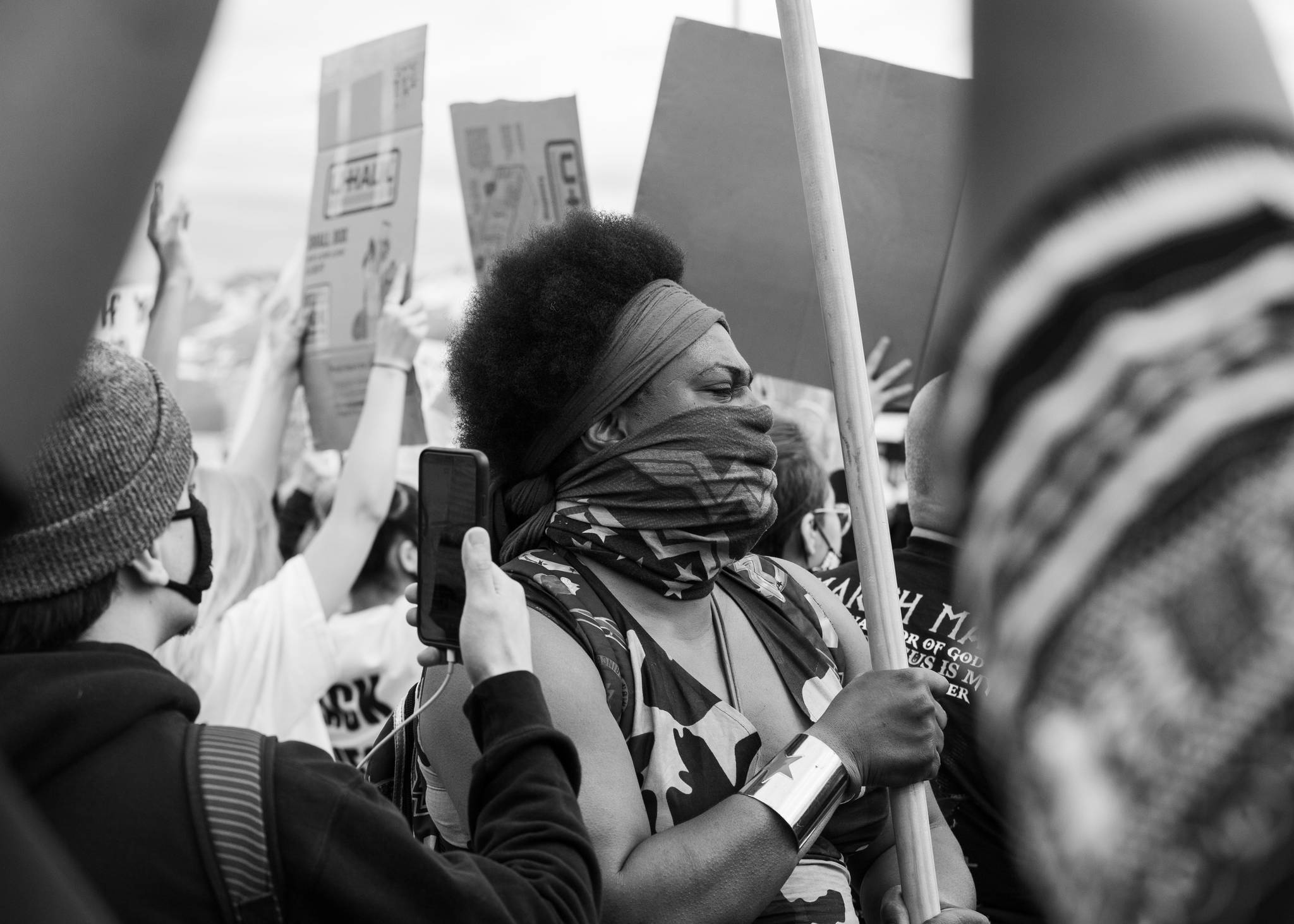
“I feel like photos are my first language,” Jovell Rennie said during the panel as he shared a photo he captured during a Black Lives Matter protest last summer. The Anchorage-based photographer said his camera roll speaks for him when he can’t quite find the right words to express himself.
The focal point of the photo he shared during the forum is a Black woman, wearing a Wonder Woman facial covering and wrist band, standing amidst a crowd carrying cardboard signs above their heads made from old U-Haul boxes. Next to her stands a young man in a beanie and face mask pointing his smartphone toward the woman, most likely also capturing the moment on video.
Rennie said what drew him to this photo is the subject’s facial expression, which is clear even under her facial covering.
“There was a lot of pain, there was a lot of emotion,” he said during the panel, noting viewers can read so much on her face by looking closely at her eyes, mouth and eyebrows.
Her expression is one of both angst and strength, reappearing in her posture and her grip on the wooden rod she holds, which extends the entire height of the frame.
For Rennie, Black Lives Matter simply means Black lives matter, too — not that they matter more than anyone else’s life. The movement is about creating a level playing field.
“We just want equity, we don’t want to live in fear,” he said in an interview with the Clarion.
Rennie said it’s important to remember that while Black people may not suffer mistreatment by law enforcement at the same magnitude as in other states, there have been generations of Native Alaskans who have been disproportionately harmed at the hands of police and other systemic institutions.
At the demonstrations he photographed this summer, Rennie said he witnessed a lot of unity and allyship for the Black community, including Indigenous, LGBTQIA+, Asian-American and Pacific Islander folks.
“It made me proud to see,” he told the Clarion.
O’Hara Shipe
O’Hara Shipe, an independent freelance journalist and photographer based in Anchorage, also shared one of her photographs for the panel.
Hers was different from the action shots many other photographers captured.
Shipe chose to showcase an portrait of Markus Vinson, a teenager of Black and Athabaskan descent who was raised by a white adoptive family, on the day he organized and attended his first protest and also came out as transgender.
“It represents the exact moment that someone found their voice,” she said about the photo during the panel.
Shipe said she has been an activist since she was a kid — now holding a master’s degree in applied ethics — and hasn’t been afraid of tackling controversial stories throughout her career as a journalist.
She has claimed the social justice beat, reporting on anything from music up-and-comers to health care to mass protests, and recently won second place for best news photo at the Alaska Press Club Awards.
Like other photographers on the panel, Shipe — who is a mixed-race woman — said Black Lives Matter boils down to a movement about basic human rights.
Her photo of Vinson encapsulated a part of the movement for her.
“It felt like in this moment he was proud to be who he is,” Shipe said during the panel.
Joshua Albeza Branstetter
“There are these stories you see when the lights go out,” Joshua Albeza Branstetter said in an interview with the Clarion about a photograph from his camera roll.
In the picture he chose to present for the panel, a group of people dance in the street while holding signs.
Albeza Branstetter said he packed up his photography equipment to leave one of the protests in Anchorage, but remembers something telling him to stay a little longer.
“I saw something that emerged and surprised me, and consumed me,” he said during the panel.
“It’s so important that we don’t turn Black people — people of color — into this sob story,” Albeza Branstetter told the Clarion in an interview.
Albeza Branstetter, a Filipino-American independent filmmaker and photographer in Anchorage, said Black Lives Matter is an inclusive movement to him.
He reflected on how Vincent Chin — a Chinese-American man who was celebrating his friend’s bachelor party in Detroit at the time — was killed in the early 1980s by two white men who were upset with the rise of Japanese auto manufacturers.
The men who murdered Chin, by striking his head repeatedly with a baseball bat, were sentenced to three years probation and ordered to pay a $3,000 fine.
“Black Lives Matter is an acknowledgement of the issues we’ve always had in our communities that we weren’t always willing to look at,” Albeza Branstetter told the Clarion. “We are not going to ignore that anymore.”
His photo captures another side of the Black Lives Matter movement, one that often receives less recognition. It doesn’t center overwhelmingly on suffering.
“I just want to also find the joy because life is both things,” Albeza Branstetter told the Clarion. “Our communities are so rich and diverse and it’s important to me that we recognize both pain and joy.”
Reach reporter Camille Botello at camille.botello@peninsulaclarion.com.
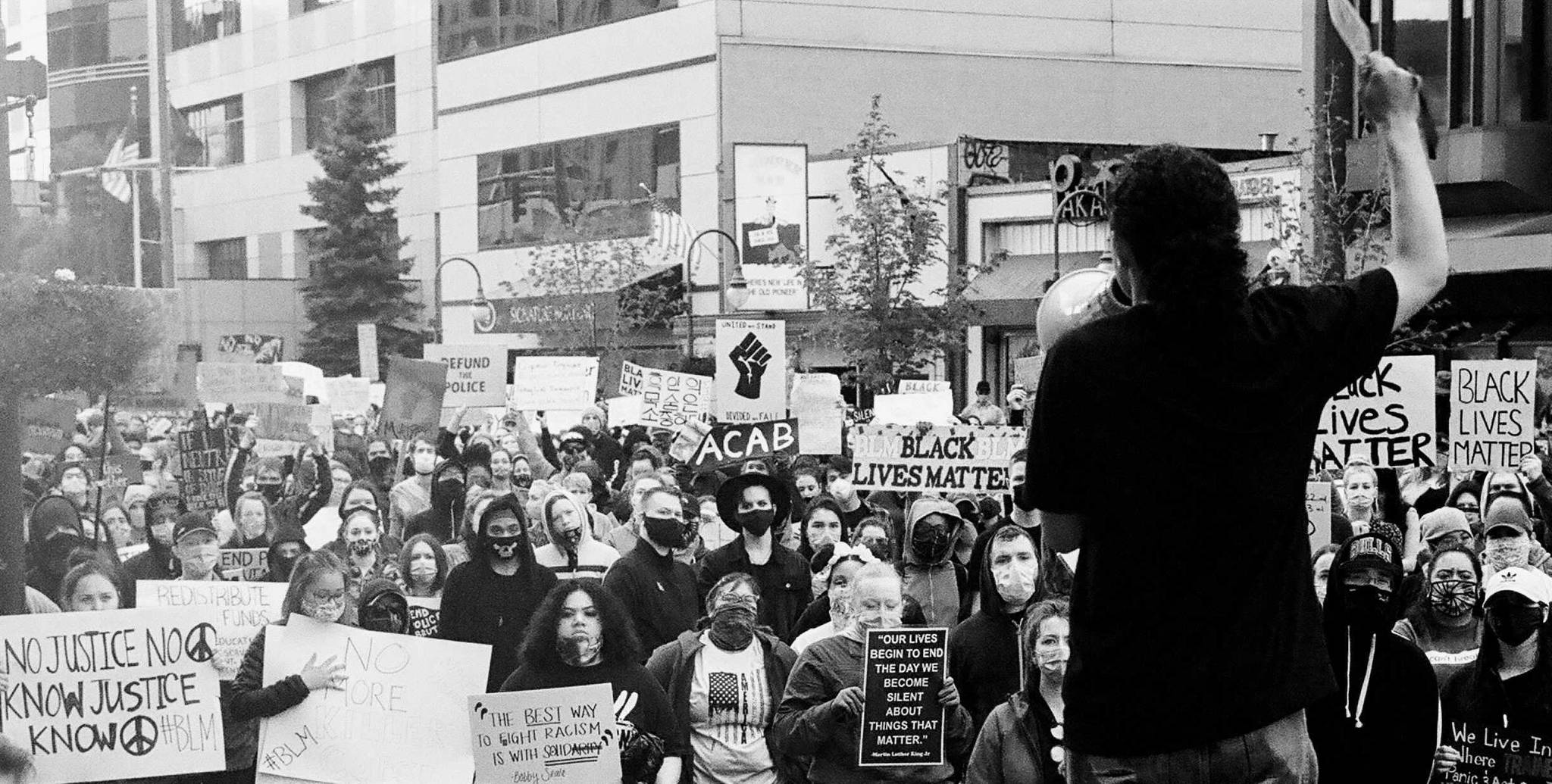
Photo by Thomas McIntyre A group gathers in downtown Anchorage during a Black Lives Matter protest in the summer of 2020.
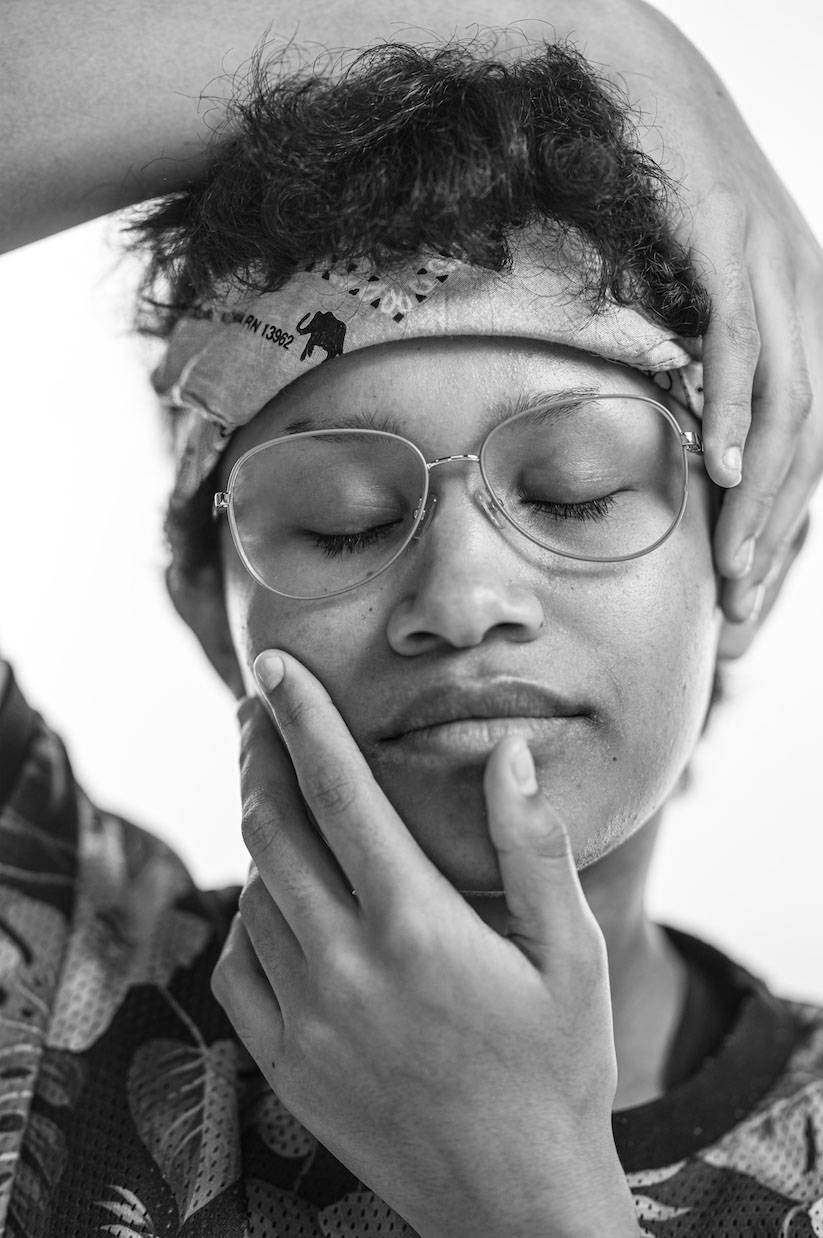
Photo by O’Hara Shipe Markus Vinson poses for a portrait after organizing a Black Lives Matter protest in Anchorage, Alaska, in the summer of 2020.
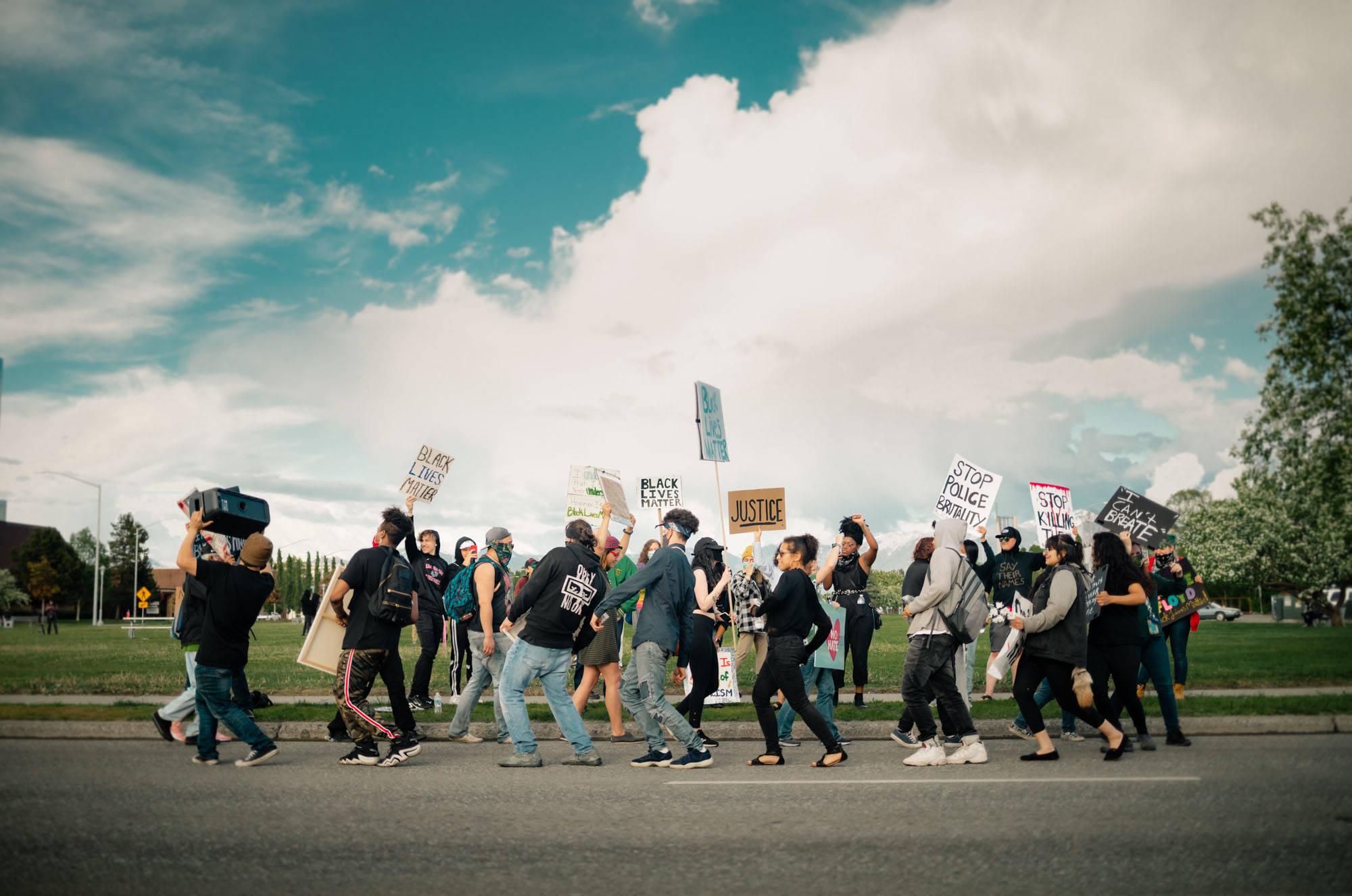
A group dances in the street during a Black Lives Matter protest in Anchorage, Alaska in the summer of 2020. (Photo by Joshua Albeza Branstetter)
