Plankton bloom brings red hues to Kachemak Bay
Published 10:30 pm Wednesday, May 26, 2021
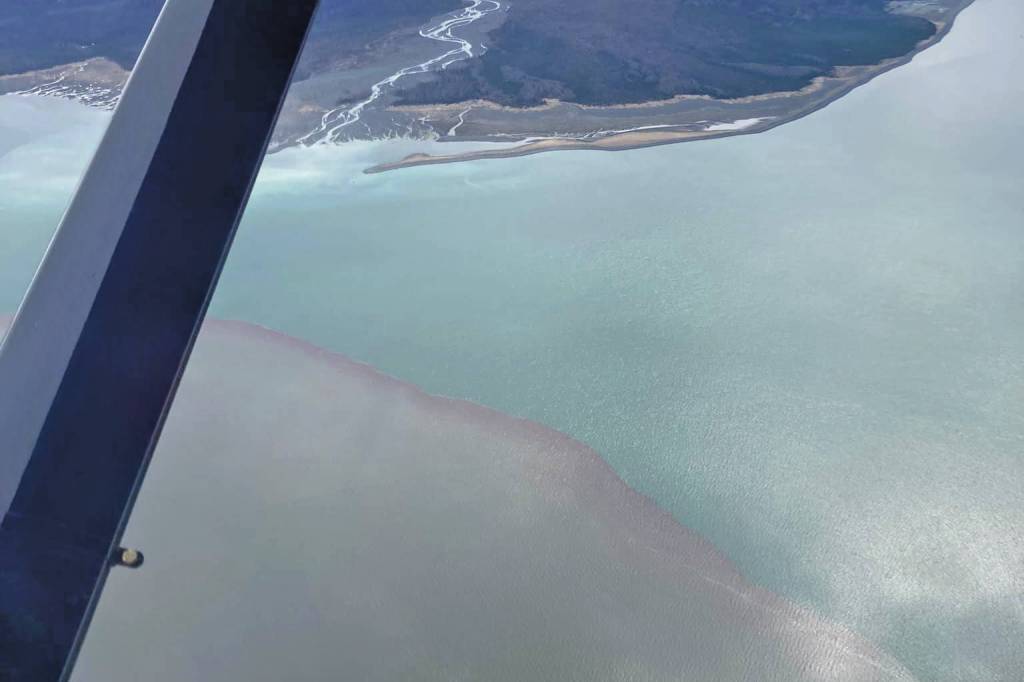
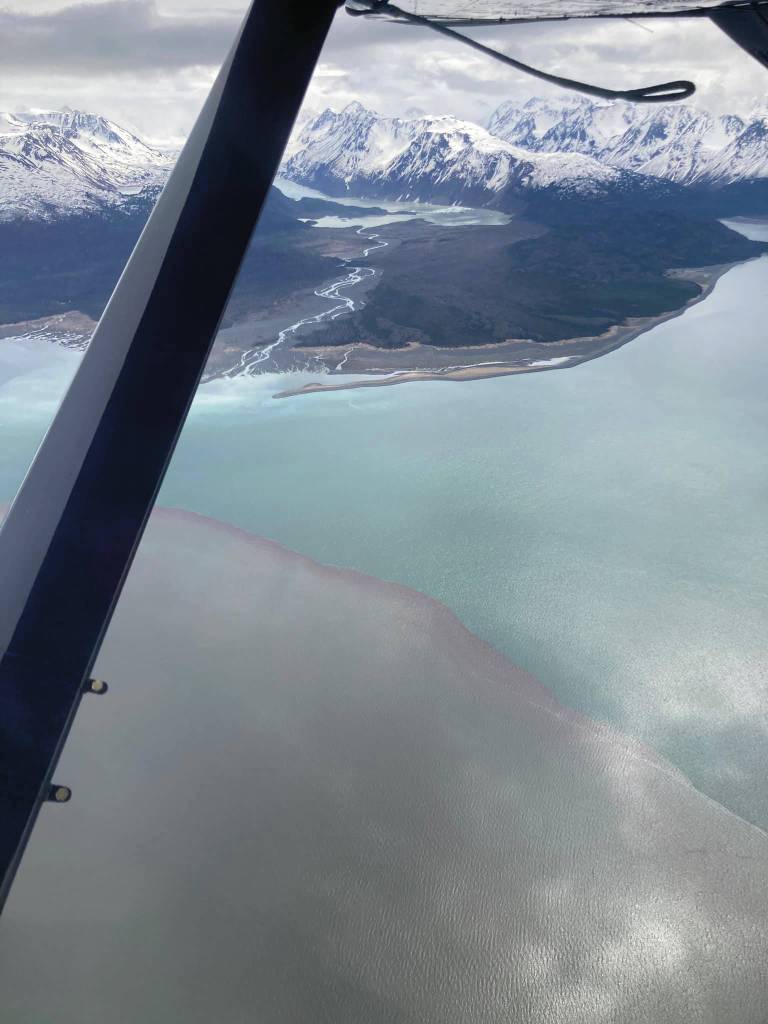
A bloom of algae and plankton that turned Kachemak Bay red last week might have looked alarming, but scientists confirmed the explosion of marine life will not harm the environment.
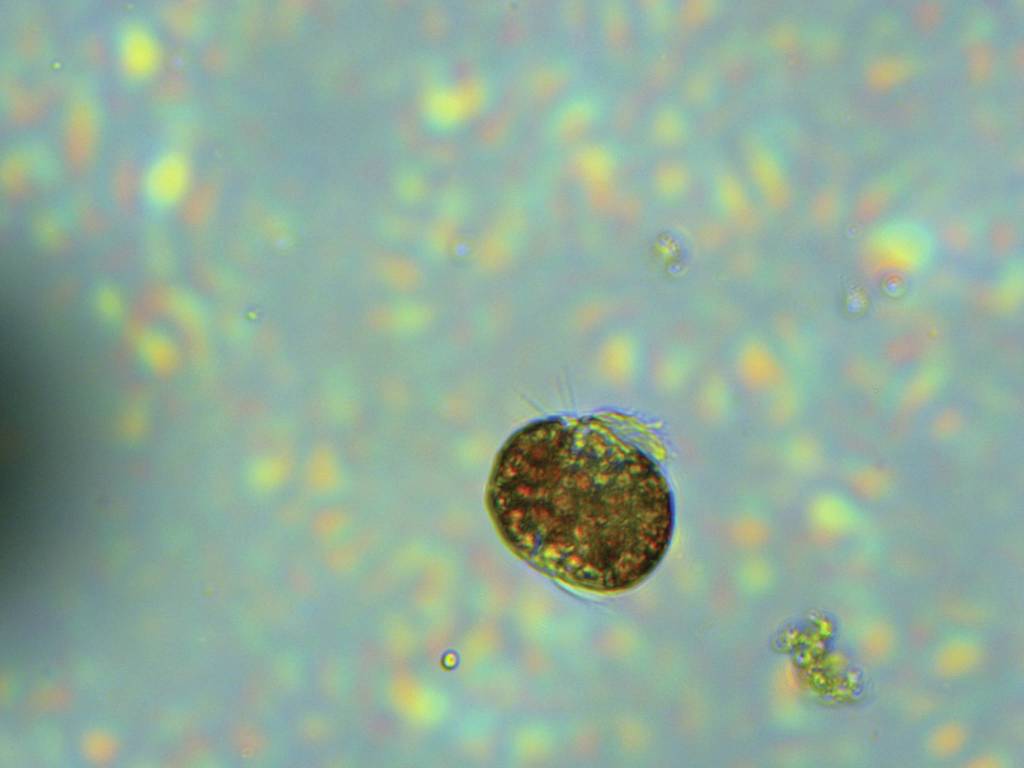
However, if ingested by oysters and other shellfish, the sudden burst of a ciliate form of zooplankton — or animal plankton — called Mesodinium rubrum could turn their meat pink.
“It might freak people out, but there’s nothing to be alarmed about,” said Rosie Masui, harmful species coordinator for the Kachemak Bay National Estuarine Research Reserve with the University of Alaska Anchorage Alaska Center for Conservation Science.
The bloom came to the attention of Masui and scientists from Homer to North Carolina after Beryl Air pilot Stephanie Greer took a photo of it while on a training flight over Kachemak Bay last Friday, May 21. Greer sat in the right side seat while training another pilot and saw a distinct contrast between one side of the bay colored pale red and the other side a more normal blue green. She posted the photo to Beryl Air’s Instagram account and tagged the research reserve.
“Rosie Masui got ahold of it and off it went into science,” Greer said.
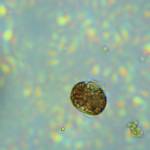
Greer’s photo also went viral on the Kachemak Bay Nature Watch Facebook page. Research coordinator Steve Baird at the KBNERR went out last Saturday and took water samples. Masui examined them under a microscope and took photos — a challenge since Mesodinium rubrum skitters around like water on a hot skillet. She said she thought her identification was correct, but to be sure she sent photos to Dr. Wayne Litaker, a retired phytoplankton expert with the National Centers for Ocean Science in Beaufort, North Carolina. He confirmed her identification — a red tide, yes, but not the toxic plankton blooms seen down south.
“When most people hear ‘red tide’ or see colored water, they associate them with red tides in the Lower 48 that are harmful,” Masui said.
“This is classic. It’s red tide,” said Kris Holderied, director of the National Oceanic and Atmospheric Administration and University of Alaska Fairbanks Kasitsna Bay Laboratory. “…You don’t have to have color in the water to have problems, and sometimes color in the water is not a problem.”
Once scientists got a closer look at water samples, they realized Mesodinium rubrum had another red companion, a cryptomonad or cryptozite also tinted red. Mesodinium rubrum ate the cryptomonads, so that it filled its cells with red cuisine. Masui said the water samples had so much plankton you could see tiny red dots zooming around in the bottle.
Microalgae, cryptomonads get their energy and create carbon through photosynthesis. Chloroplasts in the algae cause photosynthesis.
And here’s where things get weird.
Holderied said Mesodinium rubrum not only eats cryptomonads, they’re ingesting the chloroplasts.
“Rather than zooplankton that would eat phytoplankton for the carbon, they’re taking the chloroplast and hijacking the mechanism for photosynthesis,” she said.
Life on earth can be classified as autotropes like plants that make their own food or heterotropes like fish that eat other things. Mesodinium rubrum crosses the line.
“The answer to the question ‘Is it a plant or is it an animal?’ is ‘yes,” Holderied said.
How and why Mesodinium rubrum bloomed also depends on how and why the cytoplankon bloomed. Masui and Holderied and their research organizations work together with citizen scientists, Alaska Native subsistence harvesters, water taxi operators and fishermen to monitor events like last week’s kinder, gentler red tide. Masui has been running a program for the past 16 years through the research reserve that looks at events like plankton blooms. The network includes 35 monitors from the Gulf of Alaska to Prince William Sound. The Kasitsna Bay Lab does the research side of monitoring.
Holderied said there have been two blooms of Mesodinium rubrum, one in 2013 and another in 2017. Factors like nutrients in the bay, water temperature and the degree of sunlight could be causes, but also the complex community of plankton. With a big bloom like last week’s, “There are a whole bunch of zooplankton that are happy right now,” Holderied said. “Anything you see in the water, that’s not static. It’s getting grazed. There’s stuff eating it. It’s blooming faster than it can get grazed.”
On top of that, Kachemak Bay gets cold water from glaciers and spring melt from winter snowpack. The fresh water flowing out of the bay pulls in nutrient-rich salt water from Cook Inlet, a process called estuarine circulation. At the base of the food web swim little critters like the ciliates.
“This is fundamentally why we have rich fisheries up here,” Holderied said. “We have the mix of the conditions that promote a rich base of the food web. We’ve got rich plankton. From that comes everything else.”
Masui said when she first heard of the colored bay waters, she had concerns that though Alaska red tides or colored blooms don’t produce toxins, they can be harmful in other ways. For example, diatoms — the plankton with spikes — can get into gills of juvenile salmon that can’t dive deep enough, which happened once to young salmon in net pens at the Nick Dudiak Fishing Lagoon. Mesodinium rubrum doesn’t do that.
“This shouldn’t cause any issues like that, which is great, thank gosh,” Masui said.
Events like the Mesodinium rubrum bloom offer scientists an opportunity to study the Kachemak Bay ecosystem further — “a mini experiment from Mother Nature,” Holderied called it.
“We’re always in a detective search,” she said. “Can we find a key driver and understand what those changes are and what are driving those changes so we know what’s driving the change down the road?”
Other colored blooms can be of concern, Holderied said. Following the Mesodinium rubrum bloom in 2017, scientists saw a more concerning bloom, a brown bloom that looked like beer foam or oil and that turned out to be Karenia mikimotoi, a plankton that can cause shellfish mortality and fish kills.
“We were very glad this was not that, but we’ll keep an eye out for it,” Holderied said. “… This is why if you see something weird, let us know. Rosie (Masui) has been on top of that, always. We rally around to get samples and get confirmation on id’s.”
For more information on the Kachemak Bay National Estuarine Research Reserve, visit its website and accs.uaa.alaska.edu/kbnerr. To report suspicious events, call Masui at 907-235-1598. For more information on the Kasitsna Bay Laboratory, visit www.uaf.edu/cfos/about-us/locations/kasitsna-bay/
Reach Michael Armstrong at marmstrong@homernews.com.
Editor’s note: The story has been updated with the correct spelling of Rosie Masui’s name.