Borough, school district ask lawmakers to move K-Selo money
Published 10:30 pm Friday, May 7, 2021
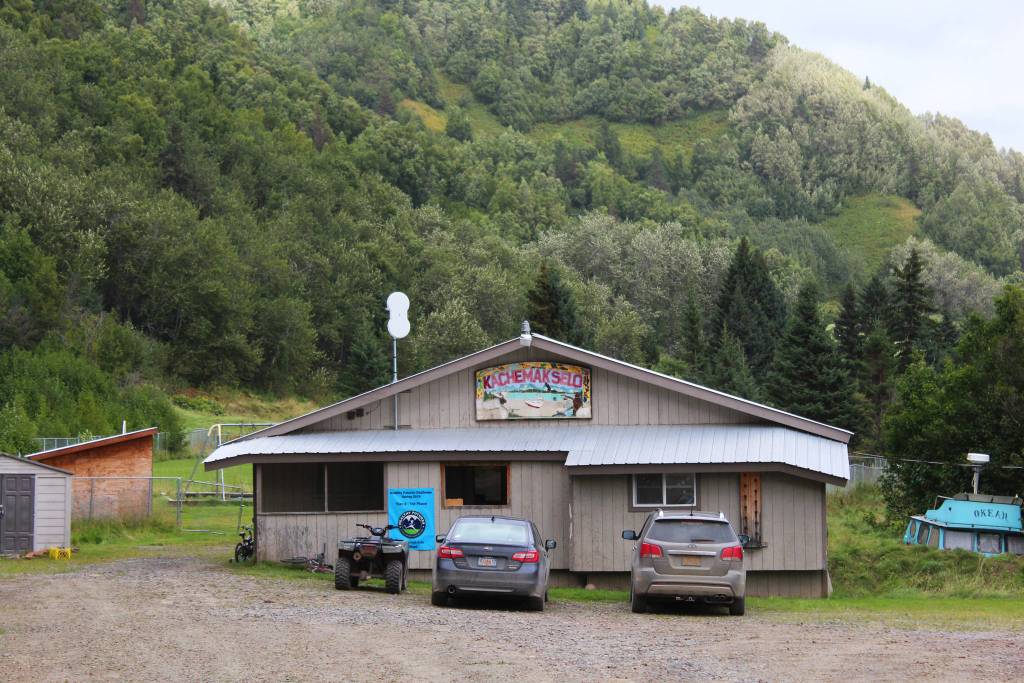
In an effort to eliminate the need for a locally provided $5 million funding match, the Kenai Peninsula Borough and the Kenai Peninsula Borough School District are asking the Alaska Legislature to reappropriate money intended for a new school in Kachemak Selo.
Efforts to construct a new K-12 school building in the remote village of Kachemak Selo, at the northern end of Kachemak Bay, have been in the works for years. In addition to being in disrepair and out of compliance with code, KPBSD has said of the current Kachemak Selo school that people are not supposed to be inside the buildings if there is snow on the roofs, one of which can be seen in photos dipping inward.
Kenai Peninsula Borough Mayor Charlie Pierce and KPBSD Superintendent John O’Brien submitted a joint letter to Sen. Peter Micciche, R-Soldotna, at the end of April, in which they asked that the money the state previously awarded for the Kachemak Selo project be reappropriated from the Alaska Department of Education and Early Development to the Department of Community, Commerce and Economic Development via the state’s Grants to Municipalities.
“Re-appropriating these funds to DCCED will solve some of the extraordinary transportation and access issues by allowing the borough to work with private industry to solve the challenges of providing a facility in this remote community,” the letter says. “This approach will meet the educational and community needs of the Kachemak Selo community as well as save millions of dollars in taxpayer funds.”
During a KPBSD Board of Education work session last Monday, O’Brien said there have been two meetings with Micciche about the reappropriation and that Micciche has expressed “interest” in introducing the necessary legislation.
“We are trying to do everything we can in working with the borough to keep the Kachemak Selo new school project alive,” O’Brien said. “In doing so, we are cognizant of the borough mayor’s reluctance to go to bond on that project; they believe that it will fail again if we go to bond.”
KPBSD included funding for Kachemak Selo in its list of “critical projects” for FY2021, which they offered as a bond package proposal. That list includes the same projects from FY2020, which were not completed due to the COVID-19 pandemic.
Kenai Peninsula Borough administration, however, pushed back on the inclusion of Kachemak Selo in that list, noting that Kenai Peninsula voters rejected funding the Kachemak Selo project when it appeared on the ballot as a standalone bond. O’Brien said during a work session with the borough earlier this year that packaging the project with other KPBSD projects would give voters more incentive to pass the package.
Grant funds for the Kachemak Selo project were first approved in 2016 under DEED. That agreement requires a 35% local match, meaning the borough would be responsible for about $5.39 million while the state would pay for $10,010,000.
Pierce has previously stated that he thinks the borough can build a school in Kachemak Selo for less than $15 million and that he would like to receive $10 million from the state “with no strings attached.”
Reappropriating the project funds under DCCED would mean the money would not be bound by the same restrictions as it is under the DEED program. Specifically, funds awarded under DCCED’s Grants to Municipalities would allow the borough to construct a building that the Kachemak Selo community could use for their emergency and non-emergency needs as well as for educational purposes.
Moving the funds would require amending the language of Senate Bill 50 to authorize the use of the funds under a municipal grant. Under the current DEED agreement, the borough has until 2024 to complete a project in K-Selo. If the funds are reappropriated under DCCED, the borough will have three years to complete the project, with the option to request a one-year extension. That amendment would need to be approved by the Legislature prior to the end of the session this month.
Alternatives to building a new K-12 school in Kachemak Selo that were considered included combining the attendance area to an adjacent attendance area, however, a request to do so in 2001 was denied by the Department of Education because the community is “geographically separated.”
According to Alaska statute, geographically separated is defined by a lack of year-round, publicly maintained road access to other district schools or a separation of more than 20 road miles from the closest other school in the district.
The Kenai Peninsula Borough Road Service area commissioned a feasibility study in 2012 to see if it would be possible to construct a road to the community that resulted in a “no build” option due to concerns about safety and liability, construction and maintenance costs and environmental impacts. Construction of a gondola or tram or of a tracked bus or vehicle to connect Kachemak Selo to another community were also ruled out due to similar concerns, and because the community would still be considered “geographically separated” per the state’s definition.
Kachemak Selo School currently operates out of three residential buildings, the newest of which was built in 2005. Together, the three buildings have 5,450 square feet and were serving 31 students in grades K-12, according to KPBSD enrollment data collected on April 21.
Kenai Peninsula Borough Community and Fiscal Projects Manager Brenda Ahlberg said Friday that if the funds are not reappropriated by the Alaska Legislature, the borough will continue to work with the school district to get a facility built in Kachemak Selo. Ahlberg said she is working collaboratively with both administrations and is keeping a “positive perspective” throughout the process.
Reach reporter Ashlyn O’Hara at ashlyn.ohara@cmg-northwest2.go-vip.net/peninsulaclarion.