
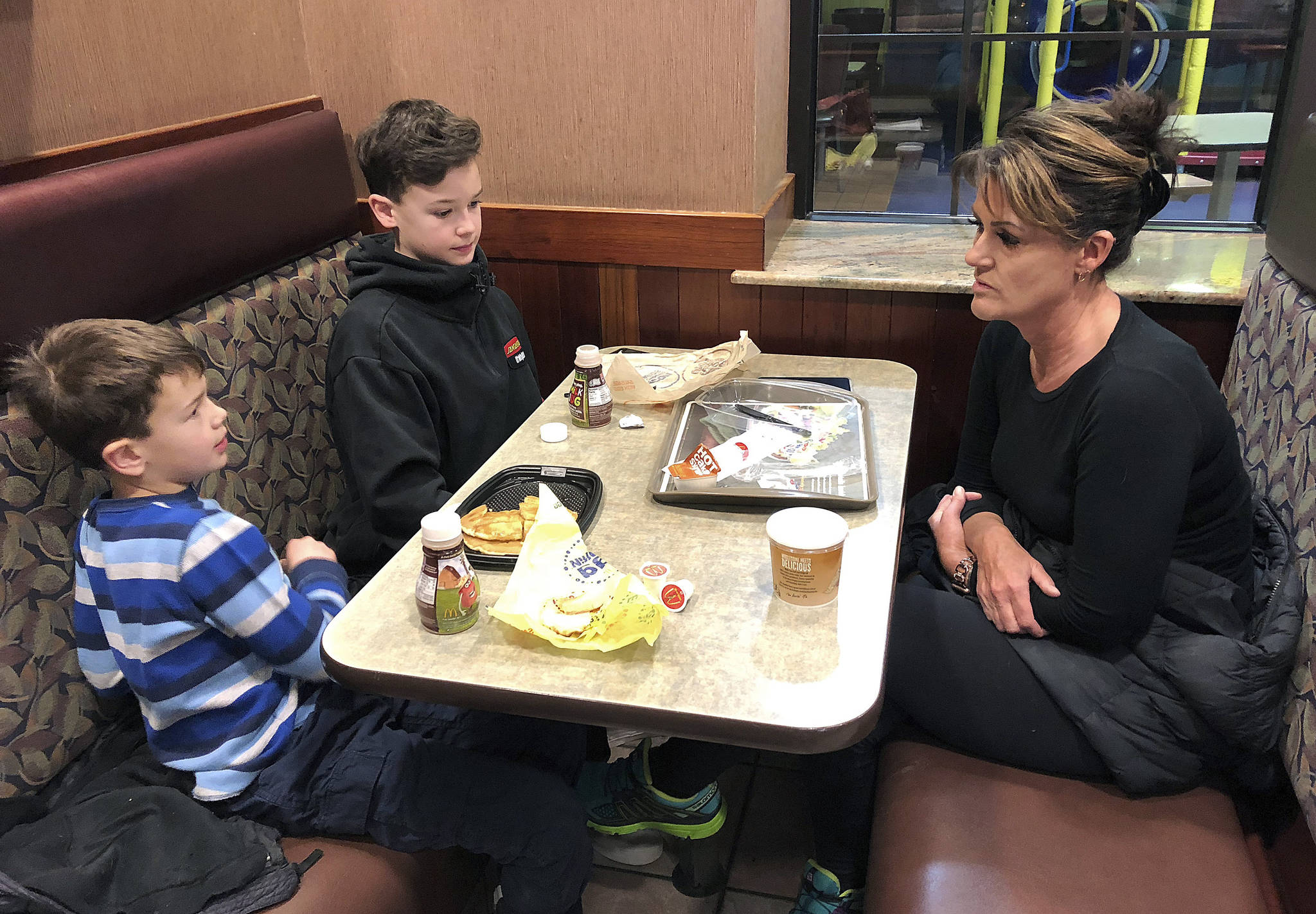
ANCHORAGE — Seven weeks after a massive earthquake rocked Alaska, aftershocks are still shattering 7-year-old Connor Cartwright’s sense of safety.
They shake the earth far less than the 7.0 magnitude quake that sent a mirror, TV and dishes crashing to the ground in the Anchorage home where Connor lives with his mother, father and 11-year-old brother.
But the seemingly never-ending aftershocks deepen quake anxiety for the second-grader and many other Alaska residents in the wide swath of the state shaken by the Nov. 30 quake.
When the big aftershocks hit, Connor fears his home will collapse.
“I feel like the house won’t hold up,” he said.
Many of the aftershocks are so small that people don’t notice them, like a recent one that Connor didn’t feel at school — but his teacher made all the students dive under their desks to be safe.
The latest big aftershock happened last Sunday — a magnitude 5.0 jolt that flared already frayed nerves and prompted panicky posts on social media.
That one “reminded people again that it’s not over yet,” said seismologist Natalia Rupert at the Alaska Earthquake Center.
There have been more than 7,800 aftershocks since the main earthquake struck 7 miles north of Anchorage, the state’s most populous city. Most were too small to feel, but 20 have had magnitudes of 4.5 or greater. Rupert expects the temblors to continue for months, although the frequency has lessened, from about 200 daily to a couple dozen a day.
With no end to the seismic action in sight, Laura Dykes said her upcoming vacation trip to Las Vegas will be a huge relief from the stress she now experiences. The Anchorage law firm worker still has vivid memories of her basement office in a building swaying back and forth during the November earthquake. It was built on rollers to protect it from seismic events.
“I can’t get out of here fast enough,” Dykes said. “It’ll be five days I can get sleep.”
The earthquake buckled roads and some homes and buildings sustained heavy damage, with initial estimates to repair damage and other costs at about $100 million.
But most parts of Anchorage and other areas escaped the type of widespread catastrophic damage that happened in a devastating 1964 earthquake because of strict building codes that were put in place after that quake, which had a magnitude of 9.2 and was the second most powerful quake recorded on the planet.
No deaths or serious injuries were reported after the quake seven weeks ago, but federal officials soon declared a public health emergency and mental health aid was made available for people traumatized by the event. School counselors were swamped and crisis counselors were brought in from Oregon to help at several Anchorage-area schools. Therapists and other professionals struggled to meet demand from a nervous public.
Mental health providers say the rush of new patients has slowed, but they still treat clients rattled by the aftershocks, which strike without warning or any apparent pattern.
“It’s overwhelming for people, and they feel emotionally out of control,” said Deborah Gonzales, a licensed clinical social worker in Anchorage.
Gonzales said people tell her they can’t stand the shaking and don’t feel safe anywhere. Some are considering moving out of state while others say they feel “crazy” — feelings Gonzales called “100 percent normal.”
For Connor, every noticeable shake triggers feelings of vulnerability, said his mother, Tamra Cartwright, adding that many of her friends’ children also struggle with quake-related fears.
Tamra Cartwright said her husband was at work when the main quake struck, but she and her sons ran out of the house and hugged each other as they huddled together outside. Along with broken family items, the only damage to their home was an existing hairline wall crack that was made wider. But Connor couldn’t sleep in his own bed for weeks and only just returned to it.
His mother said she “totally” hates the aftershocks, but tries to “be strong for my kids.”
Lifelong Alaskan Robert Bell was 12 during the 1964 earthquake and remembers it as a rolling action while the recent quake was more of a back-and-forth movement that felt more violent even though it wasn’t as powerful. The recent quake and its aftershocks have been like reliving that youthful experience over and over, Bell said.
Bell, who worked in construction for years, built his own home and says it’s safe and solid. But his heart races when the aftershocks hit.
“You don’t know when the next one’s going to hit — that’s been unnerving,” he said.
They’re also unsettling for Ethel Sechlera. But the Anchorage supermarket cashier considers them a way for the ground to let out seismic pressures.
“I’d rather have the little aftershocks to keep from having the big one hit,” she said.
Others shrug off the aftershocks as part of daily life in the most seismically active region of the U.S.
“I guess I’m a special kind of case because I don’t really mind it so much,” said Isaiah Sagayo. “I just continue on.”
• By RACHEL D’ORO, Associated Press
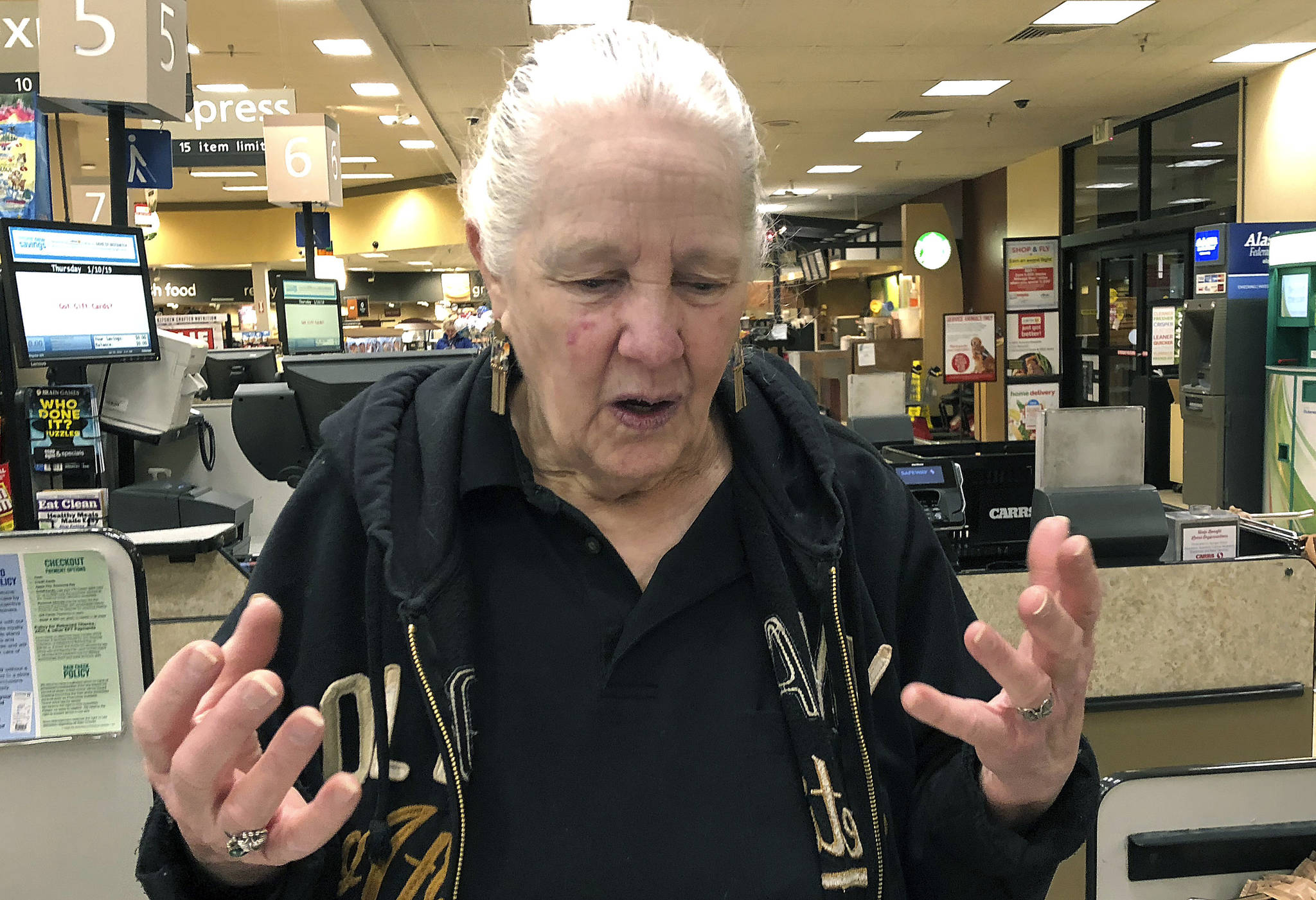
In this Jan. 10, 2019, photo, Ethel Sechlera talks about the effect of multiple aftershocks from Alaska’s recent magnitude 7.0 earthquake in Anchorage. (AP Photo/Rachel D’Oro)
