
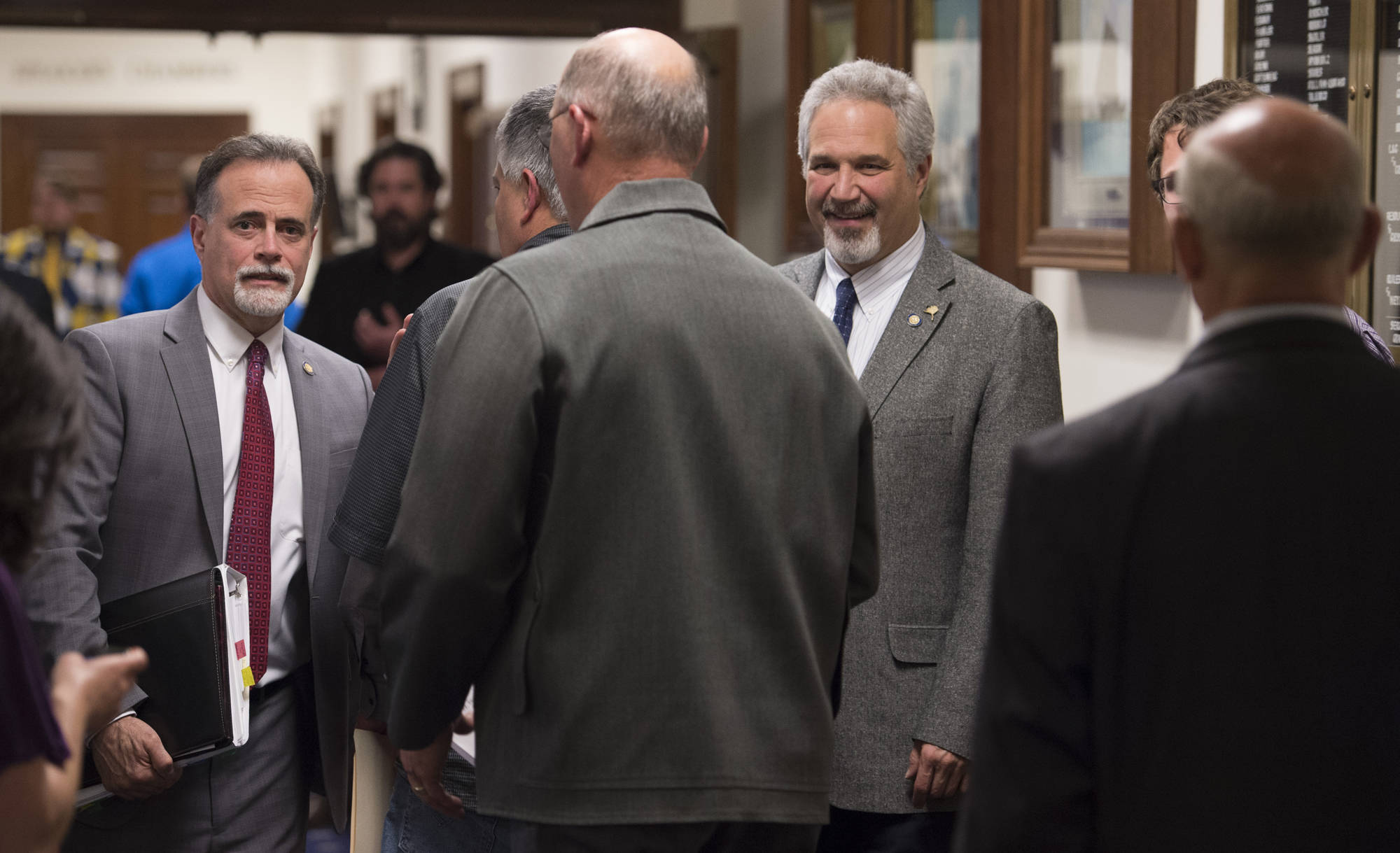
With nine days to spare, the Alaska Legislature has averted a statewide government shutdown.
At 1:04 p.m. Thursday afternoon, a joint House-Senate conference committee approved a compromise budget that funds state government past July 1 using savings from Alaska’s Constitutional Budget Reserve.
The Senate voted 16-1 just before 9 p.m. to approve the deal, and the House followed suit, 31-8, just after 10 p.m.
“This is very much a compromise budget, and that’s what we’ve been down here working on,” said Rep. Paul Seaton, R-Homer and House chairman of the conference committee.
“No one got what they fully wanted. We had to concede; they had to concede, and we came up with this compromise package,” said Sen. Lyman Hoffman, D-Bethel and Senate chairman of the conference committee.
Every vote against the budget was cast by a Republican who said they wanted to see greater budget cuts.
“We just can’t keep spending money like this,” said Rep. Tammie Wilson, R-North Pole. “At some point, we have to cut back just like private business has done.”
Even though the conference committee spent more than a month negotiating Thursday’s compromise, there was anxiety down to the final hours about whether enough members of the House Republican Minority would support the deal, which pays for the budget using the state’s Constitutional Budget Reserve.
A three-quarters vote of the House and a three-quarters vote of the Senate is required to use that reserve, and the Coalition House Majority has only 22 members.
In the end, even with Rep. Steve Thompson, R-Fairbanks, excused absent, nine members of the minority voted for the deal and the spending from the CBR.
“I’m not going to try to destroy the budget to score political points,” said Rep. Dan Saddler, R-Eagle River.
Gov. Bill Walker also must approve any compromise; he could veto it if he deems it incomplete.
In a brief statement Thursday, he indicated that was unlikely to happen.
“I am pleased the conference committee has compromised on an operating budget, which means we are one step closer to averting a shutdown of government services. Now, it is time to compromise on a fiscal plan,” Walker said in a brief prepared statement.
According to the nonpartisan Legislative Finance Division, the compromise budget cuts $64.4 million in unrestricted general fund money from the current fiscal year. UGF figures are closely watched by deficit hawks. That’s the category of spending that excludes dedicated funds like Fish and Game fees, and federal support. UGF money comes from oil revenue and taxes that don’t have a designed target.
In the compromise budget (if Permanent Fund Dividends are excluded), the state’s UGF spending drops from $4.277 billion to $4.148 billion.
Under the agreement, K-12 education will be fully funded. There will be a Permanent Fund Dividend of $1,100 per person. The University of Alaska will see an $8 million funding cut. The state will pay $57 million in oil and gas tax credits to encourage drilling.
Most importantly, the compromise will keep the state from shutting down.
As the conference committee put the final touches on the deal, about 30 state employees gathered on Fourth Street outside the Capitol to urge them to finish their work and avert a shutdown.
On Tuesday, Department of Revenue employee Bradley Johnson sent a mass email to all 18,000-plus state employees, urging them to protest.
“Thursday at lunch, I’m going to stand outside of the Legislative Building and I’m going to hold a sign about how I am a man with a wife, two kids and lots of bills. You should do the same- make it personal and let them know that you are a human being,” he wrote.
While Johnson got plenty of feedback ─ including a warning against making political statements with state resources ─ he followed through on his promise and held a sign Thursday in front of the Capitol, accompanied by many others.
“I want a job,” he said. “If it means cutting the PFD, if it means more taxes, I want a job. I need to work. I don’t want to sit around, do nothing, and expect something good to happen. Whatever kind of resolution they come up with, I hope they can compromise with each other.”
The consequences of a shutdown and mandatory furlough (or layoff) would be high, he and others said.
“I can’t afford even a week,” Johnson said. “I just installed a new floor in my house that put us $1,000 in debt, and by the way, there’s this pink slip out of nowhere. My two kids … they’re the most important thing in my entire life, changed my life for the better, and that’s why I’m here: For them.”
Even if lawmakers approve the deal, they will have plenty of unfinished business. The state’s capital construction budget remains a work in progress, and lawmakers end their budgetary work in the same place they started it: facing a multibillion-dollar annual deficit.
After more than five months of action, no bill dealing with that deficit has passed the Legislature.
Editor’s Note: This article has been updated, and will be updated as events warrant.
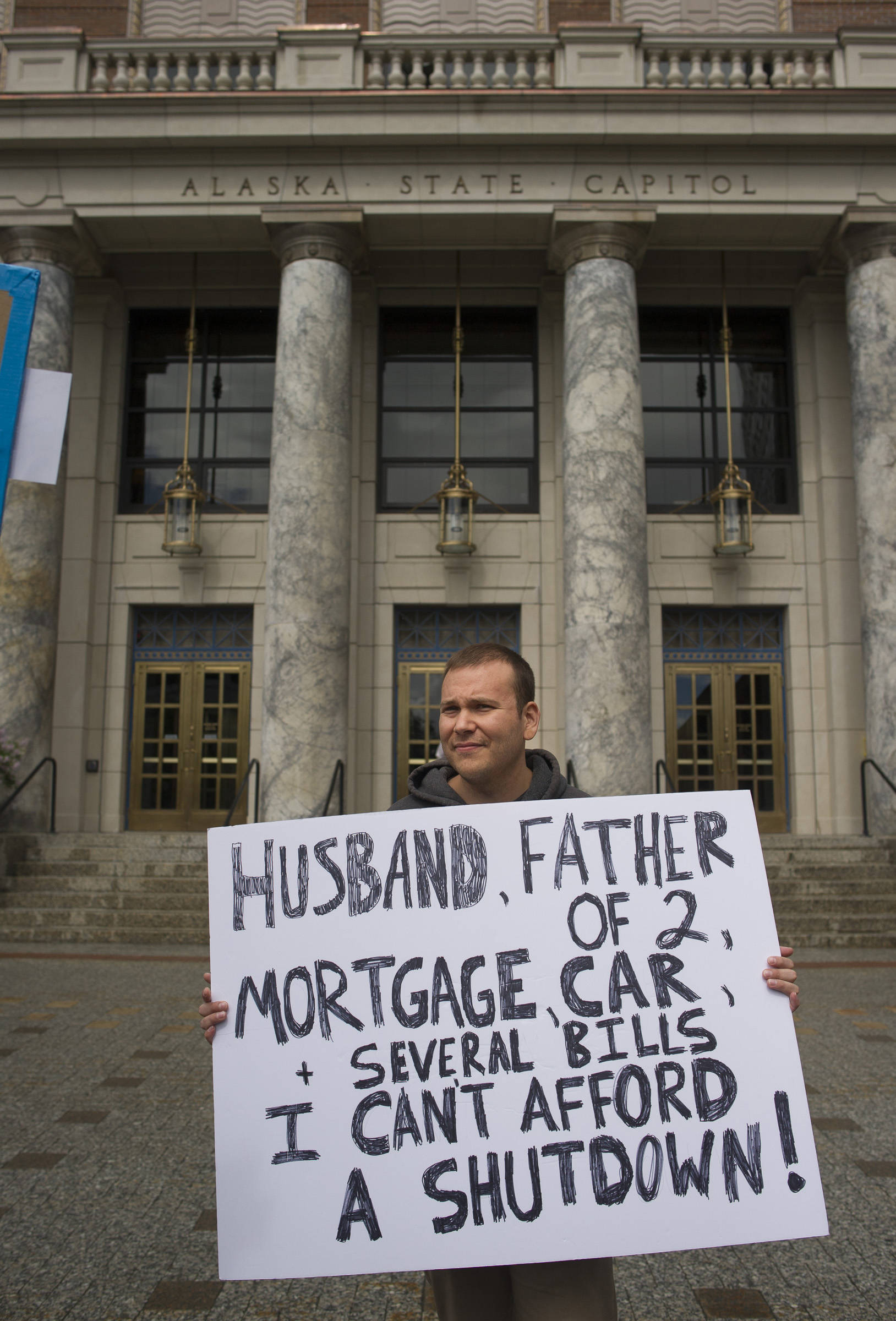
Bradley Johnson, a state employee at the Department of Revenue, holds his protest sign during noon rally against the Legislature’s lack of a budget compromise on Thursday, June 22, 2017. (Michael Penn | Juneau Empire)
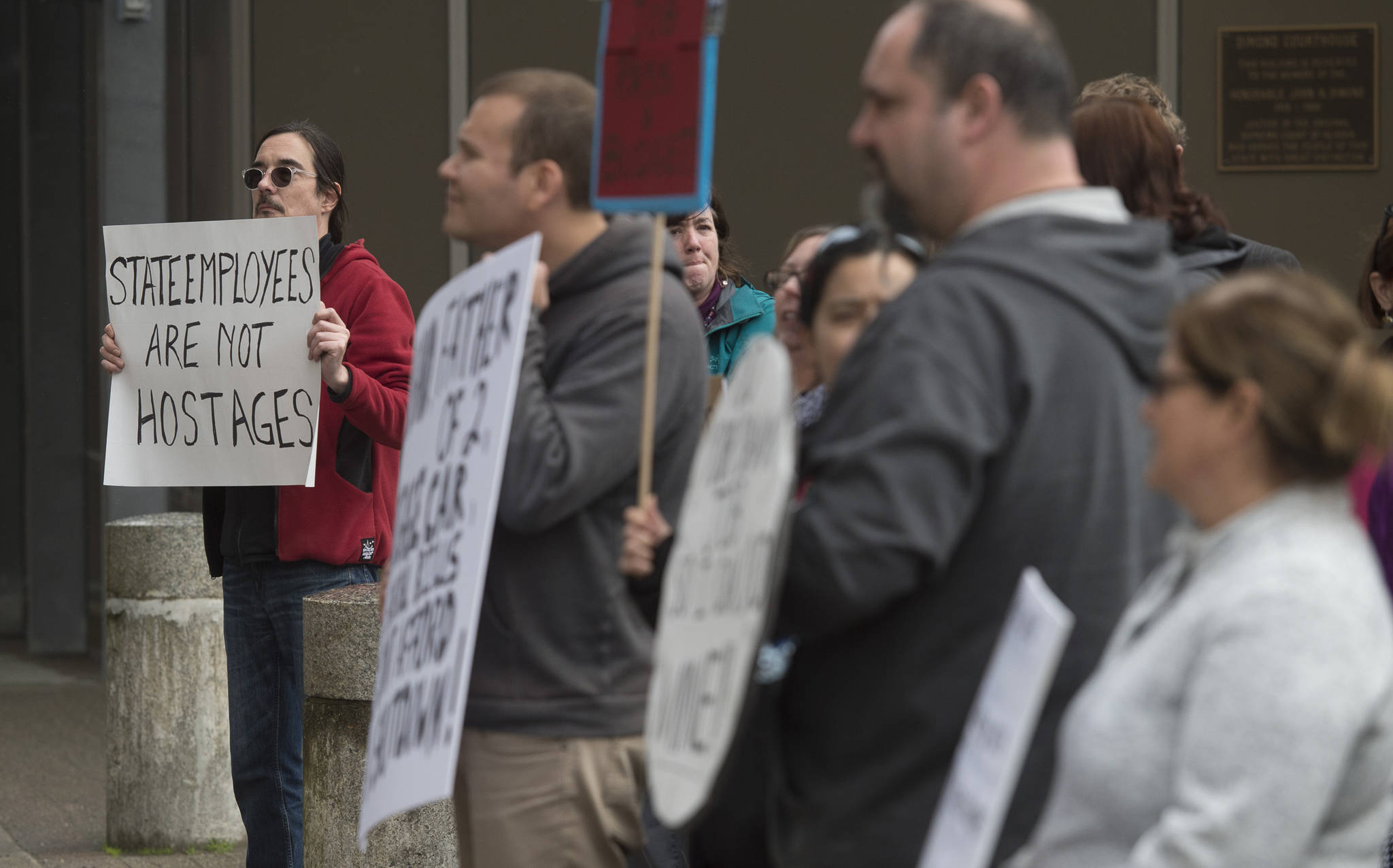
Tony Warren, a state employee at the Department of Education and Early Development, left, stands with other state workers during noon rally against the Legislature’s lack of a budget on Thursday, June 22, 2017. (Michael Penn | Juneau Empire)
