
By Becky Bohrer
Associated Press
JUNEAU — Oil-dependent Alaska has long sought ways to fatten its coffers and move away from the fiscal whiplash of oil’s boom-and-bust cycles.
The newest idea, promoted by Republican Gov. Mike Dunleavy, would have the state capitalize on its oil and gas expertise to tap into a developing industry — carbon storage — as a way to generate new revenues without curtailing the extraction industries that underpin Alaska’s economy. It’s also being pitched as a potential way for petroleum and mining companies to head off legal challenges over greenhouse gas impacts.
Hearings with state lawmakers are underway on legislation that would charge companies rent and fees for carbon dioxide storage deep underground in places like the Cook Inlet oil and gas basin. Hearings are coming on another bill that would enable Alaska to set up programs so companies could buy credits to offset their emissions. While details are few, such so-called “carbon offset” proposals sometimes include letting trees stand that otherwise might have been logged with the idea that the carbon stays stored in the trees so a company can pollute elsewhere.
Dunleavy said the state could ultimately earn billions annually without raising taxes on industry or Alaska residents. Alaskans currently receive yearly checks from the state’s oil-wealth fund and pay no statewide sales or personal income taxes.
“The reason we landed on this is it doesn’t gore any ox, and more importantly, it’s in line with what Alaska does, and that’s resources,” Dunleavy said, underscoring the idea that the plan, as laid out, wouldn’t harm existing interests.
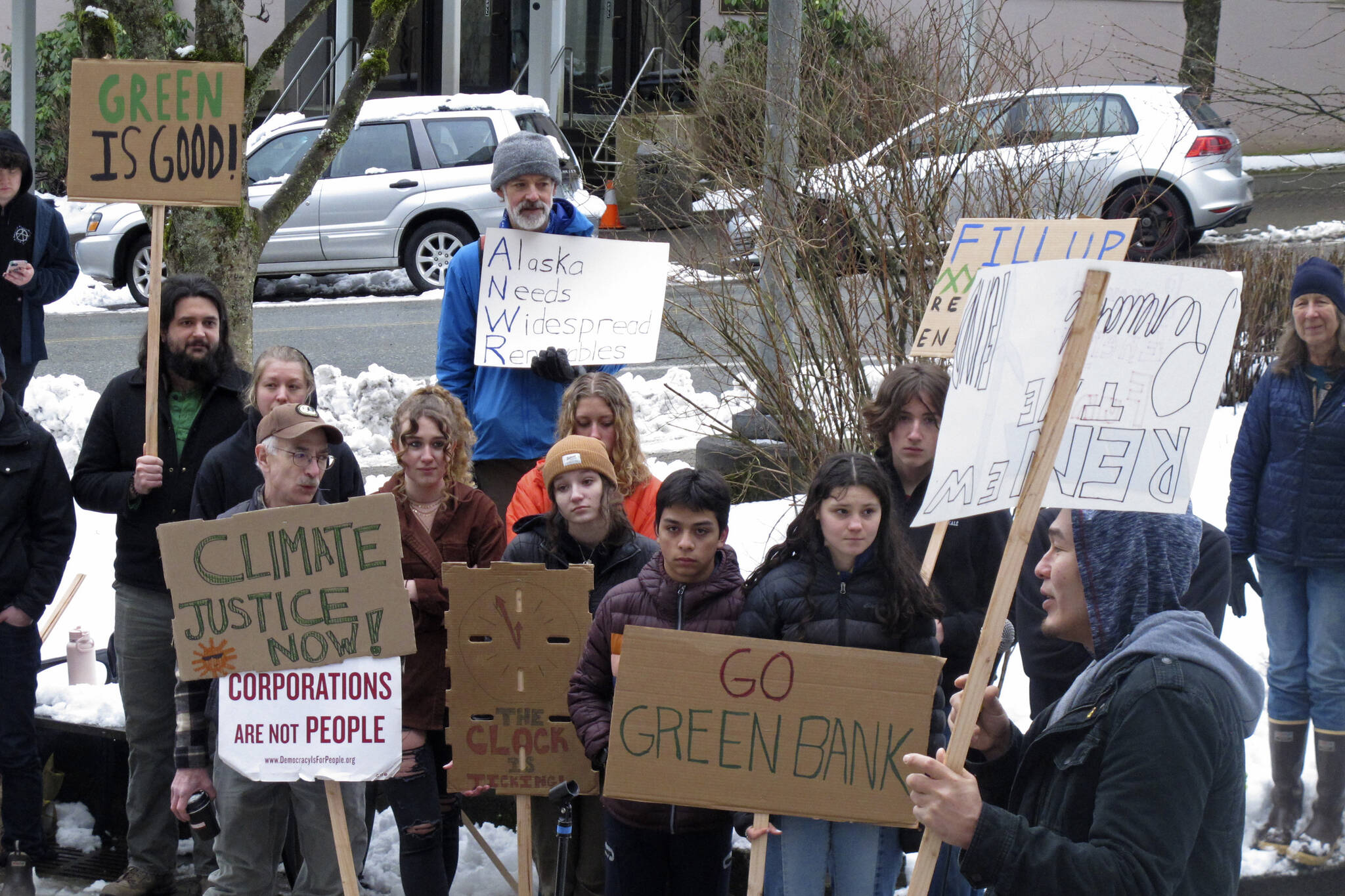
But some environmentalists say the state, which has a front-row seat to the ravages of climate change, should be focused more on investing in renewables and green projects. Many of the oil companies operating in Alaska have emissions reductions targets, but the state itself has no overarching climate plan or emissions reduction goals.
The governor “will be the first person to tell you it doesn’t have anything to do with climate change, and it doesn’t have anything to do with solving Alaska’s energy needs,” said Matt Jackson, climate program manager with the Southeast Alaska Conservation Council.
It’s unclear exactly how much money Alaska could reap from the proposals, and there are still many questions around ideas such as the potential for other states or countries to ship in carbon dioxide for underground storage. Alaska officials for now have emphasized they want to prepare a regulatory framework for future carbon storage.
Shipping carbon dioxide is being analyzed in parts of the world. A project in Norway aims to ship carbon dioxide captured at European industrial sites and pump it into the seabed in Norway, according to the International Energy Agency. Japan is working on shipping technology.
Lawmakers in Alaska want to find experts who can help them analyze Dunleavy’s proposals, said state Rep. Ben Carpenter, who chairs the Legislative Budget and Audit Committee. Carpenter said finding people with the experience necessary has been a challenge. It’s not clear if Dunleavy’s proposals will gain traction during the current legislative session.
Alaska is rich in traditional resources — oil, gas, minerals and timber — and is home to a largely intact forest the size of West Virginia that is estimated to hold more carbon than any other U.S. national forest. But Alaska is also feeling the impacts of climate change: coastal erosion threatening Indigenous villages, unusual wildfires, thinning sea ice and permafrost that threatens to release carbon as it melts.
Dunleavy’s plan would give the Department of Natural Resources, which manages state lands for development including oil leasing, authority to implement carbon offset programs and would set up protocols for underground injection and mass storage of carbon dioxide.
Alaska’s concept echoes efforts in other fossil fuel-dependent states to capitalize on carbon offsets and sequestration or other emissions-reducing technologies while continuing to support the traditional industries they’ve long relied on, such as oil, gas or coal.
The proposal for underground storage would also offer a way for companies to mitigate emissions that might otherwise tie a project up in court, said Aaron O’Quinn with the state Division of Oil and Gas.
Cook Inlet, the state’s oldest-producing oil and gas basin near Anchorage, could serve as an underground storage site for carbon dioxide pollution from other states or even countries, according to the state Department of Natural Resources. The agency also said federal tax credits aimed at spurring carbon storage could provide a boost for a long-hoped-for liquefied natural gas project.
As part of its plan, Alaska wants to get authority from federal regulators for oversight of carbon injection wells, something North Dakota and Wyoming have already secured and that other states, like Louisiana, are pursuing or interested in.
An Iowa-based company working with Midwest ethanol plants is pursuing a $4.5 billion carbon dioxide pipeline project that would store the gas underground in North Dakota. The idea has gotten pushback from some landowners. In Wyoming, a state law requires utilities to evaluate getting at least some of their electricity from power plants fitted with carbon capture equipment, but utility reports suggest such retrofitting could cost hundreds of millions of dollars per plant with the expense showing up in higher electricity bills. Wyoming’s governor, Republican Mark Gordon, has vowed to make the coal state carbon negative, in part by trapping the carbon dioxide emitted by the state’s coal-fired power plants and pumping it underground.
ConocoPhillips Alaska, Alaska’s largest oil producer, is among the companies that have expressed interest in Dunleavy’s carbon plan but said it is too early to make any commitments.
The company is pursuing an oil project on Alaska’s far-northern edge that it says could produce up to 180,000 barrels of oil a day. Environmentalists call the Willow oil project a “carbon bomb ” that could lead to more development in the region if approved by the federal government. A decision could come by early March.
Alaska officials see perhaps the most immediate carbon opportunities on forest lands. Several Alaska Native corporations have made money through the sale of credits to let trees go unlogged, and the University of Alaska system is proposing a carbon credits program on some lands it manages as a revenue generator.
A report commissioned by the Department of Natural Resources identified three “high potential” carbon offset pilot projects on state forest lands, pegging the revenue potential for all three around $80 million over 10 years. The department said the report was limited in scope.
