
As Alaska moves into its second phase of reopening amid the novel coronavirus pandemic, the state tallied three new cases of COVID-19 on Friday, bringing the total number of cases to 377.
The Alaska Department of Health and Social Services reported three new cases Friday, all women from Anchorage. These reflect cases that were reported to the state on Thursday. One woman is aged 20-29, one is aged 60-69 and the third is aged 70-79.
By the numbers
Out of the state’s total 377 COVID-19 cases, 305 of those people have recovered, DHSS reports on the state’s coronavirus response hub.
As of Friday, Alaska has conducted 25,473 tests.
There have been no new deaths associated with the disease since the death of an Anchor Point man in his 80s on May 5. There are currently 16 people being hospitalized, either for confirmed cases of the disease or suspected cases.
The state’s 377 cases are spread out across 26 Alaska communities. As of Tuesday evening, there are 172 cases in Anchorage, six in Chugiak, 13 in Eagle River and three in Girdwood. In the Fairbanks North Star Borough, there are 64 cases in Fairbanks, 18 in North Pole and one in a community labeled “other.” In the Matanuska-Susitna Borough, there are nine cases in Palmer and 12 in Wasilla. In the Southeast, Juneau has 27 cases, Ketchikan has 16, Petersburg has four, Craig has two and Sitka has one. Bethel, Kodiak, Nome, Delta Junction, Tok and the Yukon-Koyukuk Census Area each have one case.
On the Kenai Peninsula, Anchor Point has had two cases, Homer has four, Kenai has five, Soldotna has six, Seward has three and Sterling has three. Of these cases, one was an Anchor Point man in his 30s who died outside of Alaska, and one is a resident of Homer who was tested and isolated in Anchorage.
Face coverings
According to health mandate guidelines under the state’s second phase of reopening the economy, some businesses that had already reopened were allowed to expand their capacity to 50% starting Friday, which other previously closed entities like bars, museums and libraries are allowed to open at 25% capacity.
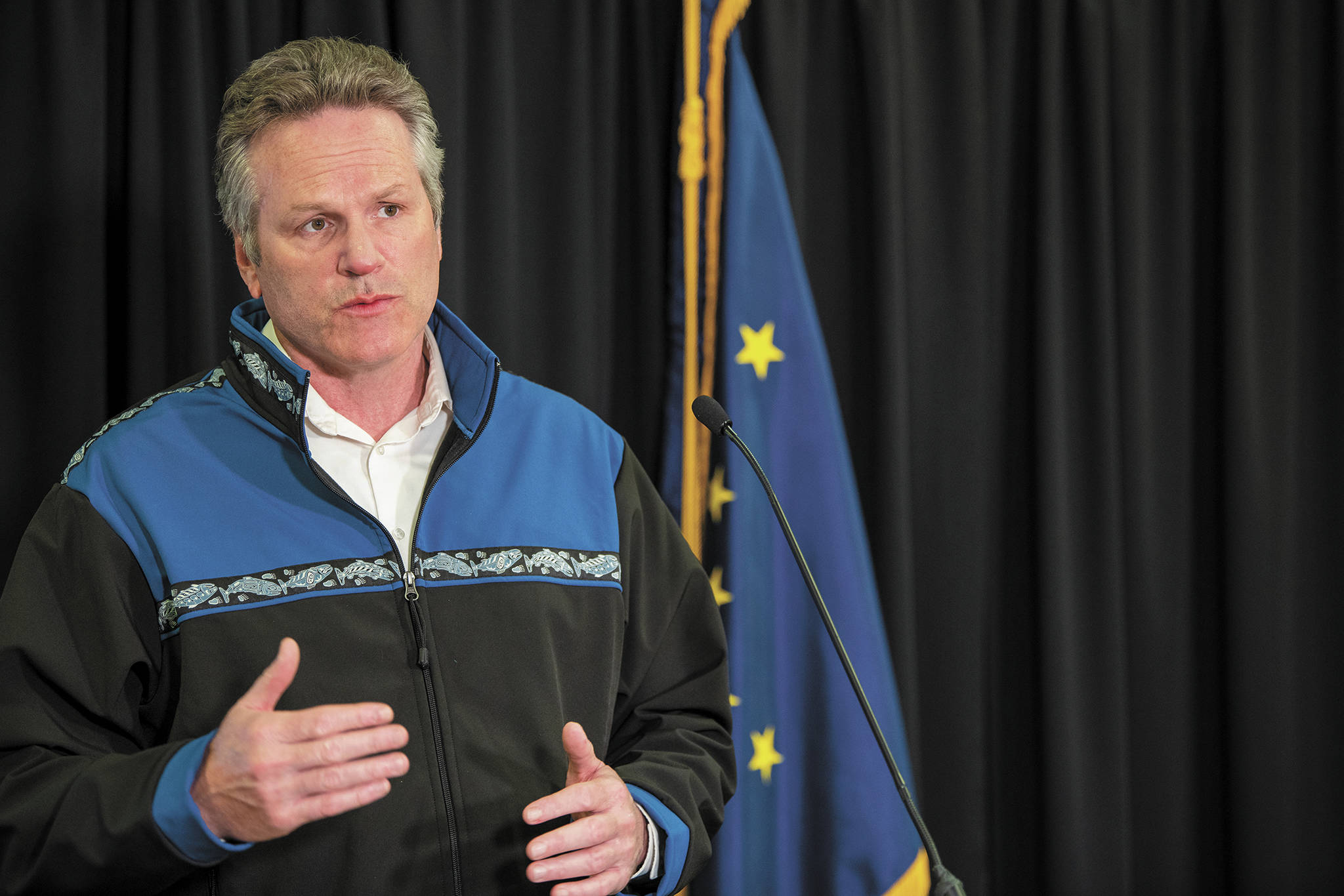
Asked by a reporter during Friday’s press conference whether the state would consider giving Alaska businesses new guidelines further in advance so that they could have more time to prepare for these changes, Gov. Mike Dunleavy said when the guidelines are released is dependent on the state’s metrics for monitoring the disease.
“We have to watch the numbers,” he said. “We can start to talk about the changes in the guidelines as we look at phase three, but again we have to be very sure that our numbers — as we’ve mentioned, number of cases, testing, ICU bed count, overall counts, etc. — the metrics that we’re using that you’ll see on the website. We have to make sure that those are still holding.”
When the Dunleavy administration posted the updated guidelines for myriad sectors of the economy and Alaska society on Thursday, they differed slightly when it came to the rules for face coverings for each sector. For most sectors of the economy, including retail, restaurants, bars, theaters, bingo halls, bowling alleys, gyms, libraries, museums and charter operations, the wearing of face coverings by employees and, in some cases, customers, is not mandated but “strongly encouraged.” But for three sectors (childcare/day camps, lodging and camping, and personal care services) the guidance documents of mandate 16 stipulated that staff “must” wear face coverings. This requirement is extended to customers frequenting personal care services such as salons or tattoo parlors.
Clinton Bennett, communications director for DHSS, said on Friday that the word “must” is being replaced with “strongly encouraged” in the guidelines for lodging and camping as they pertain to wearing face coverings.
He confirmed that the state is requiring staff members in the childcare/day camps sector and in personal care services to wear face coverings, as well as customers frequenting personal care service businesses.
“The personal services and childcare/camps require … both groups of providers to be in close proximity to patrons and to the children they are taking care of,” Bennett wrote in an email.
The state is requiring employees in those sectors to wear face coverings “to mitigate any possible exposure in these close contact environments,” he wrote.
For child care services, the mandate guidance document states:
“Cloth face coverings must be worn by all employees. Face coverings may be removed for a short time when necessary, such as when playing a musical instrument, but must be worn at all other times.”
For personal care services, the mandate guidance document states:
“Service providers/licensees must wear cloth face coverings, at a minimum. Face coverings must be worn before, during, and after service delivery.”
The guidance document for personal care services goes on to state:
“Customers must wear cloth face coverings and wash or sanitize hands upon arrival. Face coverings worn by customers may be removed for no more than five minutes at a time when necessary to perform services, but must be worn at all other times, including when entering and exiting the shop.”
Dunleavy also addressed face coverings during Friday’s press conference.
“If you see people with masks, they’re just trying to help you,” Dunleavy said. “Because the masks, from what we understand, help limit or slow down a projection, whether it’s a sneeze or a cough. So those folks are trying to help you.”
Dunleavy said people will likely see private businesses choosing to make face coverings a requirement for patrons.
“That’s their prerogative,” he said. “They are trying to help you.”
If Alaskans continue to help each other, Dunleavy said, the state can continue to be what he calls a model for getting through the pandemic.
Also announced Friday was a change to the state’s coronavirus data hub. The state is getting rid of the “COVID Cases Public” data file DHSS announced in its press release, “to address health information privacy requirements of the Health Insurance Portability and Accountability Act (HIPAA) and Alaska state law.”
This data set broke down the state’s COVID-19 cases by region, onset date and report date, and also included age ranges for each case as well as whether each case had been hospitalized. It also showed how a person got infected with COVID-19, such as through traveling or through community transmission.
“Due to these privacy concerns and under the guidance of the Attorney General’s Office,” DHSS wrote in the press release that the data set is being removed from the website.
“However, most of the data will still be available in table format,” according to the release. “Each set of graphics on the data hub will have its own summary table.”
Reach Megan Pacer at mpacer@homernews.com.
