
By Clark Fair and Rinantonio Viani
AUTHORIAL NOTE: Writing this story has been a collaborative effort between Clark and Rinantonio [Rino, for short]. Among the many tasks Rino accomplished that made this tale possible was the transcription of numerous hundred-year-old letters and postcards mostly handwritten in “bad Italian” and then the translation of those transcriptions into English. For Rino, in particular, the research involved has been a family affair and a labor of love.
Rediscovering the Past
Rinantonio Viani was born nearly 89 years ago in Imperia, Italy. When Rino was a child, his father, Giò (Giuseppe), sometimes regaled him with stories about an uncle who went by the nickname “Frenchy” and who lived for nearly 30 years in Alaska, including about 20 years in Kenai.
The stories were full of high adventure — whaling, mining, polar bear hunting, extensive travel, and the accumulation of wealth. Some of the stories were so wild that young Rino wondered whether they could possibly be true, even though his father insisted that they must be.
When Rino became an adult, the stories of Frenchy remained in the back of his mind. But as he went on with his own life, Frenchy’s adventures drifted further and further into the recesses of memory. Then, a year or so ago, Rino’s niece — Antonella, daughter of Rino’s only brother — showed him a 1901 booklet that changed everything.
The booklet, badly worn by the passage of time, had been in the keeping of Antonella’s father, Ioseph, who had saved it from among Giò’s belongings. At first, judging by its title, the booklet seemed innocuous. Published by a Chicago fur trader named C.F. Periolat, it was called “History and Habits of the Muskox.” But the back of the booklet contained some promotional material for Periolat, including photos of some extremely large sets of moose antlers.
In the margin next to a photograph of a mounted moose head claiming to sport antlers with a spread of 72.25 inches, Frenchy had written “I kill that one in ’98.” On another page, below a photo of Periolat standing next to a set of antlers said to measure 78 and five-eighths inches, Frenchy had written “I kill that in 1900.”
The booklet also included a brief, typeset letter from Frenchy, clarifying his claims and correcting a mistake: The biggest moose pictured, he said, had not been killed near the headwaters of the Stewart River, as claimed by the owner of the antlers; instead, it had been killed in Cook Inlet country.
Rino was intrigued. He was transported back to those days of his father’s stories. Suddenly he had to know more.
And he was in luck: Two breakthroughs lay just around the corner.
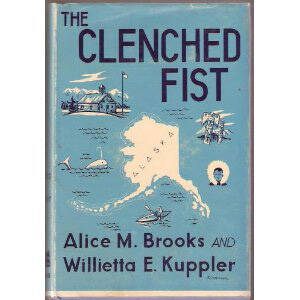
An initial internet search for his great-uncle produced several intriguing but often fragmentary leads. Then, Rino happened upon a series of articles written by Kenai Peninsula writer Clark Fair about a pair of killings in Kenai in April 1918. Playing a minor role in the story — and in a book from that time period called “The Clenched Fist” — was Frenchy.
From his home in Switzerland, Rino emailed the Kenai Historical Society in an attempt to garner more information. A spokesperson from the historical society directed him to Clark, and the two became email pen pals over the next several months, exchanging information and scheming about the idea of one co-authoring Frenchy’s story.
Next, Rino met a cousin he hadn’t known he had. It turned out that late in his life, Frenchy had left the United States and returned to Europe. He had married and had a son. This “new cousin,” as Rino referred to her, was Frenchy’s granddaughter, Manola. And Manola had plenty of information to share — the collected photographs and correspondence of her grandfather.
The earliest of this correspondence was dated Oct. 25, 1892, and had been penned in Sand Point, near the southern tip of the Alaska Peninsula. The final letter was dated Oct. 28, 1923, and had been written on the S.S. Watson while it lay in harbor at Petersburg in Southeast Alaska. The correspondence was a veritable gold mine. Without it, very few examples of Frenchy’s authentic voice would exist.
Figuring Out Frenchy
Months before becoming acquainted with Rino, Clark had first encountered Frenchy in a Kenai photograph from the early 1910s. The grainy black-and-white image showed two men, labeled “Frenchy V.” and “Bill Dawson” standing before the entryway to a trading post in Kenai.
Clark knew that Dawson operated a trading post in the village of Kenai at that time. He had no idea, however, who “Frenchy” was, what the “V” stood for, or what the connection was between the two men.
The memoir “The Clenched Fist,” penned by sisters Willietta E. Kuppler and Alice M. Brooks, was only moderately helpful in clarifying things. The sisters, who taught in Kenai from 1911 to 1914, loathed Dawson and found Frenchy fairly delightful.
Not once during their book’s 206 pages did they mention Frenchy’s last name, but they did imply a business connection between Frenchy and Dawson involving the trading post.
The U.S. Census for 1900 and 1910 filled in some of the gaps while simultaneously generating more questions. According to both census reports, Frenchy was Peter F. Vian. In 1910, he was said to be a “Cook Inlet” resident and a storekeeper for a general store. The 1900 census said Vian lived in Kenai, had “located” in Alaska in June 1888, and was a 35-year-old single man.
Vian also claimed Calumet, Michigan, as his home address, said he had been naturalized as a citizen of the United States, and he worked as a miner and a trader. More significantly, he claimed to have been born in France, as had been both of his parents — which Clark would learn later was untrue.
Other activities involving Vian were also potentially of concern.
In 1909, a Kenai resident and hunting guide ironically named William J. Hunter had submitted a petition to District of Alaska Gov. Walter Eli Clark, complaining about the many abuses that Frenchy had perpetrated in his position of area game warden.
The petition, containing about 15 signatories, alleged that Frenchy used his authority to “coerce and compel natives to trade and spend their money and earnings with him,” that he had “prostituted the use of a honorable public office to his own private interests,” and that he lacked the moral conduct necessary for an officer of the law. Hunter even questioned whether Frenchy was truly an American citizen.
In 1913, Forest Service ranger Keith McCullagh did not know Frenchy personally but perceived a possible trouble-maker because Vian was living rent-free in an off-limits, closed government facility in Kenai.
In fact, his fingers were in many community pies. Frenchy had launched what was essentially a good-old-boys organization called the Interlocked Moose Horn Club in Kenai. He was a notary public, a big game guide, a game warden. He located placer-mining claims and sold them to mining companies at a profit. He was involved with local salmon-processing operations.
He was also a highly successful businessman. He was well traveled and appeared to be multicultural and multilingual.
But who was this guy, really? Was he a figure for good or ill, or both somehow? And were all of those exciting Frenchy stories told to young Rinantonio by his father back in Italy really true?

Manola Viano-Pino, granddaughter of Frenchy, is the cousin that until recently Rinantonio Viani didn’t know he had. (Photo courtesy of Manola Viano-Pino)
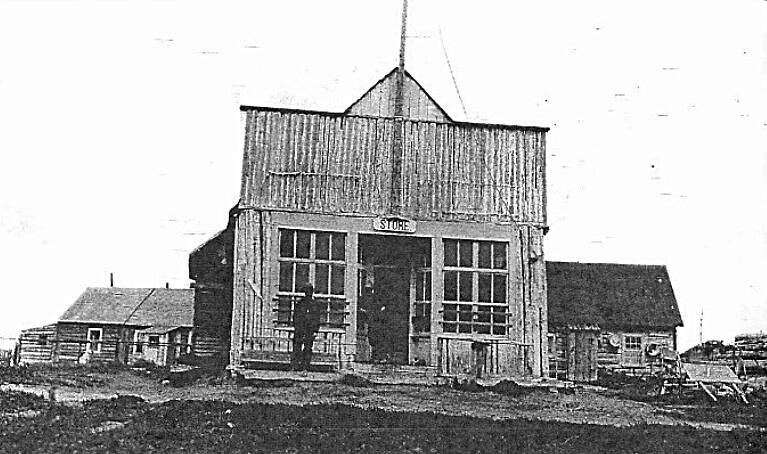
This grainy photo from 1911-12, showing Frenchy Vian and William Dawson in front of their Kenai trading post, was the first exposure Clark Fair had to the mysterious “Frenchy V.” (Photo provided by the Kenai Historical Society)
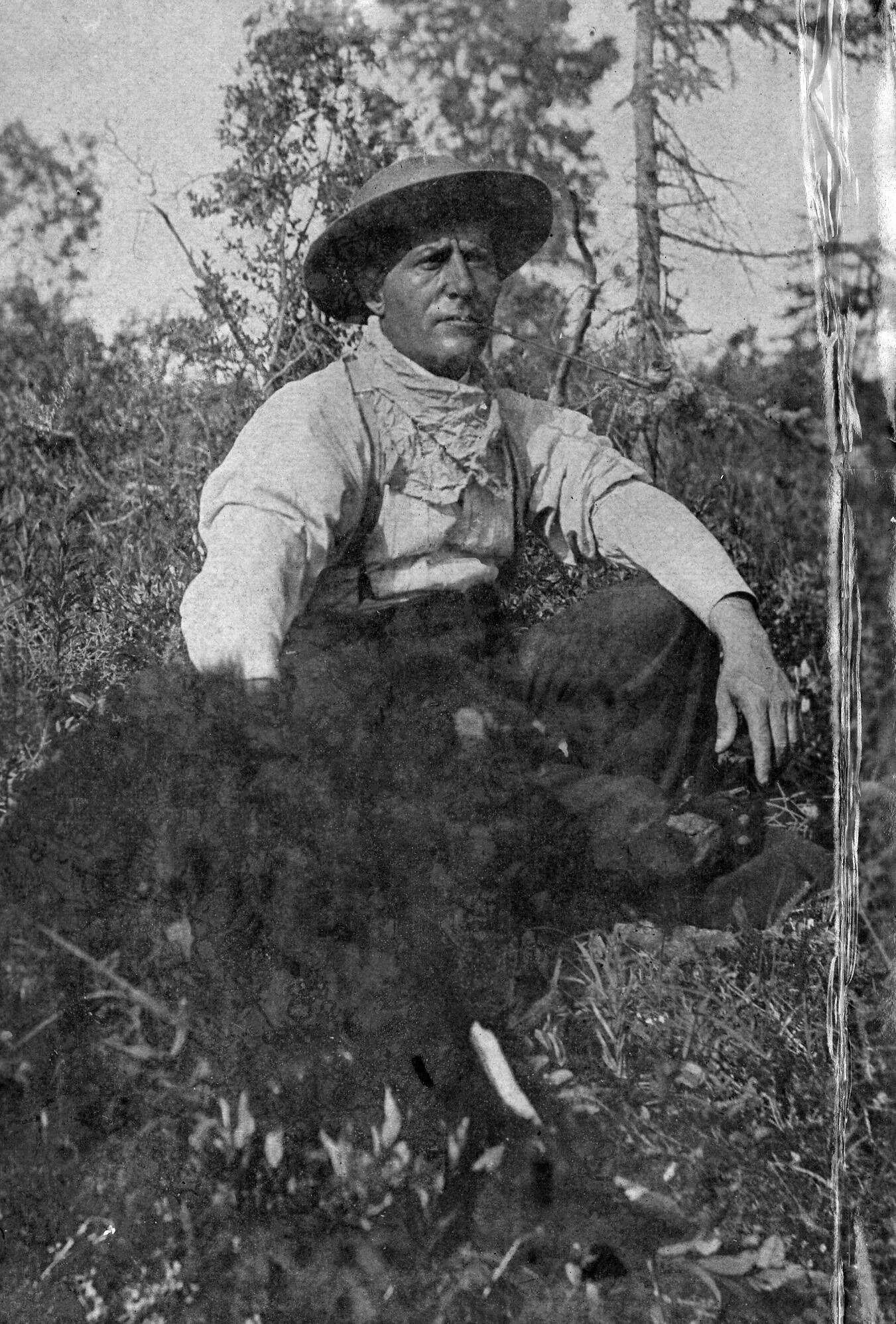
This photo of Frenchy with a freshly killed black bear was taken on the Kenai Peninsula in the early 1900s. (Photo courtesy of the Viani Family Collection)
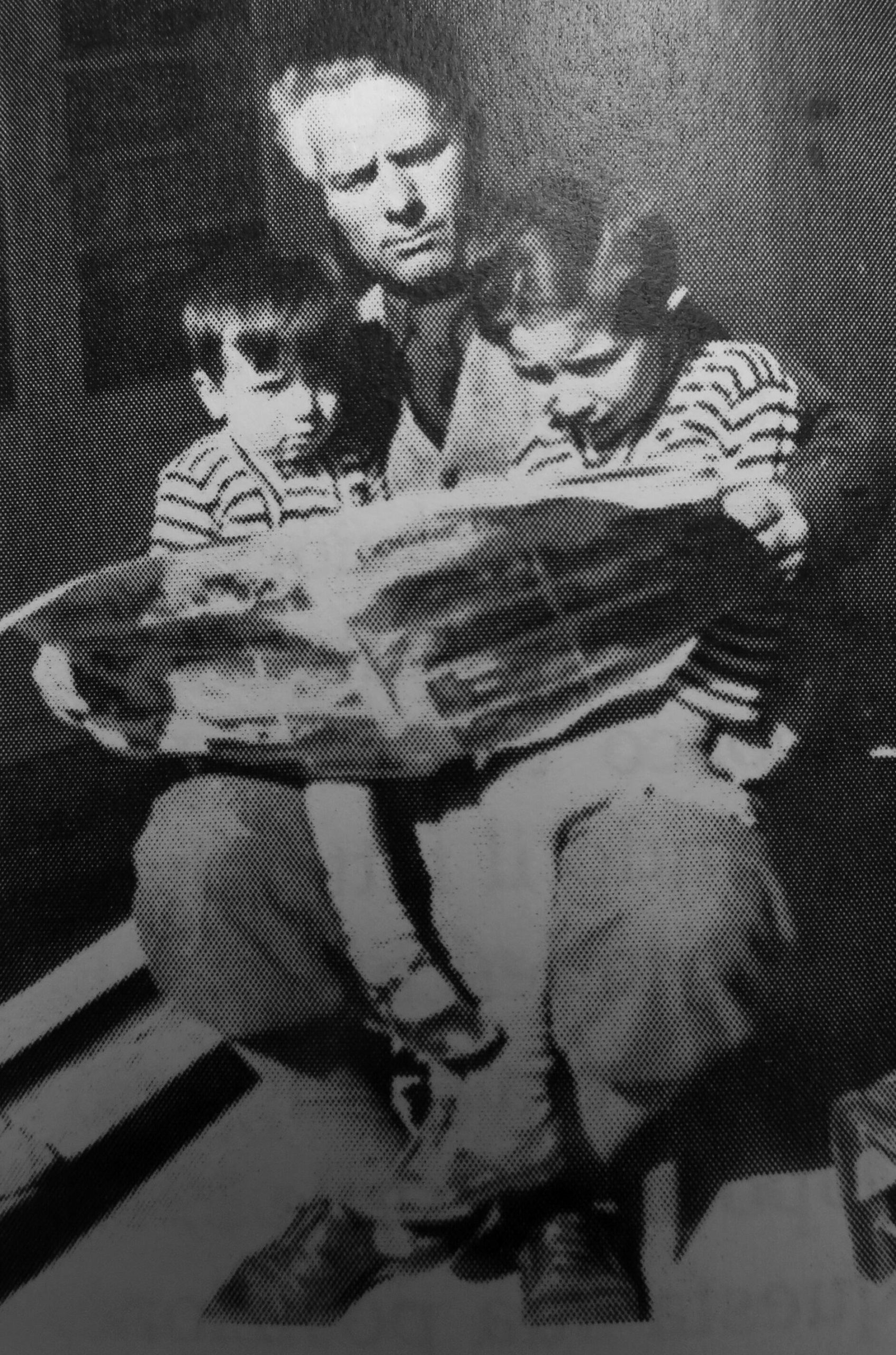
Giò Viani (center) reads to his two sons, Rinantonio (left) and Ioseph, in about 1936. When Rino was a boy, his father also used to regale his sons with stories about his adventurous Uncle Frenchy, who spent about 20 years in Kenai.
