

AUTHOR’S NOTE: After Randy Simmons, Robert Jett and Paul Stavenjord, in August 1971, pulled off the largest bank robbery in Alaska history, they quickly found themselves captured and jailed. They made deals for lighter sentences, with prosecutors expressing hope that the young men would learn lessons from their incarceration. Wishful thinking, as it turned out.
Robert Garner Jett had served time in a federal youth facility prior pulling the bank job in Seward. The bank robbery conviction earned him a six-year sentence, of which he served four years. Then he shot two supermarket security guards in California and was sentenced to more time behind bars. After his release in October 1983, he experienced about five years as a free man.
Jett’s mother, Esther Faye Jett had moved to Brevard County, Florida, as had his half-sister Kathleen. At some point, Robert Jett himself moved to Brevard County, and in 1988, while babysitting Kathleen’s three daughters, all younger than age 10, he perpetrated a crime against his own family.
After an initial arrest and investigation, Jett was convicted in 1989 of two counts of capital sexual battery and two counts of lewd and lascivious acts with a child. He was placed in the Florida state prison system and began a long period of hearings, trials and appeals. From the time of his initial arrest until his release in February 2003, he spent another 15 years of his life as an inmate.
The U.S. Death Index indicates that Robert Garner Jett died in Las Vegas only about eight months after his final release from prison.
Stavenjord
Paul Thomas Stavenjord is easily the most infamous of the three men who made off with $140,000 from the Seward bank in 1971, but four years later it appeared redemption might be possible.
Upon his release from prison in Lompoc, California, in March 1975, Stavenjord vowed to turn his life around and go straight. And he did … until, suddenly, he spectacularly did not.
It is unclear where Stavenjord was born, but it may have been in or near Everett, Washington, in January 1951 to Margaret Clara “Marge” (Lielke) and Oliver Wendell “Jack” Teegarden, her second husband. It was after Marge married her fourth husband, Roy Uldrick Stavenjord, in 1958 that Paul was adopted and dropped his Teegarden surname.
Paul’s older sister Lyn later claimed that Paul had had rocky relationships with each of his stepfathers, and she chalked up some of his bad behavior as simple acts of defiance. “Our stepfather (Stavenjord) always believed he was right no matter what,” she said. “So a lot of this was ‘You’re not the boss of me’ type attitude.”
Whatever the cause, Paul’s problems began to manifest in Alaska.
When Paul was a freshman in Seward, where his mother had moved the family in 1965, he was already behind academically. He was expelled after he called African-Americans “coons” in front of a Black teacher, and he never returned to school.
He was arrested five times during two years in Seward — for breaking into cabins, for stealing a skiff and a car, and for entering his girlfriend’s house and stealing a gun. While serving time in an Anchorage youth facility in 1966, he escaped, stole another car and led police on a high-speed chase through the city streets.
In court, according to the Anchorage Daily News, his mother testified that her son “was belligerent and prone to dark moods during which he would withdraw to his room and sit with a faraway look in his eyes and his head in his hands.”
After his release, Stavenjord, nursing a worsening drug problem, robbed a downtown liquor store at gunpoint, netting him $190 and a three-year hitch in confinement.
Next on his rap sheet was the bank robbery — with the subsequent conviction and the federal prison time, followed by his release and his promise to go straight.
Stavenjord took a job with the Alaska Railroad, repairing and inspecting tracks for at least 15 years. In 1975, he met a waitress named Peggy Hogarty; they married in 1976, and together they built a dry cabin near Chulitna, lived a rustic lifestyle and produced two children, a son and a daughter.
During this time, Stavenjord began to exhibit a creative aspect of his character. He casted small pewter animals and buttons. He carved wooden flutes and learned how to play and write music for them. He did scrimshaw work on ivory, bone and antlers. He sold his craftwork to souvenir shops and during the Fur Rendezvous.
After 11 years in Chulitna, Peggy wearied of living so remotely, with no electricity or running water and no school for the kids. Paul acquiesced. They bought 2.5 acres in Trapper Creek and lived in a cabin with no running water but a generator for electricity. Paul also took on a job caring for special-education children while they rode school buses.
In 1991, however, Paul and Peggy Stavenjord separated. Two years later, they divorced, with Peggy gaining custody of both children. During the divorce proceedings, according to the Anchorage Daily News, she “told the court Stavenjord had not supported her emotionally or financially. While she washed dishes and cleaned houses to supplement their income, he lost money working on crafts.”
Despite these problems, their split was generally amicable, and Paul remained active in his children’s lives.
But in the spring of 1997 the wheels flew off any hope for a happy ending.
In late May in the Chulitna area, an extensive manhunt was under way, and Stavenjord was the target, accused of a double-murder committed over the Memorial Day weekend.
As the search continued for weeks, Stavenjord’s ex-wife, sister Lyn, daughter Becky and several friends struggled to reconcile the sudden violence of the slayings with the peaceful man they had known and loved for two decades — a man they said was questing for spirituality, a man who gave gifts and taught children about music and living in the wilderness, a creative soul and a good friend.
But after Stavenjord finally surrendered voluntarily to authorities, it turned out that the kind man they knew was also a killer. His trial began the following year, and a jury eventually found him guilty on two counts of first-degree murder. A judge sentenced him to 198 years in prison.
Stavenjord’s life and crimes have since been featured in at least one true-crime book (“Murder at 40 Below”), on podcasts and on true-crime television programs.
For all three men, difficult beginnings begat difficult endings. The possibility of redemption had been dangled before each of them after their bank robbery in Seward, but attempting to achieve that redemption had been a mighty struggle. Robert Jett floundered right away and never surfaced. Stavenjord rose up and tasted long-term success, only to see it all slip suddenly away because of his own actions. And Simmons endured numerous self-made hardships but perished with a good name intact.
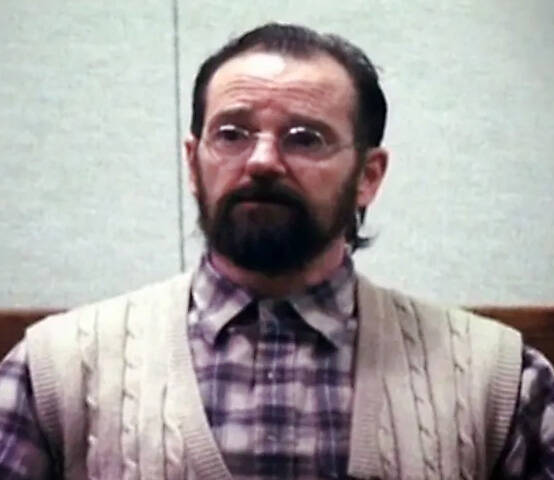
This image from a True Crimes podcast transcript in 2021 shows Paul Stavenjord on trial in the late 1990s.

Bank robber Paul Stavenjord was back in the news in big way in the late 1990s. In this KTUU-television images, he is seen here in law-enforcement custody.
