
In a steady August rain and heavy cloud cover, a trio of young men huddled just below treeline on Mount Marathon, which towered over the city of Seward. The men were not dressed for the weather. They were wet. They were cold. They were alert to the sounds of searchers. And they were considering their options.
Perhaps for the first time they were realizing that they had made a series of questionable decisions when planning a bank robbery.
The biggest problem concerned the location of the bank. The city of Seward offered few means of escape. In fact, Seward was, effectively, a trap, as other criminals in the past had learned to their chagrin.
The Seward Highway was the only road out of town, but they had already abandoned their getaway car. Resurrection Bay was a recognized boating and shipping lane, but they had arranged no marine assistance, stashed no watercraft and purchased no tickets to sail out of the city. The Seward Airport catered primarily to small aircraft, such as air-taxi operations and charters, but the men had failed to secure air passage. Ditto for the railroad.
Besides, they had known that local authorities would establish roadblocks on the highway. They would monitor the train station, the Municipal Small Boat Harbor and the airport.
That left the trembling trio in their current, self-selected predicament — on foot, a difficult choice for even the hardiest of travelers. To the west and east of Seward stood craggy mountains, with thick brush girdling their bases, exposed ravines and ridges above treeline and, often, glaciers or glacial remnants at their peaks or in their rugged cirques.
Travel on the shoreline of Resurrection Bay was subject to the whims of the tides. Travel up the wide valley toward Kenai Lake was fraught with obstacles — meandering streams, areas of marsh and thickets of alder and willow. And the big lake itself, if they were to reach it, offered similar topographical challenges.
Before the robbery, their plan had seemed so simple. Now it seemed like a series of blunders.
In August 1971, Seward had just one bank — a branch of the First National Bank of Anchorage, located in the heart of downtown. How hard could it be, they had wondered, for three young men to slip into the bank, armed and focused, to clean out the tellers’ cages and the vault, and to escape with more money than any of them had ever dreamed of?
They had an escape vehicle, a diversionary strategy, weapons to emphasize the sincerity of their intentions, and a willingness to take hostages, if necessary.
Yet here they were, about a day and a half later, having spent the foodless night of Aug. 4 shivering on the mountain and with another, even more miserable night rapidly approaching.
Except for a small wad of cash, they had stashed the spoils of their efforts — a rubberized bag containing well over $100,000 of stolen money — in heavy brush farther down the mountain because it weighed nearly 40 pounds and they found it too hard to lug up the steep slopes.
They had forsaken their diversion involving dynamite. They were certain that their car had already been impounded by authorities. Federal, state and local law-enforcement officials were likely to be everywhere.
So in the late evening of Thursday, Aug. 5, they put their heads together once more and decided it might be best to split up, then to work their way downhill, attempt to blend in with the local citizenry, and find a way to sneak out of town. After all, they believed, no one in Seward knew who they were. It shouldn’t, therefore, be that difficult to escape if they drew no unnecessary attention to themselves. They could return for the money later, when things had cooled down a bit.
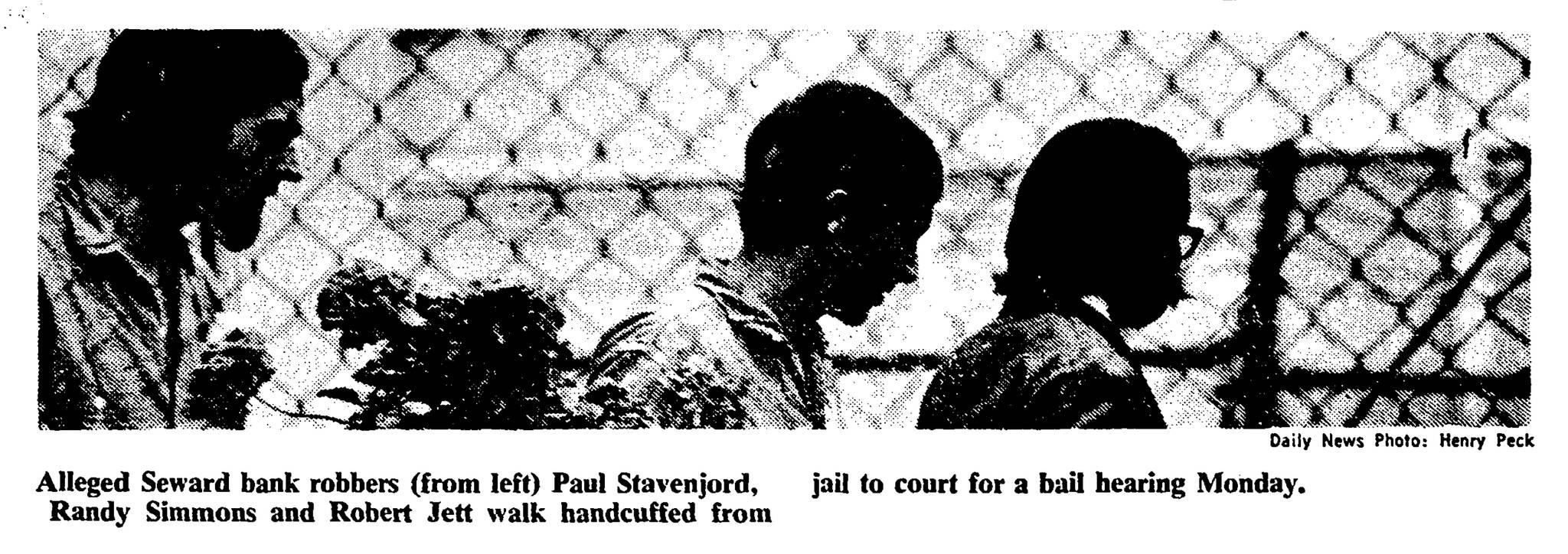
Paul Stavenjord, with $580 in cash in his pocket and armed with the .380-caliber Browning automatic pistol he had brandished during the Wednesday afternoon robbery, took off on his own. Robert Jett and Randy Simmons stayed together.
Near midnight on Thursday, Seward Police Chief William T. Bagron, who had been working more than 15 hours straight and was fighting the temptation to go home and get some sleep, decided instead to check out the wooded area near the Country Store on the Seward Highway north of town.
“I was sitting in my car in the rain,” he told the Anchorage Daily Times, “when suddenly I observed something move out of the corner of my eye…. I turned my light on him and there he was, standing in the dark and the rain. I called him over and talked with him.”
It was Stavenjord. He had stepped out of the woods onto the road and had failed to notice the police cruiser parked only about 50 feet away.
Stavenjord offered Chief Bagron no resistance, but he also denied any knowledge of the bank robbery. Nevertheless, Bagron took Stavenjord into custody, and a search of the suspect revealed the pistol, the cash, an ammunition belt and a what was described in the newspaper as a dagger.
With Stavenjord identified, authorities examined his rap sheet and quickly pieced together a list of past associates. This move enabled them to refine their search for the other suspects. A State Trooper familiar with one of the names on the list began a stake-out of the small boat harbor, near which Jett and Simmons were apprehended on Friday morning.
There is conflicting information concerning the actions of Jett and Simmons when they were arrested. The Anchorage Daily Times reported that the two men were “apparently trying to mingle with other citizens.” The Anchorage Daily News, on the other hand, said they “reportedly had been seeking assistance in getting out of town.” Other sources claimed that Jett and Simmons were captured at a Seward diner while eating chili.
Regardless, before noon on Friday all three men were being held, without bail, at the Seward jail, pending a formal arraignment on federal charges of armed bank robbery — later confirmed to have been the largest bank heist in Alaska history, with a total take of $140,000 (with the equivalent spending power of about one million dollars in 2023).
They were marched before a police lineup and then transported to the federal building in Anchorage for arraignment. Interrupted only by questioning, and preliminary and grand jury hearings, long days of confinement passed. Witnesses gave statements. Indictments were issued. Defense attorneys argued for their clients. Prosecutors countered those arguments and urged punishment. Judges ruled, and the gears of justice ground slowly forward.
Almost a full year after the robbery, a trial approached, with now 21-year-old Paul Thomas Stavenjord, 23-year-old Robert Garner Jett and the nearly 20-year-old Randall Morris Simmons still in lockup.
All three men had been arrested before, more than once. They could see what was stacked against them, and they sensed that a long haul in a federal penitentiary lay ahead. So they decided to cut a deal.
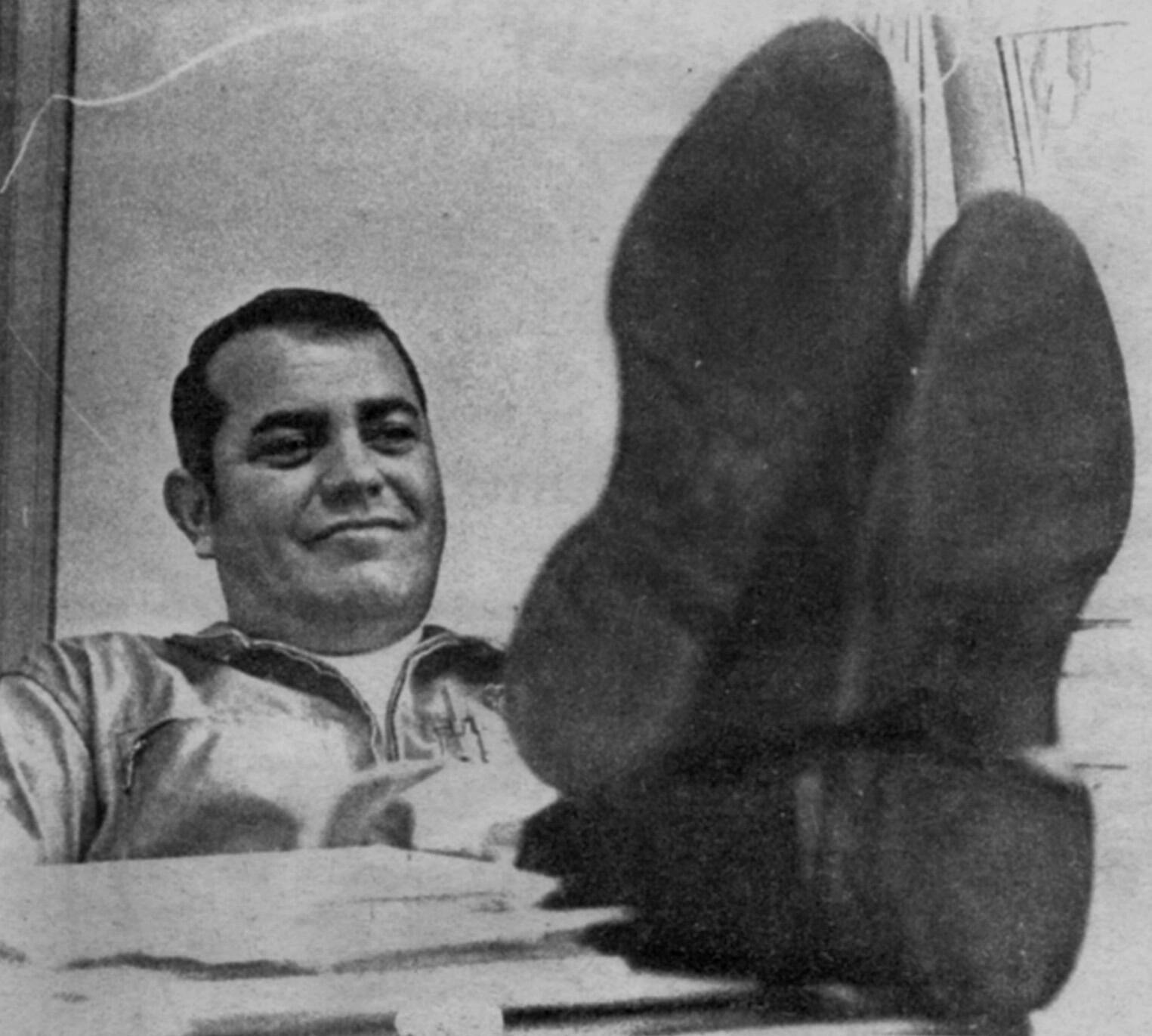
Seward Police Chief Bill Bagron puts his feet up contentedly after the arrest of all three suspects in the robbery of a Seward bank in August 1971. (Original photo from the Seward Phoenix Log)
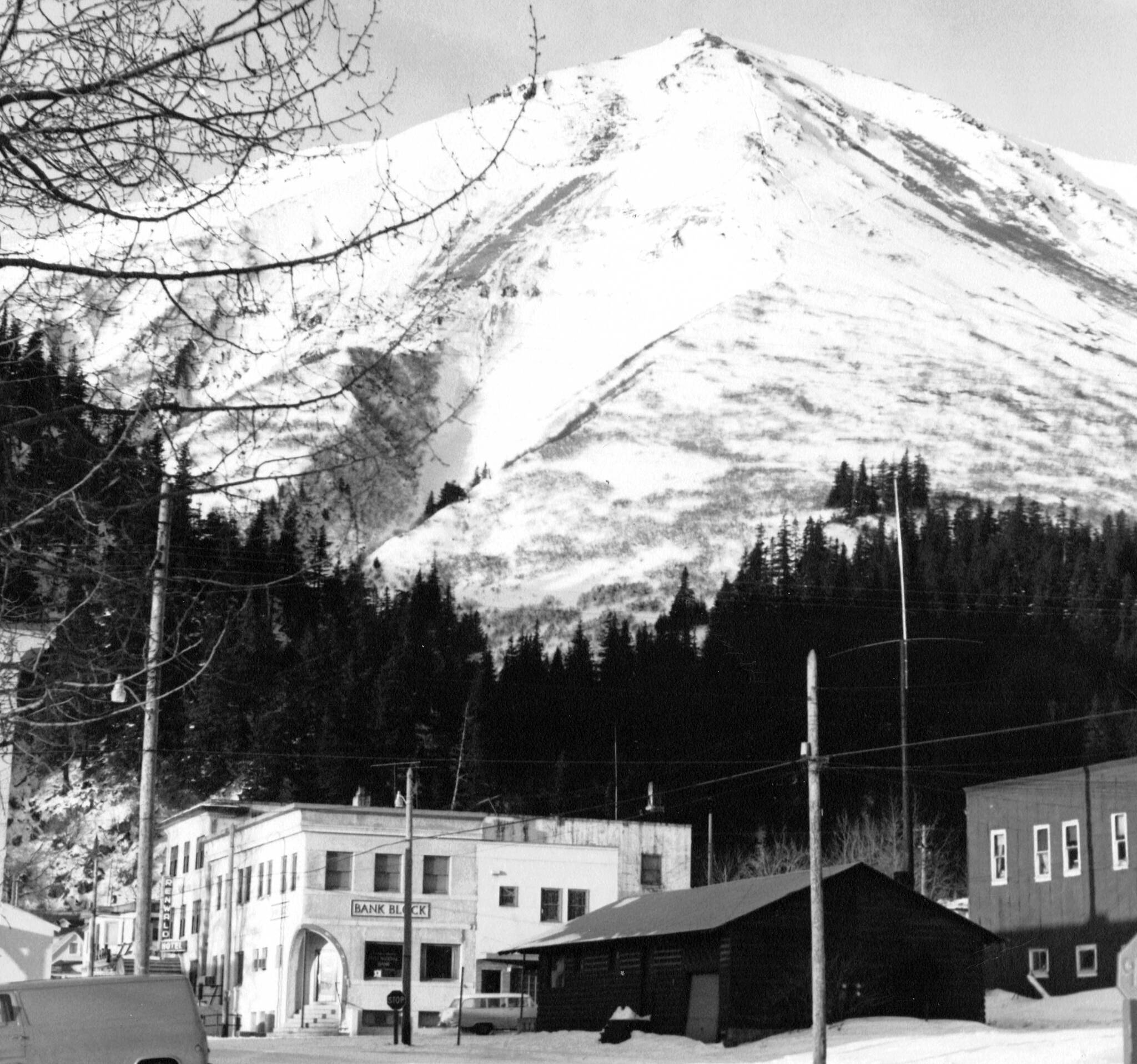
Below the snowy slopes of Mount Marathon stands a building labeled “Bank Block,” which in August 1971 contained the city of Seward’s only bank. (Photo #44.1.7 courtesy of the Resurrection Bay Historical Society)

This was a headline in the Anchorage Daily News on Aug. 5, 1971, after three young men got away with more than a hundred grand from the only bank in Seward.
