
AUTHOR’S NOTE: A full decade would pass after the Lancashire family’s arrival on the central Kenai Peninsula before the area got its first resident physician. In 1958, Dr. Marian Goble established a practice in Kenai. In 1960, Soldotna got its first resident doctor and dentist when Drs. Paul Isaak and Calvin Fair came to town. Before this time, however, health care — especially emergency care — could be difficult to come by.
“The Doctor said he had never seen a mouth that looked so like hamburger,” Rusty Lancashire wrote to family in the States in October 1949. The mouth she was describing belonged to her husband, Larry, after the blade on his sawmill shot a wooden slab into his face.
In shock, Larry had wandered back to their family’s cabin and told his wife he thought he’d like to lie down for a while. Two hours later, a friend who had been a medic in the military stopped by, took one look at Larry’s mouth, and said he needed to be taken to a doctor. The nearest physician in 1949 was at the hospital in Seward.
So down the narrow, icy road they traveled. At the hospital, doctors injected Larry with penicillin to ward off possible infection and admitted him overnight. He stayed from Saturday until Monday before being released.
“Maybe now he will be more careful around the mill,” Rusty said, noting that on the return trip to bring him home, she had brought along her .22 rifle and with a single shot had dispatched a running snowshoe hare she thought might make a good meal.
She also noted that recently her middle daughter, Lori, had cut the front of her head and then later had fallen into the basement and cut the back of her head. Youngest daughter, Abby, had burned the palm of her hand, while Rusty herself had cut her thumb. Everyone was “fine” by the time she was writing, she said, but she knew they were only one bad infection away from potential disaster.
She hoped they were all learning from their mistakes.
Despite her wishes for more common sense, however, Larry hurt himself again at the sawmill when one of his gloves caught on the drive belt and pulled his arm into the roller. “I of course asked him again to sell the mill, as I am so afraid, but he says he can’t until he gets all the lumber we need.”
When her friend Jane Nestor had needed dental work in October 1948, that, too, had required a drive to Seward. Rusty offered to take her. The winding, dirt road had been “blasted by wind, covered by ice and snow,” she said, and they needed seven hours to travel the 110 miles each way.
On the positive side, they were able to stay overnight in Seward with a friend named Luella James, who treated Rusty to a bubble bath in a real bathtub.
Around Thanksgiving, 1-year-old Abby developed a high fever, and Rusty took her to Anchorage via the 10th Air Force Air Rescue unit. It turned out that Abby had pneumonia, and Rusty was able to take advantage of one of Larry’s old military connections to get her the care she needed.
At the same time, Rusty, who’d been feeling a little out of sorts, learned that she had a mild kidney infection, so both mother and daughter received antibiotics before being released to return home. Since at-home telephones were unavailable on the Kenai at this time, and since Rusty had forgotten to post an announcement on the radio service called “Mukluk Telegraph,” Larry had no way to know how his wife and daughter were faring until they arrived home safe and sound.
Then there was the time that Abby drank some kerosene. And the time the whole family suffered from exposure to carbon monoxide from a poorly vented, gasoline-powered washing machine.
Rusty had an ear infection in the middle of one winter. The next fall, Abby burned a finger, Rusty burned an ankle, and Lori got dinged on the chin.
In August 1950, Rusty had another, more serious kidney infection, requiring antibiotics and a stay in the hospital. She also spent time in a Seattle hospital for a surgery in 1953. In the summer of 1955, she broke a foot, apparently while dancing.
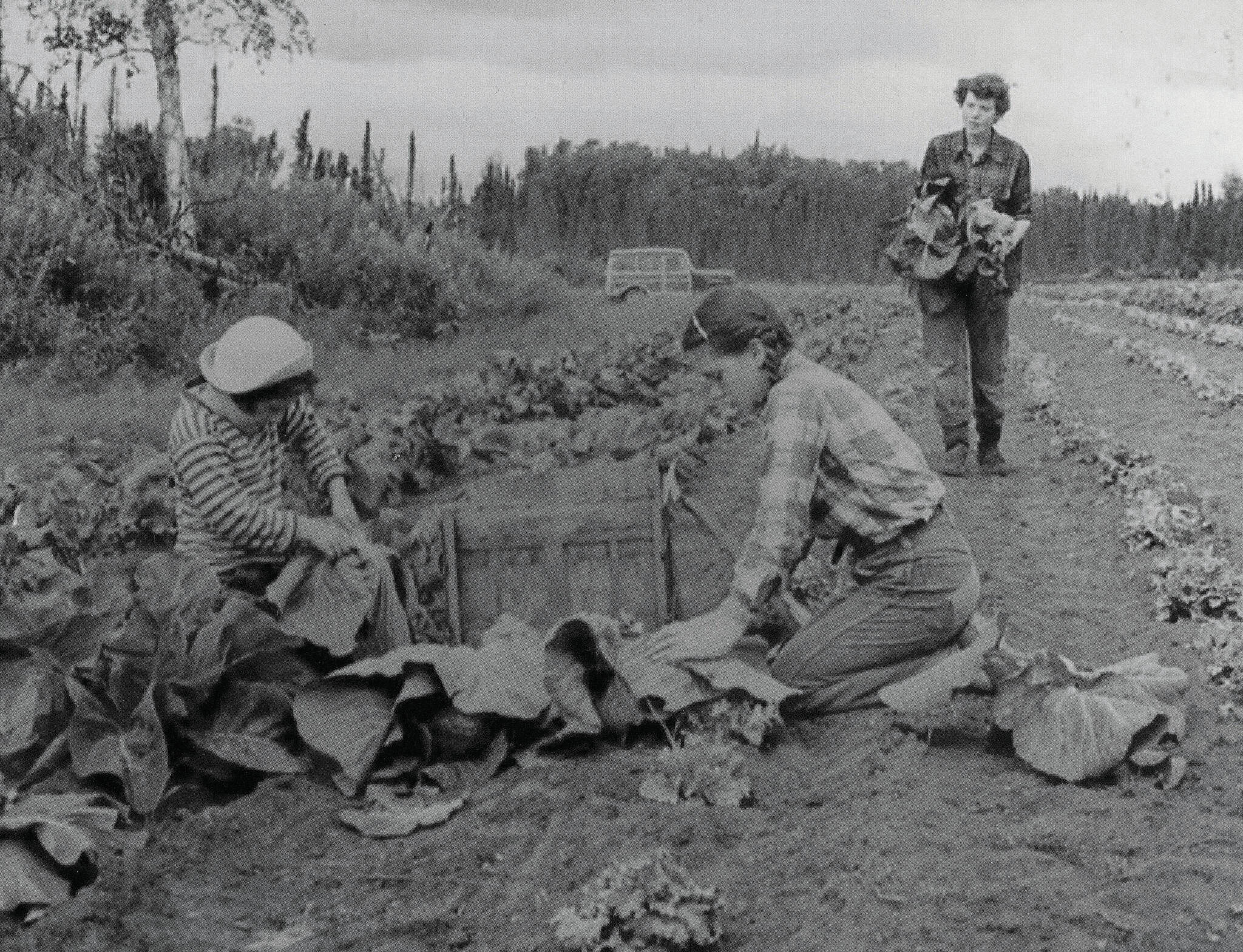
Still, the family persevered and even thrived. They had received patent to their 164-acre homestead in May 1950. By October, they had graveled their driveway. With help, they had cleared about 25 acres and planted oats and peas to feed their cow. They had a large potato patch and vegetable garden.
And some of their medical and dental needs were being met locally, albeit intermittently.
Occasionally, a doctor would fly in to the area from Anchorage or Seward to provide medical care, but the appointments and walk-ins were usually offered no more than one or two days a month, at best. Sometimes, doctors or public health nurses visited only to offer vaccinations.
The government’s hospital ship also scheduled arrivals in the ports of coastal cities each summer. In 1949, the Lancashires — along with other families in the area — went to Kenai to meet it. Each person got a chest x-ray to check for tuberculosis, which was epidemic at the time. Adults were tested for syphilis.
“The Lancashires passed all,” Rusty reported in a letter to family Outside. “Even our teeth were given an A1 rating—no cost!”
But for residents of the central Kenai, the more serious problems often required emergency evacuations to Anchorage.
When Pappy Walker was mauled by a pair of brown bears in Kenai in the summer of 1948, he suffered a crushed left elbow, a partly detached scalp, a badly injured left eye, and bite marks across his body. Getting him prompt medical care took a coordinated effort: Civil Aeronautics Administration personnel called ahead to Providence Hospital in Anchorage to arrange to have an ambulance rush to the airfield in order to meet the plane carrying the wounded patient.
Another Kenai resident, Hank Knackstedt, was severely mauled by a brown bear four years later. Like Walker, he was flown to Providence Hospital, and, after emergency surgery there, on to Virginia Mason Hospital in Seattle.
Over the weeks of treatment and travel, his medical bills piled up. In 1952, when the average American wage earner brought home about $2,300 a year, Knackstedt’s expenses totaled nearly $4,700. On the central peninsula, few people had much money, but residents there understood the financial straits in which their neighbor now found himself.
Teamsters and other laborers in Kenai sponsored a fundraising drive to help Knackstedt. Most individuals, including Larry Lancashire, donated between one and 10 dollars to the cause. Those who gave cared about the welfare of the man they were assisting. They also knew that medical emergencies could happen to anyone.
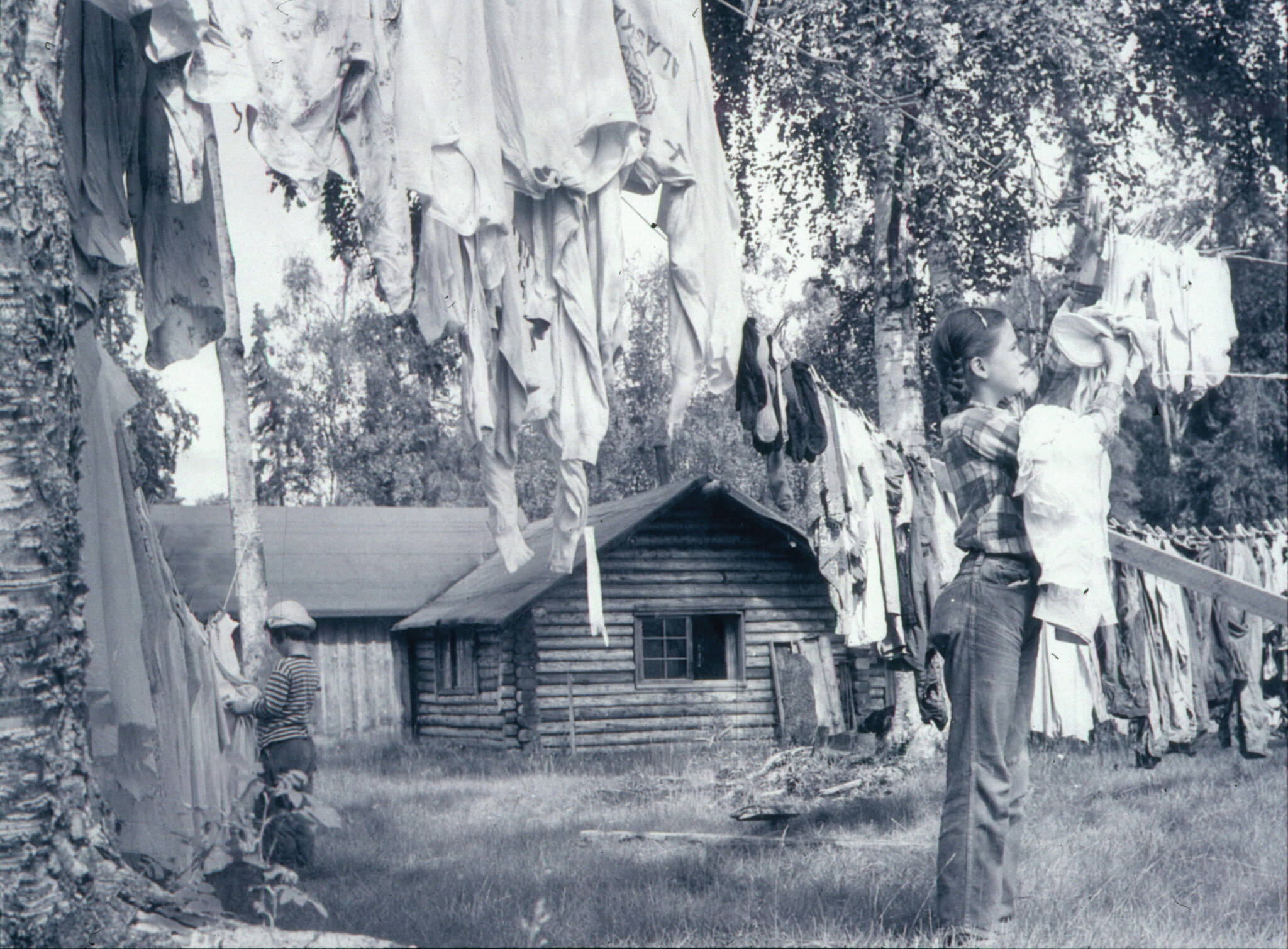
1954 photo by Bob and Ira Spring for Better Homes & Garden magazine It’s laundry day on the Lancashire homestead.
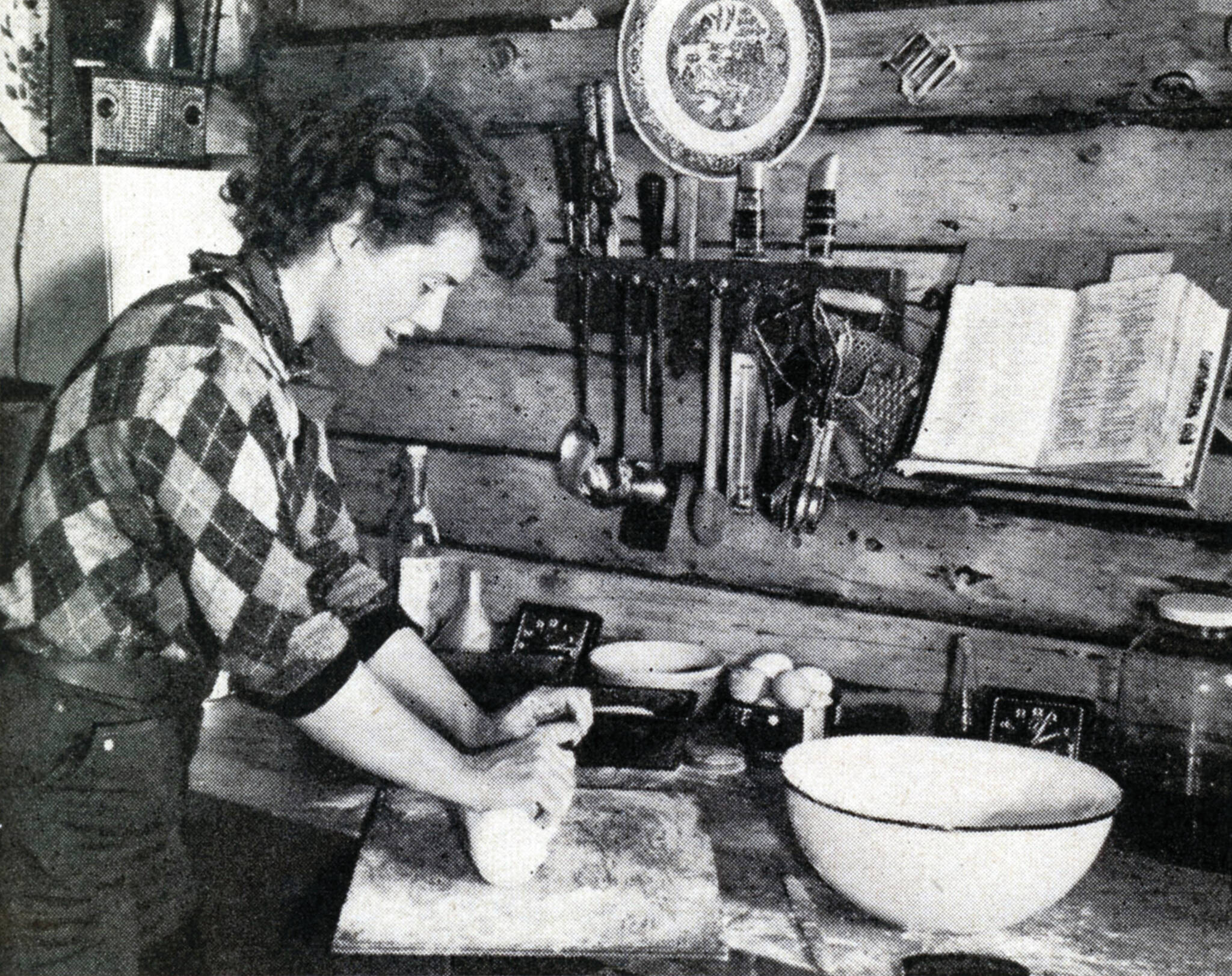
1954 photo by Bob and Ira Spring for Better Homes & Garden magazine —Rusty Lancashire kneads bread dough in her kitchen.
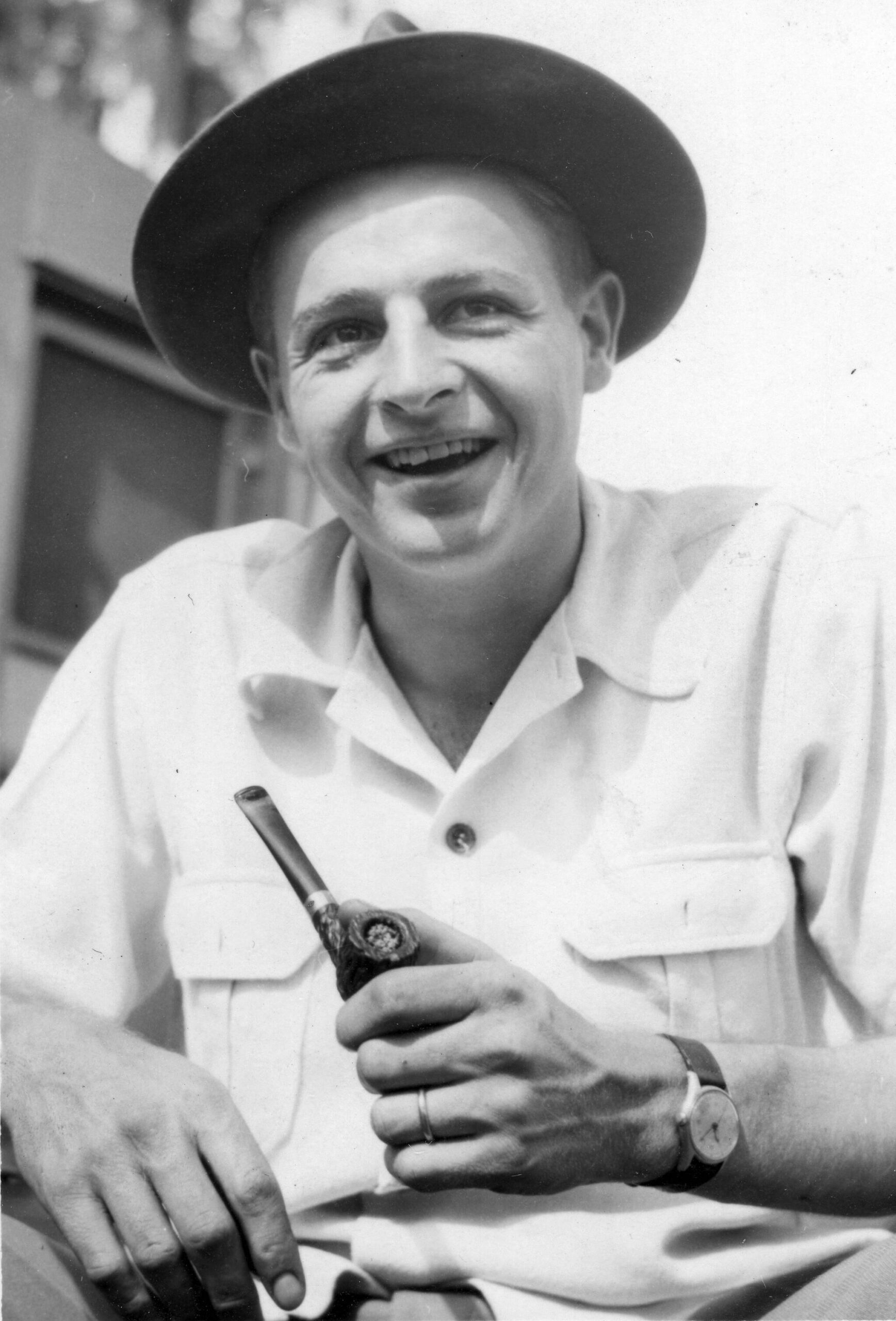
Photo courtesy of the Lancashire Family Collection. Larry relaxes with his pipe, probably in the 1950s.
