
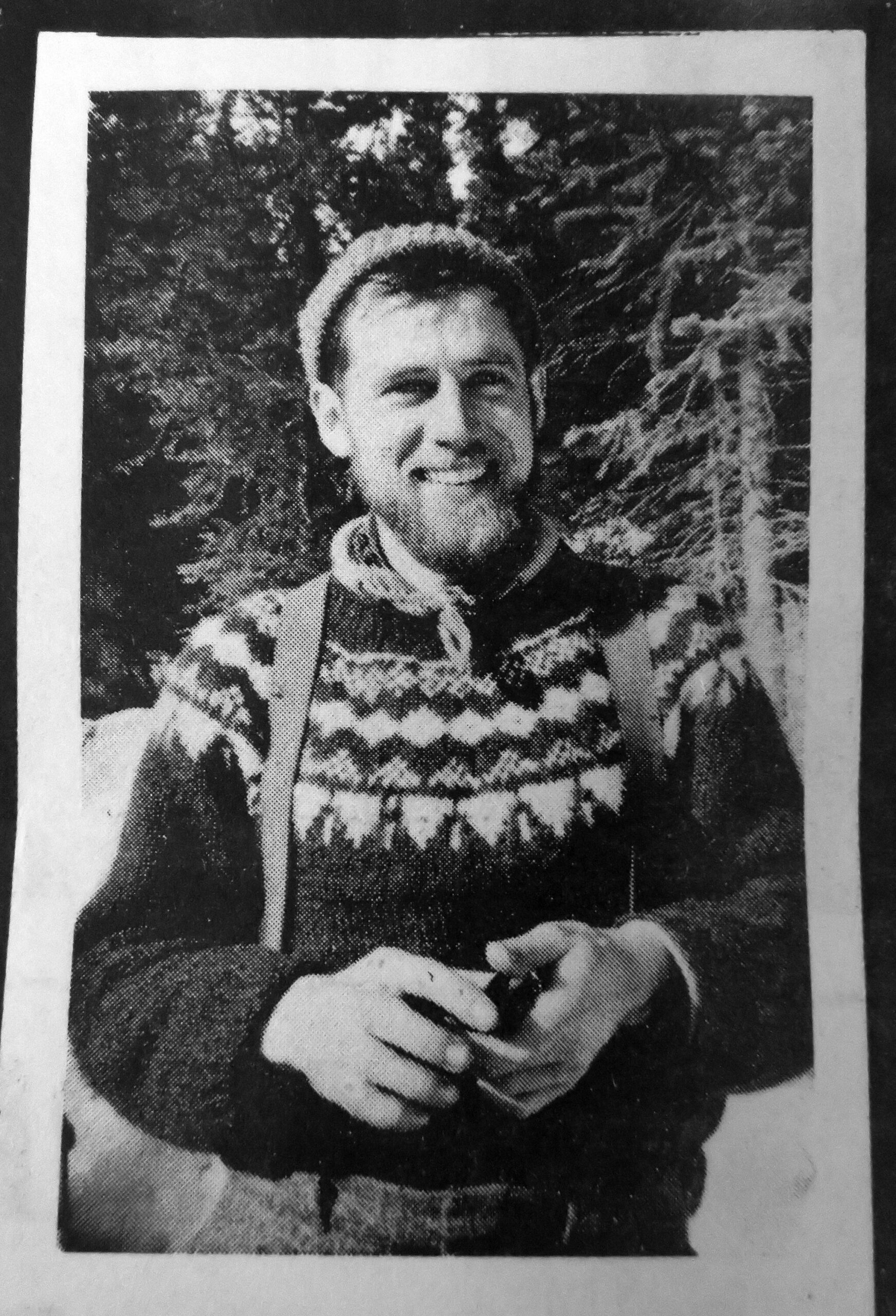
AUTHOR’S NOTE: The two most deadly years for people on or near Tustumena Lake were 1965 and 1975. This series examines the tragedies of those two years. This chapter describes two accidents in July and August 1975, which was the worst year recorded for tragedies at Tustumena.
The Game Surveyors
A eulogy in the Homer News in July 1975 called it ironic that “the only part of his job that (Spencer Linderman) disliked … took his life.” Linderman, a game biologist for the Alaska Department of Fish & Game, was a licensed pilot who disliked flying through canyons while counting game animals. He disliked the danger of navigating those close quarters, and he disliked being prone to airsickness during all the aerial maneuvering necessary while spotting game.
Nevertheless, animal surveys were part of the job, and he had been on the job, searching for mountain goats, with Homer pilot Robert “Robin” Johnson on July 10 when one wing of their Super Cub scraped a mountainside near the Chernof Glacier, just southeast of Tustumena Glacier.
Contact with the mountain sent the small plane tumbling onto the glacial moraine below. The aircraft crumpled and burned, killing both men.
A Rescue Coordination Center team and Alaska State Troopers located the bodies and made a preliminary determination that the crash had occurred when Johnson had attempted to turn the single-engine plane in the narrow glacial draw.
Linderman, 29, was survived by his wife, Randi. He had grown up in Kansas, earned an undergraduate degree in wildlife biology from Kansas State University and a master’s degree in wildlife ecology from the University of Alaska. He had moved to Alaska in 1967, and he and Randi had to come to Homer from Fairbanks only a year before the accident.
The Anchorage Daily Times had featured him with a full page of words and photographs in its March 21, 1974, edition. The newspaper quoted from a recent Linderman letter, in which he had mused on his wilderness ethos: “To be close to nature is sometime to be ecstatic at scenes of overpowering grandeur. But more often, to me, it’s to be quietly reflective on the scheme of daily life and death which seems to form the warp and woof of real life and fills out its flesh, too.”
After Linderman’s death, Times columnist Jay Massey called him “one of the best. He was young, well-educated, articulate and hard-working. Most important, he had a sense of purpose and a great love of Alaska.”
Johnson, 27, was survived by his wife Holly and a young son. Born in Panama City, Florida, he had lived in Alaska for 14 years. He was employed as a pilot for Homer Air Service.
Of Johnson, columnist Massey wrote: “Although I did not know him, the pilot was apparently well qualified. He had lots of hours in the air, and all the ratings, from instructor to multi-engine. However, when you’re flying 100 feet off the cliffs in tricky mountain winds, there is absolutely no room for either human error or mechanical failure.”
Massey continued: “Flying game surveys is dangerous work. The pilots and biologists who do it are involved in a risky business. Most of those who regularly fly game counts have had close calls, because survey flying has … low altitude and low airspeed and lots (more) work to be done than just flying an airplane.”
The Sheep Hunters
The 1976 yearbook, Kaknu, for Kenai Central High School was dedicated to its former carpentry teacher, James Byron Brewer. Two facing pages early in the book featured four hunting photos of Brewer, along with his son Byron and other hunting partners, in camp and in the field.
The dedication read: “In memory of James Brewer:
The years may wipe out many things,
but this they’ll wipe out never,
the memory of those happy times,
that we have spent together.”
Brewer and his son, along with Stephen Arthur Koch, a local elementary-school teacher, had all perished on Tustumena Lake just weeks before the start of the 1975-76 school year.
Jim Brewer, who died just before his 40th birthday, was survived by his wife Dorris (also a teacher) and three daughters (Kellie, Kathleen and Karen). Jim and Dorris had moved from New Mexico to the village of Iliamna to teach in the late 1950s; in the early 1960s, they moved to the Kenai Peninsula, where their two youngest children (Karen and Byron) were born.
Byron, 9 years old at the time of the accident, would have begun fourth grade that fall.
The tall, lanky, easy-smiling Koch, 34, was survived by his wife Elizabeth. Stephen and Libby had married in San Antonio, Texas, in February 1968; by that autumn, they, like both Brewers, were both employees of the Kenai Peninsula Borough School District. Stephen taught English and had a fifth grade home room in a portable classroom at Soldotna Elementary School, while Libby worked as a district speech pathologist.
After a successful Dall sheep hunt in the Tustumena benchlands, Stephen Koch and the Brewers arrived on Wednesday, Aug. 13, at the mouth of Moose Creek on the northern shore of the lake. They had a boat waiting to haul gear and game to the Kasilof River landing more than 20 miles away. Although conditions on the lake were not friendly, and even though other members of their hunting party had not yet arrived, the trio decided to shove off and head for home.
They piled their gear and the meat, horns and hide from their full-curl ram into the 14-foot, flat-bottomed SmokerCraft, fired up its outboard and headed out into the waves in the general direction of Caribou Island, several miles distant. To avoid rock hazards, it was typical for boaters on the north shore to travel across the lake to the island and then motor from the island’s tip to the river outlet.
They were spotted as they departed Moose Creek, but they never arrived at their destination.
Only Byron’s body was ever found — recovered on Saturday, Aug. 16 — perhaps because he had been the only one wearing a life-jacket. The heavy, silty waters of the lake permanently claimed the other two.
Byron’s funeral was held Aug. 20, and his body was interred at Spruce Grove Memorial Park in Kasilof.
Among the gear recovered — because most of the items in the boat (which had Styrofoam under the seats to aid in flotation) had been tied in securely — was Jim Brewer’s good-luck charm, which his daughter Karen kept for the rest of her life.
No one knows precisely what caused the drownings. Very likely, the small craft was swamped and/or capsized by the turbulent waters.
The Fredericksburg (Texas) Standard — Koch’s old hometown newspaper — reported on Aug. 27, 1975, that the search for Koch and Jim Brewer had been abandoned. In early October, the paper reported that the two friends had officially been declared dead.
NEXT: The Final Tustumena Death of the Year
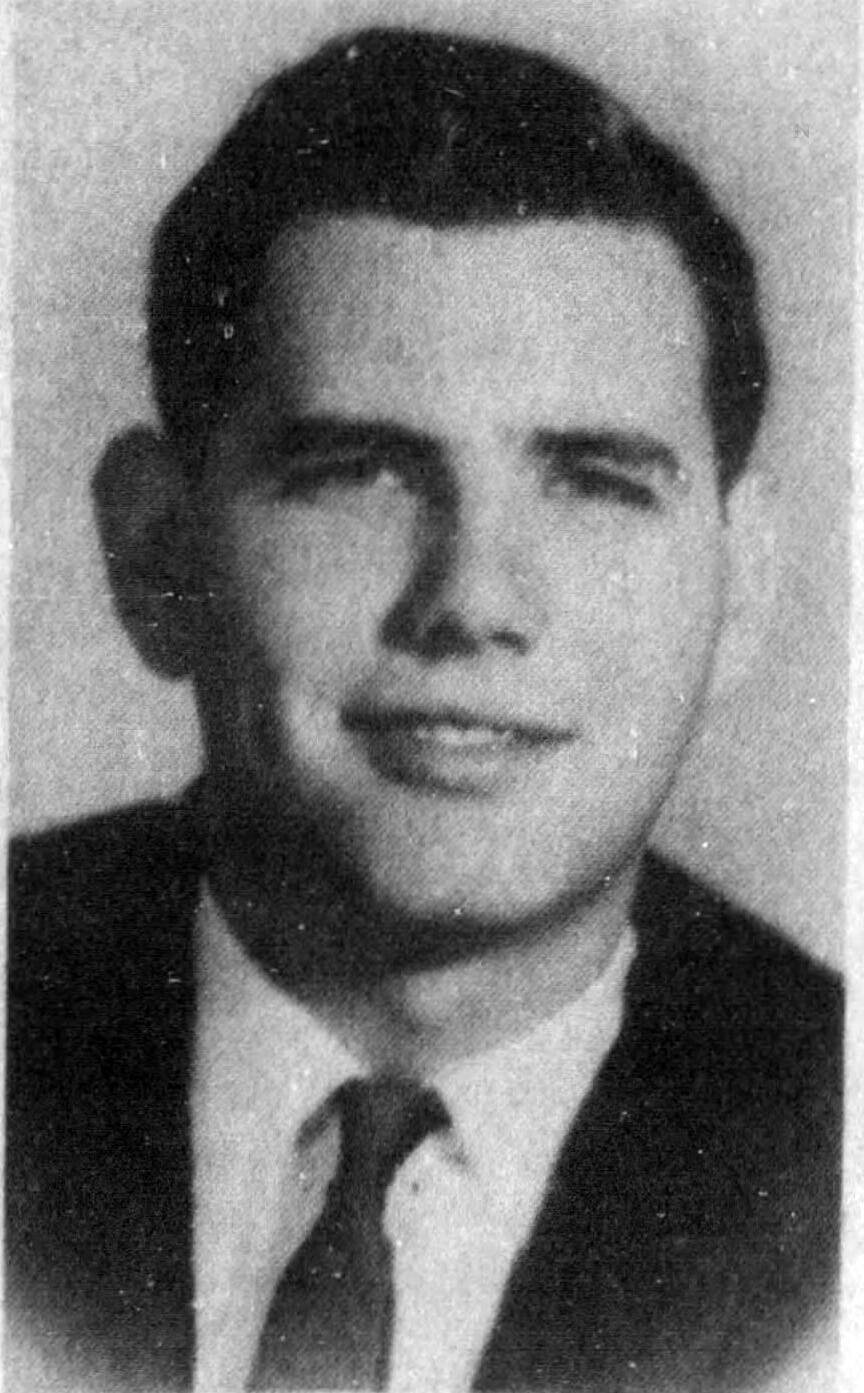
From an August 1975 Fredericksburg (Texas) Standard article about his death comes this photograph of Stephen A. Koch.
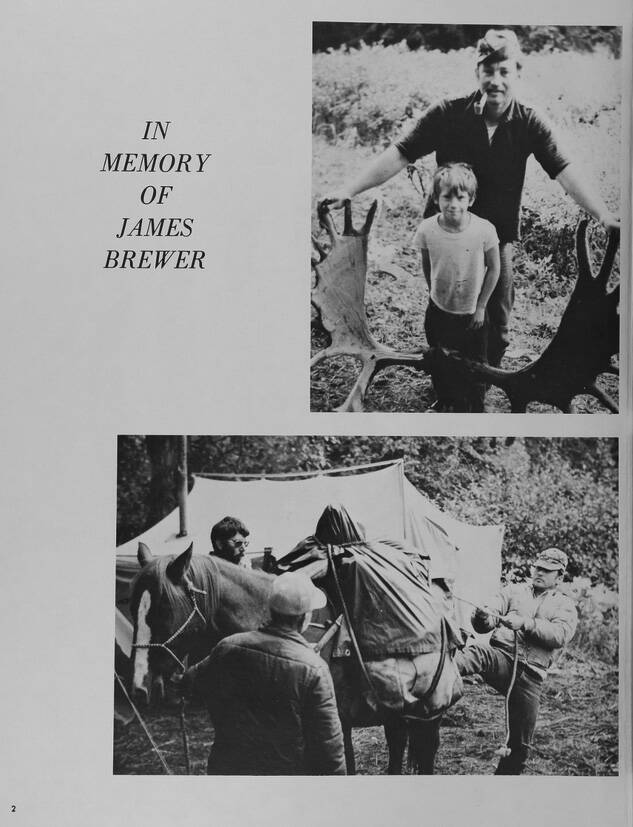
These two pages from Kaknu, the 1976 yearbook for Kenai Central High School, were dedicated to KCHS teacher James Brewer, who drowned with his son Byron and Soldotna teacher Stephen Koch in August 1975. The man smoking the pipe and standing with moose antlers is Brewer; his son is in front of him.
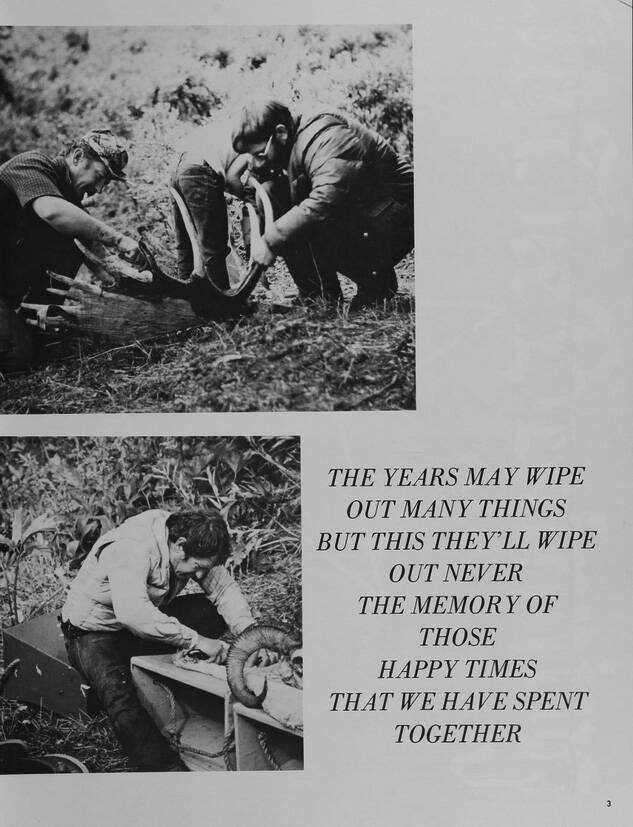
These two pages from Kaknu, the 1976 yearbook for Kenai Central High School, were dedicated to KCHS teacher James Brewer, who drowned with his son Byron and Soldotna teacher Stephen Koch in August 1975. The man smoking the pipe and standing with moose antlers is Brewer; his son is in front of him.
