

AUTHOR’S NOTE: Records indicate that the two most deadly years for people on or near Tustumena Lake were 1965 and 1975. This series examines the tragedies of those two years. A similar version of this chapter about a 1965 Cordova Airlines crash into the lake first appeared in the Redoubt Reporter in April 2012.
One day in 1966, a visitor walked into the office of civil engineer Harold H. Galliett Jr. and offered him something free — but it was also something he did not want.
Galliett was working contractually on a water-and-sewer project for the City of Kenai, and his office was upstairs above the café at the Kenai Airport. According to Galliett, the conversation with his visitor, a friend named Bert Johnston, went something like this:
“Harold, how would you like to take a ride in a plane?”
“Uh-oh. I suppose you’re going to suggest that we ride in that Grand Commander that I crashed in.”
“Well, yes.”
“Well, forget it. Not only ‘no,’ but ‘hell no.’”
Galliett said he wasn’t afraid to climb back into the airplane, but doing so just seemed like a bad idea. “I just thought I’d had enough of that plane for a while,” he said.
The last time he’d seen the aircraft was in the previous September, when he had been standing on the leading edge of one of the wings as it sank rapidly into Tustumena Lake. As the plane vanished from sight, Galliett steeled himself against the icy water surrounding him and began to swim for his life….
*****
During that same September, only a short time after he’d survived the incident that had resulted in four fatalities, Galliett had a different visitor to his Kenai office. Anchorage businessman Joe Blackard began the conversation with: “Harold, I want to buy you a cup of coffee.” Since Blackard was a friend, Galliett agreed to join him in the café downstairs.
“He got a booth,” Galliett remembered, “and he said, ‘Harold, I want you to tell me the absolute truth.’ I said, ‘Okay. Depends on what you’re asking, but I’ll try.’ He was interested in the condition of the plane just before it sank — and very interested in how far from shore it was.”
Blackard and his partner, Anchorage helicopter pilot Bert Johnston, were keenly interested in buying the sunken wreckage and salvaging it, but first they wanted to make sure they’d be able to find it.
Galliett, who was also a land surveyor, told Blackard that he was confident in his ability to determine the distance, which he estimated as almost exactly one mile. Besides the “eyeball test,” he said that he also knew from experience: He had been wearing a Swiss-style waterproof Wittnauer watch when he swam ashore to save his life, and his swim had taken him approximately one hour. As a veteran swimmer, he estimated that he had been traveling through the frigid waters at a rate of one mile per hour.
Blackard and Johnston chose not to simply take Galliett’s word, however. Instead, after they had paid Cordova Airlines for the plane, they sent hired divers to search only 3,850 feet out from shore because a Cordova Airlines pilot named Gene Effler had flown the area back and forth in his Piper Cub and had estimated that to be the proper distance.
“They tried at 3,850 feet or thereabouts for three or four days, with no result,” Galliett said. “They were getting very worried. They had $9,000 (more than $61,000 in today’s money) into this venture of theirs. It looked like they weren’t going to find anything. It’s a pretty deep lake, and they already knew it (the plane) was about 140 feet deep.”
Frustrated, Blackard and Johnston turned to Galliett’s recommendation. “They got a boat and a rope of measured length, and they got down to the spot where I said it was,” Galliett recalled. “And for three days they fooled around down there, dragging the bottom — and by golly they found the plane, right there, right where I said — pretty close anyway — damn close. And they got it out.”
The accident had occurred on Sept. 4, 1965, one mile out from Point Lake, which lies just north of Tustumena’s northern shoreline, approximately halfway between Moose Creek and Bear Creek. By the end of that month, they had the plane ashore.
“They worked as fast as they could,” said Galliett, “but to recover the plane they had to get straps under it and raise it a foot or two (using flotation), drift toward shore with it, and then tighten the straps.” Divers had affixed the straps to the plane, and through this lifting-and-moving strategy, they incrementally raised the aircraft and brought it in to land.
Meanwhile, on the shore they had to make room to beach the plane and create a work area, for it was their intent to repair the aircraft on the spot and then attempt to fly it out.
The 42-foot Aero Grand Commander, with its high wings, narrow fuselage, twin engines and eight-passenger capacity, required considerable space for this operation, so they felled a large swath of forest to bring the plane ashore. From there, they moved the wheeled craft through the woods to Point Lake, where they hoped to take once the coming winter had formed an icy runway.
“They built a shelter over it, a tent of some kind, and the plane was in excellent condition,” Galliett said. “The propellers were not bent, were not damaged at all. The mechanical was okay, except that the engines were full of water and some silt.” Only the bottom of the fuselage was “pretty chewed up” from its impact with the lake surface during the initial crash. Since doing aluminum work on-site would have been difficult, they trimmed off the sharp edges and covered the holes with treated fabric.
They spent weeks working on the project and hired Tustumena Lake resident Joe Secora to stay on-site and guard the plane whenever they couldn’t be on hand.
When Point Lake had sufficiently frozen over, Blackard and Johnston climbed aboard, started the engines, and then went rolling across the icy lake until they could lift off. Airborne, they headed for Anchorage.
“They were on final approach at the Anchorage International Airport, and they were close to touching down when one of the engines quit,” Galliett said. “Scary, but nothing fatal at all. They landed with one engine, and they taxied off the line.”
More repairs ensued, including specialized work at the Aero Commander factory in Oklahoma City, and soon the craft was in “first-class condition” again.
*****
Despite Bert Johnston’s generous offer of a flight in the revamped airplane, Galliett turned him down. He said he toyed with the notion of going, but quickly rejected the idea. “I never did take a ride in that thing,” he said, “but I saw it a few times parked along Merrill Field.”
Galliett allowed the memory of his only flight on that plane to suffice for a lifetime, and in 2012 — at age 88 and living near Oroville, Calif. — his memory of that trip and its disastrous conclusion was still crystal clear.
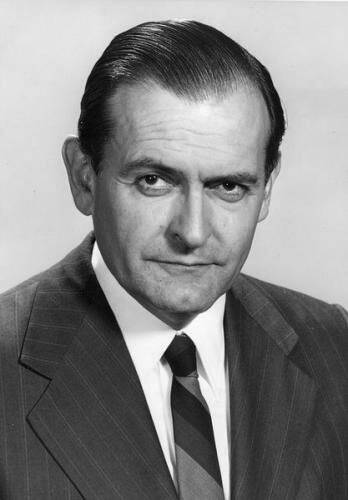
Photo from Galliett’s 2014 obituary Harold Galliett was the lone survivor of a 1965 Cordova Airlines crash into Tustumena Lake. A year after the accident, Galliett was given the opportunity to fly in the plane again after it had been retrieved from the bottom of the lake. He declined.
