
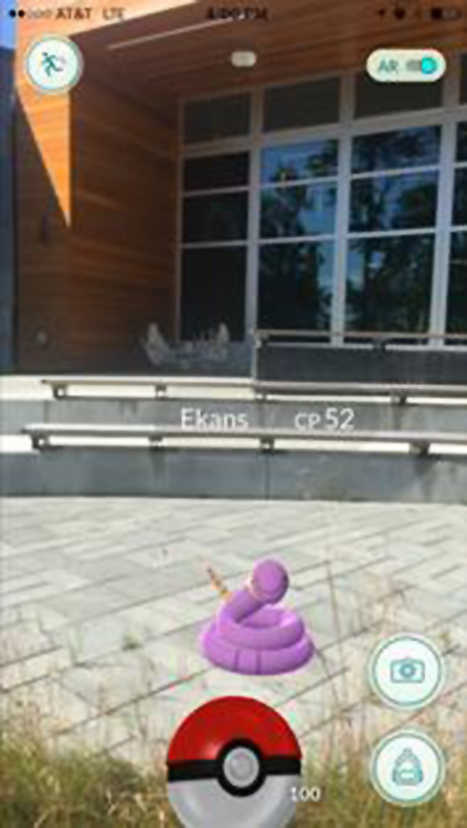
Driving past the Refuge entrance sign last week, a group of boys gathered nearby caught my attention. It’s an unusual hangout spot, so I stopped to check that everything was OK. Everything was, except one of the boys had run out of Pokéballs and was picking some up from the sign. I smiled, knowing what was going on, and asked them how many Pokémon they each had in their Pokédex. We compared creatures sightings, stopped to watch a Mallard duck fly over our heads, chatted about a moose these friends had seen together, and then parted ways.
The boys headed to Soldotna, walking toward a few more PokéStops and a gym while I headed to work, where I welcome Refuge visitors to the Kenai, and often have very similar conversations over bird identification books and mammal lists as I had over our collective smartphones moments earlier. The park ranger in me, who loves seeing people spend time outside during the beautiful Alaskan summer, was happy about both wildlife viewing groups, virtual and those in real life.
So just what were those boys doing? You likely already guessed: playing the wildly popular app Pokémon Go, a revival of a cherished childhood game of the mid-90s.
Bridging the virtual and real worlds, the game leads participants called “trainers” through a scavenger hunt of sorts, hunting for mythical creatures, stopping to refill supplies at aptly named PokéStops and gathering to test the strength of their collected pocket monsters against each other at “gyms.” All this action takes place through smartphones on an overlay of Google map data, so despite sounding like just another role playing game, Pokémon Go is creating an augmented reality, a mix of real and virtual, using smartphone or tablet cameras and their GPS features.
Trainers don’t just travel to different PokéStops within the game. They walk on real streets, in real parks, and through real communities on their journey. They travel for miles, and not as often by car as other methods since moving faster than 20 miles per hour means their eggs can’t incubate. (Just follow along here, this game has many layers, each discovered in time by the participants without help from an instruction manual.) This is a game that requires spending time outside to be successful. This is exciting!
There has already been plenty of online discussion about this “walk in the real world” phenomenon. What I like to take from it all is that a huge number of people are spending their summer outside, getting to know their cities and towns, meeting new friends and exploring. Pokémon Go encourages social interaction, outdoor exercise, and consideration, to some extent, of nature. These are the goals of park rangers across the country: to connect people to the great outdoors. Now, it is happening in a very big way. This game already has over 21 million daily users.
Pokémon Go is interesting in part because the game uses information from Google to place virtual Pokémon in real habitats. For example, you are much more likely to find a water-type Pokémon near real water like a lake, beach or river than in the middle of a desert. Also, players can discover new places they may not have previously visited. For example, the Refuge sign at the bottom of Ski Hill Road where I met that group of boys is a designated PokéStop. Last summer, they admitted during our quick chat, they spent most days indoors playing video games. For them, and the others who through social media are remarking about how their legs hurt after walking 4 miles or how they picked up some more bug spray for their journey tomorrow, this is a new adventure.
Interested in more? There’s already another virtual game going on around town and the refuge. Celebrating the 75th anniversary, visitors to the Refuge in 2016 are encouraged to pick up a “75 Things Checklist” and see how many of the activities on the list they can do while here. Finish 25 activities or more to receive a limited-edition commemorative gift. Finish more to compete for a grand prize. Visit the PokéStop at the refuge sign on Ski Hill Road and figure out what federal agency the quote that shows up at the stop really belongs to (hint: it is not the U.S. Fish and Wildlife Service) then come in to the Refuge Visitor Center for an extra stamp on your checklist.
Leah Eskelin is a Visitor Services Park Ranger at the Kenai National Wildlife Refuge. You can find more information about the Refuge at http://kenai.fws.gov or http://www.facebook.com/kenainationalwildliferefuge.
Heading out to play Pokémon Go this week? That’s great! The Kenai Refuge Visitor Center in Soldotna is open seven days a week all summer long and staff can help you with trail information, tips on how to enjoy the outdoors safety, and even wildlife (the IRL kind) and plant identification lists to expand your adventure beyond the Pokédex. Rangers are also available through Facebook (www.facebook.com/kenainationalwildliferefuge) if you need trail help while out and about.
Just remember, virtual animal sightings are a bit different than live wildlife sightings. Always be aware of your surroundings, stay on marked trails, avoid getting close to any animals you do see, and unlike lure modules and incense in the game, baiting wildlife in for a closer look isn’t permitted on the Refuge. Never feed wild animals, for their health and your safety.
