
Sheila Wyne is the kind of artist who, when you call her to set up an interview, asks you to call her back because she’s at the top of a 12-foot extension ladder. She’s a big-project, work-with-her-hands builder as well as a creator. Based in Spenard, Wyne has become known as an artist who discovers new media and techniques, learns how to work with them (sewing, welding), and then explores the possibilities.
Coming out of the COVID-19 pandemic, Wyne has discovered signs — decommissioned, beat up, cratered with bullet holes and faded-by-salt road signs. The pandemic gave her time “to follow the nerve of one’s being, as Annie Dillard has written,” she said in her Aug. 6 First Friday opening of “Strata,” her latest show at Bunnell Street Arts Center.
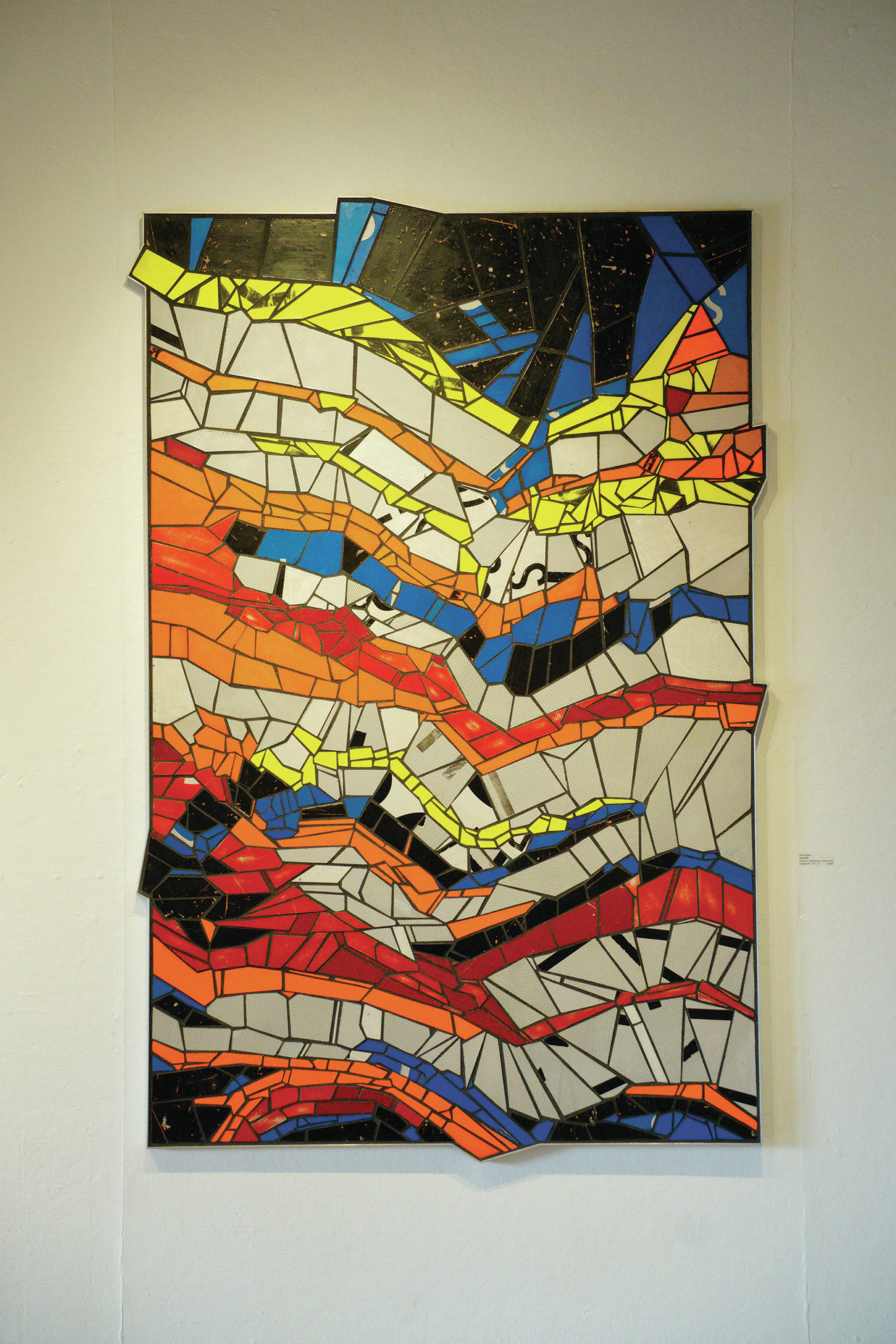
“Strata” shears and chops up signs into elements of color like paint. For another technique in her show, she takes the shredded pieces and puts them together like mosaics.
“You can think of (Mark) Rothko, these color quadrants,” she said in an interview on Tuesday. “His is much more meditative. These are more bundled with energy by comparison.”
At her artist’s talk, Wyne said “Strata” started with a 12-foot by 14-foot commissioned piece she did in 2019 for the University of Alaska Anchorage Engineering Building, “Ingenerare,” Latin for “to cause, to produce.” In that work she used road and street signs to created layered surfaces.
“There was a lot of technicality in it,” she said of that piece and its use of signs. “… These are civil engineers. Every time you see a sign on the road, an engineer has been there. Oh, this is kind of perfect.”
After she finished “Ingenerare,” she kept thinking of the medium and the idea of layering.
“Typically, an artist goes from small to big,” Wyne said in her talk. “I needed and wanted to go in the opposite direction, from big to a smaller scale. I thought it could be useful and learn a lot.”
Wyne also wanted to explore the idea of strata in geologic terms. She spoke of rafting the Grand Canyon, where a billion years of geologic history form the landscape — a scope almost too big to absorb.
“I wanted to strip down that 2019 commission to the essentials, which to me were materials and time. ‘Strata’ is all about time and stories,” she said in her talk.
One conceit with “Strata” is how layers of aluminum could be the evidence of humanity millions of years from now, what some now call the Anthropocene era.
“That’s the thing I’m really liking about the material,” she said. “I’m talking about signs in the future, way in the future when we’re not around anymore.”
The show also has a sculptural element. While the big pieces aren’t true sculptures that can be walked around, they do have dimensionality. In the lighting of the Bunnell gallery, holes and angles cast shadows that add another element to the art.
“You move slightly in either direction from these bent pieces, you catch a different facet,” Wyne said.
“Strata” also has an element of a shorter time span, that of the signs themselves, discarded because of damage or replaced because street names and numbers have changed. Wyne is coy about how she gets the signs since she wants to keep her sources available.
“There has been this joke going around: ‘You sell one of these. You may need bail money. Sheila is taking signs,’” she said.
Along with the larger works in the show, Wyne has taken scraps from that work to make mosaics. If the big pieces look like the broad layers of a canyon, the mosaics are like strata bent and folded by geologic forces — the cliffs Bluff Point compared to the rocks of Gull Island.
“I’m kind of a waste-not, want-not,” she said of her mosaics. “There’s so much excess material.”
Mosaics are one of the oldest art forms, Wyne noted in her talk.
“It’s an appropriate adaptation for me, the juxtaposition of new materials with the earlier slow time of art making,” she said. “When I make these pieces, I get a lot of time to think about the layers of time, society and stories.”
With their bright colors and abstract shapes, the smaller mosaics have the look of stained glass windows. Rather than light passing through, light becomes reflected. That’s another aspect of “Strata,” Wyne said: retro reflection, the technical term for the reflective quality of modern street and road signs.
At the First Friday reception, the gallery lights were dimmed and people went around with their smart phone flashlights and looked at how reflective light changed the art.
“There is this incredible other persona that each piece has,” Wyne said. “Some of them change radically. … It’s almost like a Jekyll-Hyde quality.”
That’s one aspect Wyne would like to explore more. The works could be installed outdoors in a temporary or permanent showing that takes into account reflective light.
“Up here in Alaska, half the time we’ve got a lot of dark,” she said. “We’ve got a lot of headlights and in Anchorage we have a lot of head lamps because of people biking or walking or skiing the trails.”
As people came up to the pieces, the light would reflect and change as they went by.
“To create a presence that (for) each driver or each individual, it will flash or create a moment and it’s gone,” she said. “I think that would be really, really interesting.”
Reach Michael Armstrong at marmstrong@homernews.com.
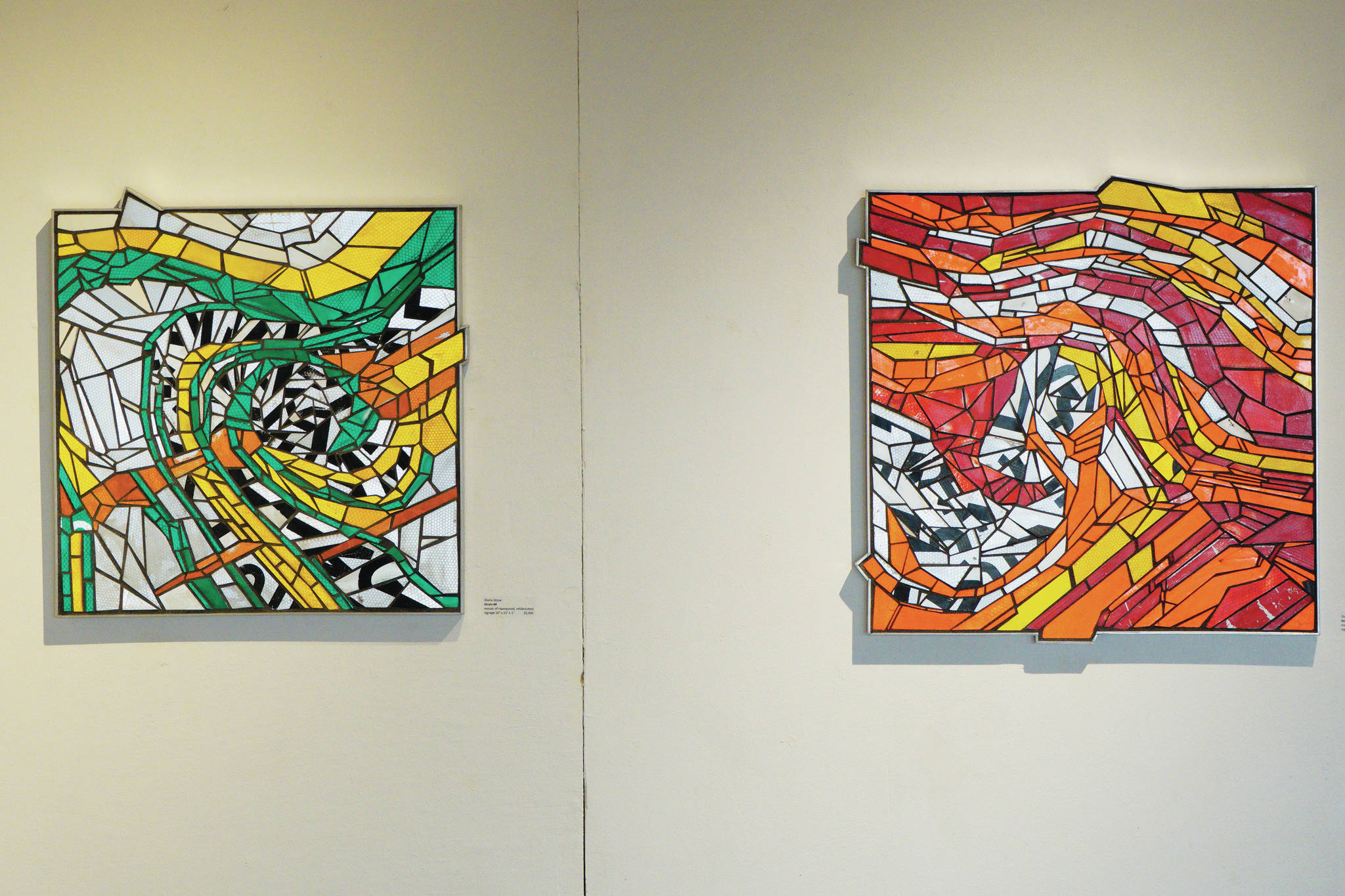
Sheila Wyne’s “Strata #8,” left, and “Strata #9,” right, are part of her show that opened Friday, Aug. 6, 2021, at Bunnell Street Arts Center. (Photo by Michael Armstrong/Homer News)
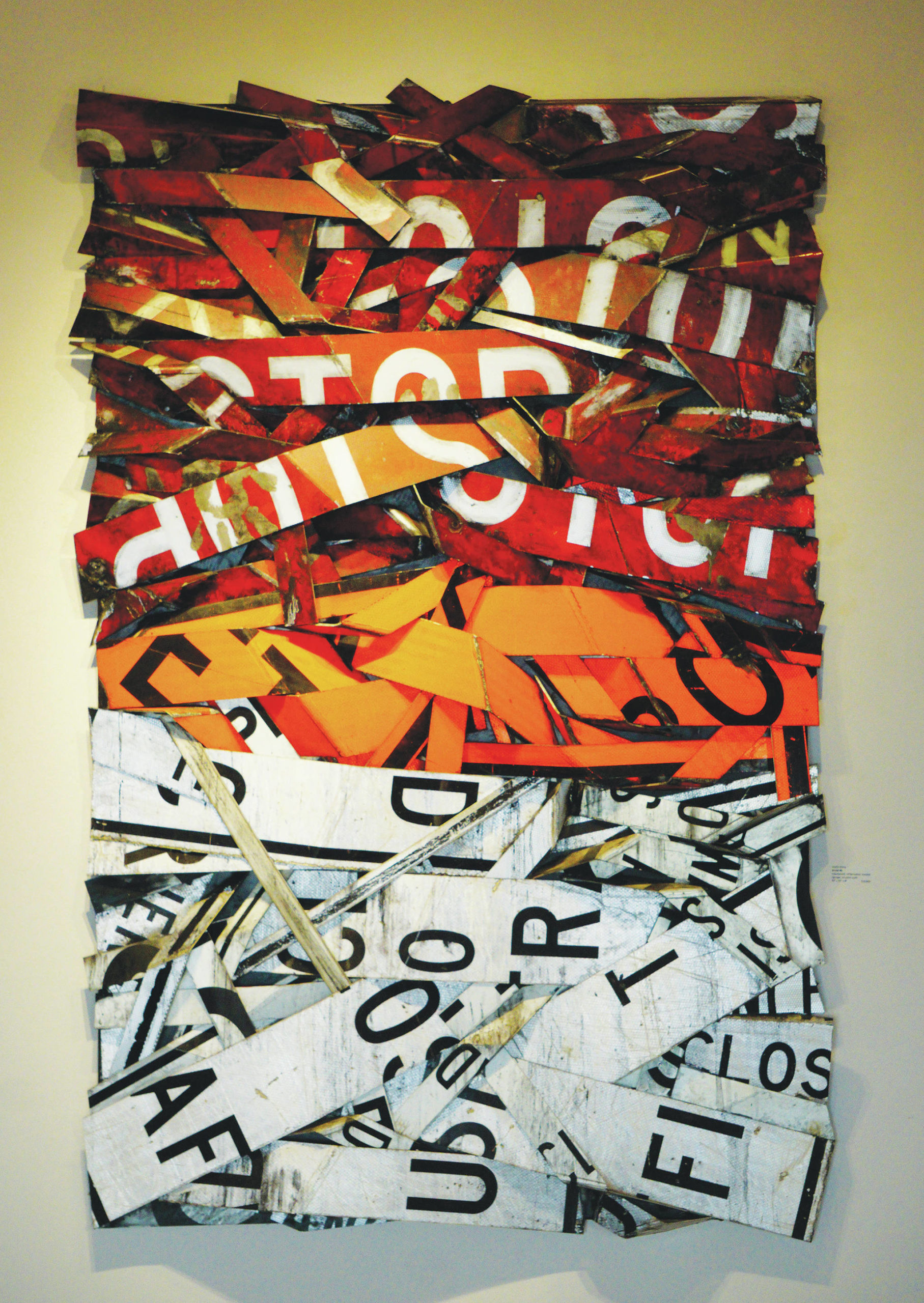
Sheila Wyne’s “Strata #5” is part of her show that opened Friday, Aug. 6, 2021, at Bunnell Street Arts Center. (Photo by Michael Armstrong/Homer News)
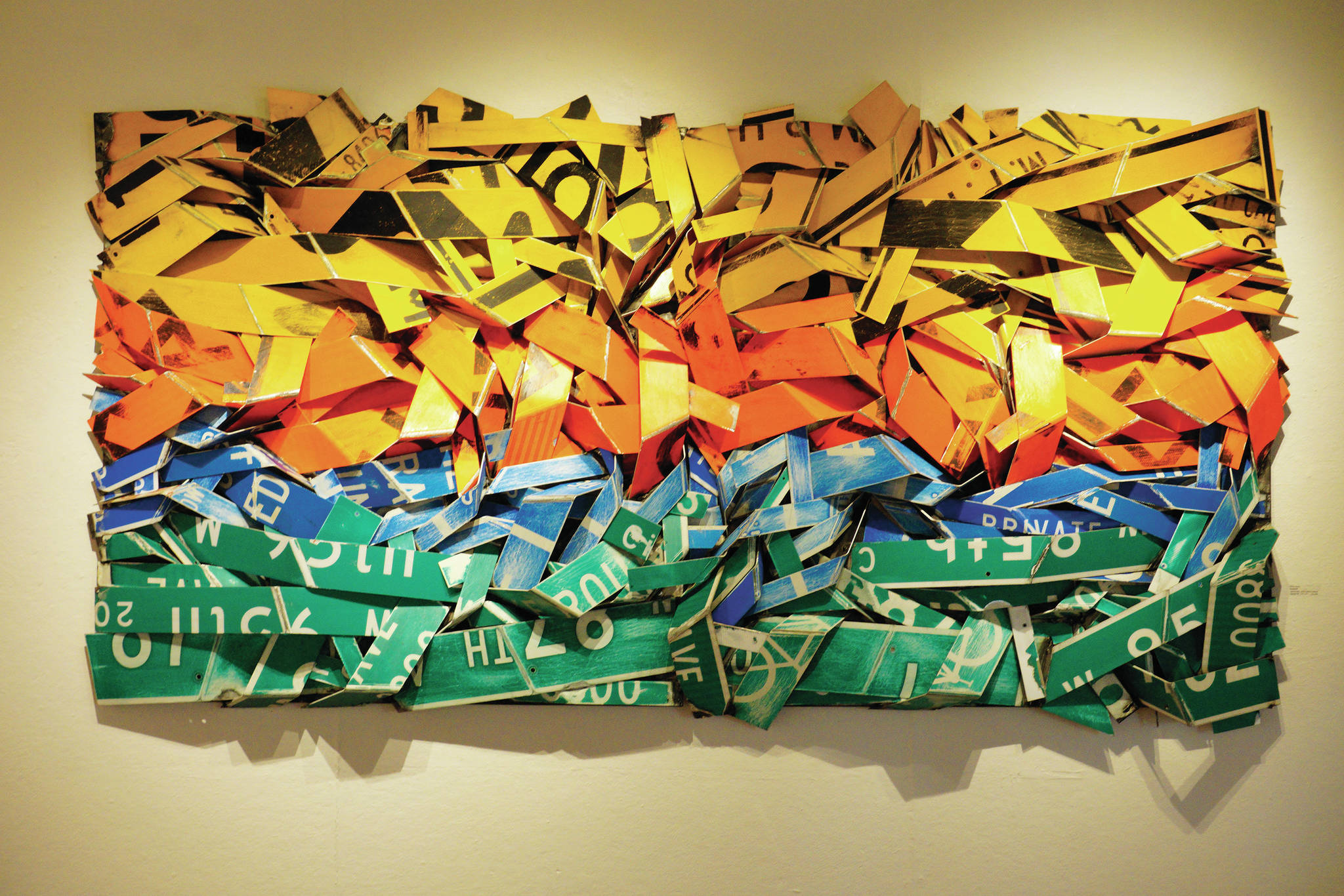
Sheila Wyne’s “Strata #4” is part of her show that opened Friday, Aug. 6, 2021, at Bunnell Street Arts Center. (Photo by Michael Armstrong/Homer News)
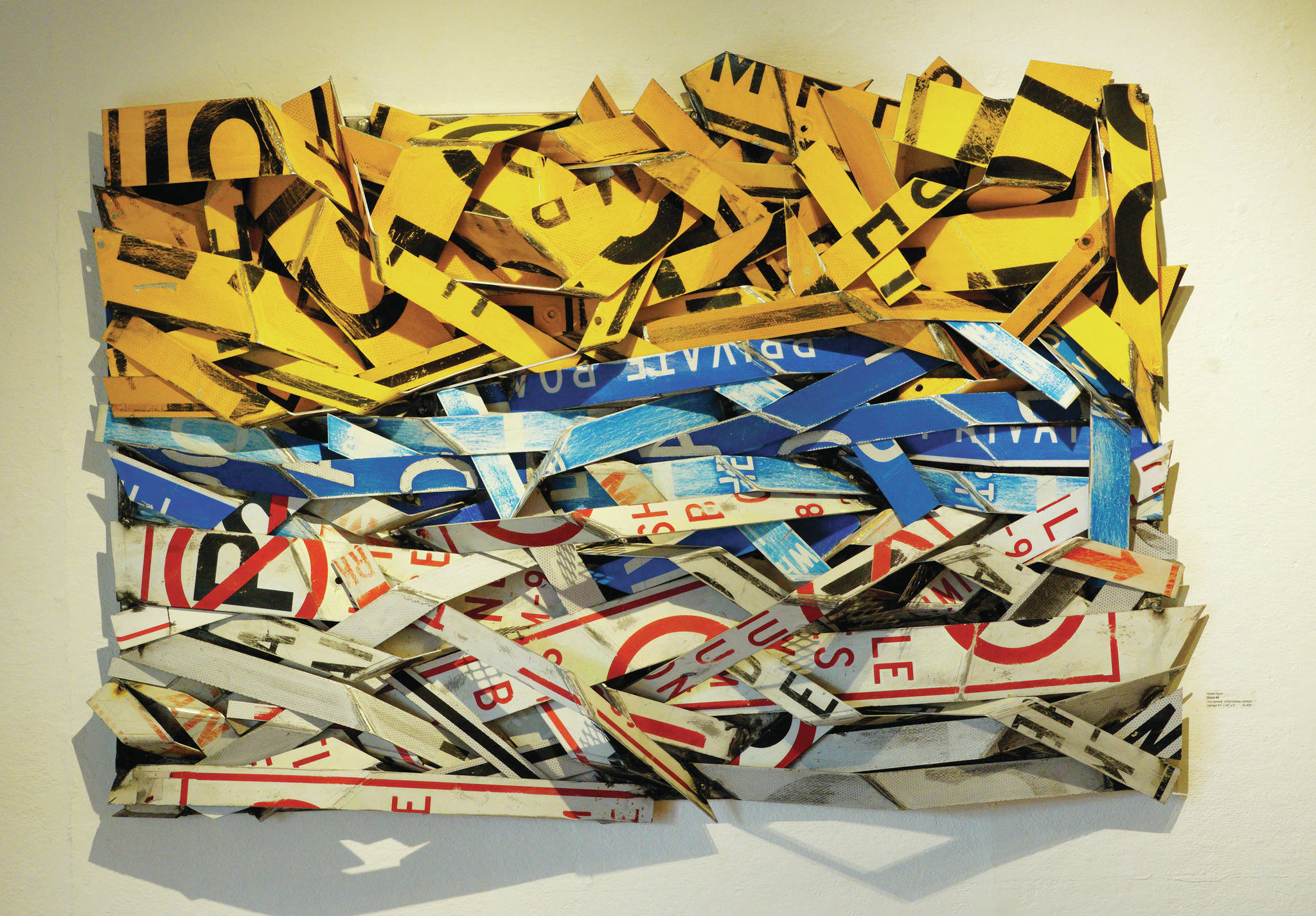
Sheila Wyne’s “Strata #6” is part of her show that opened Friday, Aug. 6, 2021, at Bunnell Street Arts Center. (Photo by Michael Armstrong/Homer News)
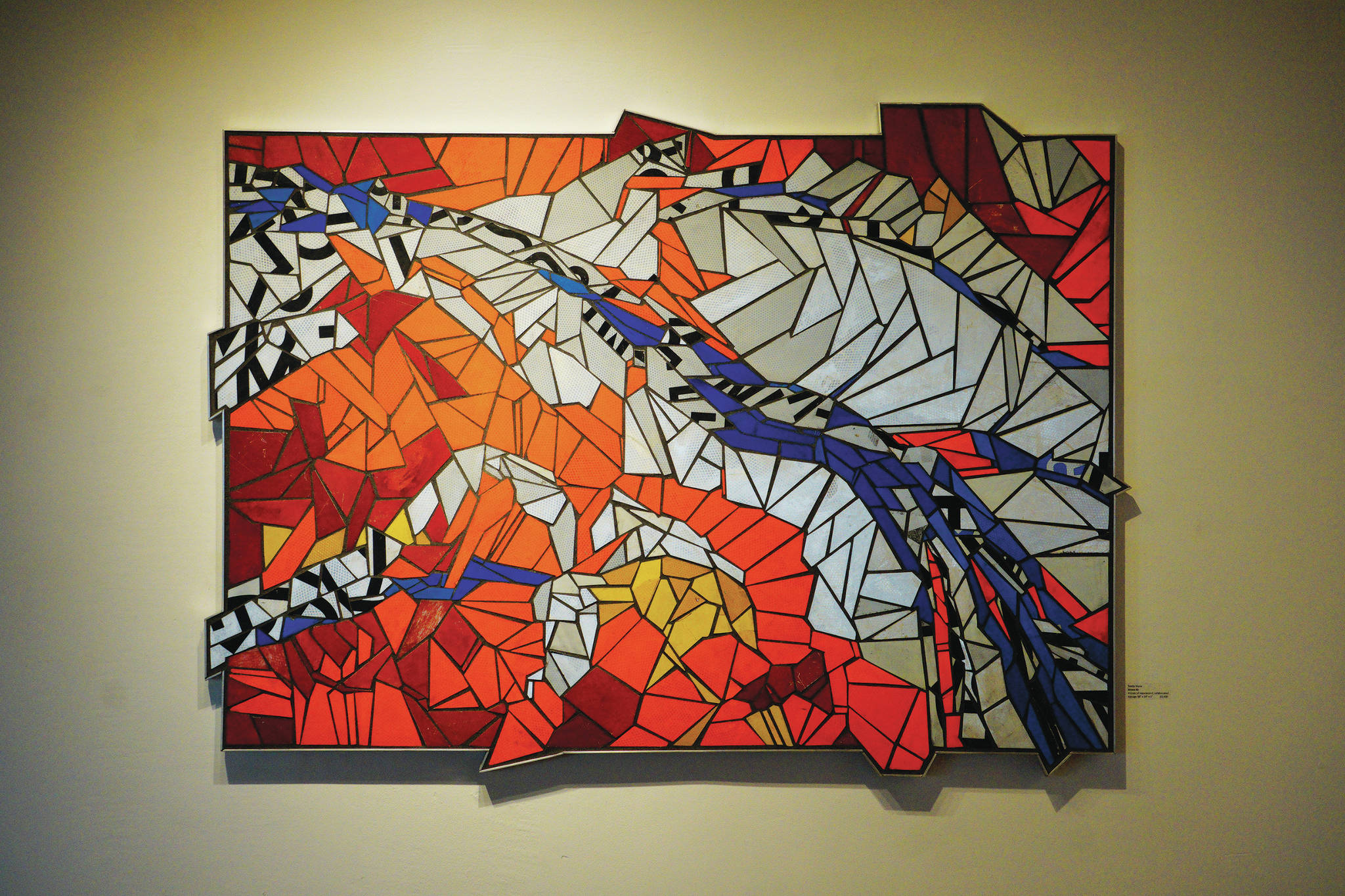
Sheila Wyne’s “Strata #6” is part of her show that opened Friday, Aug. 6, 2021, at Bunnell Street Arts Center. (Photo by Michael Armstrong/Homer News)
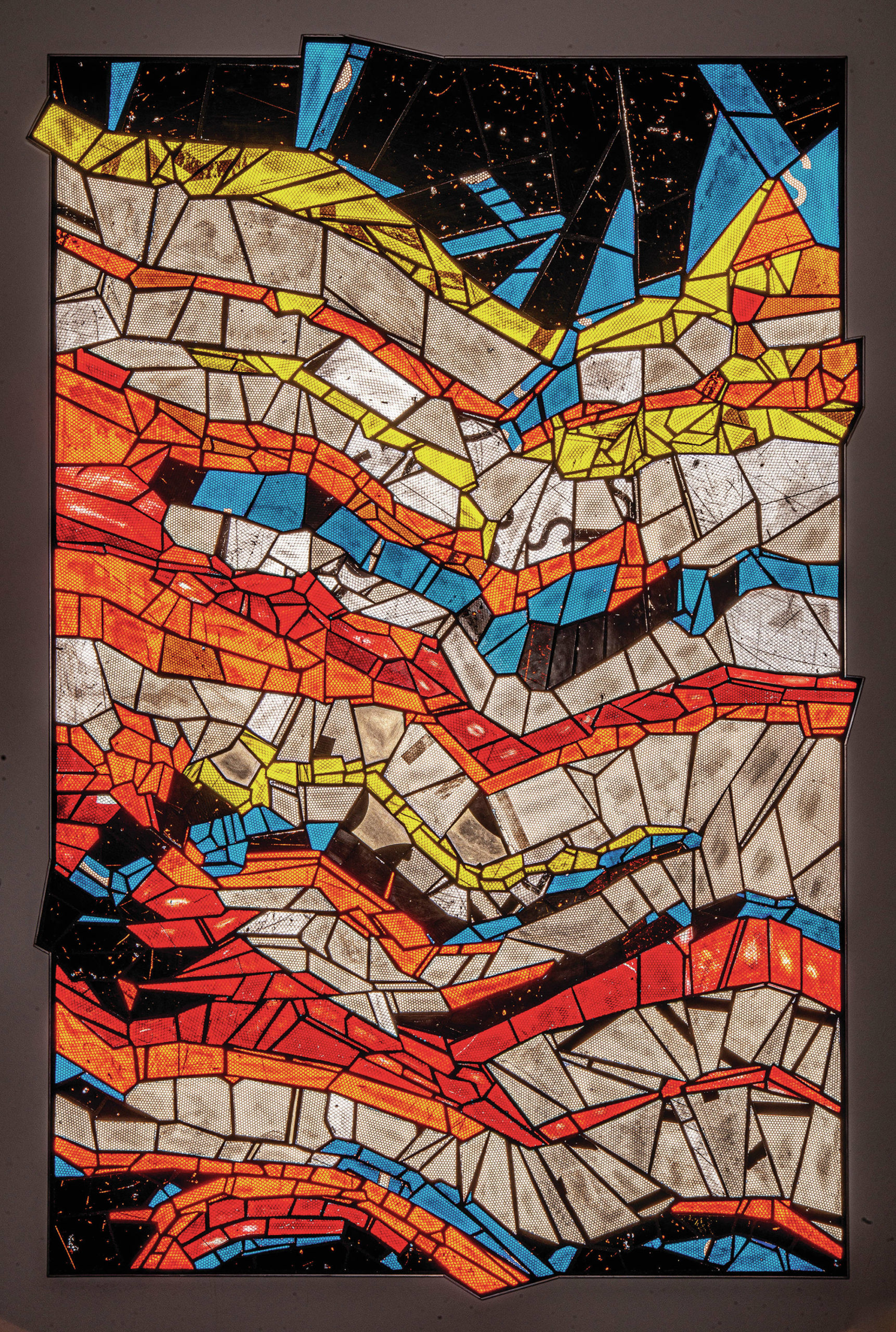
Photo by Michael Francisco Conti Sheila Wyne’s “Strata #2” is shown here in retro reflection, or when the work is seen in the dark with reflected light.
