
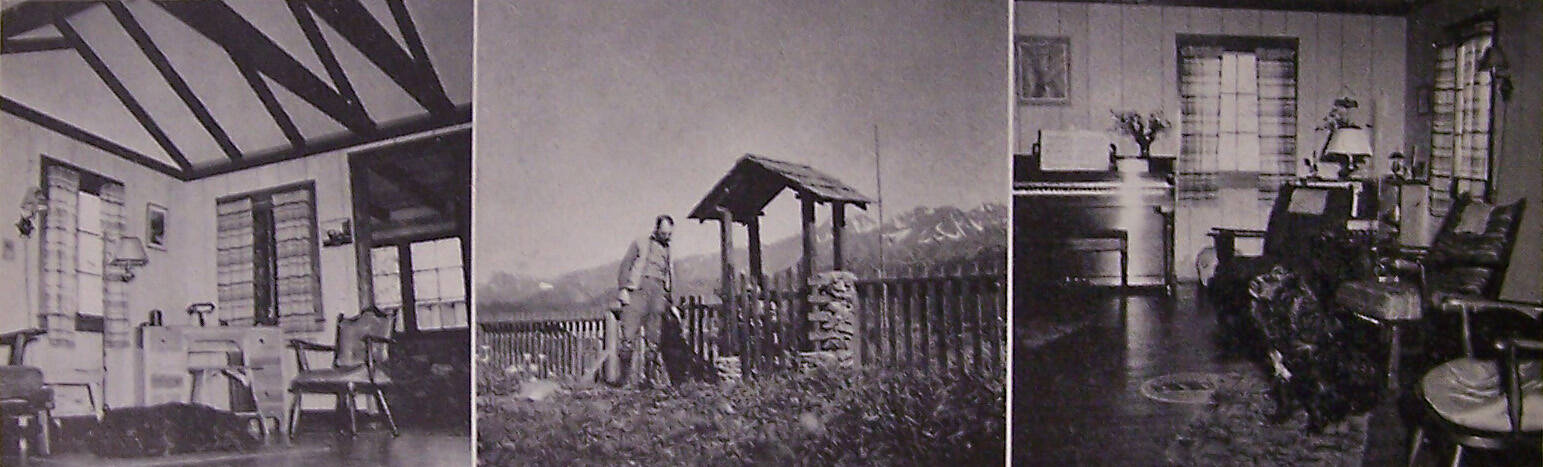
AUTHOR’S NOTE: W.R. Benson, in his mid-50s when he and wife Mable moved from Seward to Homer in 1943, seemed perpetually in motion, involved in nearly every substantive political, social, economic and business action.
William Raymond “W.R.” Benson was certainly not shy about sharing either his beliefs or his ideas, nor was he reluctant to act on them or encourage others to do the same. He’d been the same way as a resident of Seward in the late 1930s and early 1940s — and he would remain that way even after leaving Alaska.
In February 1941, when he was a Seward City Council member, he wrote a letter to the editor of the Seward Gateway, insisting that Seward residents must love and believe in their own home if they ever hoped to convince visitors or prospective newcomers of its virtues.
“If we sell ourselves on our town, we will have faith in it,” he wrote, “and when we have faith, we will go out and do things. We will build ourselves homes. We will spend money to tell the world what a fine place Seward is to live in, and when the world comes to our door, we can tell them what we have here, and we won’t only tell them, we will show them.”
After he and his wife Mable moved to Homer, he continued to express such beliefs. And he had an outlet for his expressions: the weekly, two-sided newssheet called The Homer Homestead, which he published for about six years.
By the mid-1940s, Benson realized that Homer could accomplish much more by creating official organizations — concentrations of power and influence — than any individuals could achieve on their own. So he used his own individual voice, through the Homesteader, to help transform some organizational dreams into realities.
When Benson looked at the cities of Seward and Seldovia, he saw communities with hospitals and resident physicians. In Homer, by contrast, he saw a reliance on itinerant nurses, on visiting doctors and dentists, and on the need for residents to leave town for emergency care. In the Homesteader, he promoted the formation of a local health council, which could assess and address Homer’s health-care needs.
When other large projects arose — docks, harbors, deep-water wells, wastewater disposal — Benson observed that governmental assistance often relied on matching funds from communities hoping to benefit. But Homer was unincorporated and lacked the legal means to officially raise money. Benson advocated for the creation of a public utility district, which could wield the power of taxation.
“Homer being as it is, without a civic government, Chamber of Commerce or other representative body,” he wrote in December 1947, “can expect no favors from outside sources…. Knowing that we need dock facilities, a small boat harbor, electricity, roads and other improvements which only outside aid can give, we should be over anxious to organize to obtain them.”
In a related editorial, he implored Homer residents to “be responsible for any appropriation which the government sees fit to give us…. Let’s get out of the infant stage and stand on our own two feet.”
The creation of the Homer Health Council and the Homer Public Utility District led to the construction and operation of the community’s first hospital, which opened in 1956, and its first resident doctor, four years before Homer became an incorporated city.
In August 1948, Benson announced the formation of the community’s first-ever Chamber of Commerce and a board of directors to guide it. At the board’s first meeting, Benson himself was elected president. In December, Benson, who was also a notary public, notarized the chamber’s articles of incorporation and its by-laws. By the end of the month, the chamber had been officially certified by the Territory of Alaska.
The chamber welcomed visiting entrepreneurs, speculators and politicians, anyone of influence who could help Homer grow and improve the prospects of business. In 1949, the chamber created a promotional pamphlet entitled “Homer: ‘The Shangri-La of Alaska.’” No individuals are credited in the publication, but the personal stamp of W.R. Benson is written all over it.
Meanwhile, Benson continued to opine about various problems he hoped to solve. How heartily such views were received in Homer is unclear because Benson apparently published no dissenting letters to the editor.
He wrote about moral decline: One of the reasons people were fearful in this country, he said, was that too many of them had “forsaken the Almighty, in their mad rush for gold, riotous living and sacrilege.” The United States, he claimed, had been “built on faith (and had) prospered to the extent of that faith. Its people were brave and God-fearing and in the face of seemingly insurmountable obstacles, accomplished the impossible. What a change from today.”
He applauded the notion of educating children in America’s patriotic ideals: “To bring our people back to their senses and teach them to realize the value of their liberties under democratic government, we must start with the schools and colleges,” he wrote. “Instructors, professors and grade school teachers must be challenged as to their Americanism, and radicals and advocates of the several ‘isms’ should be weeded out. The new crop of teachers must be sold on our democracy; else how (can) they instill the love for freedom in the youngsters? If we teach democracy, we will reap democracy. If we sow communism, we will reap communism.”
At least once (in 1947), Benson did acknowledge that some readers disagreed with his views. He held those readers in low esteem, however. The editors of small-town newspapers need thick skin, he wrote, because they’re easy targets. “(This) writer,” he said, “has felt the sting many times from those poor hapless souls who spend their idle hours picking to pieces someone who is trying to do something constructive.”
Time for a Change
On June 2, 1950, the Valley Frontiersman, of Palmer, published a notice that the Homer Homesteader had “suspended publication temporarily,” starting in late May. Benson told the Frontiersman that his paper would be back — this time as a printed newspaper, not just a mimeographed newssheet — but he offered no date for the Homesteader’s reappearance.
And the Homer Homesteader never returned.
By the early 1950s, W.R. Benson was in his early sixties. Although he had not slowed in his advocacy and his machinations, he and Mable had begun casting their eyes elsewhere. In 1951, they began leasing the Inlet Inn and spending winters in the States.
The Anchorage Daily Times, in June 1952, welcomed them home: “Mr. and Mrs. W.R. Benson have returned (to Homer) via auto from Riverside, Calif., where they spent the winter building a new home.” They completed that new home during the winter of 1952-53 but kept returning to run their hotel in Homer during the summers until at least 1955.
W.R.’s widowed mother, Kate Benson, and his older sister Edna, who had been widowed twice, were living together in Riverside at this time. Also in Riverside was his younger sister Ruth, who had been widowed in 1928 and was living with her second husband, a pastor named Harry Branton. When Harry died in 1954, Ruth was widowed for a second time. Neither the mother nor the sisters ever remarried again.
Ted Handy, Ruth’s son whom W.R. and Mable had taken in after the death of Ruth’s first husband, had married Mable Merrell in Anchorage in 1941. He had served in the U.S. Army in the mid-1940s and then become a railroad employee in Anchorage. He and his family had moved to Utah in about 1950.
In July 1952, Ted’s eight-year-old daughter died from extensive burns she received while playing with fire in an old, abandoned house near the Handy home. Ted himself died in 1968, at the age of 47, from what his obituary called “natural causes.”
W.R., meanwhile, wrote occasional letters to the editor of the Riverside Daily Press. He railed against those who believed Alaska should become a state. “The rank and file of Alaskan citizens do not want statehood,” he wrote in January 1955. “The politicians do…. They are looking droolingly at the many state jobs with their luscious salary checks. The big boys who are so strong for statehood have ambitions of being elected Congressmen and Senators.”
The voices of reason in Alaska, he said, “are drowned out by the persistent propaganda paid out of a slush fund appropriated by an ambitious bunch of legislators at the expense of an unwilling electorate. Alaska cannot afford statehood.” Perhaps he believed differently a few years later, after commercial quantities of oil began to flow from the Last Frontier.
It is uncertain when and why W.R. and Mable Benson left California. Perhaps their departure coincided with the death of W.R.’s mother in 1962, but by at least the mid-1960s they had moved from West Coast to East Coast and were living in Hendersonville, North Carolina.
William Raymond Benson died of cardiac failure at the age of 79 in the Mountain Sanitorium and Hospital there in November 1968, after several months of illness. Mable died of cardiac arrest two years later; she was 74.
Back in 1949, several months before he shut down the Homer Homesteader, W.R. Benson celebrated in print his publishing accomplishments and then ended with this thought:
“Our aim in publishing this little newssheet has been to give the town a modicum of news, announcements of things to come and possibly a passing thought, or encouragement. If we have been of any service to the community, we feel our time has been well spent.”
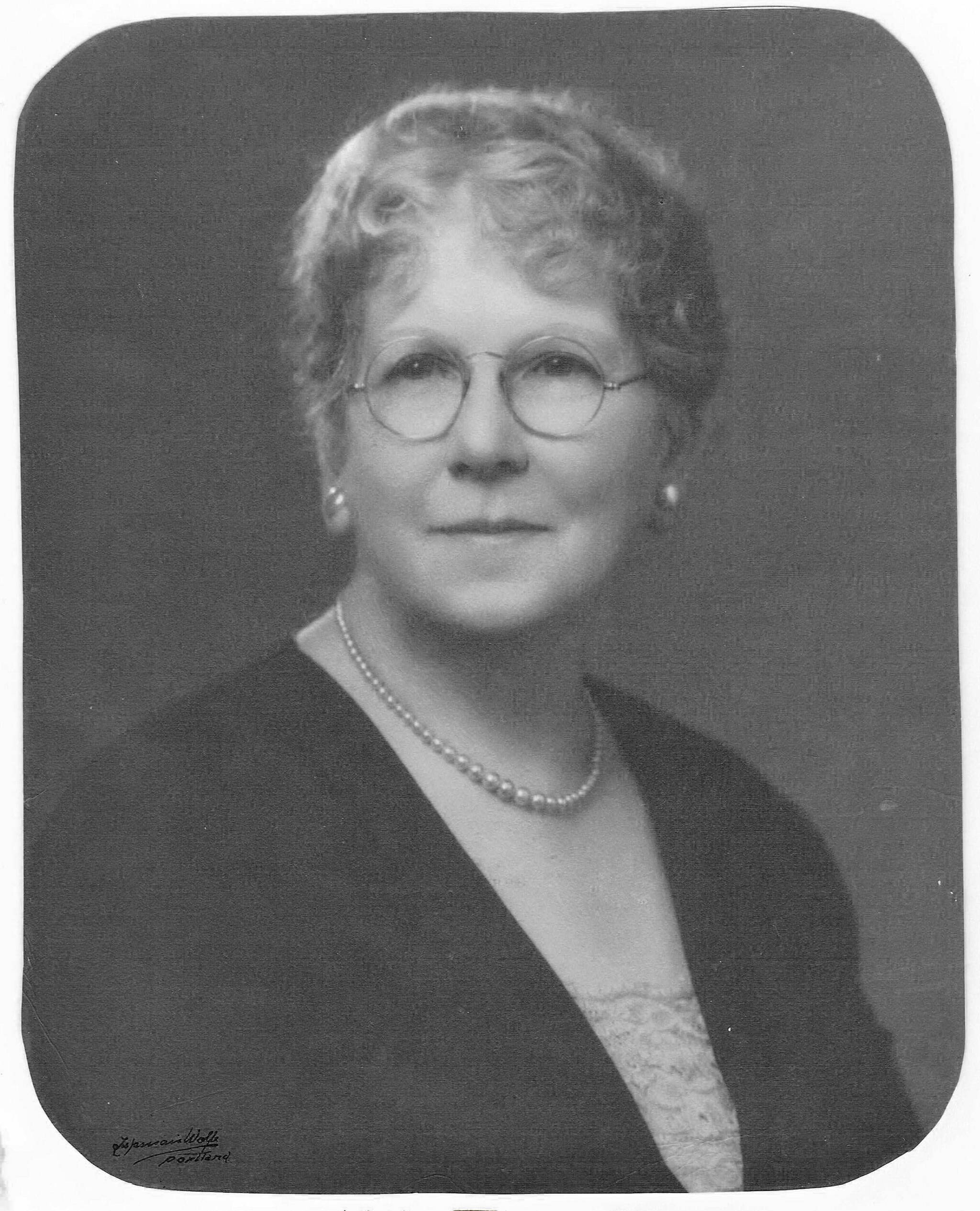
public photo from ancestry.com After being widowed, Kate Temple Benson, the mother of W.R. Benson, moved to southern California, where she was later joined by all three of her children.
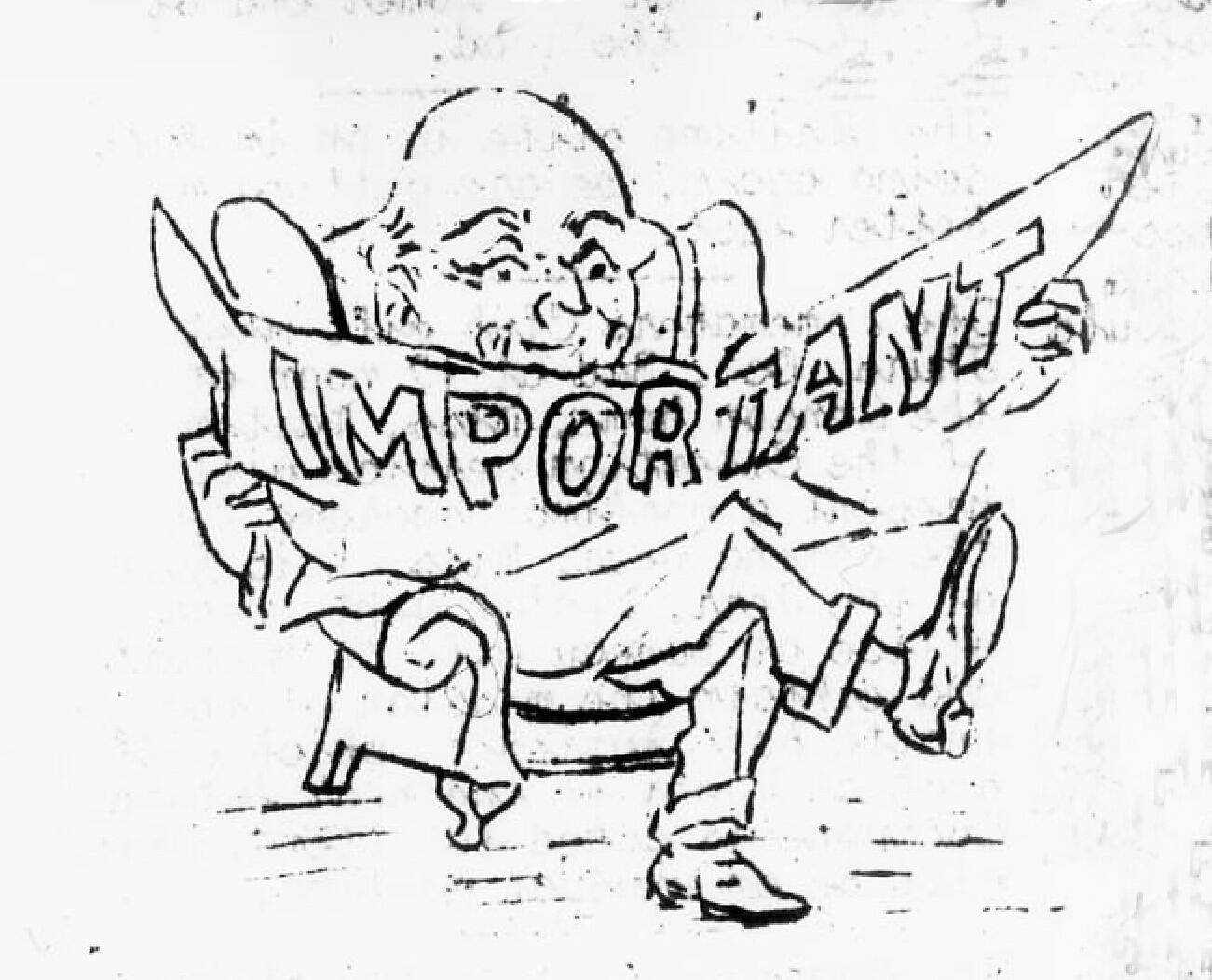
This is another of the illustrations drawn by W.R. Benson for his weekly newssheet called The Homer Homesteader. This one appeared in September 1946.
