
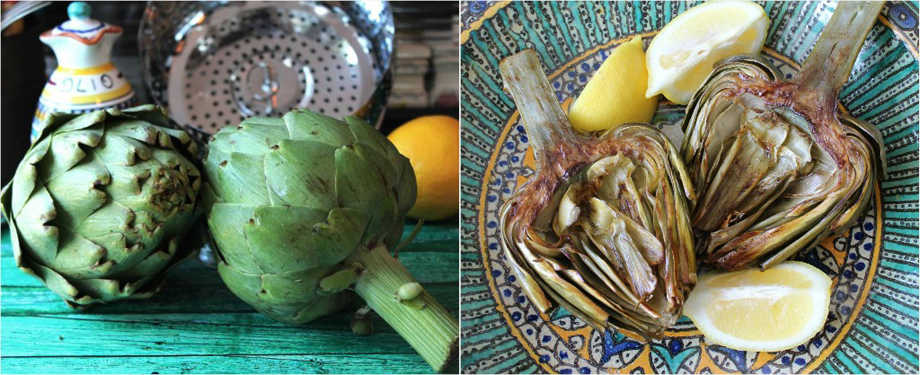
For the next several weeks, artichokes will be at their peak. From March to May, you’ll find the best artichokes at the market – and with very good prices. Artichokes are full of nutrition and flavor, and as if that wasn’t enough, they are also fun to eat. Even kids have been known to like this intimidating looking member of the thistle family, and if you teach yours how to master the art of eating artichokes early on, they’ll soon revel in being able to do something that many grownups can’t. Among the numerous ways to present an artichoke, one that has been grilled is among the most appealing. Still, in order to grill an artichoke, it must first be boiled or steamed, a process that can take more than 30 minutes. The cook time, however, may be cut by a third if you use your microwave oven for this task. If you haven’t yet cooked an artichoke in this fashion, now would be a good time to give it a try. Beside a detailed explanation on how to prepare and grill an artichoke, you’ll also find tips here on how to purchase and store artichokes. And, for the newbie, how to eat them, too.
How to select an artichoke
• Artichoke leaves will “squeak” when rubbed with your finger, an indication that it is tender. Artichokes that are past their prime will sound hollow and dry.
• Buy artichokes that feel heavy and firm. Avoid artichokes that feel light for their size, which means they have begun to dehydrate. Artichokes with brown markings are not signs of spoilage. These “kiss of the frost” streaks can signify a “nutty” flavor.
How to handle artichokes
• Store artichokes in a plastic bag in the coldest part of the refrigerator for up to 1 week.
• Before using, submerge artichokes into a bowl of cold water and plunge them up and down to remove any debris. Drain upside down on paper toweling and pat try.
• Using stainless steel utensils cut artichoke stem to desired length and upper third of top with a knife; trim off thorny ends of leaves with a scissor and rub edges with a cut lemon to prevent discoloration. Pull loose leaves from around bottom of artichoke.
• If artichokes are to be stuffed, remove fuzzy center (choke) with the point of a spoon, taking care not to scrape away the tender heart at its core.
Cook artichokes by steaming or microwaving
• To steam: Fill a large pot with three inches of water. Add a little salt and a few slices of lemon to the water. Place trimmed artichokes, stem side up, in a steamer basket, then place basket into the pot. Bring water to a boil, then reduce heat to medium-low. Cover pot and steam artichokes about 35 to 40 minutes. Artichokes are cooked when one of the leaves can easily be pulled off. Drain artichokes, upside down, on a paper towel to remove excess water.
• To microwave: Place 1 cup of water and a few lemon slices in a 3-quart microwave-safe dish. Place artichokes in a circular fashion, stem side up, into the dish. Cover with plastic wrap, turning back a corner slightly to vent. Two medium artichokes will cook in about 10 minutes, four artichokes in approximately 15 to 20 minutes. Test for doneness and drain as directed in steaming directions.
How to eat an artichoke
• The base of the leaves and the base of the choke (the heart), are all edible parts of an artichoke. Although it is generally discarded, even the artichoke stem may be consumed.
• Pull out a leaf and dip base in melted butter or other dipping sauces. Place leaf between your teeth. Bite onto the leaf gently and pull it away, scraping the fleshy artichoke “meat” with your teeth. Continue with the rest of the leaves, until you come to the artichoke’s “heart.”
• The artichoke heart is eaten with a fork and knife.
