
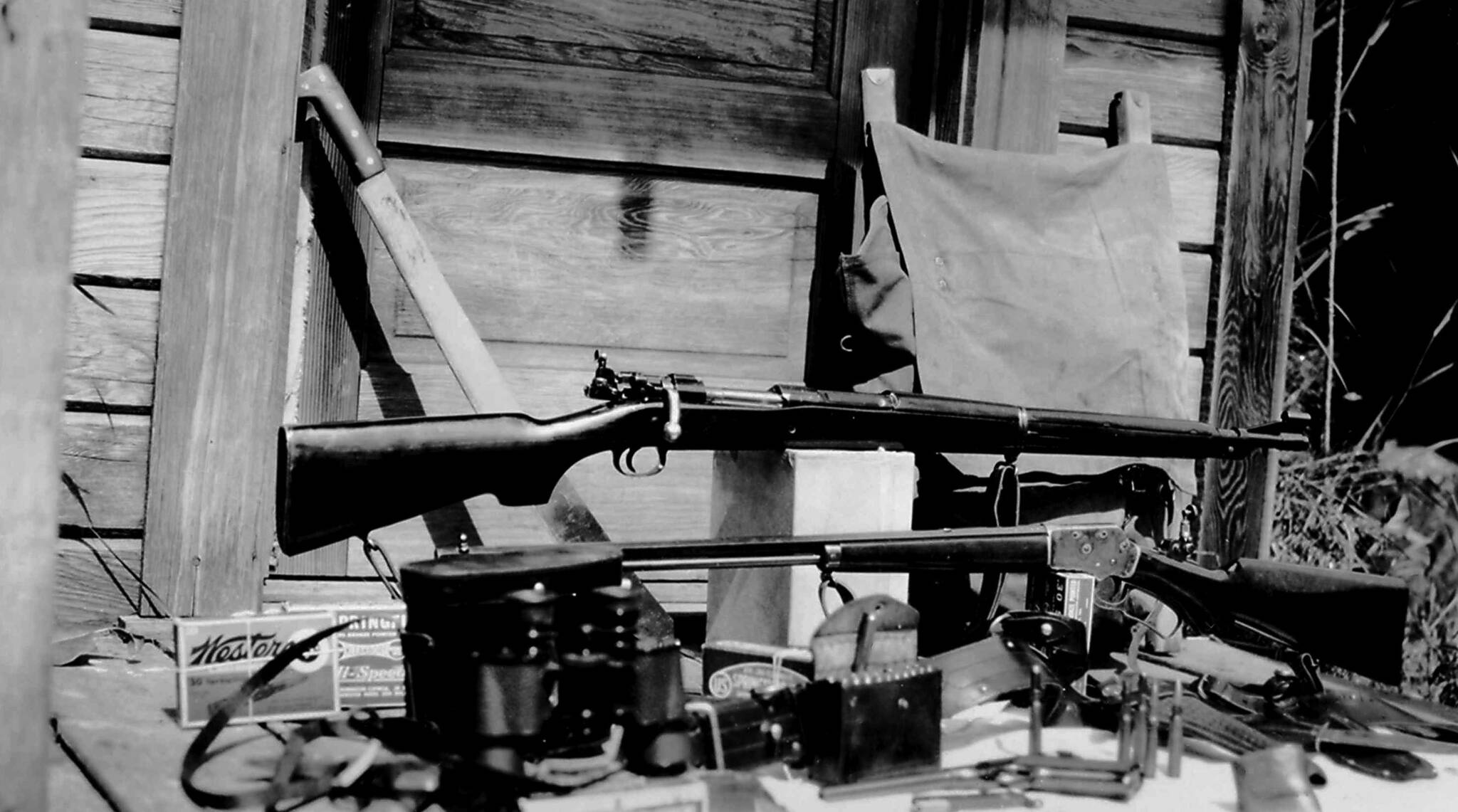
AUTHOR’S NOTE: On the Kenai Peninsula, Warren Melville Nutter would become known primarily as a premiere bounty trapper of coyotes, a hard-working longshoreman, and a reliable carrier of the U.S. mail. Before he reached Alaska, however, his life would be comprised largely of his efforts in education and the military.
Even more than a century ago, West Virginia was rife with Nutters. In fact, in Greenbrier County, not far from Warren Melville Nutter’s 1887 birthplace in Nicholas County, was a small community called Nutterville.
By the time he was 15, Warren Nutter had three younger siblings — two sisters (Olive and Elizabeth) and a brother (Lundy). His parents, Noah and Mary Nutter, made their home on a farm — fertile ground for Warren’s fertile mind. By his mid-20s, however, Warren had left West Virginia for good.
For the first 40 years of his life, most of Nutter’s experiences, both in West Virginia and beyond, fit neatly into two categories: “Education” and “Military.” Nutter attended school, and he taught school. He also served three distinctly different terms in the service of his country.
From the end of his time in public school until he ventured north, his time in the classroom and his time in the military were interwoven. These two strands provided him with a wildly varied ride that carried him to numerous states, once to Europe and once to Central America.
Educator and Soldier
By the spring of 1910, 22-year-old Warren had received teacher training at the Summersville (West Virginia) Normal School and was employed in what was probably his fourth year at a public school in Nicholas County. Two years later, he was completing a bachelor’s degree at Valparaiso University in Indiana. In the 1912 university’s yearbook, Nutter was said to be hoping to enter “active duty.”
Like thousands of men across the country, he completed a draft-registration card during World War I. He signed his card in Chicago in June 1917, but sloppy penmanship rendered many details on the card difficult to read.
It is clear, however, that he was employed as a teacher and assistant principal at Monroe County Central High School in Madisonville, Tennessee, and he had already spent nine months in military service back in Indiana. He had been a private, possibly in an Indiana militia.
Nutter also appears to have been “rejected” in 1916 by the U.S. Army due to some sort of “physical inability.” Nevertheless, he persevered. By November 1917, according to records from the U.S. Veterans Bureau, he had enlisted in the U.S. Army and become a member of the 1st Light Infantry. By early January 1918 he was aboard the S.S. Aurania with a large contingent of other soldiers bound for the war in Europe.
He served in battle in France and, according to some sources, may have suffered what was then referred to as shellshock. In late July 1919, Nutter was on his way home. The war was over, and he was asea on the U.S.S. Santa Clara, bound for Brooklyn, New York. According to the U.S. Army Transport Service passenger list, he was a first lieutenant and part of the Fifth Machine Gun Battalion.
In October, he was honorably discharged. John Barton Corson, who knew Nutter in Alaska, wrote in his autobiography, Alaska to the Rhine, that Nutter received a disability pension for wounds acquired during his service.
By January 1920, Nutter was back in a classroom, living in Fort Worth, Texas, and teaching in a city school.
It also may be that this is the time during which Warren Nutter owned and operated at trucking business, possibly also in Texas. Before turning to military service for a third time, however, he gave the enterprise to his younger brother. According to family sources, Lundy later sold the business and used the profits to found a highly successful lending institution in Texas.
When the 1921-22 school year began at Knoxville (Tennessee) High School, the Knoxville Sentinel listed “Prof. Warren Nutter, from Morristown,” a small community in the Appalachia part of the state, as one of the new faculty members and head of the science department.
Nutter taught in Knoxville for about two years and then pursued a professorial job at Columbia University in New York. In November 1925, he enlisted in the U.S. Marine Corps. Nutter was shipped off for training to the Marine Corps Recruit Depot on Parris Island, South Carolina, where he was prepared for a special task.
Between 1927 and 1933, spurred by the instability of Central American governments and the perceived threats of European intervention, U.S. Marines were dispatched to Nicaragua to “stabilize” the country and “protect U.S. business interests in the Central America region,” according to a USMC paper prepared by Lt. Col. Michael D. Russ.
The Marines, including Nutter, trained with Guardia Nacional to counter insurgents and delay the advent of a Nicaraguan civil war. By April 1928, Nutter was a sergeant with the 59th Company, stationed at Puerto Cabezas. A year later, he was headquartered in Managua. He spent at least two months — and possibly much more — in a field hospital with malaria.
It appears that Nutter’s tenure in the Marine Corps ended at some point after November 1929.
On June 9, 1930, the Alaska Daily Empire (Juneau) reported that Warren Melville Nutter — listed incorrectly as William Nutter — was a passenger on the S.S. Admiral Evans, leaving Juneau and bound for “the westward.” Nutter’s destination was listed as Cordova, but it seems likely that he sailed on to Seward later that summer.
At some point during the early 1930s, Nutter may have taught public school in Seward, but information about that teaching stint came from a third-hand source and thus far remains unconfirmed. Soon, however, his activities would take him far from any classroom, and he would never return.
According to his daughter-in-law, Thea Nutter, and to Frank Gwartney, the youngest son of Nutter’s second ex-wife, Warren Nutter came to Alaska to recover his health — and perhaps his peace of mind. On the Kenai, he appears to have found the solace he sought.
He would remain a resident of rural Alaska until the end of his life.
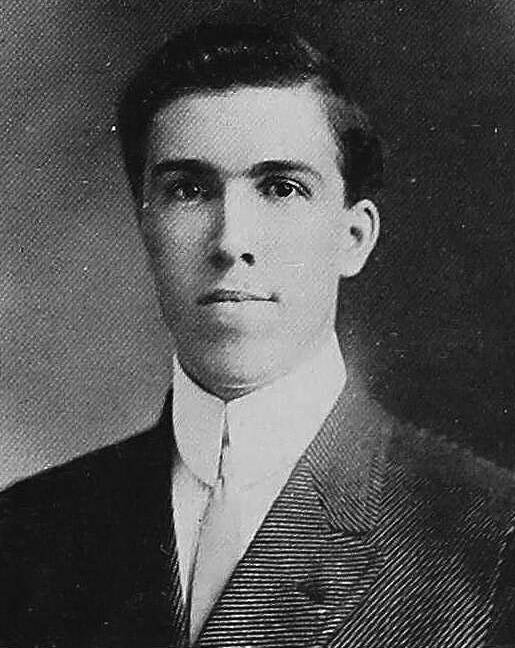
Public photo from ancestry.com Warren Melville Nutter was about 25 years old and graduating student at Valparaiso University (Indiana) when this yearbook photograph was taken in 1912.
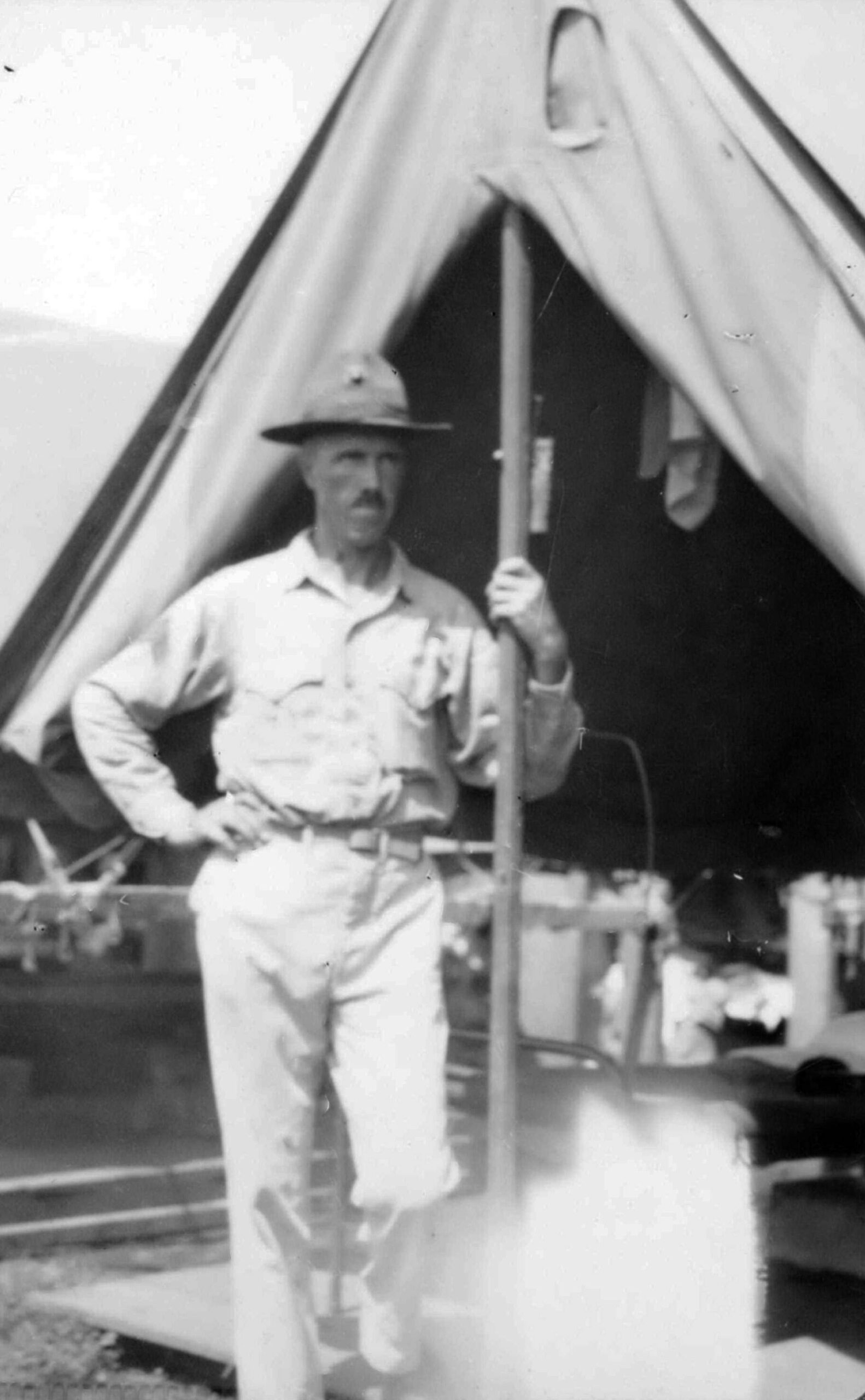
Photo courtesy of the Nutter Family Collection According to a caption on the back of this photograph, this is Warren Melville Nutter as a U.S. Marine in Campo de Marte (Havanna, Cuba) in the late 1920s. Nutter served with the Marines primarily in Nicaragua.
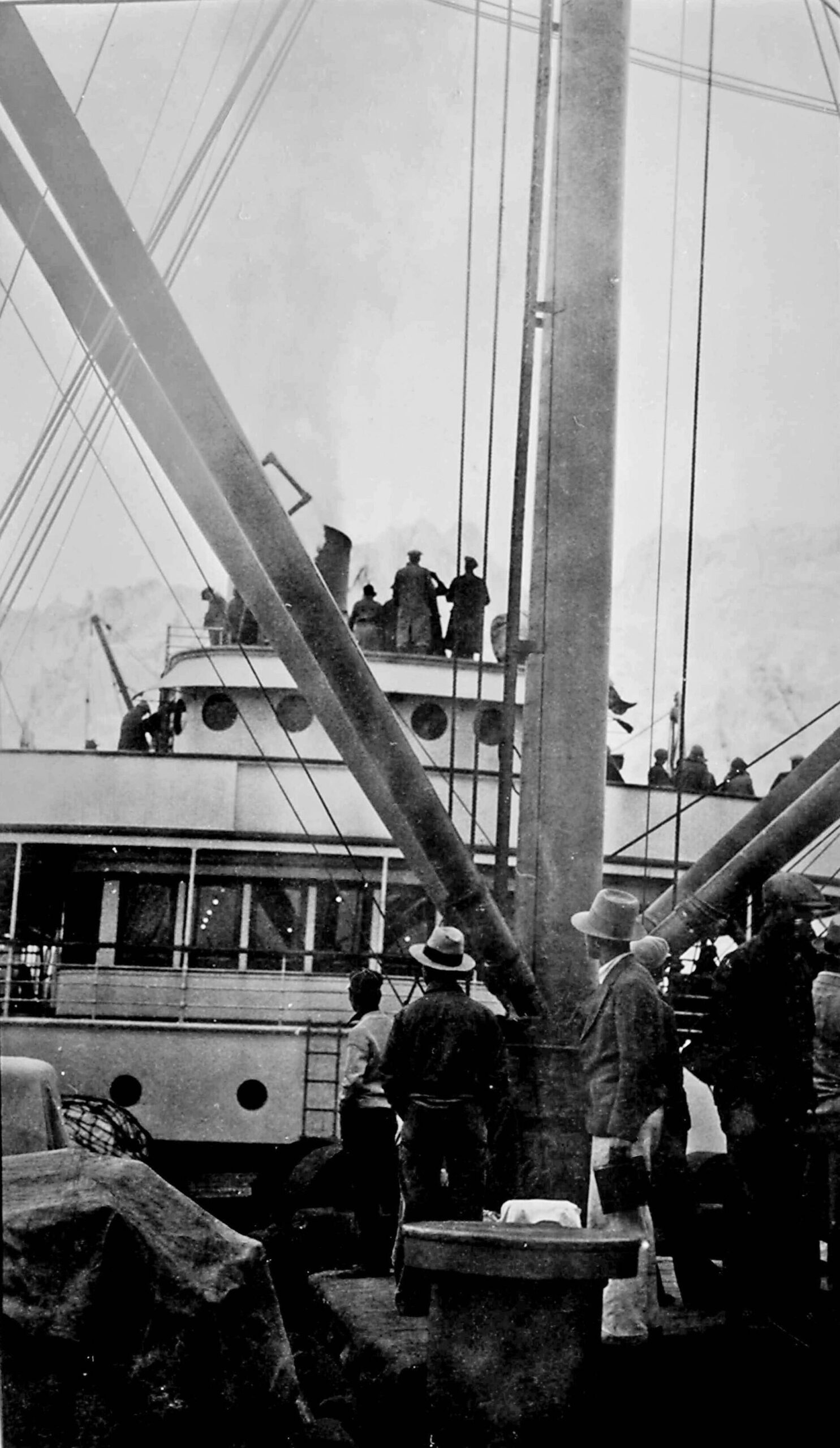
Photo courtesy of the Nutter Family Collection Warren Melville Nutter took this photo aboard the S.S. Admiral Evans, the ship on which he first came to Alaska, in June 30.
