
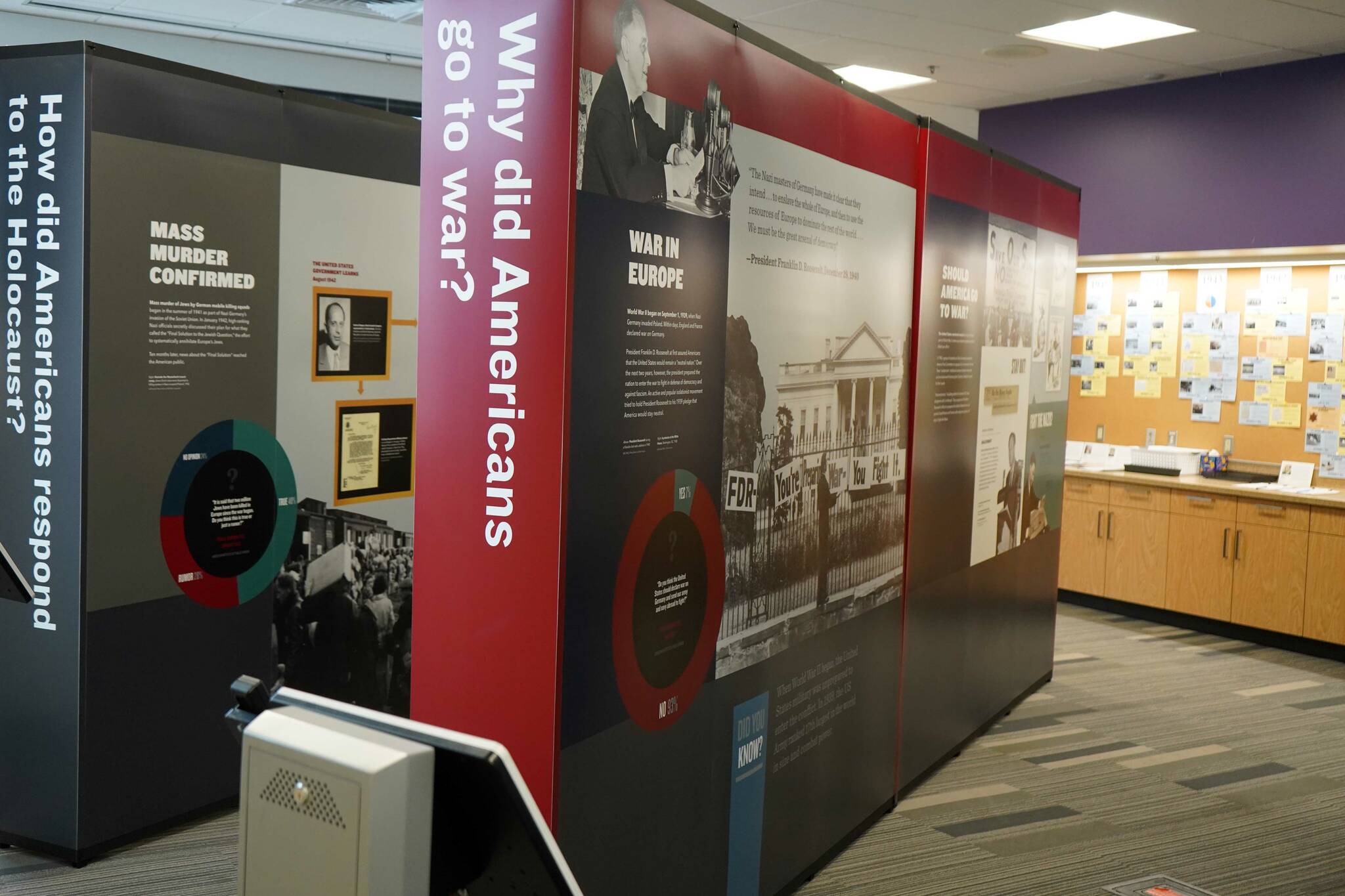
The “Americans and the Holocaust” traveling exhibition is seen at the Seward Community Library and Museum in Seward, Alaska, on Thursday, Sept. 12, 2024. (Jake Dye/Peninsula Clarion)

The “Americans and the Holocaust” traveling exhibition is seen at the Seward Community Library and Museum in Seward, Alaska, on Thursday, Sept. 12, 2024. (Jake Dye/Peninsula Clarion)

Exhibit examining American perception of Holocaust visits Seward

“Americans and the Holocaust” sheds light on how, when and what Americans learned of the Holocaust during the 1930s and 1940s

At the Seward Community Library and Museum this month, a traveling exhibit titled “Americans and the Holocaust” sheds light on how, when and what Americans learned of the Holocaust during the 1930s and 1940s. Seward’s is the first of 50 libraries in the nation to receive the exhibit over the next two years.

Library Director Sue Drover said Thursday, Sept. 12, that the library is hosting an array of events and field trips to share the learning experience with as many in the local community and Alaska as possible.

The exhibit, she said, came to Seward on a grant from the American Library Association. It’s a partnership between the association and the U.S. Holocaust Memorial Museum.

The purpose, she said, is to explore misinformation and the flow of information to Americans at the time of the Holocaust, specifically in the ways those colored American opinions and actions during that period.

An optional survey at the end of the exhibit asks attendees if they had any preconceived notions going in, and if those had changed. Drover said the responses have been largely centered on contemporary opinion polling numbers presented throughout the exhibit, citing data from the American Institute of Public Opinion.

A pair of polls in November 1938 show that 94% of Americans “disapprove of the Nazi treatment of Jews in Germany,” but only 21% favored allowing more Jewish refugees to immigrate to the United States. Another, in January 1943, shows that only 48% of respondents believed that a reported death toll of 2 million in the Holocaust was true.

“There was a disconnect,” Drover said. “Between getting the information, deciphering what it really meant, and then taking action and understanding what the action would create or cause.”

The exhibit shows that especially because of post-World War I isolationism, many Americans recognized that something awful was happening, but didn’t want to be the ones to help, Drover said.

Throughout the run of the exhibit in Seward, which began in August, the library has hosted programs to explore beyond the confines of the exhibit.

Rebecca Erbelding, a historian from the U.S. Holocaust Memorial Museum, gave a presentation on the Alaska Plan — which would have brought European Jewish refugees to Alaska but never passed. Another program explored the experiences of athletes in the 1936 Berlin Olympics and the parallels of systemic racism between Nazi Germany and the Jim Crow South. On Wednesday, the library hosted a look at what was happening in Seward and Alaska during the period, looking through contemporary newspaper clippings and photographs.

Because of Alaska’s size, Drover said they recorded a virtual field trip video to share, alongside other teaching resources, with school districts across the state. That video is still being edited, but Drover said they soon will be sharing the experience more widely.

The exhibit has already seen and lined up visiting school field trips from around the Kenai Peninsula Borough and beyond. Drover said that, because of the cruise ships visiting Seward, they’ve had people from all over visit the library and take in the exhibit. The visitor log on Friday listed people from New York, Texas, Wyoming, Missouri and England.

“Americans and the Holocaust” can be viewed at the Seward Community Library and Museum through Oct. 8. More information about the exhibit or other programming can be found at “Seward Community Library & Museum” on Facebook.

Reach reporter Jake Dye at jacob.dye@peninsulaclarion.com.
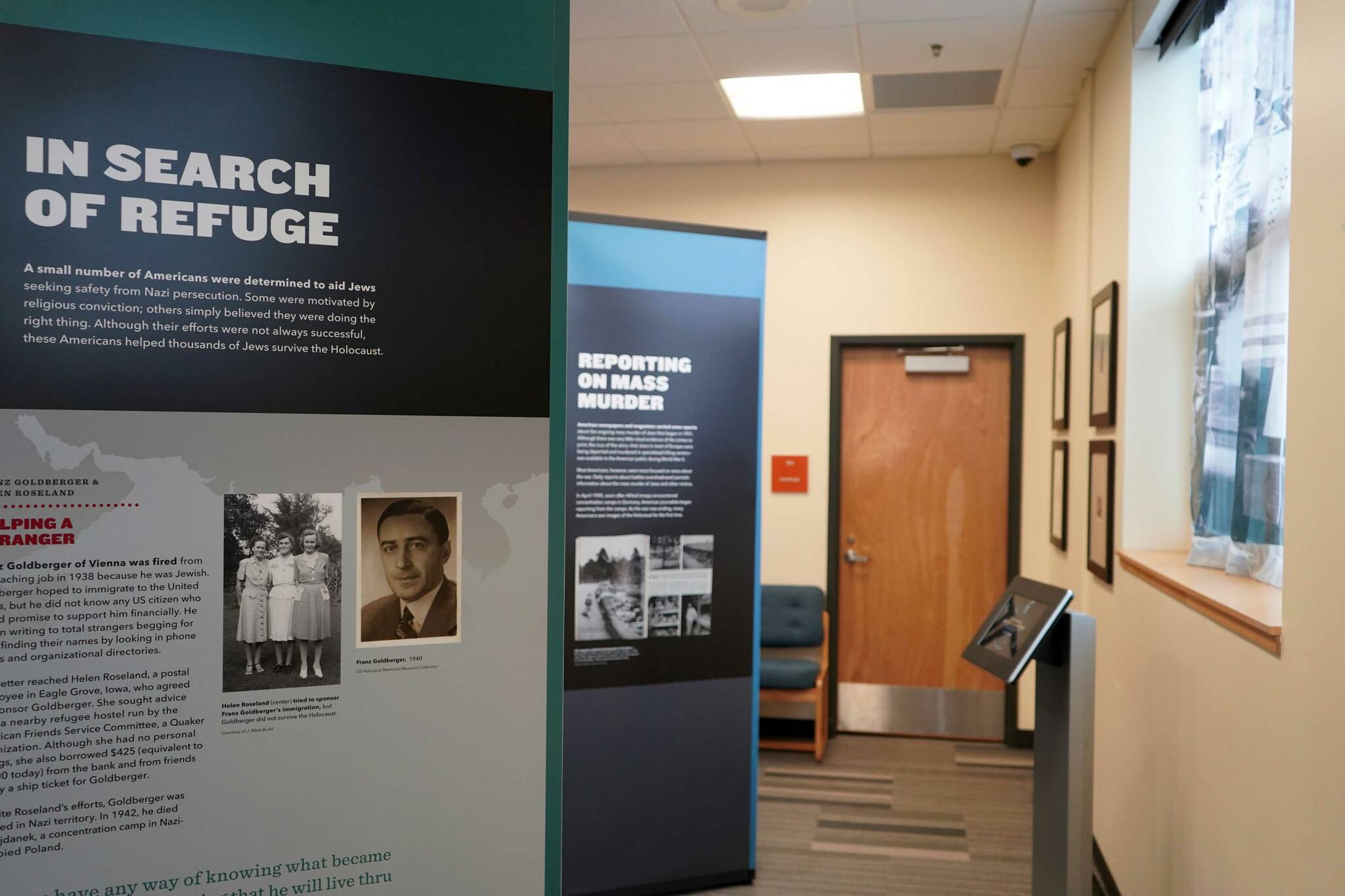
The “Americans and the Holocaust” traveling exhibition is seen at the Seward Community Library and Museum in Seward, Alaska, on Thursday, Sept. 12, 2024. (Jake Dye/Peninsula Clarion)
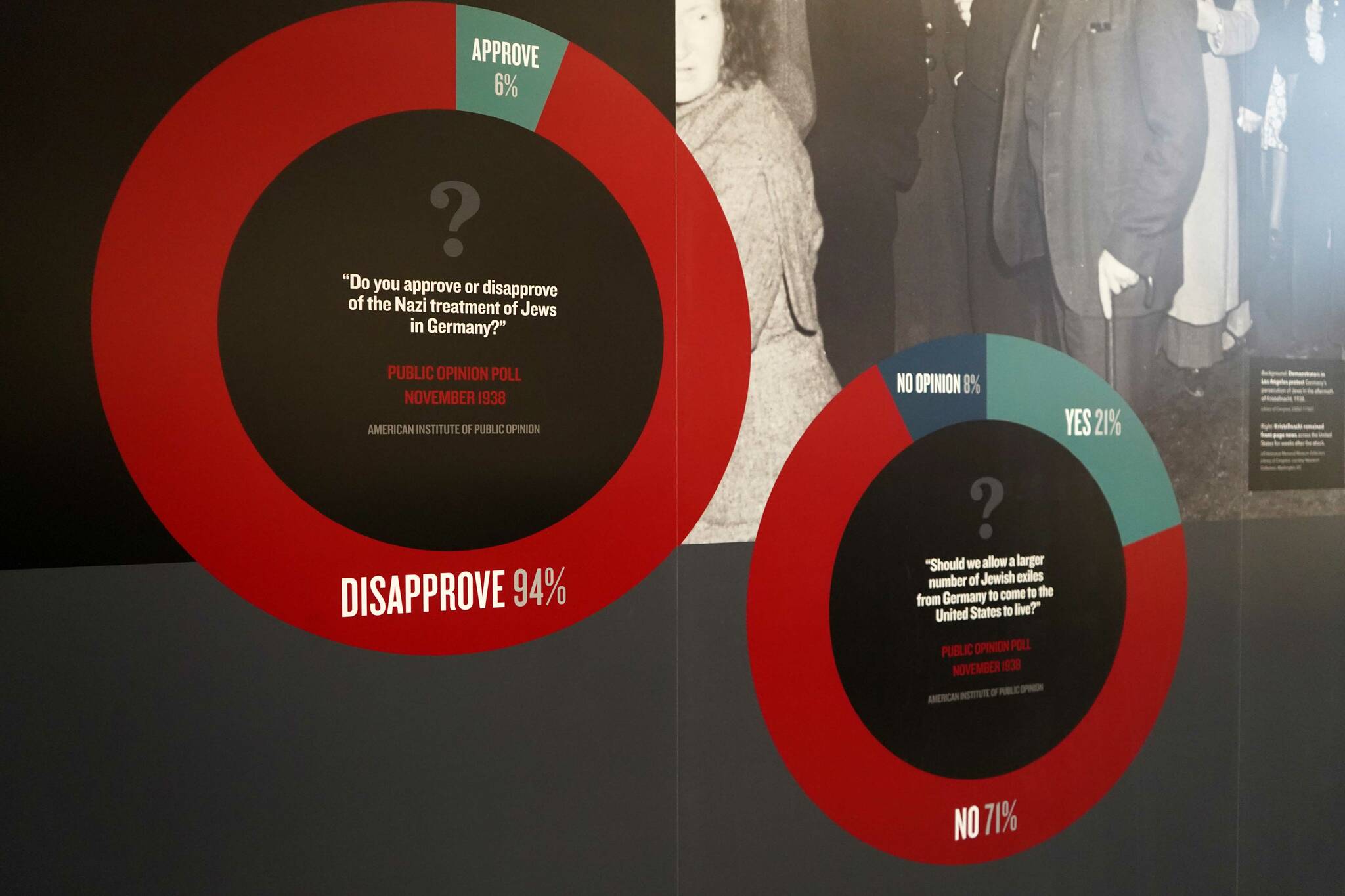
The “Americans and the Holocaust” traveling exhibition is seen at the Seward Community Library and Museum in Seward, Alaska, on Thursday, Sept. 12, 2024. (Jake Dye/Peninsula Clarion)

The “Americans and the Holocaust” traveling exhibition is seen at the Seward Community Library and Museum in Seward, Alaska, on Thursday, Sept. 12, 2024. (Jake Dye/Peninsula Clarion)
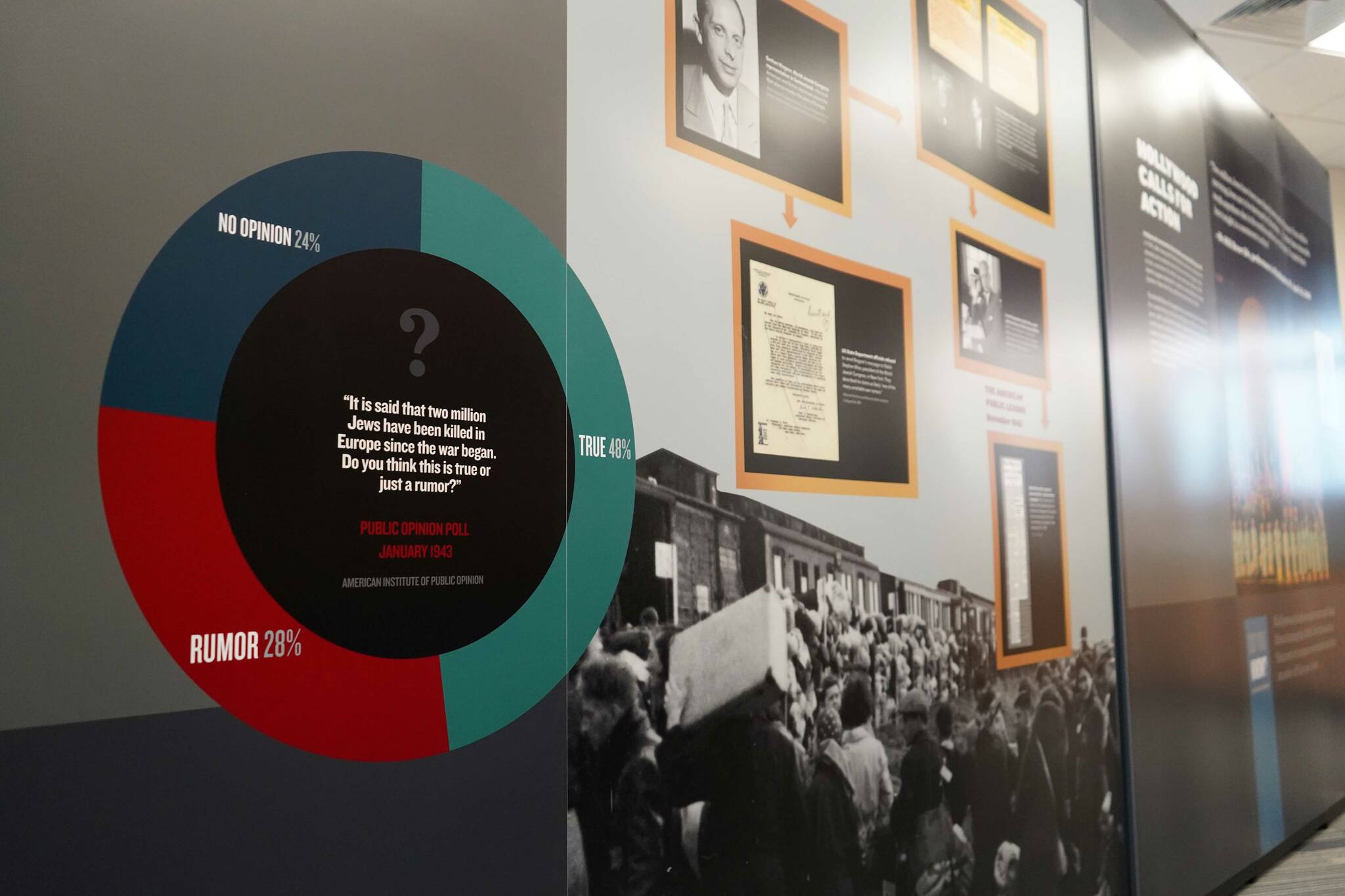
The “Americans and the Holocaust” traveling exhibition is seen at the Seward Community Library and Museum in Seward, Alaska, on Thursday, Sept. 12, 2024. (Jake Dye/Peninsula Clarion)

A display of propaganda is seen in the “Americans and the Holocaust” traveling exhibition at the Seward Community Library and Museum in Seward, Alaska, on Thursday, Sept. 12, 2024. (Jake Dye/Peninsula Clarion)

A display of propaganda is seen in the “Americans and the Holocaust” traveling exhibition at the Seward Community Library and Museum in Seward, Alaska, on Thursday, Sept. 12, 2024. (Jake Dye/Peninsula Clarion)

The “Americans and the Holocaust” traveling exhibition is seen at the Seward Community Library and Museum in Seward, Alaska, on Thursday, Sept. 12, 2024. (Jake Dye/Peninsula Clarion)

The “Americans and the Holocaust” traveling exhibition is seen at the Seward Community Library and Museum in Seward, Alaska, on Thursday, Sept. 12, 2024. (Jake Dye/Peninsula Clarion)

More in Life

Historic Elwell Lodge Guest Cabin is seen at its new spot near the Kenai National Wildlife Refuge’s Visitor Center. (USWS)
Around the peninsula

Local events and happenings coming soon.

Nián gāo is a traditional Lunar New Year treat enjoyed in China for over two thousand years. Photo by Tressa Dale/Peninsula Clarion
A Lunar New Year’s treat

This sweet, steamed rice cake is chewy, gooey and full of positivity.

This excerpt from a U.S. Geological Survey map shows the approximate location of Snug Harbor on lower Kenai Lake. It was in this area that William Weaver nearly drowned in 1910.
Ben Swesey: More to the story — Part 2

AUTHOR’S NOTE: Michigan’s hard-luck Swesey clan sprang into existence because of the… Continue reading

File
Minister’s Message: Rhythms and routines

Your habits are already forming you.

This dish is creamy, rich and comforting, and gets dinner time done fast. Photo by Tressa Dale/Peninsula Clarion
Full of mother’s love

This one-pot dish is creamy, rich and comforting, and can be ready in 30 minutes.

This screenshot from David Paulides’s “Missing 411” YouTube podcast shows the host beginning his talk about the disappearance of Ben Swesey and William Weaver.
Ben Swesey: More to the story — Part 1

More than a hundred years after Ben Swesey and Bill Weaver steered… Continue reading

Photo by Clark Fair
This 2025 image of the former grounds of the agricultural experiment station in Kenai contains no buildings left over from the Kenai Station days. The oldest building now, completed in the late 1930s, is the tallest structure in this photograph.
The experiment: Kenai becomes an agricultural test site — Part 8

Over the past 50 years or more, the City of Kenai has… Continue reading

File
Minister’s Message: So your life story can be better

Last month the Christmas story was displayed in nativity scenes, read about… Continue reading

These gyros make a super delicious and satisfying tofu dish. Photo by Tressa Dale/Peninsula Clarion
A new addition to the menu

Tofu gyros with homemade lentil wraps are so surprisingly satisfying and add extra fiber and protein to a meal.

Death notice: Marvin “Ted” Dale Smith

Marvin “Ted” Dale Smith passed on Dec. 27, 2025 in his home.… Continue reading

Photo courtesy of the 
Arness Family Collection
L. Keith McCullagh, pictured here aboard a ship in about 1915, was a U.S. Forest Service ranger charged with establishing a ranger station in Kenai, a task that led him to the agricultural experiment station there and into conflict with “Frenchy” Vian and his friends.
The experiment: Kenai becomes an agricultural test site — Part 7

AUTHOR’S NOTE: After the agricultural experiment station in Kenai closed May 1,… Continue reading

These treats are full of fiber and protein and contain less sugar than a Nutri-grain bar, so you can feel good about spoiling yourself a little. Photo by Tressa Dale/Peninsula Clarion
A treat for a new start

These cosmic brownies are a healthier, homemade version of the usual cafeteria currency.