
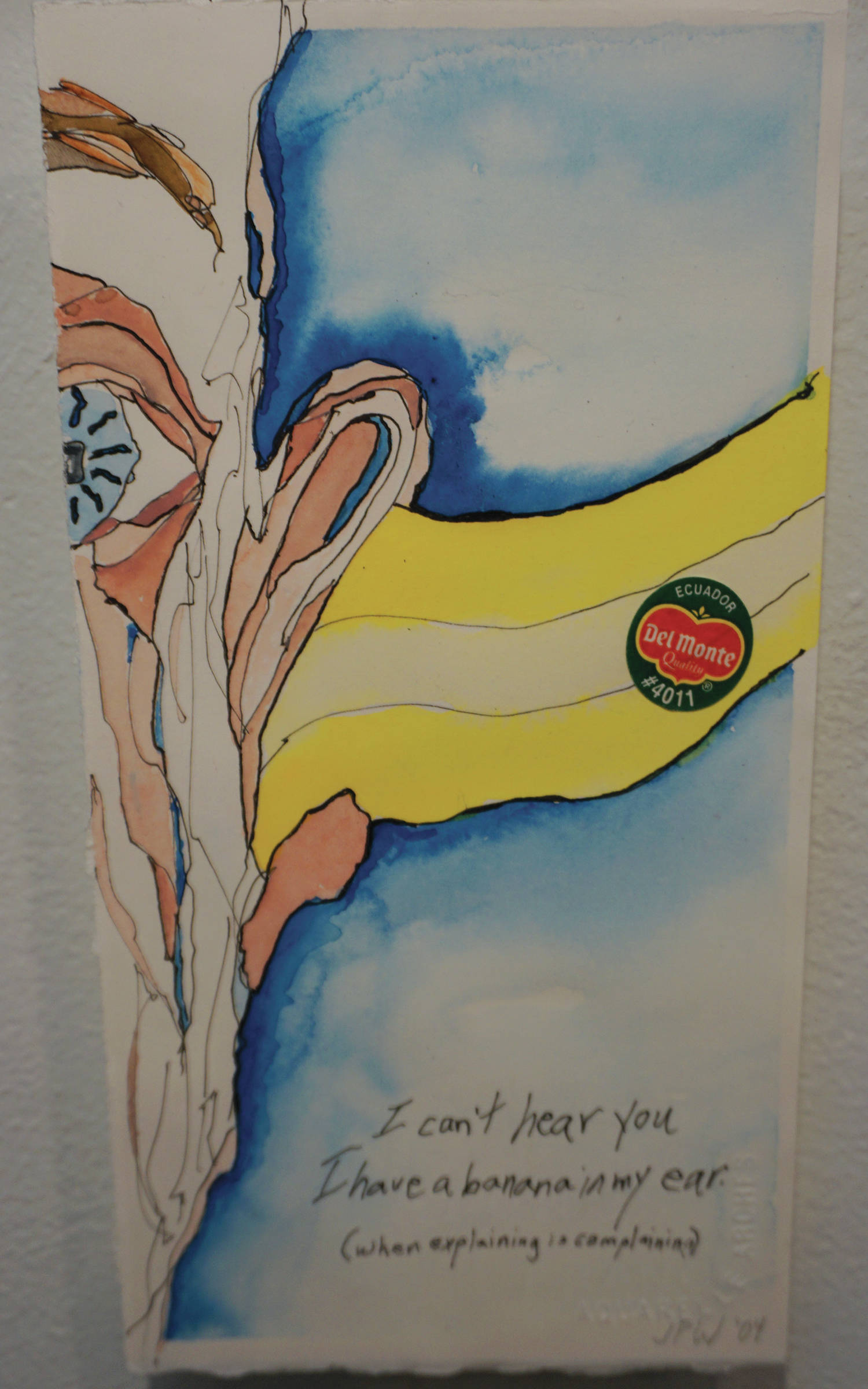
Over the years the Homer Council on the Arts has become known both for its encouragement of young and emerging artists and its willingness to collaborate with other nonprofits in themed art shows. An exhibit this month, the Disability Arts Show, brings together both elements.
For the show that opened last Friday, the council teamed up with Total Recreation and Independent Living Services, or TRAILS, a program of the Independent Living Center that helps people with disabilities enjoy nature and recreation. The artists are people whose lives have in some way been touched by disability either by personal experience or as a theme to explore.
At the First Friday opening, TRAILS Activity Facilitator Devony Lehner said she was pleased by the number of contributions — so much so that she had to scale back an area featuring artists Jim Welch and Eric David Behnke in order to accommodate everyone.
At the council’s gallery, walls and tables overflow with everything from fused glass, paintings and collages to objects like a painted prosthetic leg. Featuring art from youth to seniors, not everything is polished, but all the works show passion and commitment.
Each artist includes a statement about their experience with disability. Cindy Nelson, who does fused glass art, was diagnosed 19 years ago with multiple sclerosis and wrote that she moved to Alaska “for a better life while taking care of myself having MS.”
At the show she said that being in Homer has helped her deal with her illness. Through physical therapy and movement classes she has “rewired” her brain, for things like trying to make circles with her arms or learning how to walk again. First it was rough, but it got smoother, Nelson said.
“My legs can get weak, but I keep going,” she said. “Homer has taught me that.”
Nelson’s glass work, “Rewiring My Nerves,” shows leaf-shaped pieces tinted pale blue and brown against a dark blue background.
“This piece shows what the nerves look like in my brain while reconnecting, thereby rewiring my nerves,” she wrote in an artist statement.
Sadie Mae Millard has shown her work at group shows like Bunnell Street Arts Center’s 10×10 show. For the Disability Art show she used kitchen cabinet doors salvaged from a 1940s-era cabin in Ninilchik as her canvas. Millard removed the hardware and fixings, but the grooves and screw holes can be seen like healed scars. She said her friend Dan, the guy who gave her the doors, told her “If you take these cabinet doors, you’d better make them pretty.”
Her paintings of faces and bodies evoke the fluid technique of Marc Chagall, the crowd scenes of Henri Toulouse-Lautrec and the portraits of Pablo Picasso, some of the artists who inspired her.
“Those artists make me feel normal,” Millard said.
Millard said the movement of the grain in the wood provided a pattern for her work.
“I used that. It’s a template for me,”she said. “As I layer on layer I see the picture. The wood tells the story.”
Millard said she’s been affected by post-traumatic stress disorder as well as surgery.
“I do it for the therapy,” she said of her art. “For me to relinquish bad memories, live in a freer mind, I put it in my art work. … I love art. It’s a beautiful thing and saved my sanity. … Even when I’m sad and mad at life, I have this.”
For some artists, “disability” isn’t necessarily obvious, like being in a wheelchair or losing a leg. At the First Friday opening, artist Cora Trowbridge gave a talk about how some disabilities can be invisible, like anxiety or depression.
“Had you not known this was a reality for this person, would you have been able to tell at first glance?” she said at her talk.
Trowbridge’s art includes poetry and a mask and collage, “Behind the Mask.” In her artist’s statement, she wrote that she experiences a disability largely invisible, nonverbal learning disorder, or NVLD. It has characteristics of autism and Asperger’s and affects her ability to read social cues and nonverbal communication such as body language, tone and facial expressions. She also writes that she sometimes has delays in language processing so that she hears and decodes more slowly than some people.
“I have been very blessed to have many people who have focused more on my gifts and who I am as a person rather than strictly on the label itself,” she wrote in her statement. “I strive for acceptance just as any human. We all have life areas where we struggle. Sometimes these are obvious; others, they are not. However, none of us want to be known simply for thos struggles. We are all so much more.”
That’s a sentiment echoed by Nelson that she said she heard from other artists.
“I have MS, but MS does not have me,” Nelson said.
All works at the Disability Art Show are on sale either for a set price or in a silent auction. The silent auction ends with a closing reception from 3-5 p.m. Saturday, March 28, with live music and refreshments.
In conjunction with the show, Homer Council on the Arts also offers an art workshop from 2-4 p.m. next Wednesday, March 18, with rock painting, wheelchair decorating and more. The workshop is $10 a child, $15 for two siblings or $20 for a family.
Reach Michael Armstrong at marmstrong@homernews.com.
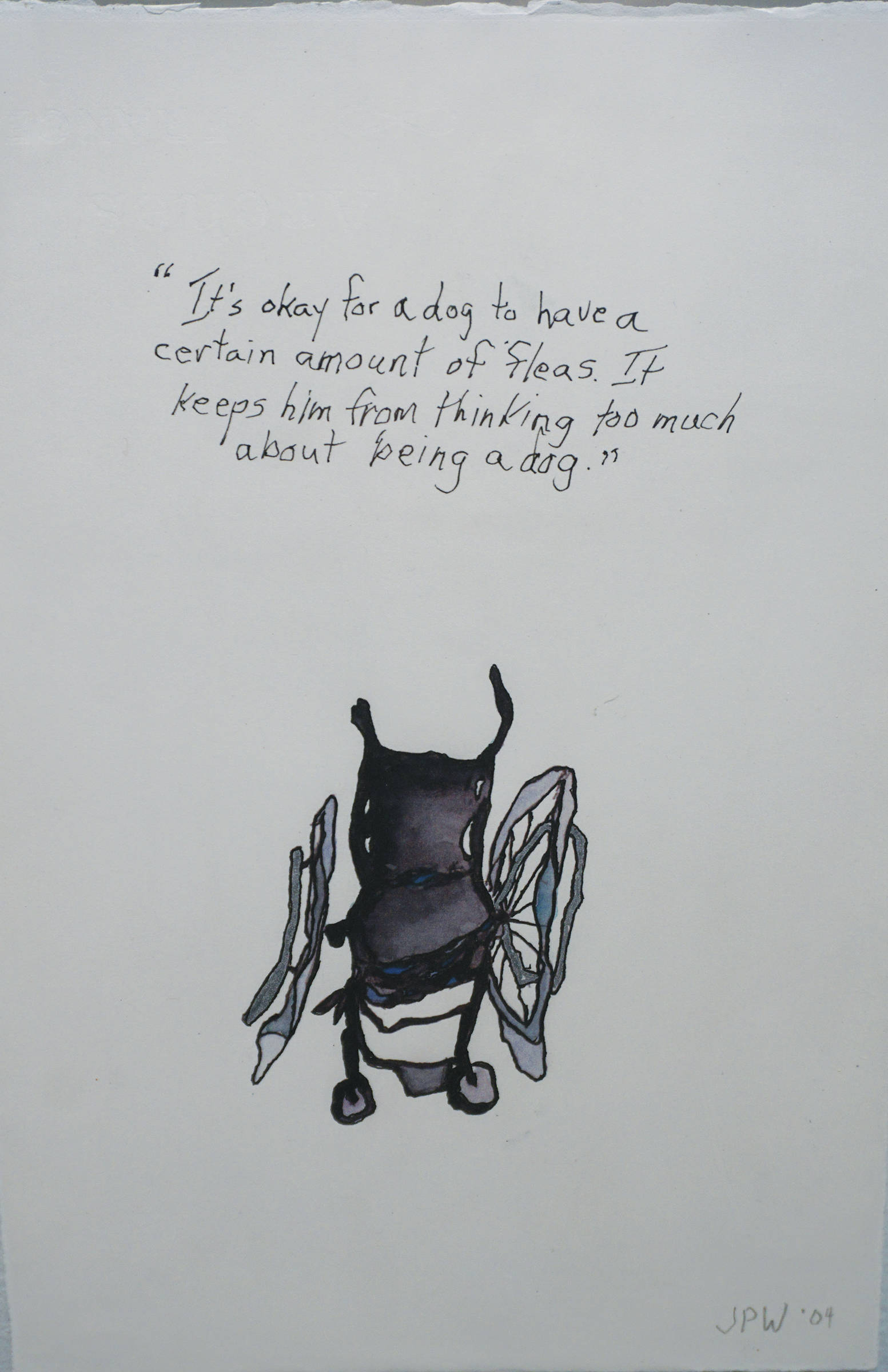
A painting by artist Jim Welch, as seen on First Friday, March 6, 2020, at the Disability Art Show at the Homer Council on the Arts in Homer, Alaska. (Photo by Michael Armstrong/Homer News)
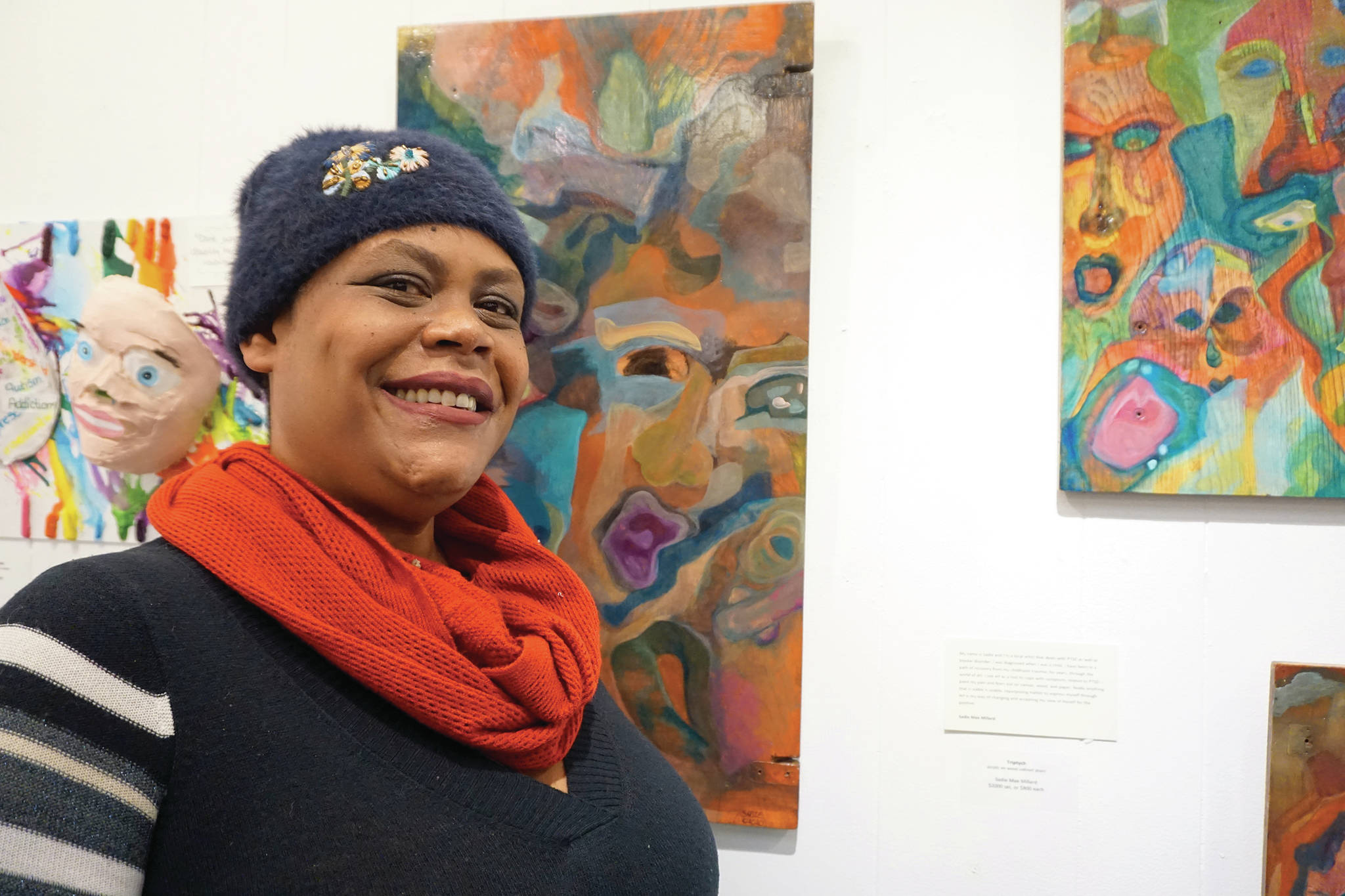
Sadie Mae Millard stands by her art on March 6, 2020, at the Disability Art Show at the Homer Council on the Arts in Homer, Alaska. (Photo by Michael Armstrong/Homer News)
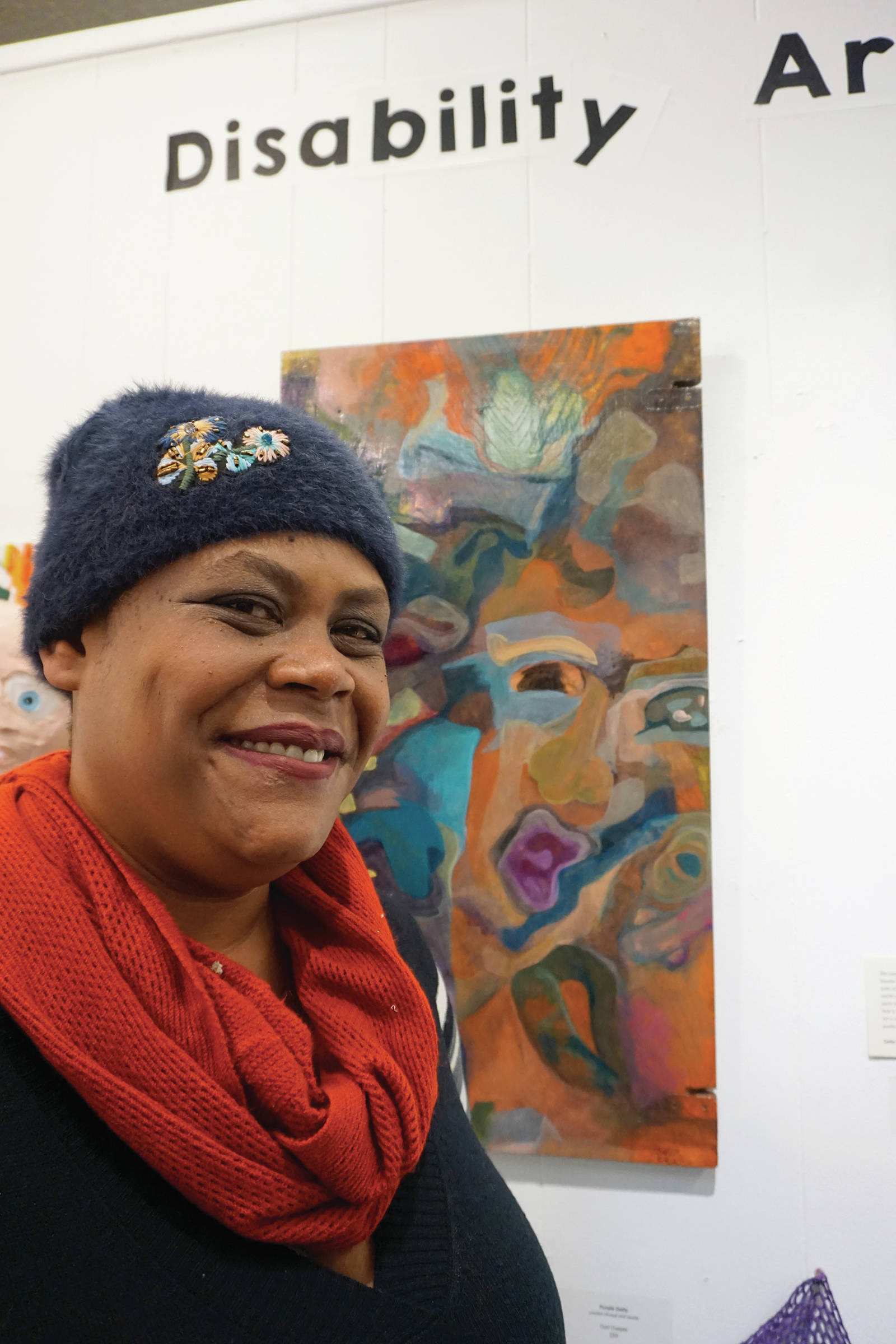
Sadie Mae Millard stands by her art on March 6, 2020, at the Disability Art Show at the Homer Council on the Arts in Homer, Alaska. (Photo by Michael Armstrong/Homer News)
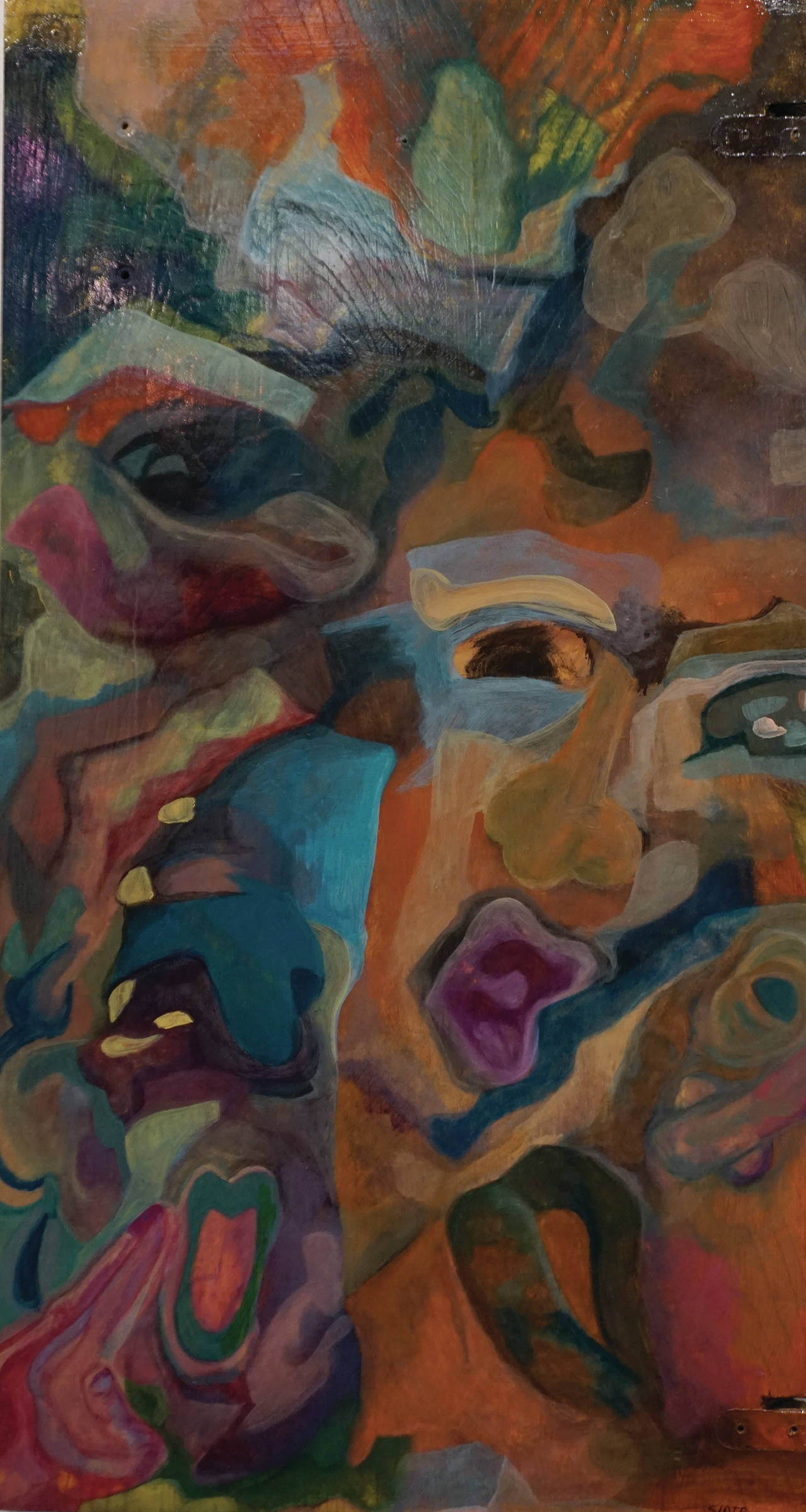
Sadie Mae Millard’s art, as seen at the First Friday opening on March 6, 2020, at the Disability Art Show at the Homer Council on the Arts in Homer, Alaska. (Photo by Michael Armstrong/Homer News)
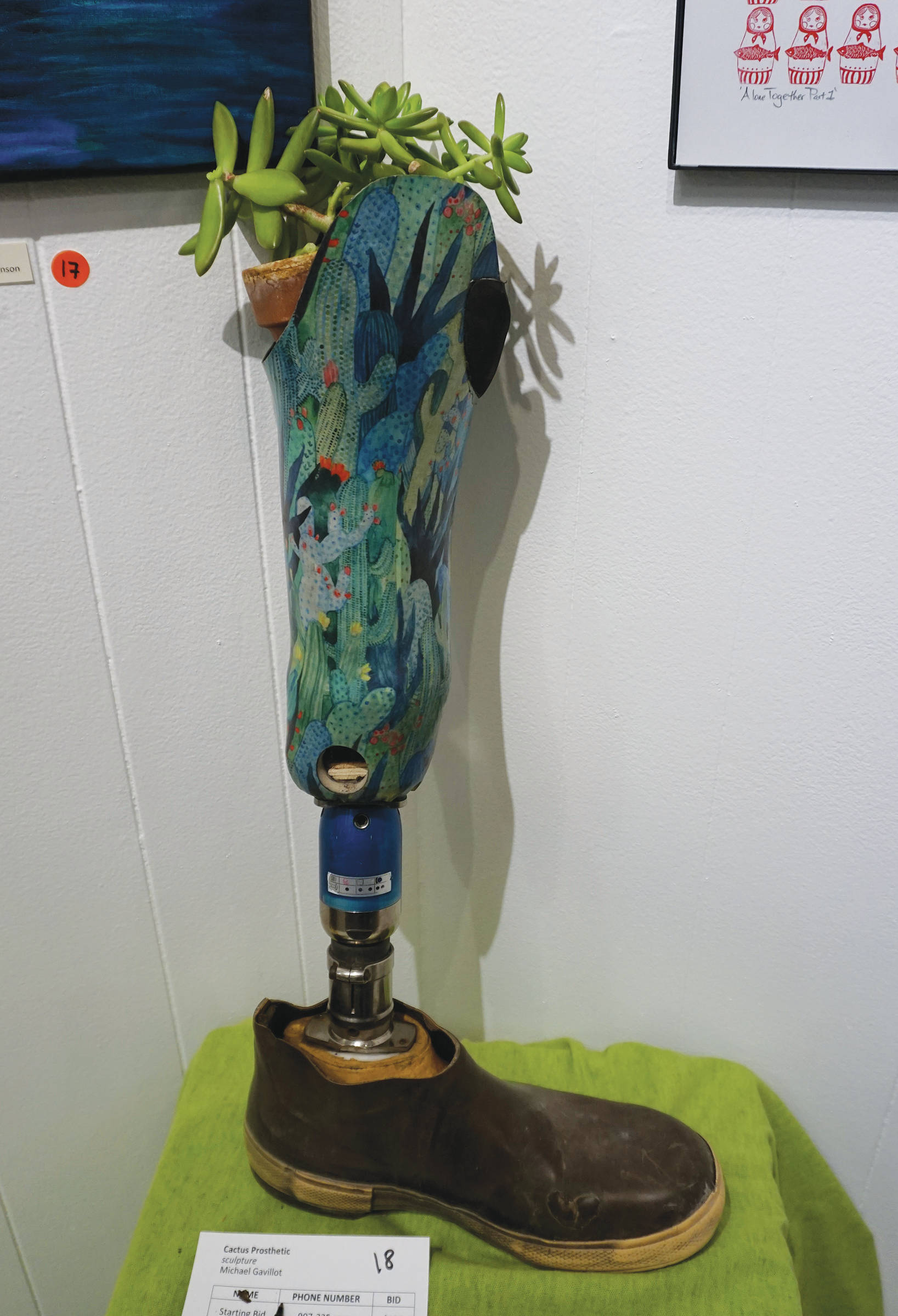
Michael Gavillot’s decorated prosthetic leg, as seen at First Friday on March 6, 2020, at the Disability Art Show at the Homer Council on the Arts in Homer, Alaska. (Photo by Michael Armstrong/Homer News)
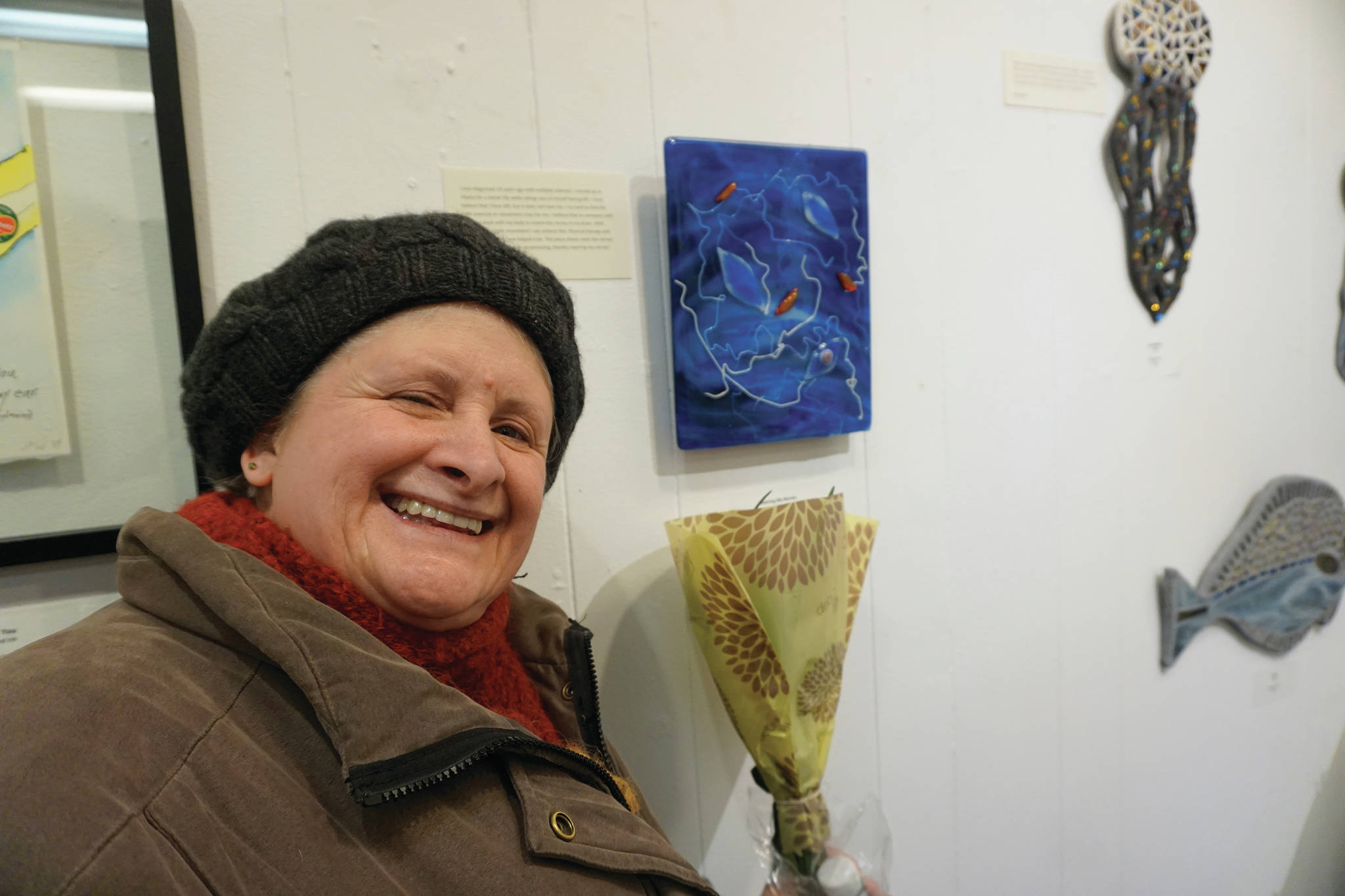
Cindy Nelson stands by her art on March 6, 2020, at the Disability Art Show at the Homer Council on the Arts in Homer, Alaska. (Photo by Michael Armstrong/Homer News)
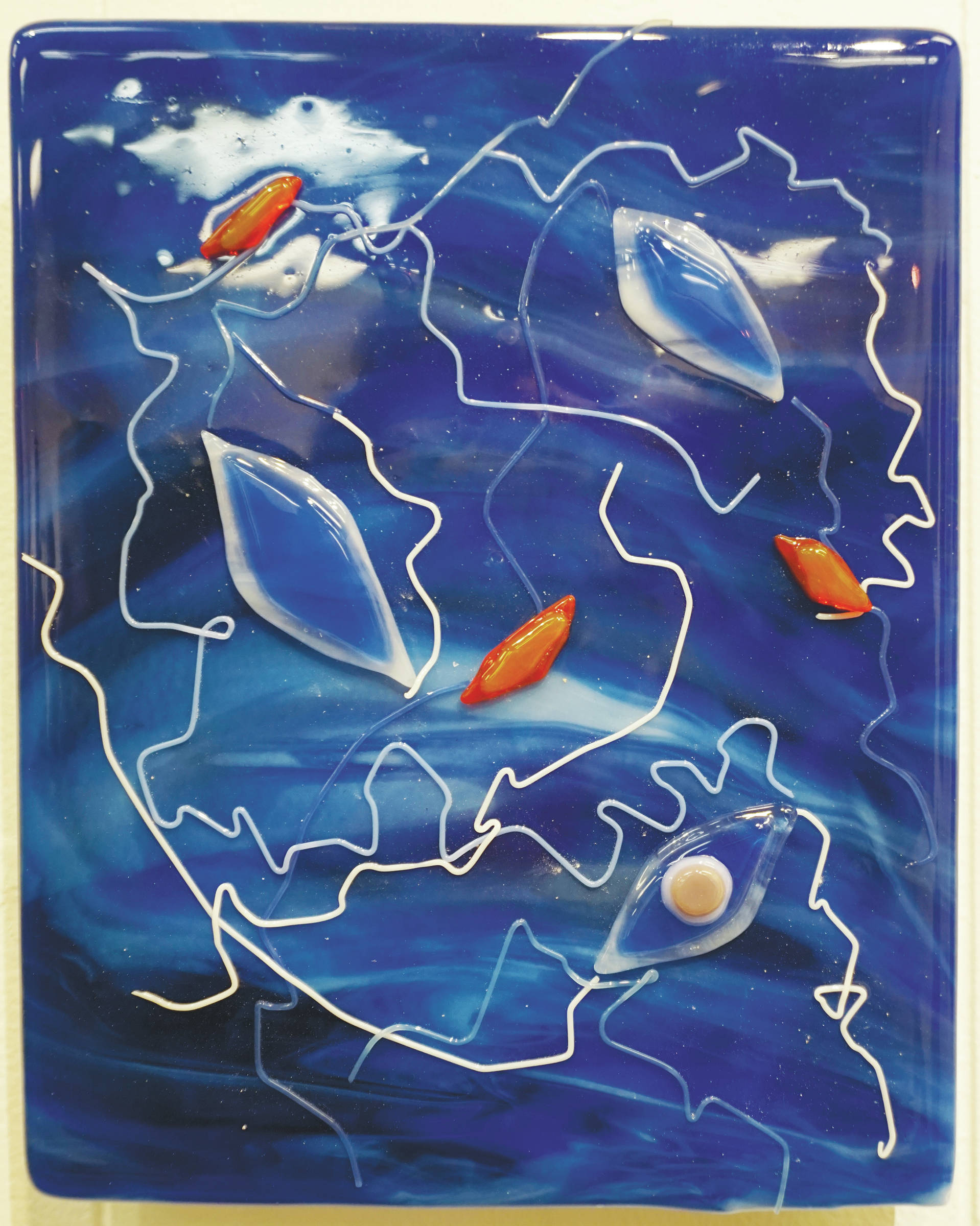
Cindy Nelson’s “Rewiring My Nerves,” as seen on First Friday, March 6, 2020, at the Disability Art Show at the Homer Council on the Arts in Homer, Alaska. Nelson said the work “shows what the nerves look like in my brain while reconnecting, thereby rewiring my nerves.” (Photo by Michael Armstrong/Homer News)
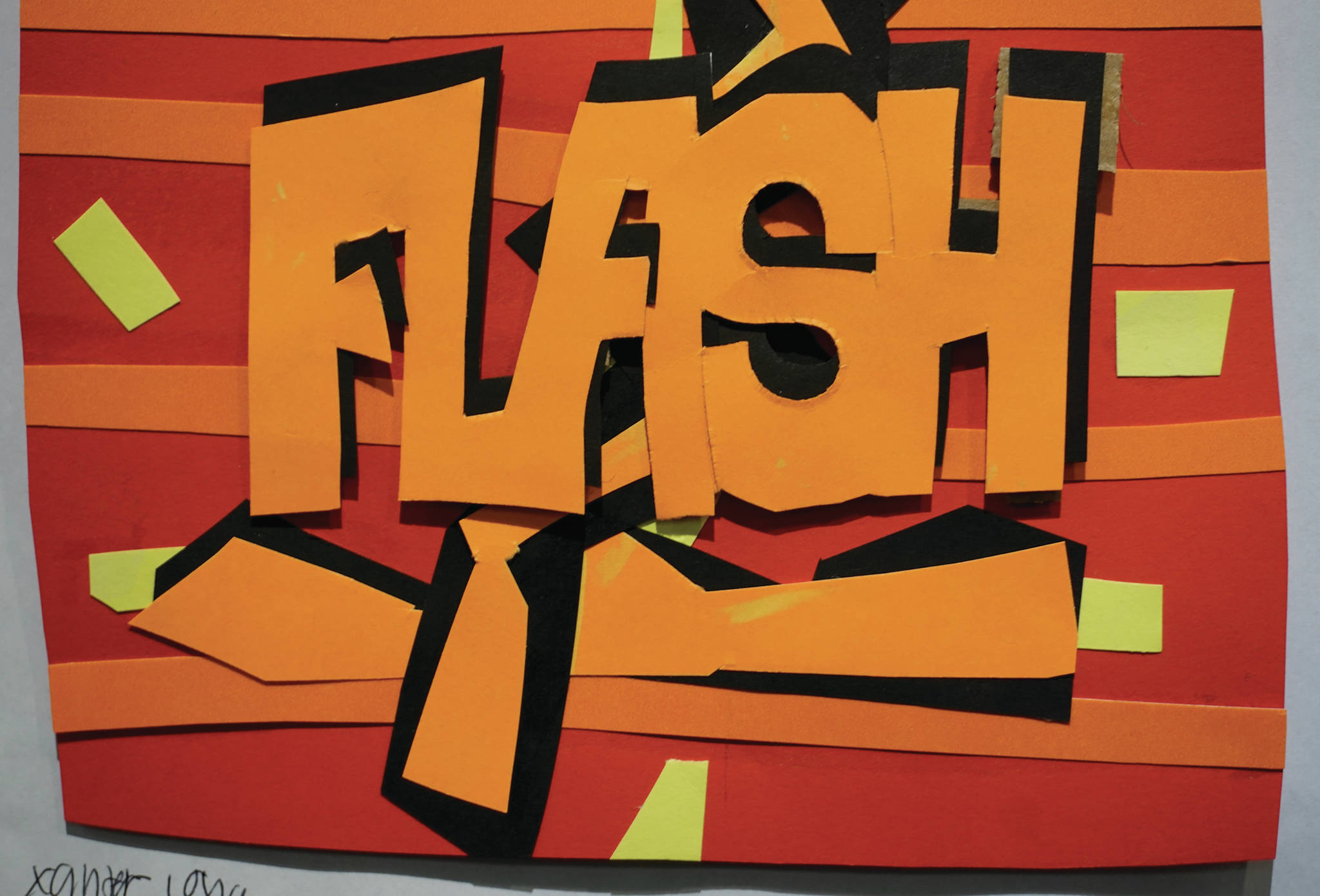
Xander Long’s “Flash,” as seen on First Friday, March 6, 2020, at the Disability Art Show at the Homer Council on the Arts in Homer, Alaska. (Photo by Michael Armstrong/Homer News)
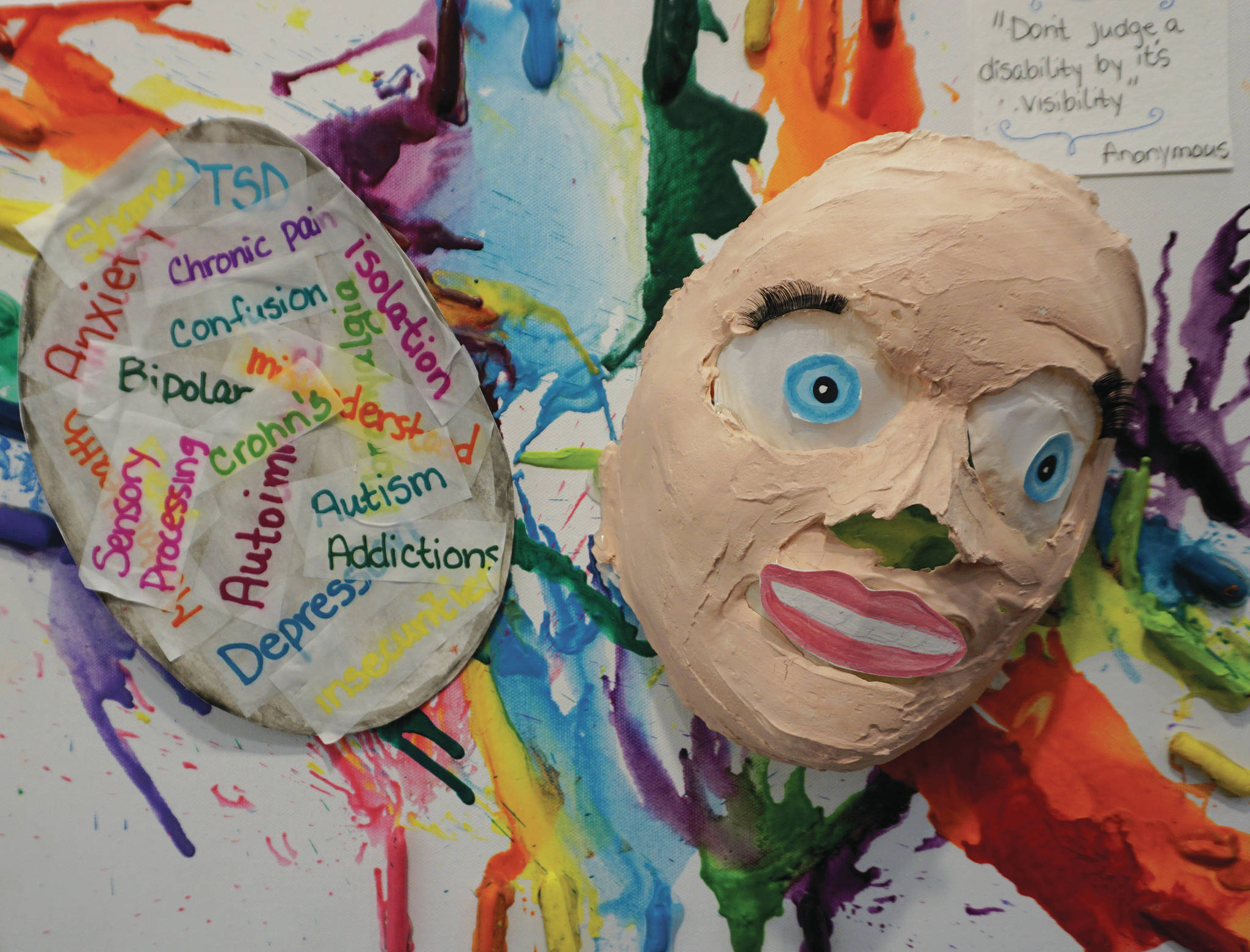
Cora Trowbridge’s “Behind the Mask,” as seen on First Friday, March 6, 2020, at the Disability Art Show at the Homer Council on the Arts in Homer, Alaska. (Photo by Michael Armstrong/Homer News)
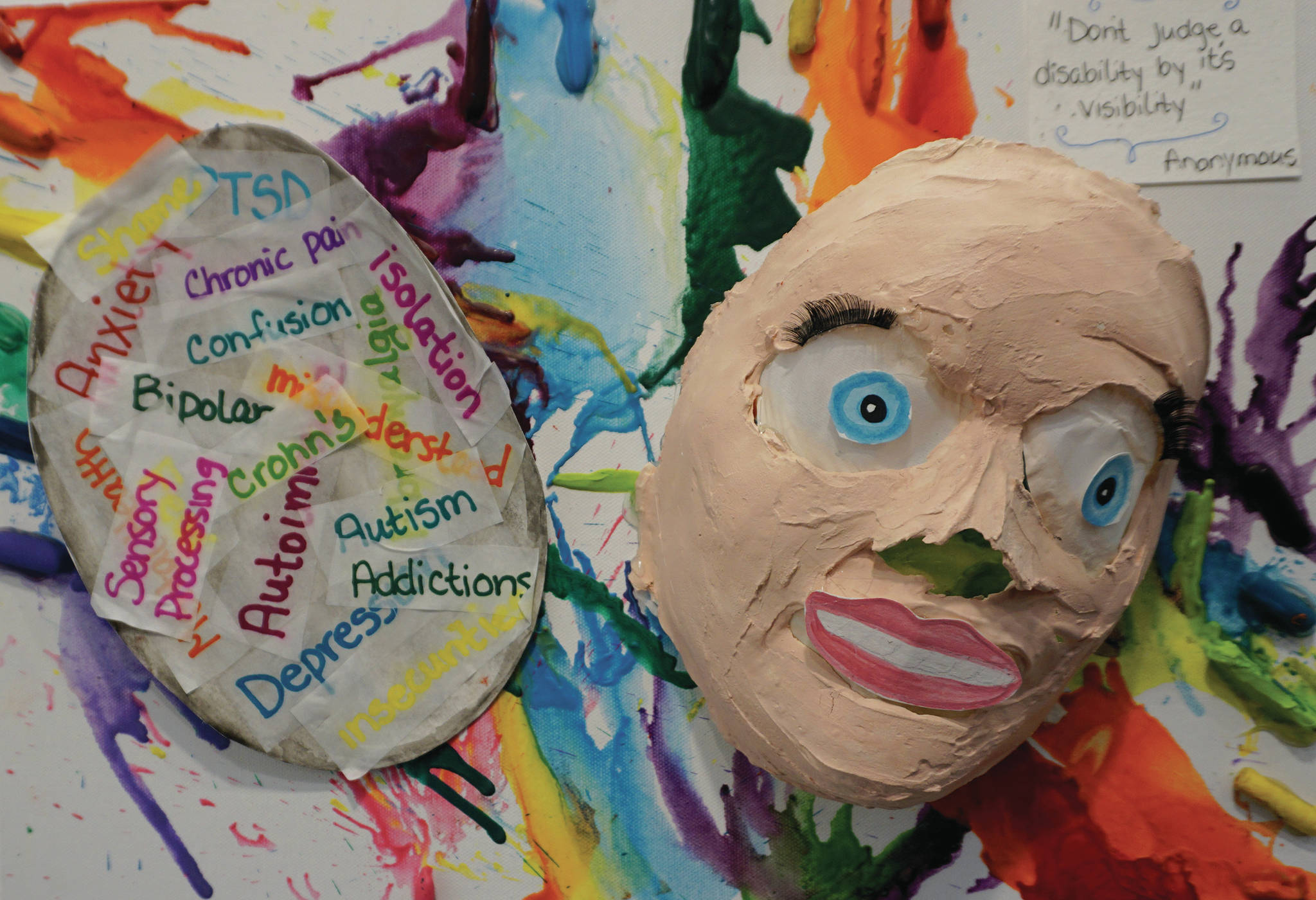
Cora Trowbridge’s “Behind the Mask,” as seen on First Friday, March 6, 2020, at the Disability Art Show at the Homer Council on the Arts in Homer, Alaska. (Photo by Michael Armstrong/Homer News)
