
The image came via text in early June: a lilac-painted 1972 Volkswagen van set against a picturesque backdrop of nettles and fireweed. Not a bad home for a Van Girl.
Mavis Muller bestows the “Van Girl” name upon her yearly summer assistant, a role which I would soon learn encompasses everything from lawn mower to “artivist” collaborator.
I became Van Girl somewhere in the 20 feet between the Homer Airport and Mavis’ zippy silver Ford, named Pearl, which she parked curbside to give me a ride to my new lilac home. It was a near-immediate transition with a steep learning curve; being Van Girl is an accelerated course in the language, stories and history of Mavis’ nearly four-decade-long career as Homer’s resident contemporary basket maker and general artistic mischief-stirrer.
Without a doubt, the Burning Basket project was the biggest commitment of my brief Van Girl career. Since arriving in Homer, the basket has been a constant and imminent September specter. I was told it would be big. I was told to prepare myself. I had no idea what I was in for.
Mavis and I spent the entire summer preparing for the basket, from harvesting materials to recruiting volunteers to lend a hand, a truck, or a chainsaw. This is a process she has done many times before, now with 15 baskets on the books in Homer and 40 overall.
Mavis uses Burning Basket to explain the passage of time, the contexts of friendships and even the history of Homer itself. Rather than relying on the usual Gregorian solar calendar, Mavis makes plans for her art based on seasonal change. As in: haying season, fireweed season, and Burning Basket season. In my capacity as Van Girl, Burning Basket has driven how I’ve come to understand Mavis as an artist, mentor and friend.
Burning Basket is an event (or as Mavis says, an “enactment”) that holds many different meanings for the people who interact with it: as a memorial, a chance for reflection, a community gathering, a giant bonfire, or maybe just a traffic jam on the Homer Spit. For me it was an opportunity to have an insider’s glimpse into Mavis’ artistic process and what it looks like to be in deep connection with the materials you work with.
Despite preparing for months, Burning Basket is a project with an inherent dose of unpredictability. It is affected by big things like rain and wind, but also by the hue of the fireweed, the height of the spruce trees and the bend of the alder branches.
Mavis works with and from the natural variations in her materials, allowing them to shape her work just as much as she shapes them.
“One of the things I love about playing with sticks,” she told me during build week, “Is reading how they want to lay.”
She took a 6-foot long alder branch in her hand, flipping and twisting it around on the work table before settling on a final position. Her artistic process is variation of architect Louis Sullivan’s saying: “Form follows function.” When it comes to Mavis, form follows alder — among other things.
With nature leading the way, Mavis doesn’t prioritize exact measurements or getting things right the first time. In fact, trial and error are embedded into her process.
Over the course of Burning Basket, sometimes this meant throwing efficiency out the window.
“I had a dream last night, and I woke up realizing I don’t really like how those panels turned out,” Mavis told me one morning.
And so we undid and redid what we had already spent three hours constructing the first time.
“Well that’s how you learn … you try something and then you go ‘nah’ and try again,” she said with a laugh.
Admittedly, the way that Mavis strays from the culturally-dominant emphasis on efficiency stressed me out in my early Van Girl days. I would find myself questioning: How is this project — one that is so large in scale and intricate in detail — actually going to happen? Again and again, Mavis’ process surprised me in its ability to do just that.
Furthermore, structuring Burning Basket in terms of efficiency is a fruitless effort because of the way the project depends not only on natural unpredictability, but human unpredictability as well. Homerites arrived unannounced all week with all sorts of materials. A truck load of alder, a pile of mountain ash, a large pot of curry. Not wanting to waste these gifts, Mavis works whatever materials she has into the project, even if that means making creative adjustments with a giant armful of curly dock on Saturday afternoon.
Even this past Sunday, Sept. 9, the day of the basket burn, Mavis continued to scour the build site, examining anything left over or unused. We arranged scraps into bouquets at the entrance and crumbled extra grass into soft bedding encircling the basket.
“I’m just trying to give the materials that are lying around, trying to give them purpose,” she said.
There were also moments when we were forced to make some non-traditional material decisions. While putting together torches for igniting the basket, for example, Mavis realized she had forgotten to bring extra cloth to wrap them in. Lori Daniel, a dedicated volunteer throughout the week, suggested an old dog towel she had on hand.
“It’s a little damp Mavis,” she warned, “It’s been under the water bowel in the back of my car.”
Nevertheless that’s what we used for the ceremonial start to the burn: a fluffy pink cotton, slightly-damp dog towel wrapped in bits of denim and soaked in fuel.
As Van Girl, I have had the opportunity to immerse myself in these intimate, sensory details of Burning Basket. I have touched the materials with my own hands. I have been a witness to Mavis’ creative musings and a partner to her brainstorming. As Mavis likes to say, when it comes to preparing for the burn “only God and I know” what it takes to put this event together. Well, perhaps this year it was God, Mavis and me.
Burning Basket creates meaning not just through the week that it physically stands on the Spit, but in its lineage as a project over time. As Mavis said to the large crowd that gathered Sunday evening, “I am here to bear witness long term, as a long-term study of interactive art as a civic function.”
If Burning Basket is the setting for Mavis’ long-term eco-artistic study, than I am only a research technician who just joined the team. There have been 14 Homer Burning Baskets that I wasn’t around for, each one building on and containing pieces of the project’s ancestry. “Dream,” this year’s basket, could only exist with the experiences, lessons and collective meanings of many other baskets holding it up.
“It’s about the entire collection, about the baskets laying the groundwork and foundation for the next one,” Mavis explained. “It is longevity that makes this magic happen.”
Longevity makes a basket into a ritual, a part of local “mythmaking” as Mavis likes to say. This is part of the function of her art.
“The world needs new traditions and rituals that aren’t attached to religion or dogma, but come from creativity,” she said.
As Van Girl I have witnessed and felt the transforming power of this Burning Basket ritual, making community-building out of basket-building. This is how a project goes from an event we attend to an event that tends to us.
Mira Klein is a freelance writer who spent this summer in Homer. She wrote this first-person narrative as a reflection on the annual Burning Basket project. You can contact her at mira.r.klein@gmail.com.
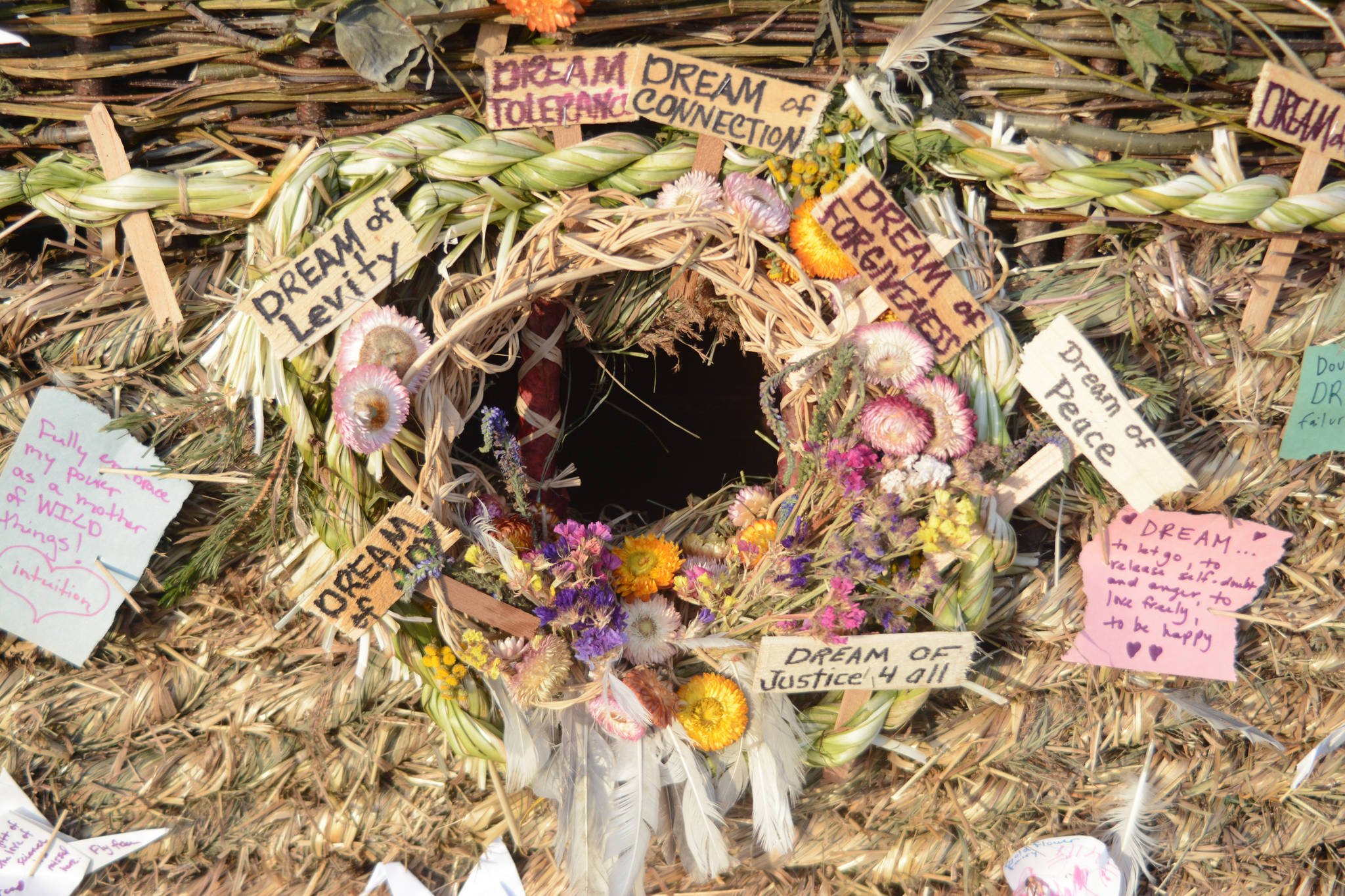
Signs and other objects adorn the 2018 Burning Basket, Dream, on Sept. 9, 2018 at Mariner Park in Homer, Alaska. (Photo by Michael Armstrong/Homer News)
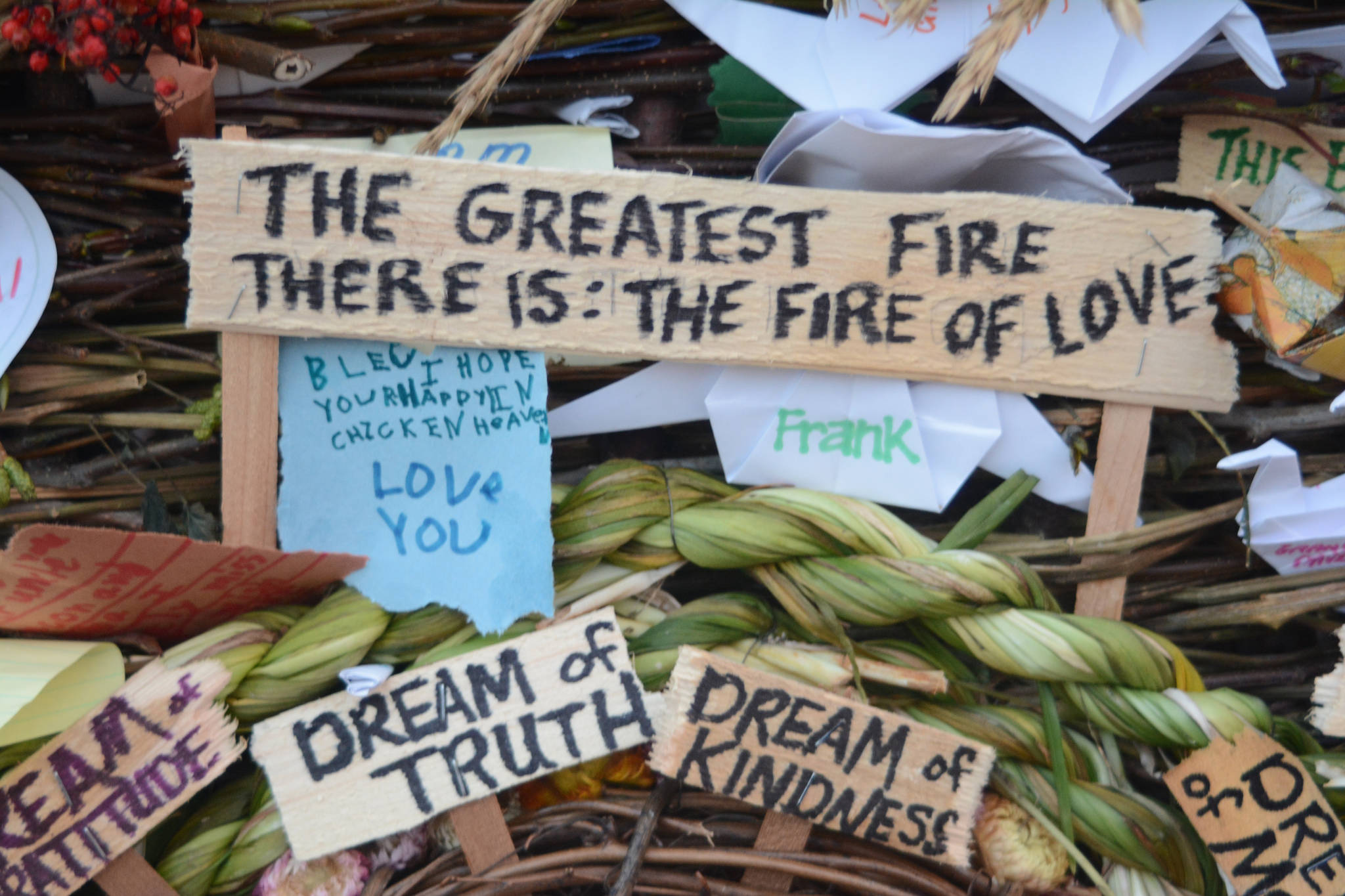
Signs and other objects adorn the 2018 Burning Basket, Dream, on Sept. 9, 2018 at Mariner Park in Homer, Alaska. (Photo by Michael Armstrong/Homer News)
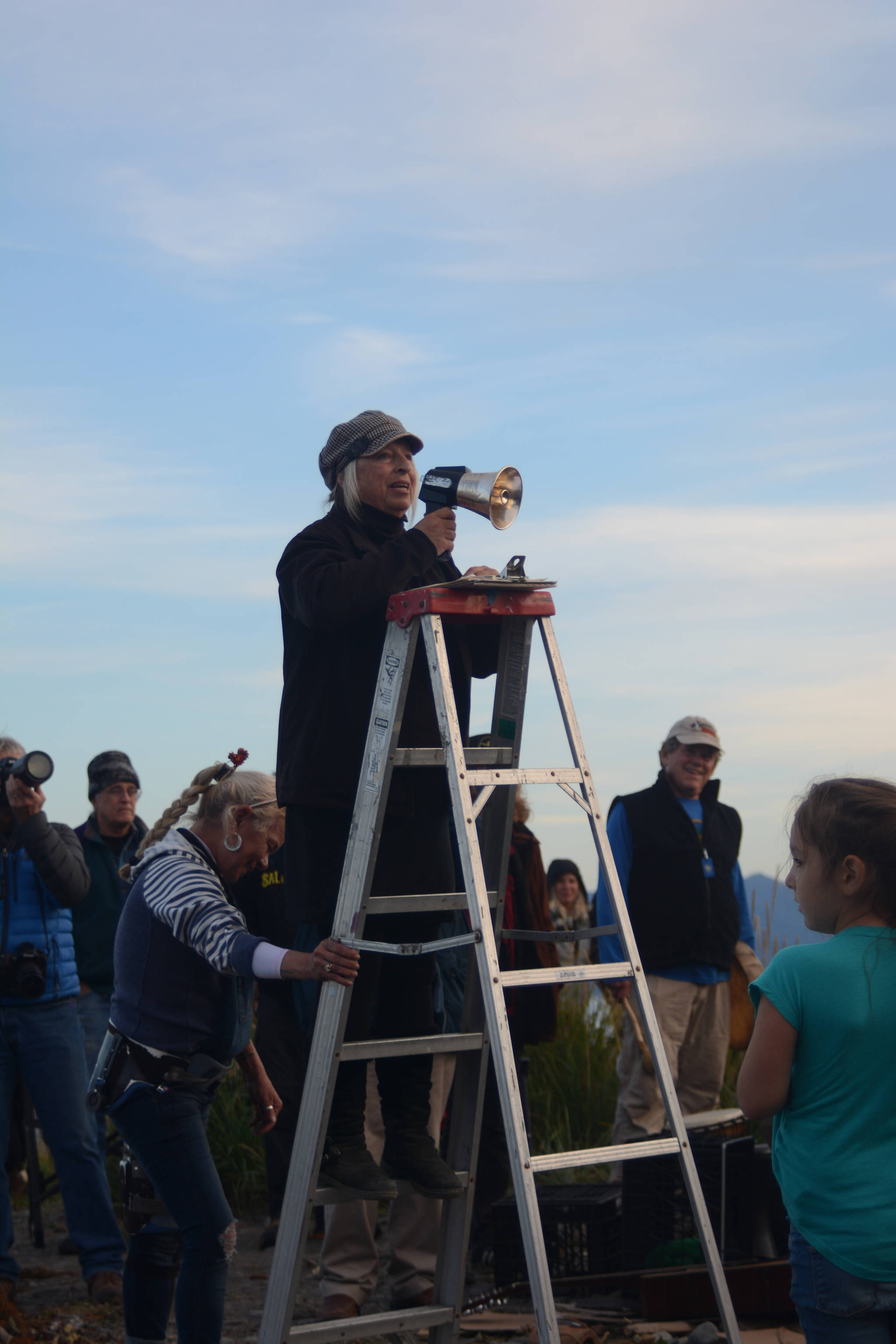
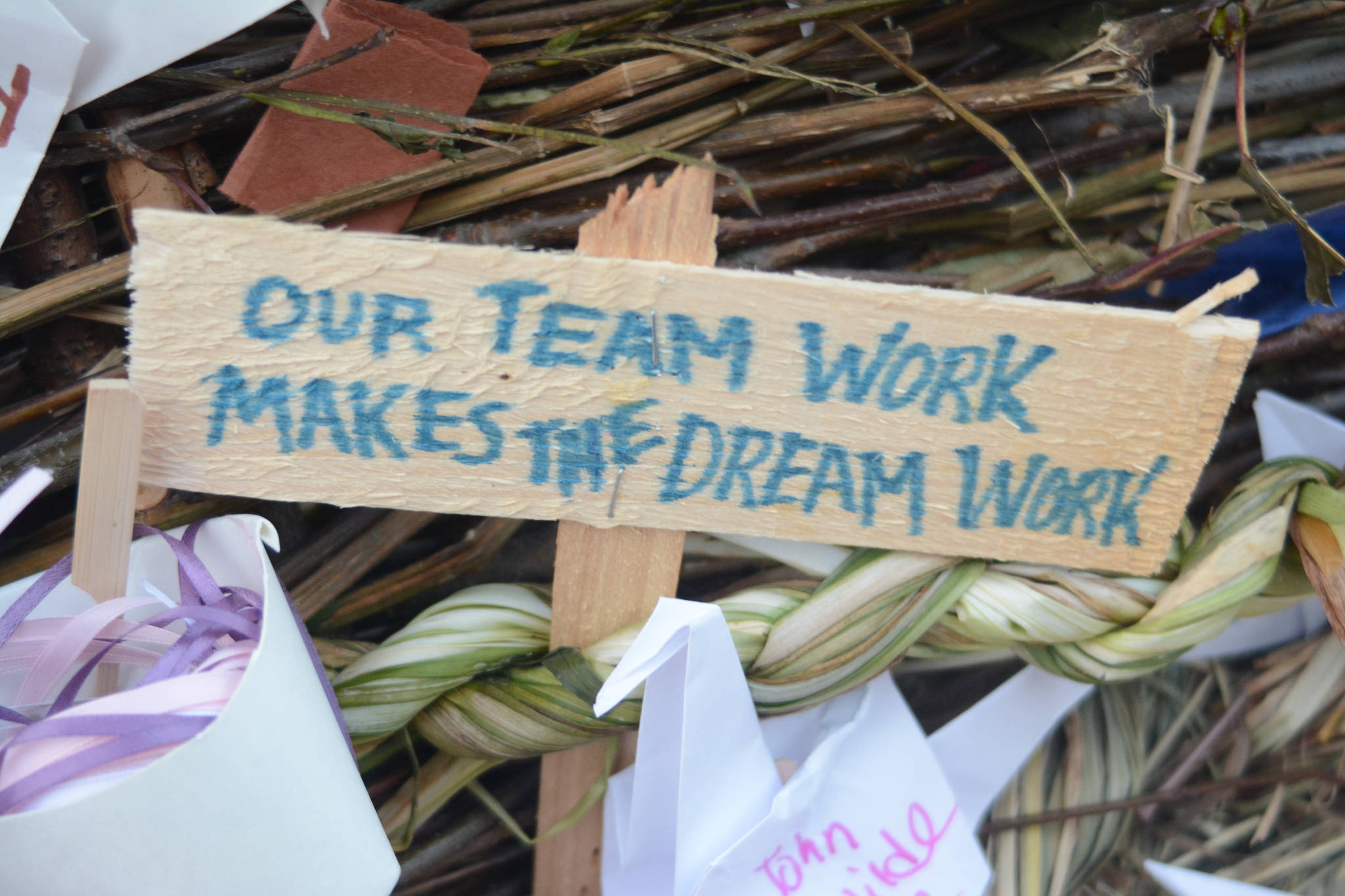
Artist and coordinator Mavis Muller speaks at the 2018 Burning Basket, Dream, on Sept. 9, 2018 at Mariner Park in Homer, Alaska. (Photo by Michael Armstrong/Homer News)
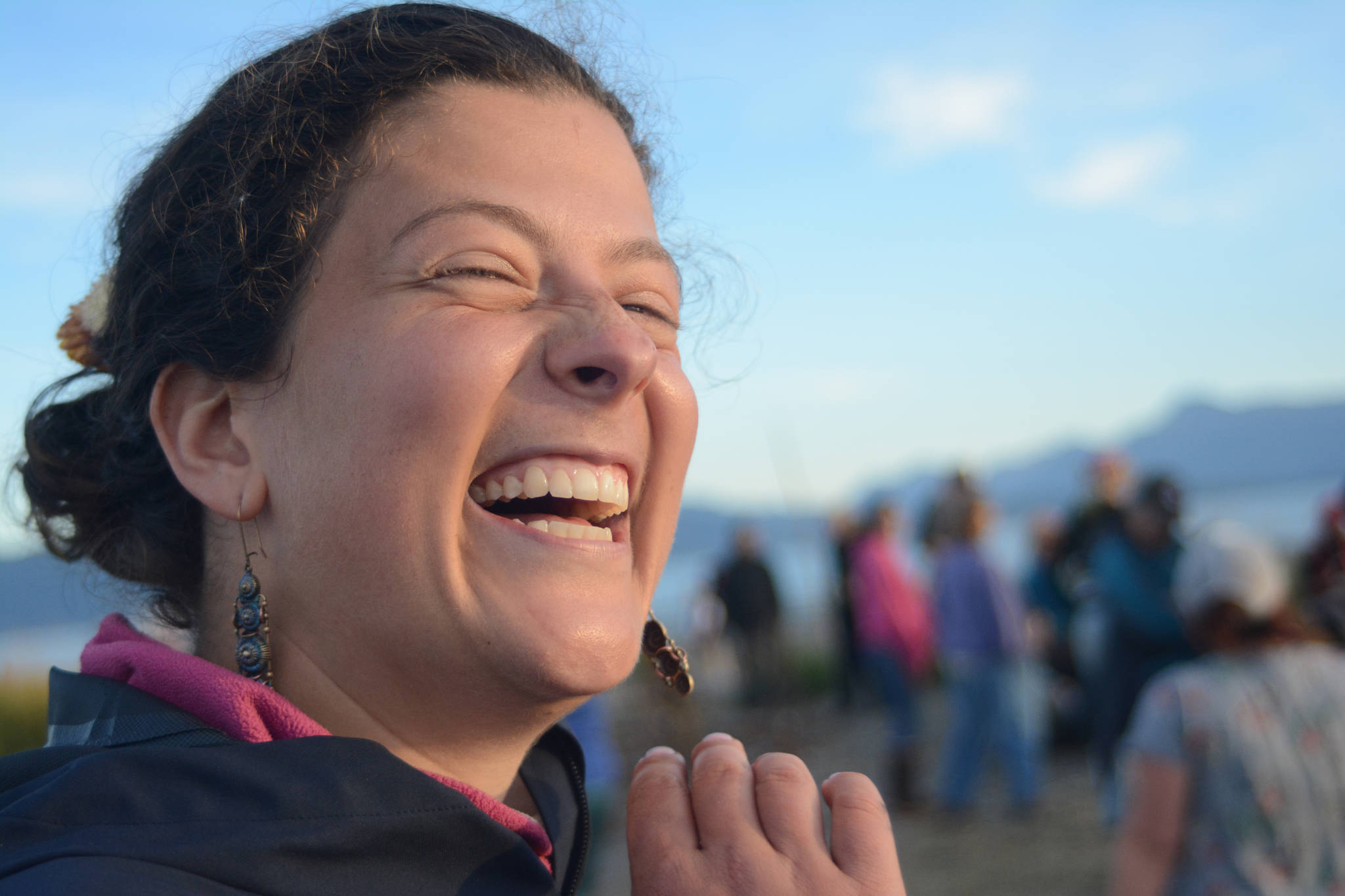
Mira Klein smiles at the start of the 2018 Burning Basket, Dream, on Sept. 9 at Mariner Park, Homer, Alaska. (Photo by Michael Armstrong/Homer News)
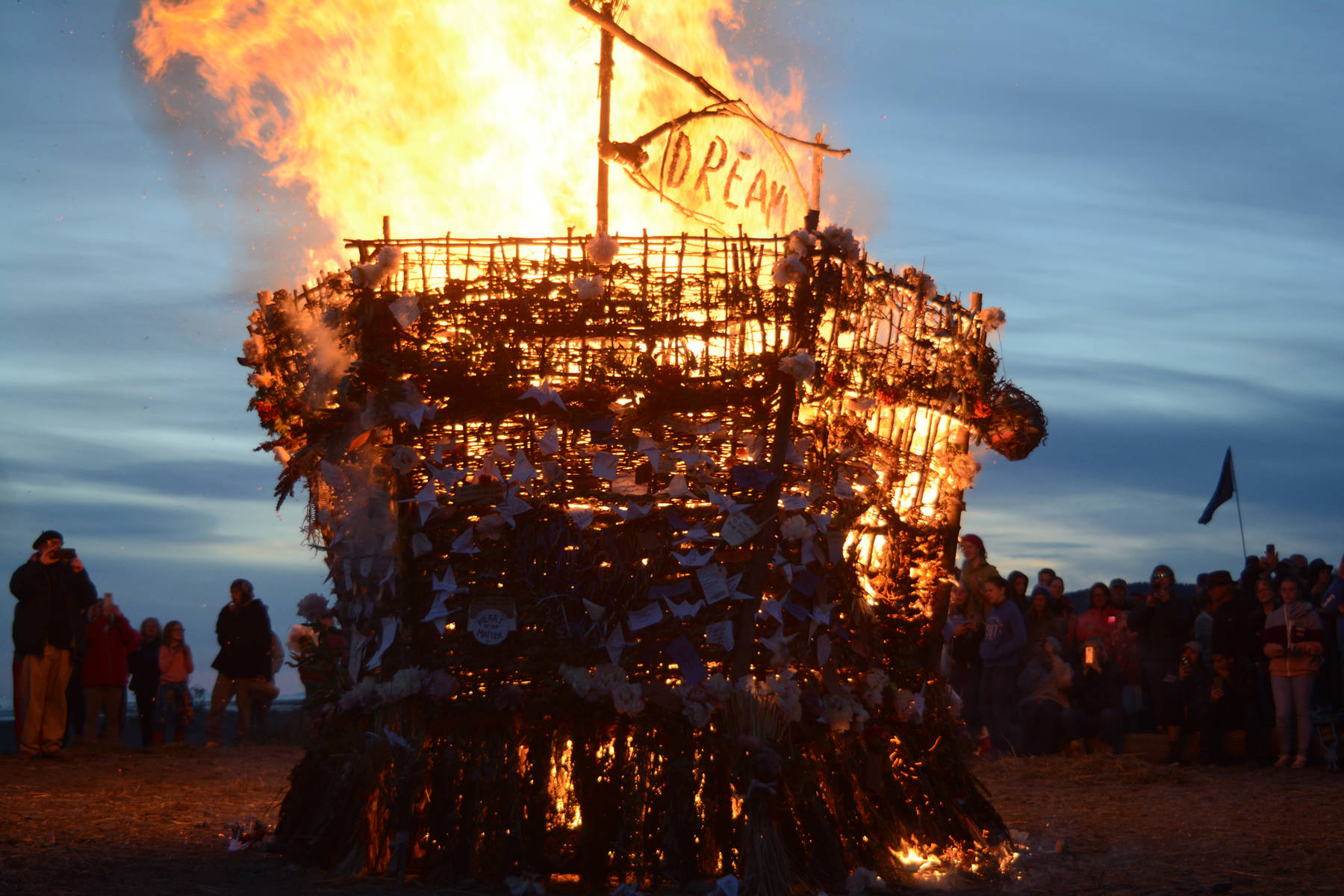
The 2018 Burning Basket, Dream, catches fire on Sept. 9, 2018 at Mariner Park in Homer, Alaska. (Photo by Michael Armstrong/Homer News)
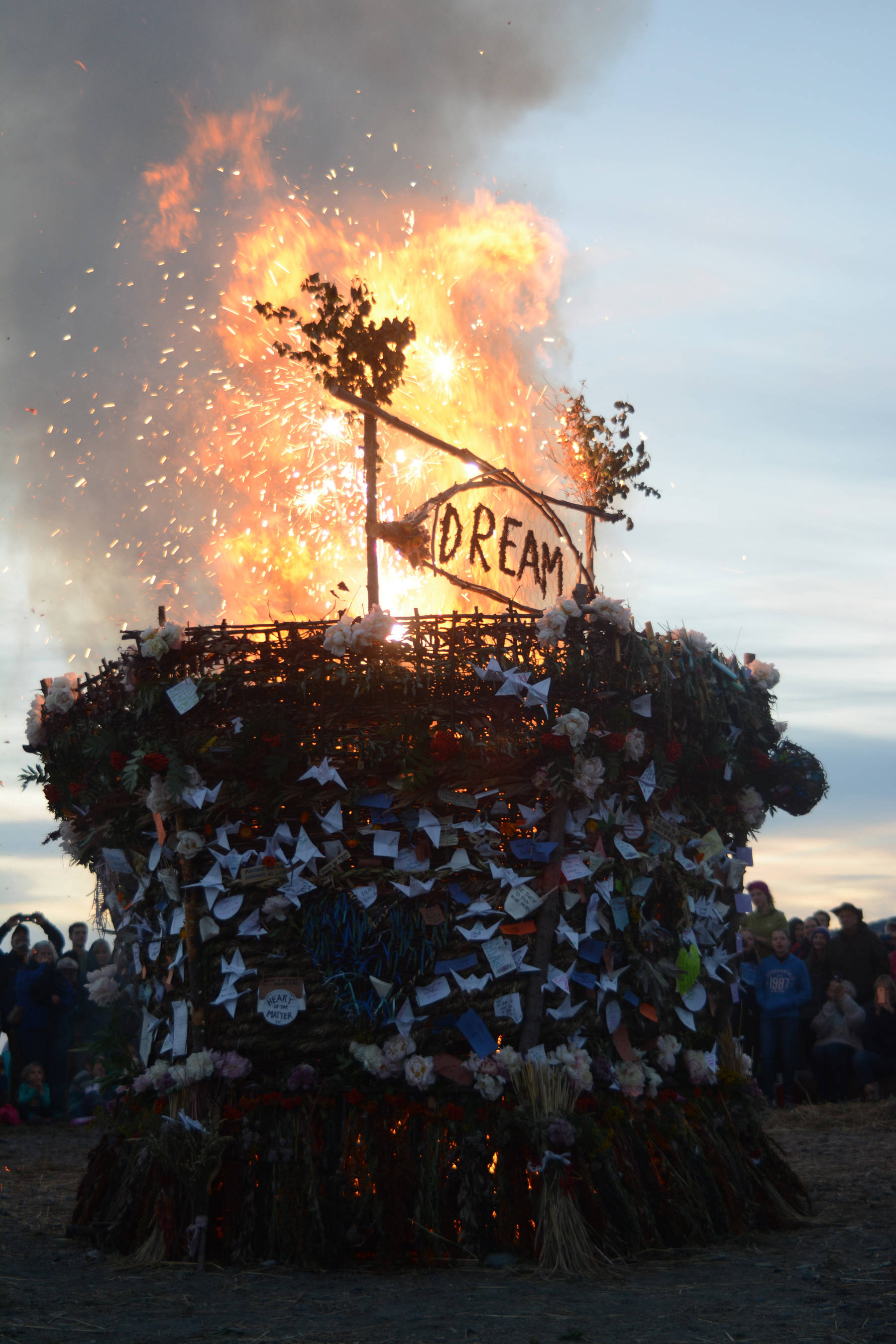
The 2018 Burning Basket, Dream, catches fire on Sept. 9 at Mariner Park, Homer, Alaska. (Photo by Michael Armstrong/Homer News)
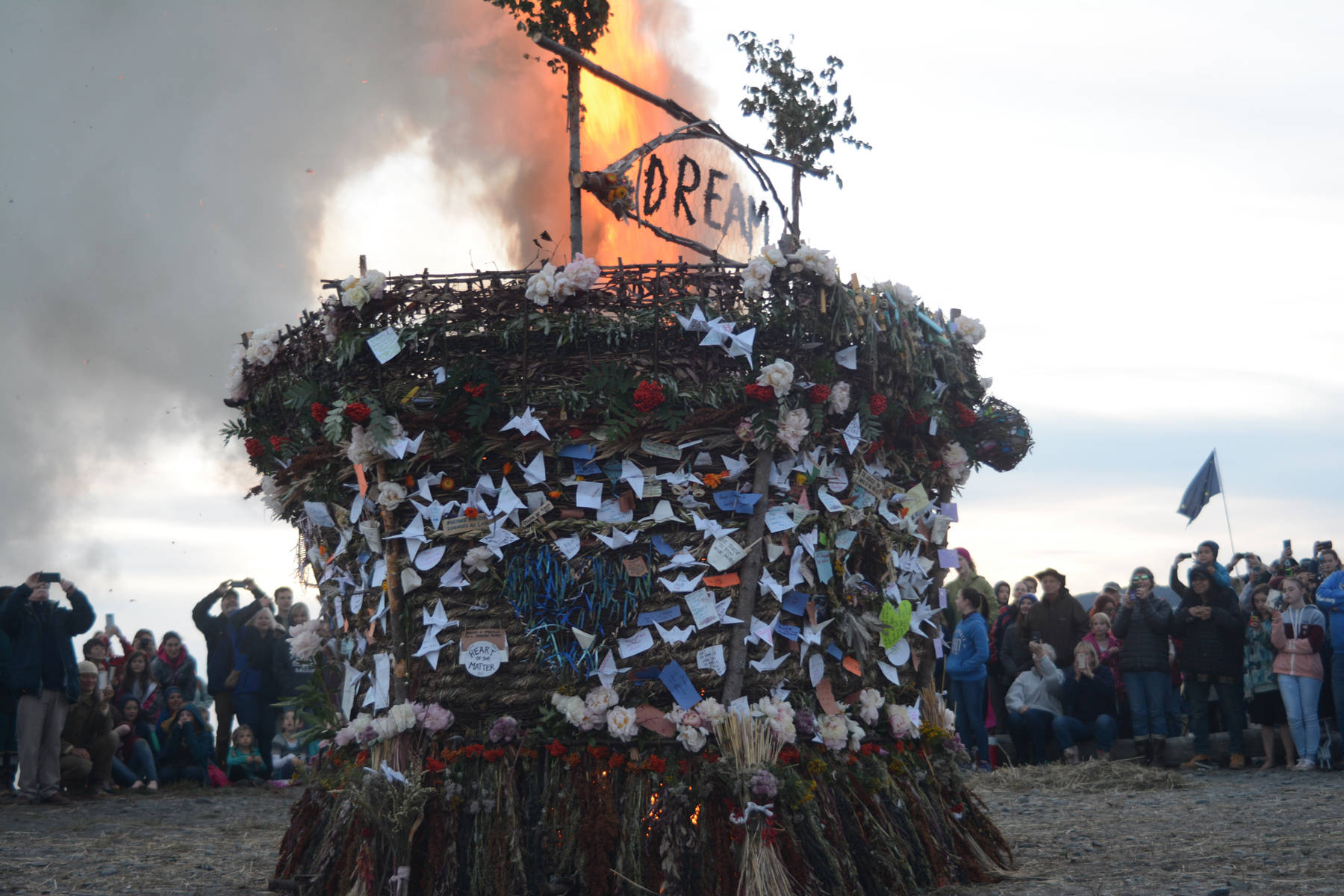
The 2018 Burning Basket, Dream, catches fire on Sept. 9 at Mariner Park, Homer, Alaska. (Photo by Michael Armstrong/Homer News)
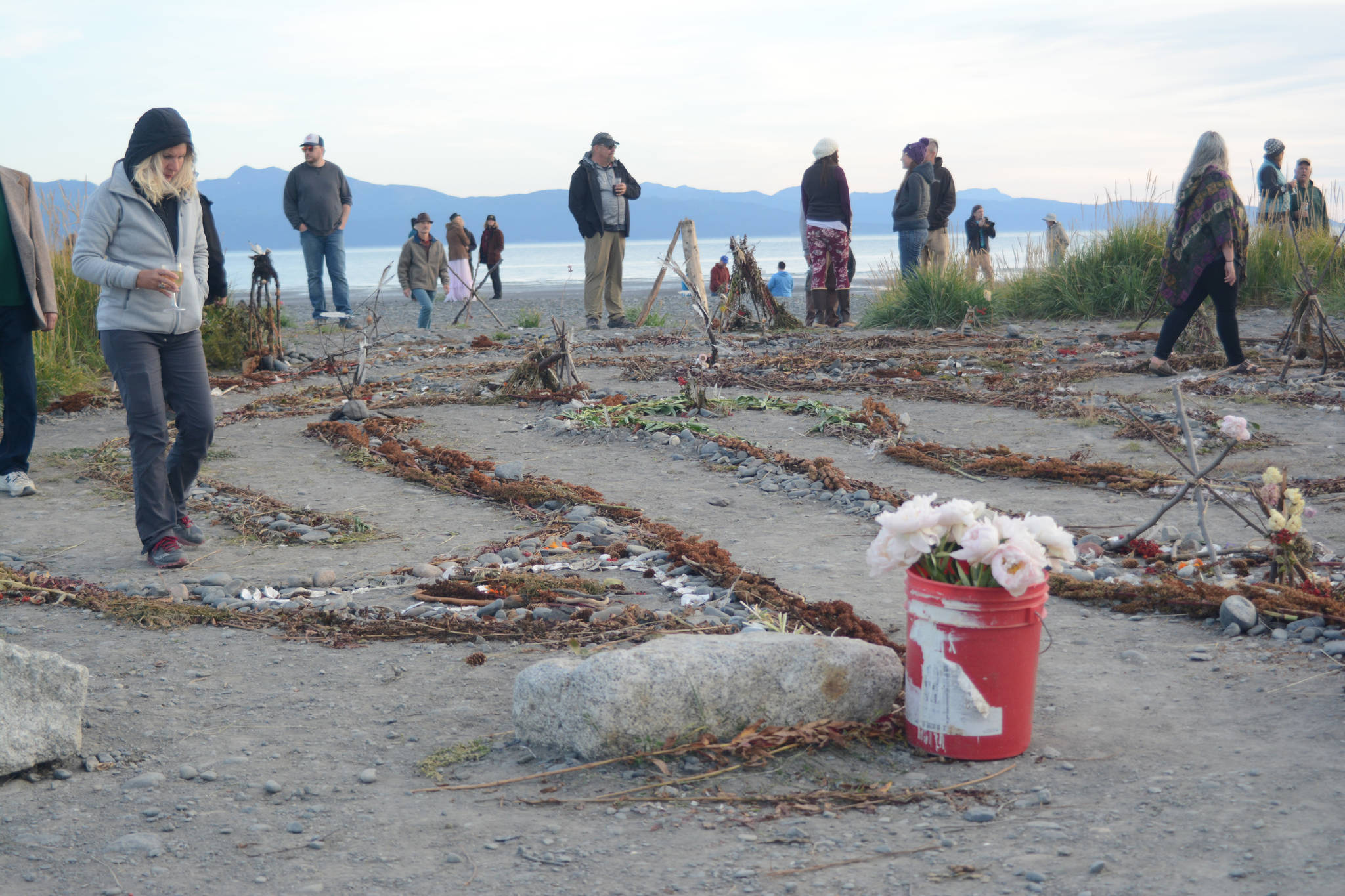
People walk the labyrinth at the 2018 Burning Basket, Dream, on Sept. 9 at Mariner Park, Homer, Alaska. (Photo by Michael Armstrong/Homer News)
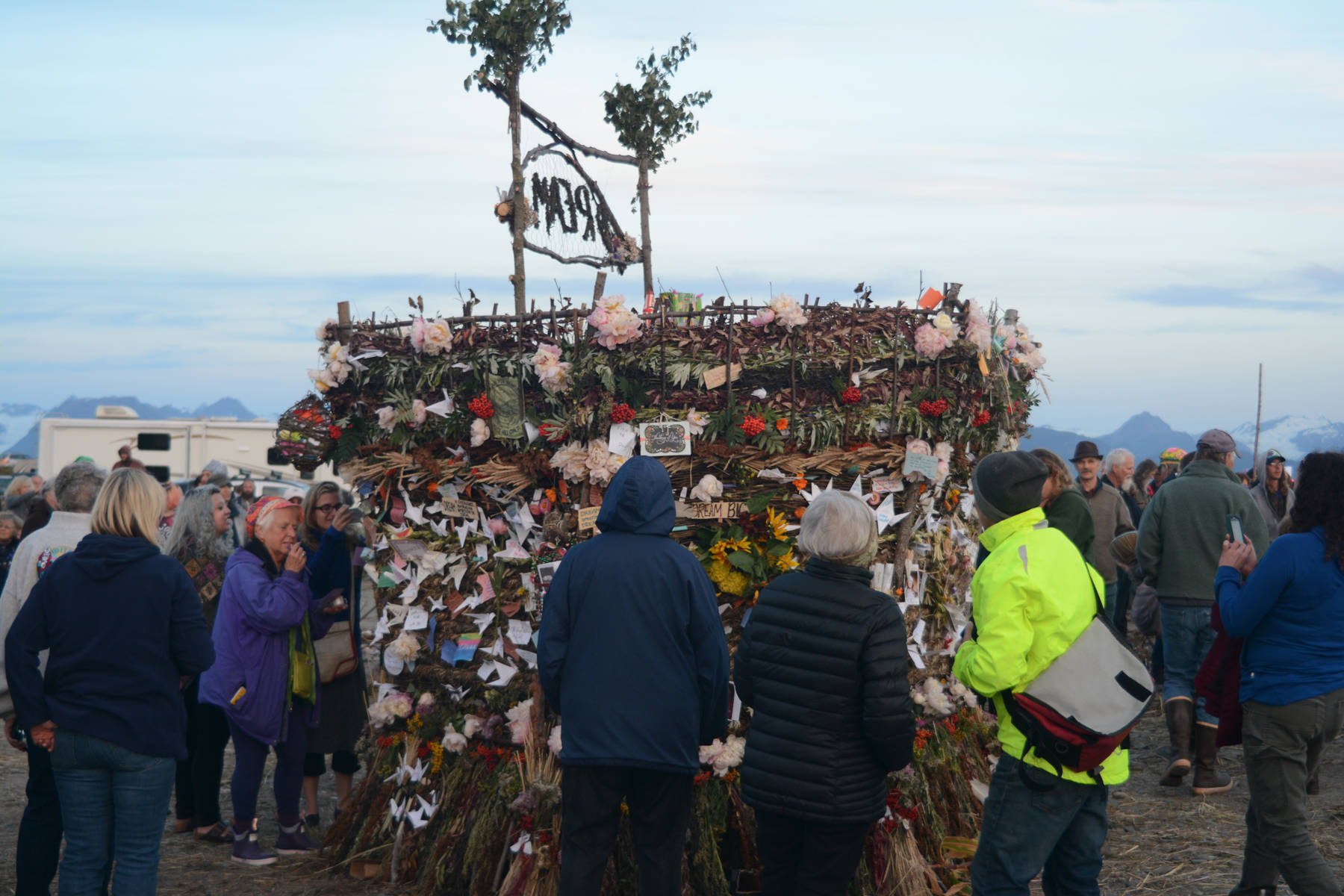
Visitors interact with the 2018 Burning Basket, Dream, on Sept. 9 at Mariner Park, Homer, Alaska. (Photo by Michael Armstrong/Homer News)
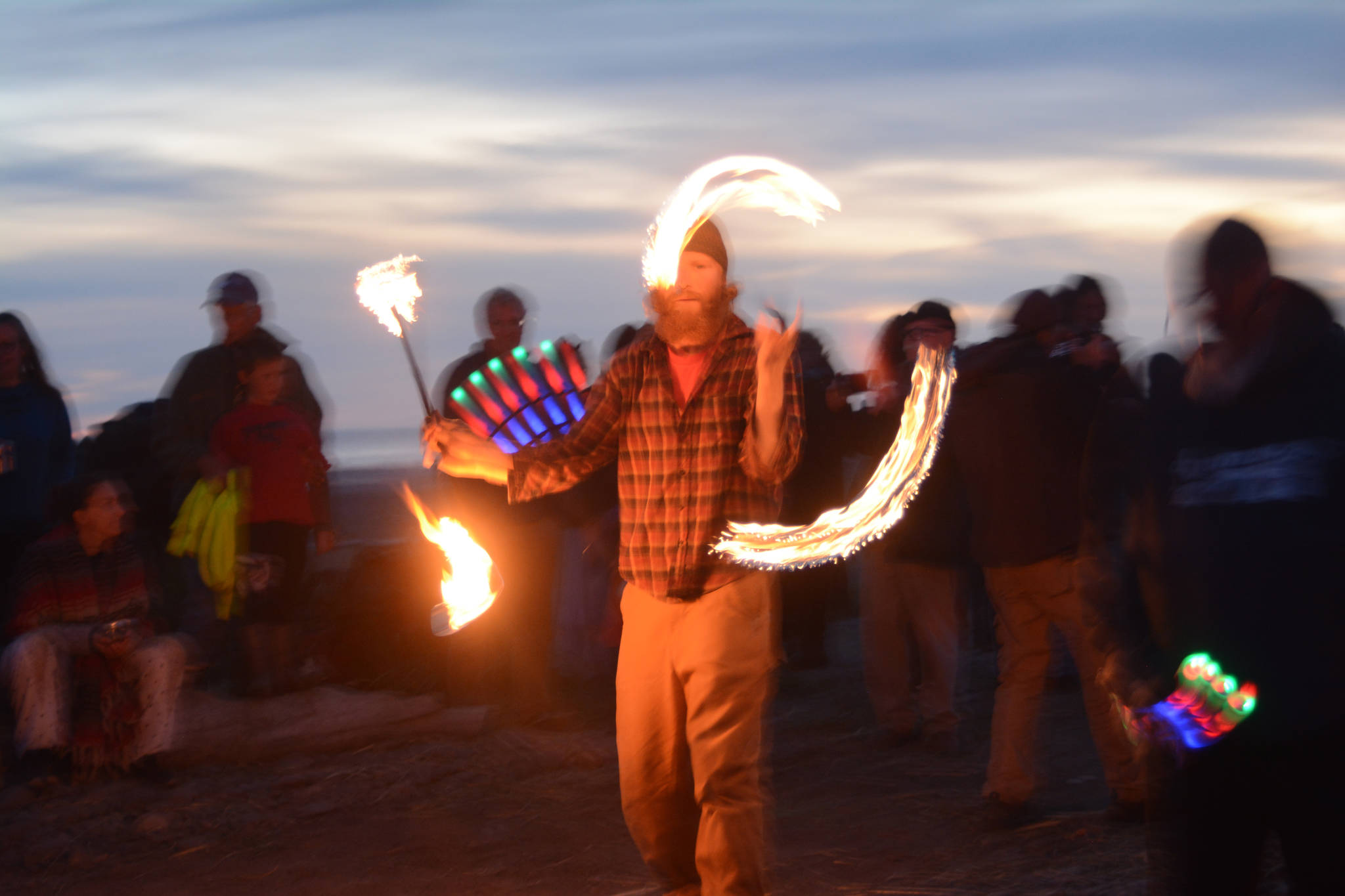
Jesse Toub spins fire at the 2018 Burning Basket, Dream, on Sept. 9 at Mariner Park, Homer, Alaska. (Photo by Michael Armstrong/Homer News)
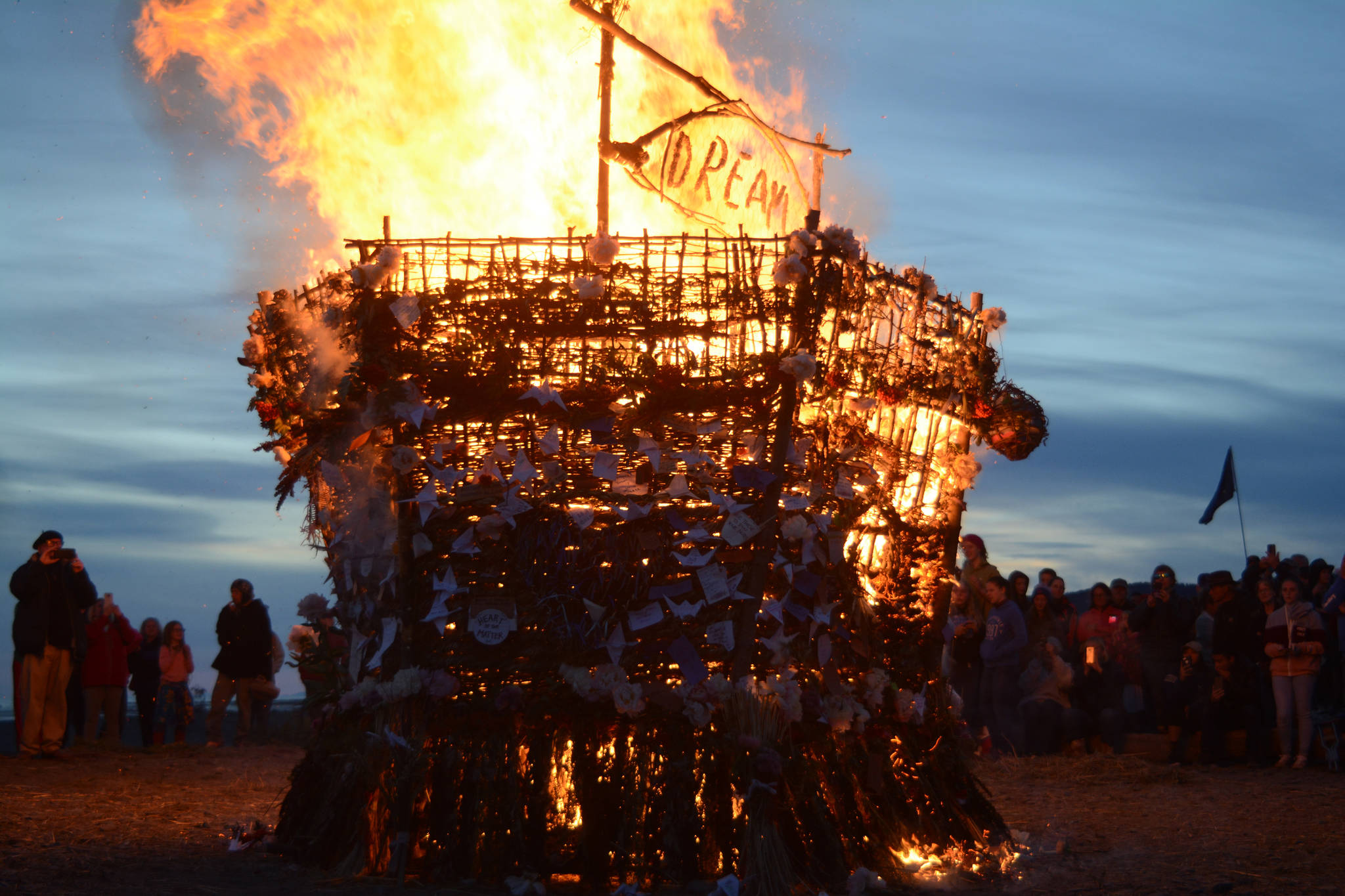
The 2018 Burning Basket, Dream, catches fire on Sept. 9, 2018 at Mariner Park in Homer, Alaska. (Photo by Michael Armstrong/Homer News)
