
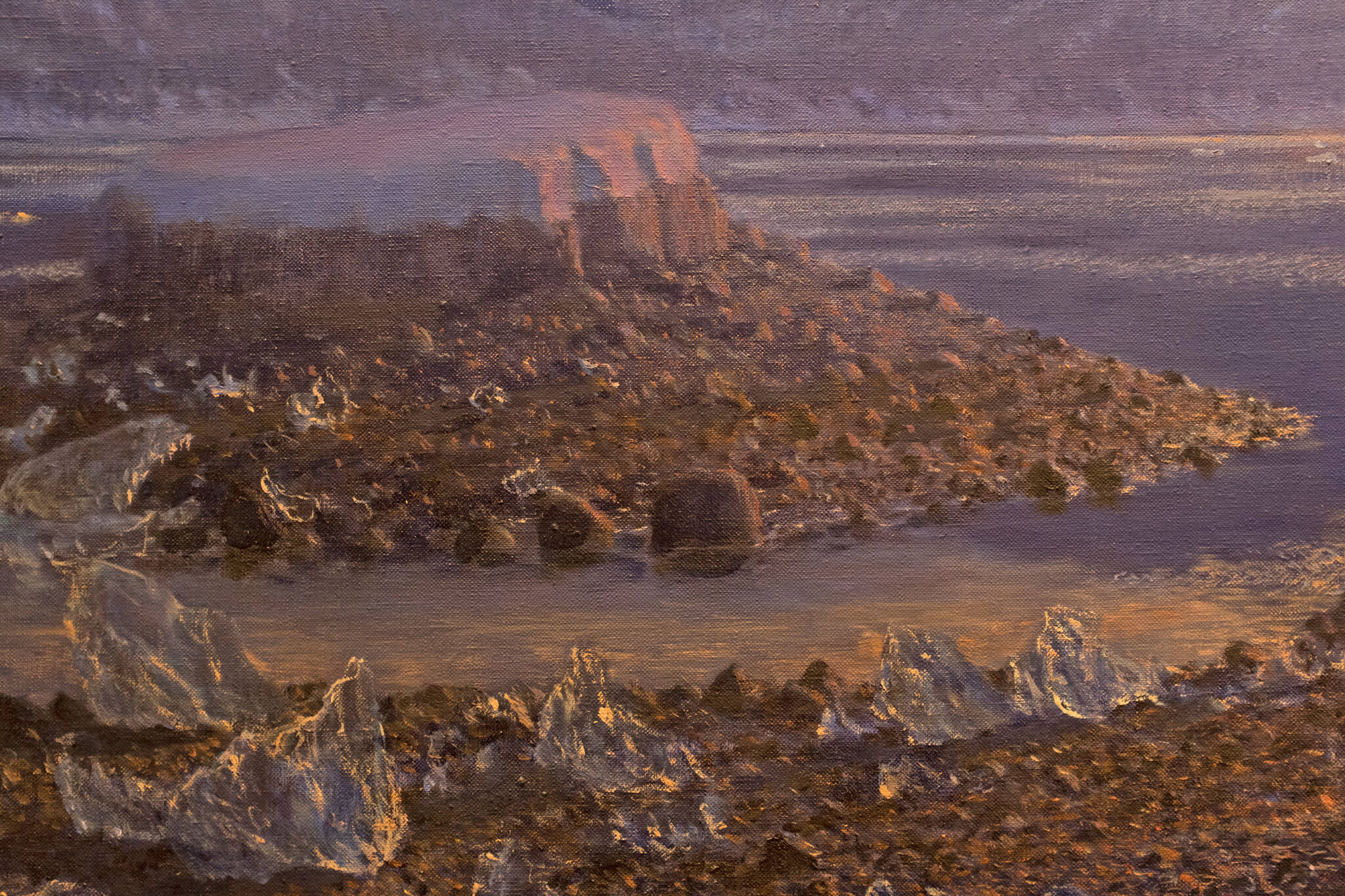
Growing up in Maine, painter David Rosenthal knew the stark beauty of snow and ice, but it took glaciers to teach him about their colors. He came to Alaska for the first time in 1977 to work in a Cordova cannery, avoided falling into a crevasse on an early glacial adventure, and fell in love with the landscape.
For more than 40 years, he has been sketching and painting scenes from the Arctic and Antarctic, and his exhibition “Painting at the End of the Ice Age” is now on display at the Pratt Museum. The show is a dynamic combination of climate science, Rosenthal’s personal journey, and dozens of his oil on canvas paintings capturing an icy spectrum of polar light.
As a realist painter with a background in science living in Cordova, Rosenthal has witnessed and documented the dramatic retreat of the region’s glaciers firsthand.
“All these years painting the glaciers around Cordova,” he said, “I unwittingly had been creating a kind of chronicle.”
With the remnant ice fields and glaciers supported by Chugach Mountains, the Alaska Range and the Saint Elias Range, Rosenthal said, “The Ice Age hasn’t ended in my view, at this point, as an artist.”
But Alaska’s glacial landscapes have radically changed since Rosenthal began painting them in 1977. One triptych of Copper River glaciers spans his years as a painter, and also includes a rendition of the area as it appeared prior to 1800, drawing from old accounts by Alaska Natives and explorers.
Creating paintings from outside his own experience was a deliberate decision to illustrate historical change for this show, Rosenthal said. A self-taught painter, his normal process revolves around pencil drawings of what he sees during excursions on, around, and above glacial landscapes. Working from memory to bring color to his sketches, Rosenthal then creates small watercolor and oil studies before scaling up to larger canvases.
Working from drawings rather than photographs enables Rosenthal to create paintings that he said are “more real to the human mind.” Being able to paint colors as the human eye sees them helps him capture more than a photograph can convey.
In one of his best known paintings of waterlilies on Cordova’s Crater Lake, for example, he was able to portray more than just the sun reflecting off the water, as a photograph would.
“As a painter, I could focus on the bottom and paint it with the refracted light, and the surface with the ripples,” he said.
Rosenthal said his work is preserving “not just a moment in time — it’s me spending hours standing in that place, looking into the shadows.”
In pictures of Denali for instance, he said, Alaska’s tallest mountain almost inevitably ends up looking small.
“When I’m up there, it looms up,” Rosenthal said. “In my drawing I’m pushed by my experience to make it bigger than a photographic record, to capture a feeling.”
By pairing his paintings with scientific information and anecdotes about his experiences in the Arctic and Antarctic, Rosenthal’s work offers a unique window into the world’s most rapidly changing ecosystems.
“[Rosenthal] is an artist who’s also a scientist, and he is communicating this very profound message through these beautiful paintings,” said Jennifer Gibbins, executive director of the Pratt Museum.
In his field work, “you see things normal people don’t see,” Rosenthal said. “Many times it’s a revelation to me too.”
When he had the chance to travel through the Northwest Passage with the U.S. Coast Guard Art Program in 1989, for example, “it took [the] most powerful non-nuclear icebreaker to get through,” Rosenthal said. “Now boats are doing it all the time.”
Working as a science technician in 2004 at Greenland’s Summit Station, which sits at over 10,500 feet, “there had never been temperatures for it to be warm enough to rain,” Rosenthal said. “Now they have recorded rain.”
As a general field assistant at McMurdo Station in Antarctica in the early 1990s, Rosenthal learned about the National Science Foundation Artists and Writers Program. He applied, but wasn’t selected.
“But throughout my career, it’s been my failures that have been the best thing for me,” Rosenthal said.
It was that first rejection that made him stick with a job he had initially disliked, giving him a pivotal appreciation for the austral winter.
When he was eventually awarded an NSF artist position in 1993, he had spent several years working at McMurdo — experience that helped him put together a plan for his residency to encompass winter months as well. Rosenthal ultimately spent 60 months in Antarctica over the course of a decade.
“My friends say this is a show I’ve been working on for 40 years,” he said.
During that time, the climate crisis has grown considerably worse.
“There’s an overall sadness for me personally, that this is happening to my world,” Rosenthal said. But, he added, “I look back at my life’s work, and it turns out, there’s a really good use for it now, which is to portray global warming.”
“Painting at the End of the Ice Age” will be at the Pratt Museum through May. Afterward, Rosenthal said he hopes the exhibition will travel around the Lower 48.
“I want it to be seen,” he said. “It’s my chance to give something back to nature.”
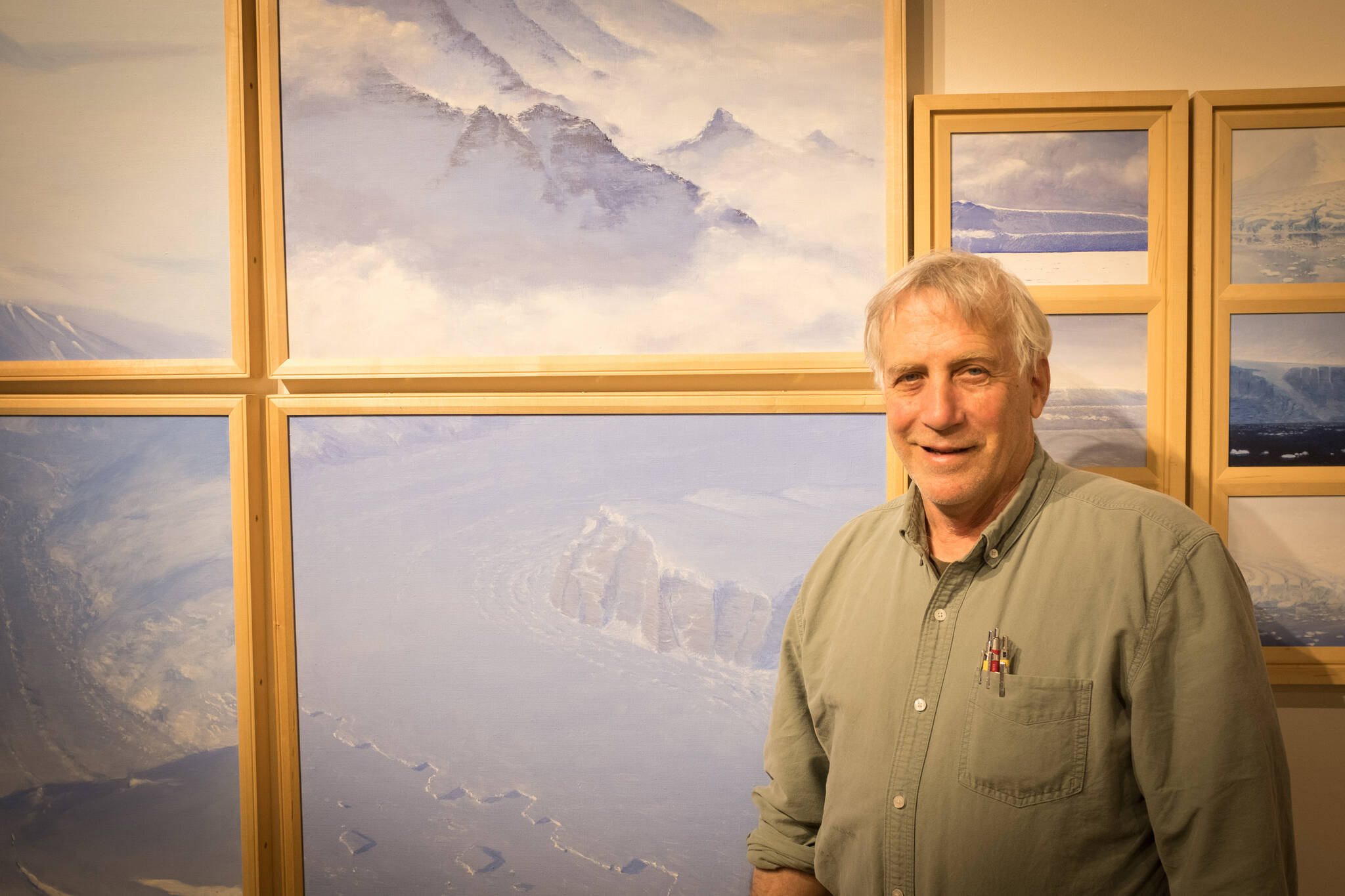
Photo by Sean McDermott David Rosenthal poses for a portrait in front of paintings from his time in Antarctica at the Pratt Museum & Park in Homer.
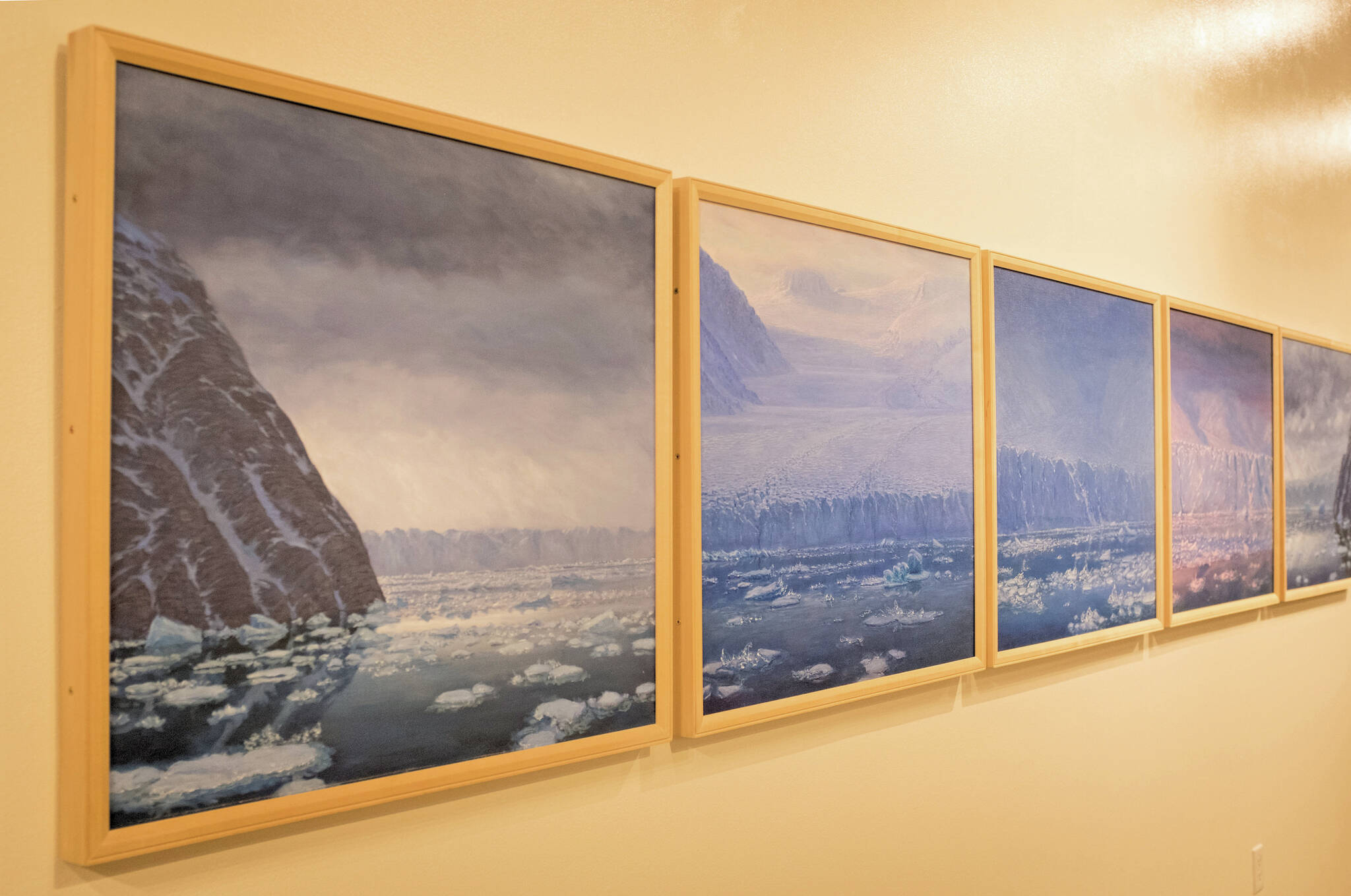
A series of paintings of the Columbia Glacier, which David Rosenthal called “the poster child for glaciers and ice retreat.” (Photo by Sean McDermott)
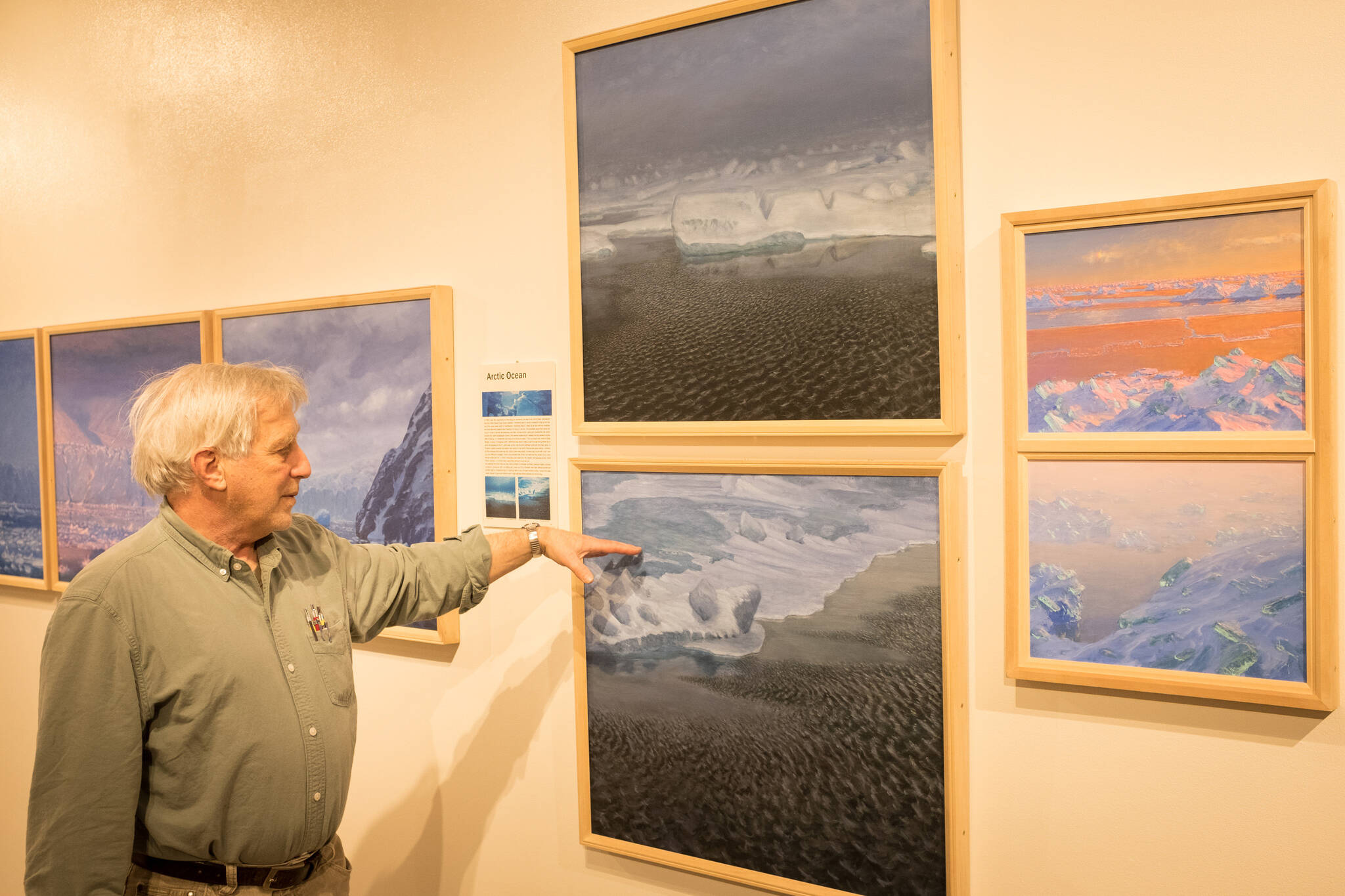
David Rosenthal describes work from his travels around the Arctic Ocean and through the Northwest Passage from his show, “Painting at the Edge of the Ice Age,” at the Pratt Museum & Park in Homer, Alaska. (Photo by Sean McDermott)
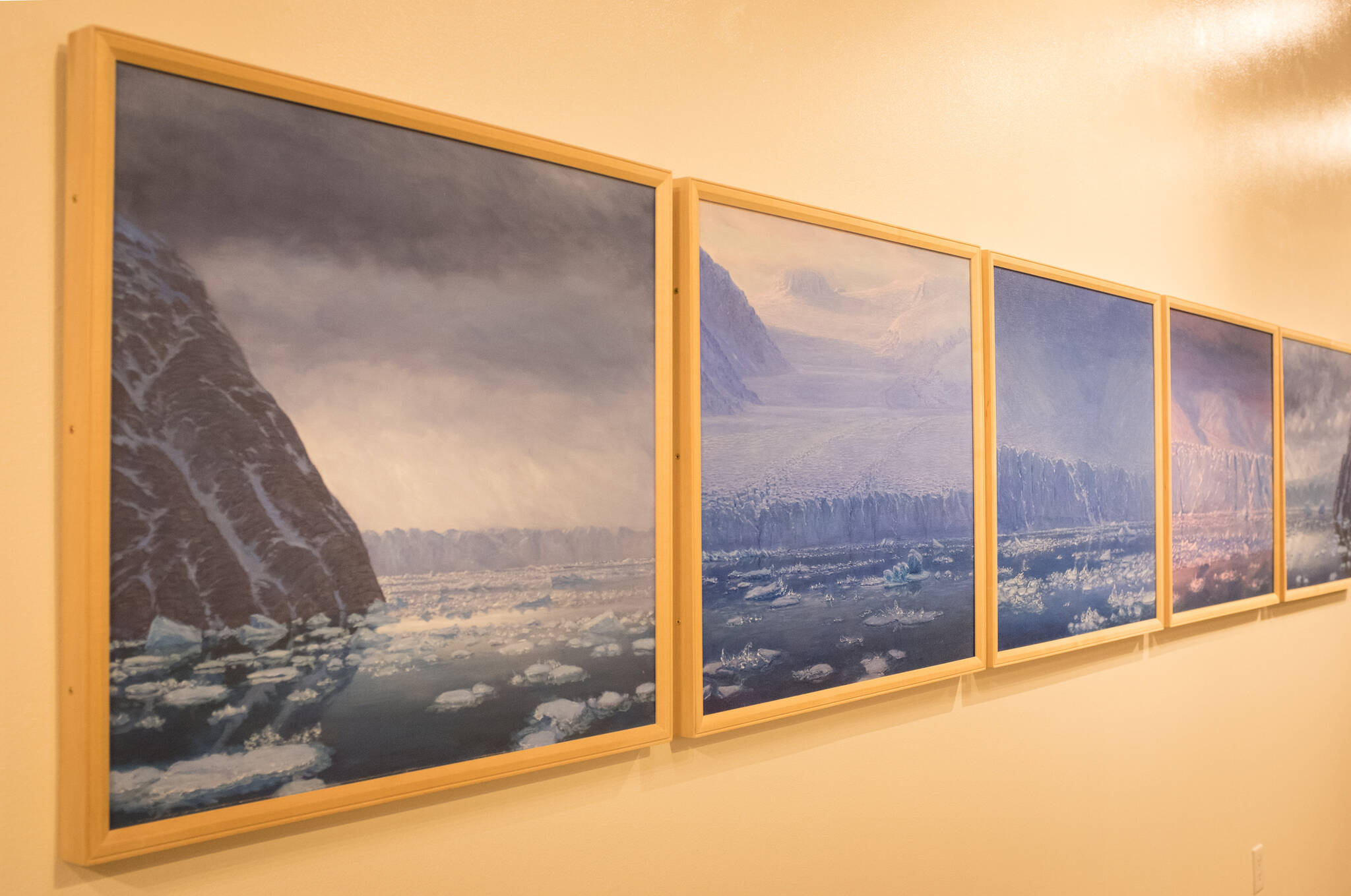
A series of paintings of the Columbia Glacier, which David Rosenthal called “the poster child for glaciers and ice retreat.” (Photo by Sean McDermott)
