
Salmon have always been an integral part of our economy, as well as a fundamental part of our identity as Alaskans. We measure the value of salmon not only in escapement numbers and dollars, but also in their ability to enrich our lives and connect us with the land we cherish and call home.
Alaskans have long supported salmon-friendly policies and regulations. And that support has paid off in the most robust wild salmon runs in the world. In fact, our state has more than 18 state and federal policies that address salmon habitat protections. These policies have been enacted and/or updated over the years, with annual revisions and additions to the list of protected habitat.
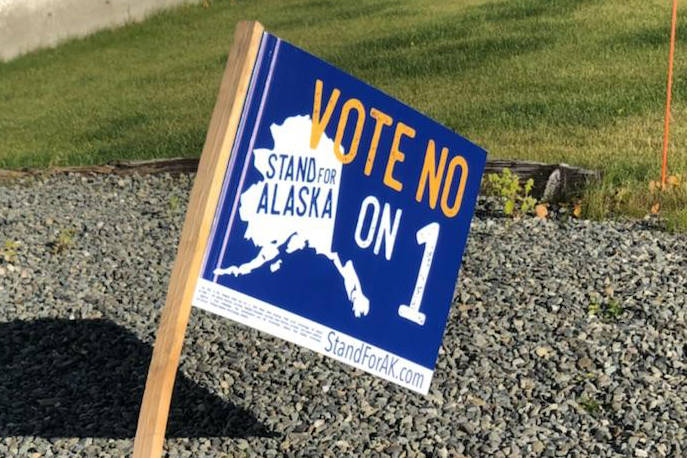
Now supporters of Proposition 1, also known as the “Stand for Salmon” initiative, want to throw out a system that has worked for decades and replace it with one that is overly cumbersome, too rigid, too expensive and too time consuming. For communities like ours, it adds costs we can ill afford for little to no gain.
The resolution recently considered by the Soldotna City Council stated, in part: “… the City of Soldotna believes that a legislative process which allows for intense public input and review, rather than the proposed ballot initiative, would be a better approach to developing a new regulatory framework for salmon protection and development permitting …”
Besides Soldotna, the Kenai Chamber of Commerce has expressed reservations with Ballot Measure 1. A Kenai Chamber resolution points out that “[t]he ballot initiative places unattainable protection standards on community and village development, both large and small. Under the proposed permitting process, road projects, water projects, wastewater treatment projects in our communities would require a major permit as described by the initiative language.”
In the case of Soldotna, our immediate concern is repermiting our wastewater treatment facility because under Proposition 1, existing operations would only be exempt until their current permits expire. After that, they would be required to reapply for permits under the new regulations. Many operations or projects, potentially including ours, would not be able to comply.
Currently the permitting process for our wastewater facility applies science-based standards specific to our unique operation and location. These standards are designed to avoid adverse impacts to water quality and aquatic life, including salmon, and the city has invested significant resources to ensure that these standards are met.
What Proposition 1 does is impose an unknown, costly set of rules that invite litigation, which only leads to delays and even more costs. Just consider what happens if Soldotna can’t repermit our wastewater plant?
Alaskans care deeply about the part of the world we inhabit and take seriously the ecological impacts of our presence here. That is why our current habitat protections are robust and science-based. Finding a balance between environmental protection and development is difficult, but we have never backed down from that challenge. We do not ascribe to the fallacy that we must either conserve everything or develop everything, but instead we face the ongoing struggle to maintain a workable balance that provides for our civil needs while preserving the quality of the natural environment that hosts us.
If, as Alaskans, we decide that changes to habitat protections are needed, there are proven, science-based procedures available, not an “all-or-nothing,” “yes-or-no” vote on a ballot initiative that most voters have not read and do not understand. Implementing these kinds of policy changes without knowing their full impact is irresponsible and reckless.
For these reasons, I invite you to join me in voting no on ballot measure one in November.
Lisa Parker lives in Soldotna. A lifelong Alaskan, she has been deeply involved in public service for the past 48 years.
