
In the global world we live in, America’s foes are always looking for ways to put dents in America’s strengths. Nations like China and Russia, envious of our prosperity, constantly try to gain economic advantage over us. And they use dirty trade tactics such as flooding markets with cheaper products produced under weaker environmental and labor standards.
Alaska’s abundance of resources and pipelines provide the U.S. a much-needed strategic advantage. To tap into it, Congress should enact the PROVE IT Act to level the global energy playing field.
As any Alaskan reading this knows, our amazing state is rich in natural resources including critical minerals, natural gas and oil. This is good for Alaska’s economy and jobs, and good for America energy security. It helps our allies as well, especially nations desperately trying to wean themselves off Russian natural gas.
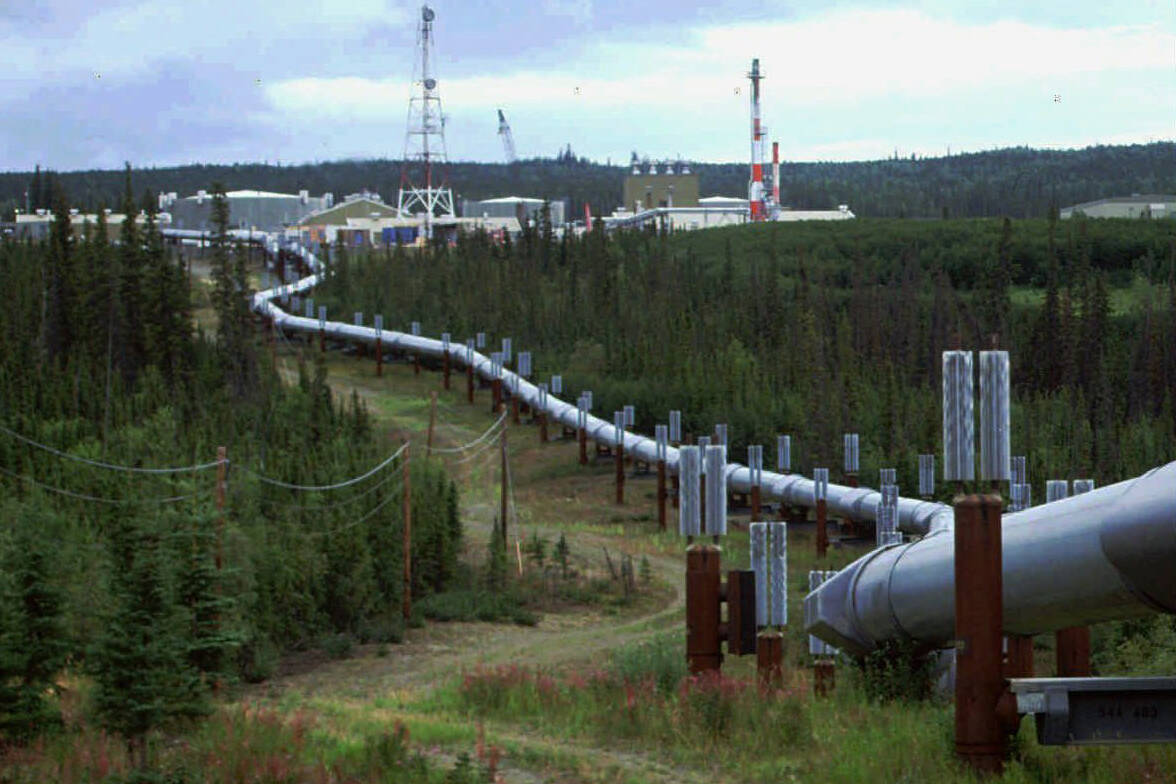
Much like the Trans-Alaska Pipeline System (TAPS) — a project which originated during the oil crises of the early 1970s and was transformative for our state, creating jobs and reducing America’s reliance on foreign oil — Alaska natural gas has similar potential. The PROVE IT Act can confirm Alaska’s natural resources are a vital part of a cleaner energy future. And embracing Alaskan LNG can strengthen the U.S. economically against strategic geopolitical adversaries.
Here’s how.
The PROVE IT Act is bipartisan legislation in the U.S. Senate to study the actual emissions intensity of goods produced in the United States with those produced in other countries. It will demonstrate what we already believe: that the U.S. is significantly cleaner (less-polluting) in some key manufacturing industries than other countries in the world. The production of American goods generates fewer emissions than heavy industrial polluters like China and Russia. When they flood markets with dirty goods, they undercut American industry that operates under higher standards. That’s not fair trade nor good for leveraging Alaska’s abundant natural resources. If we can better quantify the high standards U.S. industries adhere to — as the PROVE IT Act would direct the Department of Energy to do — we can account for them in national policies and global trade, elevating U.S. industries over cheaper, dirtier foreign alternatives.
Best of all for Alaska: This would offer a boost for our natural gas production and industry.
In every position I have held I have been grounded by relevant data. And the facts here are U.S. gas production is 9 percent more carbon efficient than the global average and 12 to 52 percent more carbon efficient than our biggest competitors. Our distinct carbon advantage in gas production comes from lower emissions intensity from flaring and venting, lower fugitive emissions rates, and use of technologies like satellite, aerial, and ground-sensor networks that increase operating efficiency.
It should come as no surprise that unlike in Alaska subpar Russian gas pipelines release some of the most potent greenhouse gas pollution in existence. This makes Russia, a very bad geopolitical actor, a heavily polluting one too. Add that to the list of reasons for our allies in Europe and Asia to decrease unhealthy and unsafe reliance on Russian natural gas and turn to the U.S. for LNG. Alaska LNG supplies can also generate substantial carbon savings by replacing coal-fired generation abroad.
By expanding U.S. exports of LNG to European and Asian markets and replacing dirty energy sources like Russian gas, we unlock significant opportunities for American businesses, improve our global ecosystem and enhance energy security for the United States and our key allies.
We should encourage Congress to promptly pass the PROVE It Act so we can level the playing field for our cleaner producers and hold China and Russia accountable for their high-polluting, anti-competitive practices.
Tom Barrett is an Anchorage resident. He formerly served as U.S. Deputy Secretary of Transportation, Commander of Coast Guard Operations for Alaska and the North Pacific, and President of Alyeska Pipeline (TAPS).
