
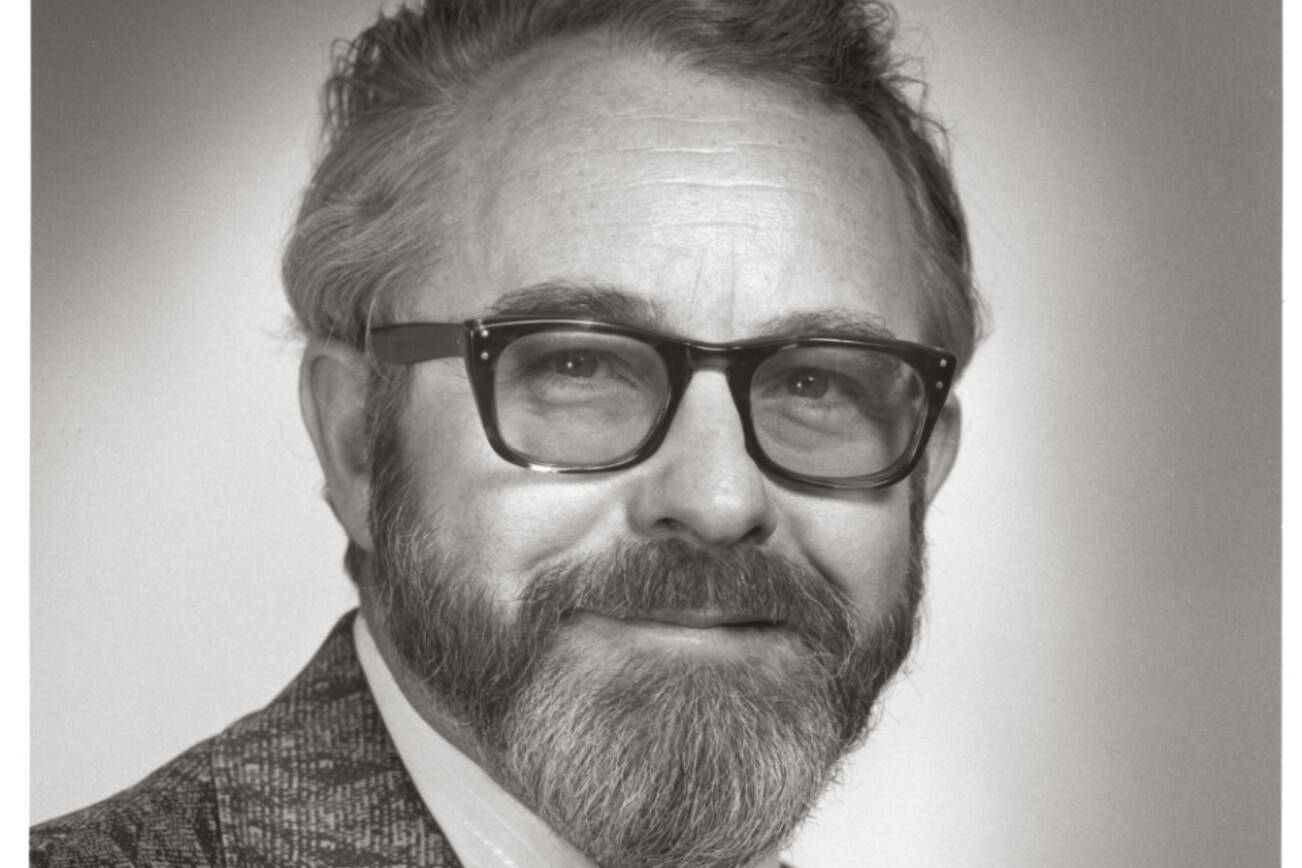
Neil Davis spent much of his career in the 1960s through the 1980s at the University of Alaska Fairbanks Geophysical Institute. He authored many Alaska Science Forum columns and the book Alaska Science Nuggets. Geophysical Institute photo

The mystery of the dancing wires

In this quiet, peaceful time of year, with all the noisy birds flown south and all the scary bears in hillside dens, little things catch our attention. Like wires that move as if by magic.

The late aurora scientist and interested-in-all-things guy Neal Brown once asked if I had written about why power wires sometimes dance to their own beat when there seems to be no wind or other force pushing them. He noticed it seemed to happen when the temperature was rising.

I pulled out Neil Davis’s Alaska Science Nuggets and found the answer.

First, though, a refresher on that book — a compilation of 400 of these columns — and why you are reading this right now.

Neil Davis was a do-all scientist at UAF’s Geophysical Institute from the 1960s to the 1980s. He started this column in 1976 at the urging of a newspaper editor and history professor Claus-M Naske. Davis wrote hundreds of the columns, which the Geophysical Institute has distributed free to newspapers. About 23 of them run it every week.

Other writers took over the column from Davis. I am the latest in that line, having started in fall of 1994. The directors of the Geophysical Institute have supported the column since its beginning. A thank you to them from me in this season of gratitude.

Back to the dancing wires. Each power wire out there has a certain tune to which it responds, known as a resonant frequency. It’s the magic a little girl achieves when she twirls a jump rope at just the right speed and gets a perfect loop whistling through the air.

Sometimes, even if we can’t feel it on our cheek, a slight breeze nudges a power wire. Wires are even more responsive to wind when snow clings to them, as it often does up here in the Interior.

“If the wire can be repeatedly tickled ever so slightly at the proper frequency, it will build up a major oscillation,” Davis wrote.

To move, wires need energy applied at their ends or in the middle. The latter is similar to a finger picking a guitar string. In this case the wind is acting as the finger.

As a guest writer of this column in 1978, late butterfly and moth expert Ken Philip described the process:

“Air moving past the wire is impeded by the wire; the air closest to the wire moves the slowest. The result is a curling up of the air behind the wire to form vortices — rotating spirals within which the air spins faster the closer it is to the center.”

These invisible little curls of air shove the wire as they depart. Sometimes those kicks happen at the sweet frequency of the wire, which responds by moving.

For the overly curious who must confirm things, Philip suggested blowing soap bubbles. They will float on a breeze that no cheek or anemometer can detect, allowing you to visualize the air that tickles the wire.

Ned Rozell is a science writer with the Geophysical Institute at the University of Alaska Fairbanks. Since the late 1970s, the institute has provided this column free in cooperation with the UAF research community. A version of this story ran in 2015.
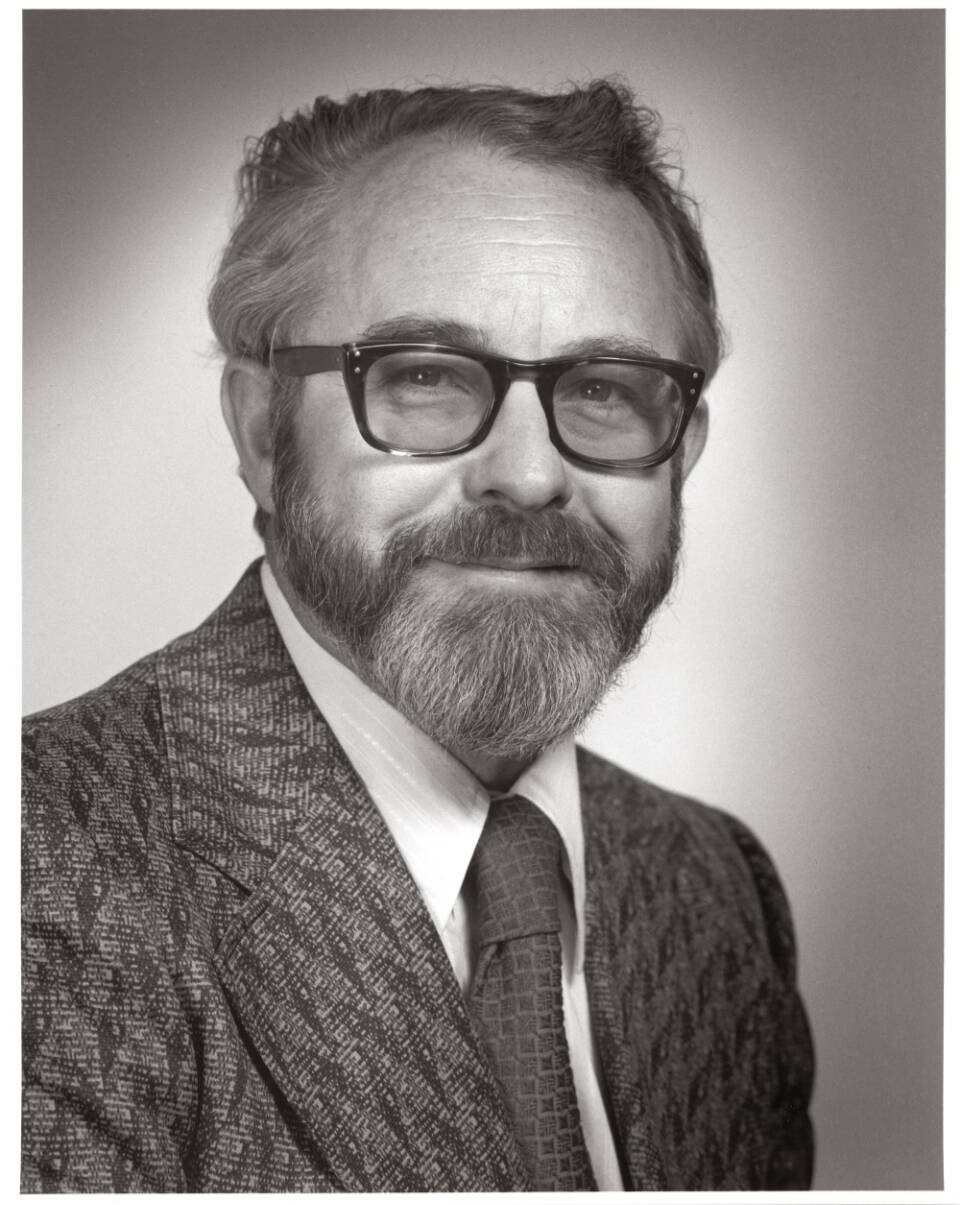
Geophysical Institute photo
Neil Davis spent much of his career in the 1960s through the 1980s at the University of Alaska Fairbanks Geophysical Institute. He authored many Alaska Science Forum columns and the book, “Alaska Science Nuggets.”

Geophysical Institute photo Neil Davis spent much of his career in the 1960s through the 1980s at the University of Alaska Fairbanks Geophysical Institute. He authored many Alaska Science Forum columns and the book, “Alaska Science Nuggets.”

More in Opinion

A vintage Underwood typewriter sits on a table on Tuesday, Feb. 22, 2022, at the Homer News in Homer, Alaska. (Photo by Michael Armstrong/Homer News)
Opinion: Federal match funding is a promise to Alaska’s future

Alaska’s transportation system is the kind of thing most people don’t think… Continue reading

Larry Persily. (Juneau Empire file photo)
Opinion: Dunleavy writing constitutional checks he can’t cover

Gov. Mike Dunleavy, in the final year of his 2,918-day, two-term career… Continue reading

Photo courtesy of the UAF Geophysical Institute
Carl Benson pauses during one of his traverses of Greenland in 1953, when he was 25.
Carl Benson embodied the far North

Carl Benson’s last winter on Earth featured 32 consecutive days during which… Continue reading

A vintage Underwood typewriter sits on a table on Tuesday, Feb. 22, 2022, at the Homer News in Homer, Alaska. (Photo by Michael Armstrong/Homer News)
Letters to the editor

Central peninsula community generous and always there to help On behalf of… Continue reading

Larry Persily. (Juneau Empire file photo)
Opinion: It’s OK not to be one of the beautiful people

This is for all of us who don’t have perfect hair —… Continue reading

Alaska’s natural gas pipeline would largely follow the route of the existing trans-Alaska oil pipeline, pictured here, from the North Slope. Near Fairbanks, the gas line would split off toward Anchorage, while the oil pipeline continues to the Prince William Sound community of Valdez. (Photo by David Houseknecht/United States Geological Survey)
Opinion: Alaskans must proceed with caution on gasline legislation

Alaskans have watched a parade of natural gas pipeline proposals come and… Continue reading

Van Abbott.
Looting the republic

A satire depicting the systematic extraction of wealth under the current U.S. regime.

Six-foot-six Tage Thompson of the Buffalo Sabres possesses one of the fastest slap shots in the modern game. Photo courtesy Ned Rozell
The physics of skating and slap shots

When two NHL hockey players collide, their pads and muscles can absorb… Continue reading

Pam Groves of the University of Alaska Fairbanks looks at bones of ancient creatures she has gathered over the years from northern rivers. The remains here include musk oxen, steppe bison and mammoth. Photo courtesy Ned Rozell
What killed the world’s giants?

Most of the large animals that have walked the surface of Earth… Continue reading

Larry Persily. (Juneau Empire file photo)
Opinion: Trying to deny voters a choice is getting to be a bad habit

Alaskans this fall will vote for the third time whether they prefer… Continue reading

Jim Jansen and Joe Schiernhorn are co-chairs of the Keep Alaska Competitive Coalition. Photo courtesy of Keep Alaska Competitive
Opinion: Alaska’s winning formula

Alaska is experiencing an energy renaissance, thanks to a stable fiscal framework… Continue reading

The Juneau offices of the Alaska Permanent Fund Corp. are seen Monday, June 6, 2022. (James Brooks/Alaska Beacon)
Stewardship for generations

The Alaska Permanent Fund is celebrating a 50-year milestone.