
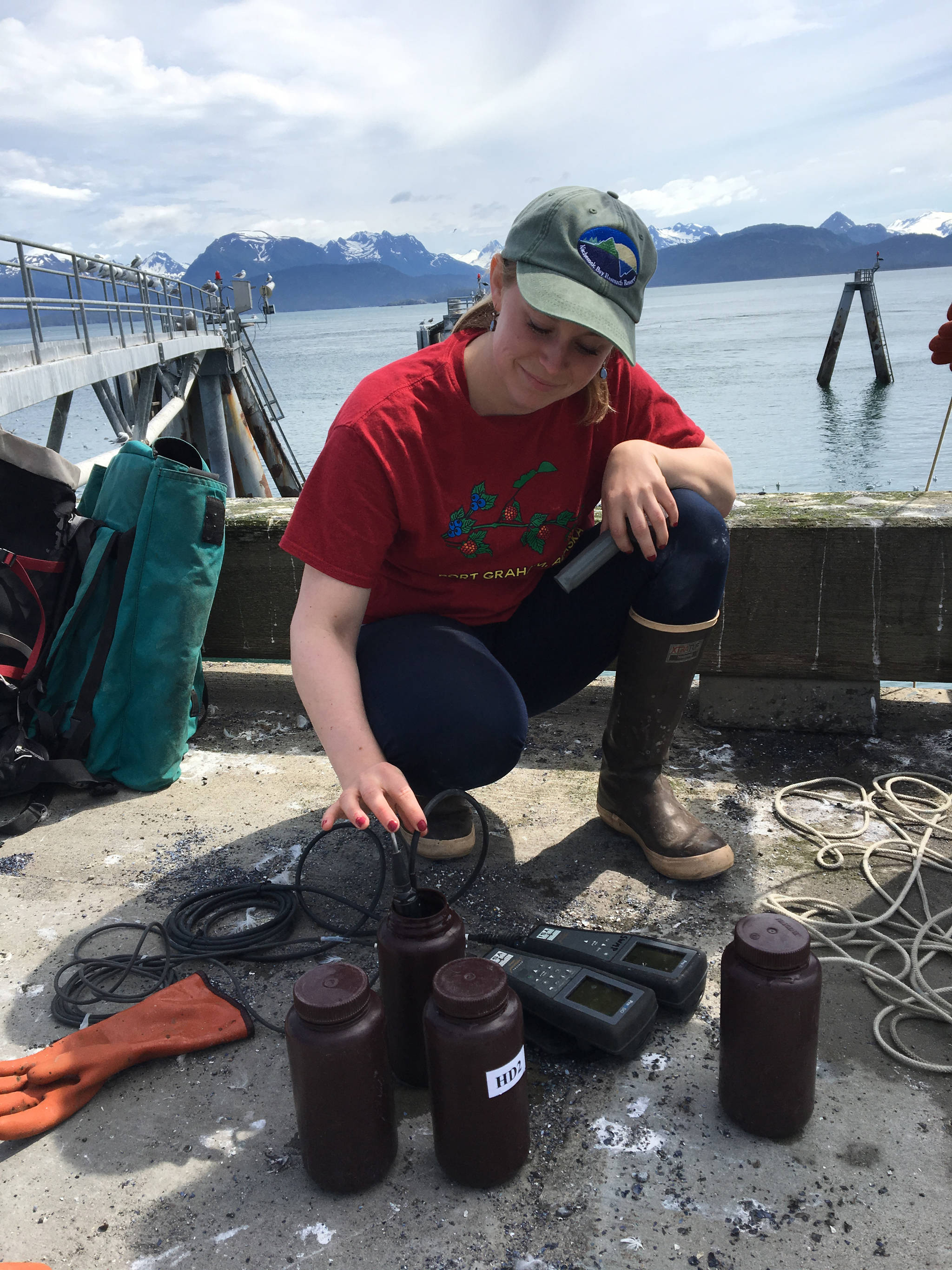
Every year, during budget negotiations at the state and federal level, staff at the Kachemak Bay National Estuarine Research Reserve (KBNERR) wait nervously for news. Will the National Research Reserve System, administered by the National Atmospheric and Oceanic Administration (NOAA) survive another year? Will the University of Alaska Anchorage (our state partner) continue to provide the small share of general funds needed ($37,000 plus $186,000 in unrecovered overhead) as match for a larger infusion ($690,000 in 2018) of NOAA funding? So far, year after year, KBNERR and the Reserve System, which includes 29 coastal Research Reserves, have prevailed, thanks to strong support from the public and our elected officials. Here’s what we stand to lose if that support falters.
KBNERR maintains three water quality stations and two weather stations. Every 15 minutes, data is recorded to provide real time information about water and weather conditions in Kachemak Bay. Twenty years of data is now available to help us track changing ocean conditions that may affect the production and health of shellfish, finfish, marine mammals and birds, as well as benefits to humans who depend on the bay for seafood and recreational opportunities.
To further understand these resources, staff conduct research on local streams and uplands to better understand how these landscapes foster juvenile salmon. The data from these projects address questions about development, and how to best proceed in ways that insure healthy salmon populations into the future.
KBNERR’s Harmful Species Program, working with some 40 volunteer community monitors, samples the waters of the bay for harmful algal blooms and marine invasives. This proactive approach serves as an early warning in the event of a toxic bloom or an aggressive invasive, like European green crabs. Staff also work with the Coastal Observation and Seabird Survey Team out of Oregon to conduct die-off alert trainings in the villages of Port Graham and Nanwalek and lead monthly beach surveys to monitor for dead or dying seabirds in partnership with the Seldovia Village Tribe Environmental Team.
KBNERR Education staff outreach place-based science in Kenai Peninsula schools to approximately 2,400 K-12 students annually. KBNERR collaborates with other environmental educators, including the Pratt Museum, Alaska Maritime NWR, and the Center for Alaskan Coastal Studies, to offer a five-day Master Naturalist Training each May for approximately 30 incoming summer educators on the natural and cultural history of the Kachemak Bay area. Staff conduct annual for-credit Teacher on the Estuary workshops for teachers around the state. And KBNERR conspires to offer a variety of public events, including Estuary Hikes, Outdoor Adventure Talks, Public Discovery Labs, and guest lectures.
Trainings, technical assistance and public programs are conducted throughout the year, including the 3-day Kachemak Bay Science Conference, quarterly meetings of the Kachemak Bay and Lower Cook Inlet Marine Ecosystem Workgroup, and a Green infrastructure training which led to funding ($100K) for the incorporation of green infrastructure into the new police station design. In 2018 2,395 community members participated in these trainings.
Additionally, KBNERR offers numerous opportunities to undergraduate and graduate students. Each year staff create and oversee internship opportunities for students attending the Kenai Peninsula College, Semester by the Bay program, and undergraduate NOAA Holling Scholars. Over the past year, KBNERR has hosted six undergraduate and seven graduate students.
Staff share their scientific, training and education findings through manuscript publications, reports, posters, conferences and workshops, oral presentations, and web-based data portals and videos.
Finally, KBNERR provides a significant local return on investment for Alaska. Approximately 98% of federal funding from NOAA is spent at the local level. Those federal dollars help attract over $750,000 annually from partners like the Alaska Department of Fish and Game to monitor for harmful and invasive species, and from the Gordon and Betty Moore Foundation for research and community engagement on watershed support for salmon habitats. State financial support for KBNERR is money well-spent.
Jessica Shepherd is the education coordinator for the Kachemak Bay National Estuarine Research Reserve.
• By Jessica Shepherd, For the Homer News
