
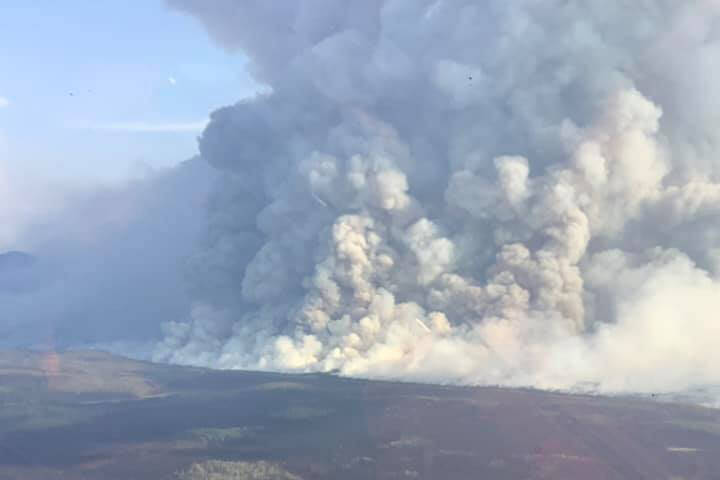
The start of school is the perfect time to get students outside learning about the role wildfire plays in the boreal forest and our communities. This summer’s wildfire season started early and consumed 1 million acres. Fires stretched across the state from the North Slope and northwest Arctic to the southeast Interior. Though cool, wet conditions recently shut down the 2025 fire season, smoky days are still in Alaskans’ memories.
Research shows that lessons held outdoors, and exposure to nature, increase student engagement in school and improves emotional and cognitive function. Teaching about local wildfires while in the natural landscape allows students to directly experience and understand their immediate surroundings, which can improve community preparedness.
One-stop shop wildfire field trip
New low-prep wildfire lesson plans make field trips to burned areas convenient and easy. We at the Alaska Fire Science Consortium and International Arctic Research Center created these resources, available at tinyurl.com/WildfireWalk, for people interested in bringing students to the Wildfire Walk interpretive trail conveniently located on the University of Alaska Fairbanks campus. The trail leads to the easily accessible 2021 Yankovich Road Fire scar.
Parents and educators in other communities can also use the resources. Few places in Interior and Southcentral Alaska are untouched by wildfire, and fire is moving into new areas like western Alaska where it was once rare. Many burned areas are readily and safely accessible by school bus or vehicle and they provide a perfect backdrop for young learners to study wildfire.
One of the new lessons, geared toward kindergarten through second grades, uses a bingo card to hone observational skills and teach new vocabulary. Students search for charred wood, trees with low branches called ladder fuels that draw fire into the canopy, signs of woodpeckers drilling into dead standing trees hunting for insects, and other plants and animals that are important parts of a forest’s story after a burn.
Another lesson prompts kids to act out and hike through a living timeline of wildfire succession — from the lightning strike that starts a fire, to the first plants that return, and an old forest ready to burn again.
In a lesson for third to eighth graders, students compare soil conditions within and outside a burn. Their data can be submitted to actual scientists who are monitoring the long-term effects of wildfire in Alaska. Additionally, through an art and writing activity, students hone their observation skills and imagine what the forest may look like years after a burn.
A final activity — similar to red light, green light — keeps students moving and engaged as they walk back from a burn. The learners themselves represent how fast a fire spreads or is contained by speeding up or slowing down their walking pace based on cues related to weather and firefighter activity.
By engaging youth in educational activities like these, parents and educators can cultivate a culture of preparedness in future generations, leading to more resilient communities. Whether you use these resources or find other ways to help young people understand wildfire risks and prevention strategies, you empower youth to become active participants in community safety.
Find a previously burned area near your community using the Alaska Wildfire Explorer tool (alaskawildfires.org). Field trips in Fairbanks can follow the Wildfire Walk interpretive trail (tinyurl.com/WildfireWalk). Remember to stay safe in burned areas by paying attention to your surroundings, especially near dead standing trees, roots and other debris.
Heather McFarland is science communications lead at Alaska Fire Science Consortium. Tori Brannan is science education specialist and program coordinator at International Arctic Research Center. Katie Spellman is co-director for education and outreach for International Arctic Research Center. Hilary Shook is coordinator for Alaska Fire Science Consortium.
