
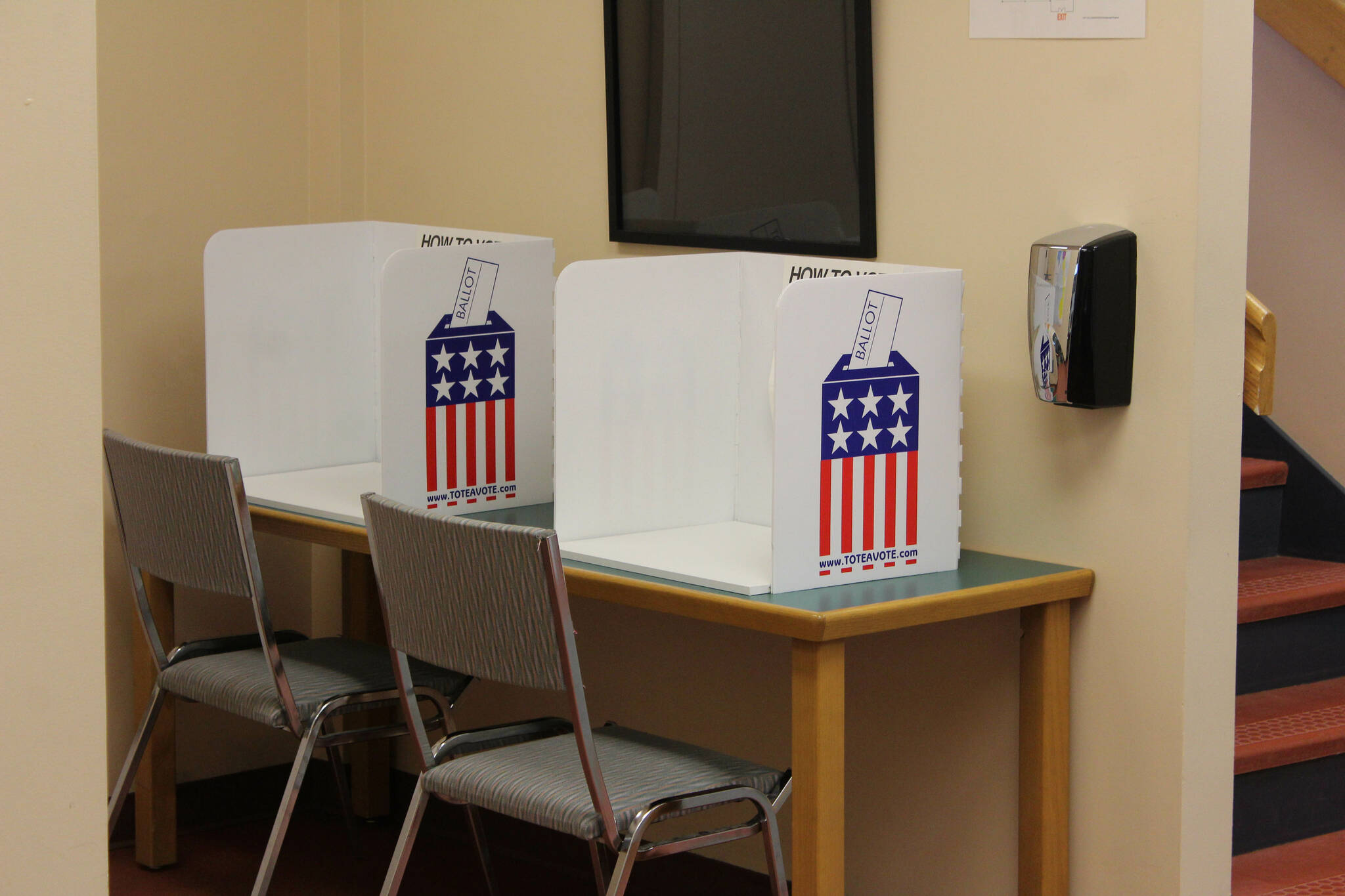
I have worked the elections for our precinct in Homer since 2020. It continues to be a great and rewarding experience. Here is what I know about our Kenai Peninsula Borough election system, which is very similar to the state’s system.
First of all — the borough and the state are two separate elections. The borough directs the local elections at the borough and city level. These elections are for borough assembly and mayor, school district board, service area boards (hospital and emergency), city council and mayor. They do not have a primary because they are not a political election, they are community service elections. These elections are held every year the first Tuesday in October.
The state directs state and federal elections for our governor and lieutenant governor state and federal representatives and senators in even number years and do have a primary in August and then the general in November. The presidential election is held every four years.
Both systems are similar in how the election process works. They are paper-ballot based and provide options in voting: You can vote early in person at a city hall or borough office; you can request an absentee ballot and mail it in; and, of course, you can be social and go to your local polling place and cast your ballot on Election Day.
At the polling place people get checked in by showing their ID and signing the precinct register. If they are not on it, they can complete a question ballot, which will get reviewed by the elections commissioners along with absentee mailed in ballots.
Every precinct gets paper ballots equivalent to the number of voters in their precinct. They are delivered to city and/or borough clerks along with the voting equipment, the precinct registers and all sorts of supplies as well as district maps and voting pamphlets. There is a training provided for election workers followed by the checking in of all the supplies. When the supplies and ballots are sent out, the clerks check off the numbers on a records form. After the training, the precinct chairs with their workers check off and sign they have received all items on the same form. It is important to note that the number of ballots are recorded when they are sent, they are recorded when they are received. The ballots and registers are in a locked bag and along with the voting machine and tablets, also in locked cases, are picked up by the chairs the day before election day.
The ballots are packaged in pads of 25, each attached to numbered stubs. The ballot is separated from the numbered stub when given to the voter. Stubs are kept for counting at the end of the day. You may recall that the ballots have black squares along the edges — those are coded for the precinct they are going to.
Regarding the voting machines which many find suspicious because it is thought they can be manipulated or somehow accessed, here is a list of its securities.
The voting machine, which is a scanner and a tabulator, is about the size of a laptop and gets attached to the voting box the morning of Election Day. There are two discs in the voting machine holding data. They are locked in with numbered/recorded locks and the voting machine is “manned” the entire voting day. Access to the scanner/tabulator requires a key and code, access to the ballot box requires a separate key. Before opening the polls, a tape is run that shows a 0 count of ballots cast, the date/time and polling precinct location.
The scanner/tabulator is NOT connected to the internet prior to and during voting hours. It is only connected after the polls close and final tally tapes have been run so results can be transmitted. Note again — there are two discs in the machine recording the voting data and there are the paper ballots in the box.
Every ballot is electronically counted on the scanner/tabulator — a person can see what number they are when they scan their ballot in and they can see that the ballot has been successfully counted. If there is a problem with the ballot going through the scanner, it tells you and the voter can put it through again.
The internet line to receive the data to the server at the borough (or the state for their elections) is only activated when the polls have been closed and totals have been run. The scanner/tabulator is then connected to the internet, result tallies are sent and in short order, it is disconnected from the internet.
Ballots are kept and can be hand counted if necessary. The borough and the state have policies for how many years they are kept.
At the end of the voting day workers cannot leave until they balance the number of ballots received to the ballots cast, spoiled ballots, question ballots, special needs ballots and ballots left over. After the result tallies are sent, the box is opened and ballots removed and put in envelopes that are sealed and signed across the seal by all election workers. A tally sheet is completed that records ballots received, ballots cast, question and special needs ballots completed and spoiled ballots. All spoiled ballots are torn in half and also sent in a sealed/signed envelope. The two discs and two results tapes, which are signed by each election worker, are enclosed with the precinct register and ballots in a locked case.
There is also a special needs voting tablet for someone who cannot complete a regular ballot to vote at using assisted technology. This is an ADA-compliant requirement for elections. A paper ballot is printed once the person votes, that is then cast in the ballot box. This tablet is also in a locked bag. It is not connected to the internet ever. All of its plug-ins are locked/numbered/recorded. It is accessed only by the election chair using a code.
Once all is properly sealed/signed and locked back up and the precinct location cleaned up, two election workers return all the equipment to the city or borough clerk. The equipment is received, lock numbers recorded and the election workers sign the record sheet.
As you can see our voting system is very secure. You have the ballots and the tally discs. The tallies have been sent electronically as everyone is anxious to hear the results. I believe this system is best as you have back up to the tabulator with the ballots, and backup to the ballots with the tabulator.
The State has a web page with step-by-step ballot counting processes. Please check it out. https://www.elections.alaska.gov/ballot-counting-process/
Therese Lewandowski is District C-6 election chair.
