
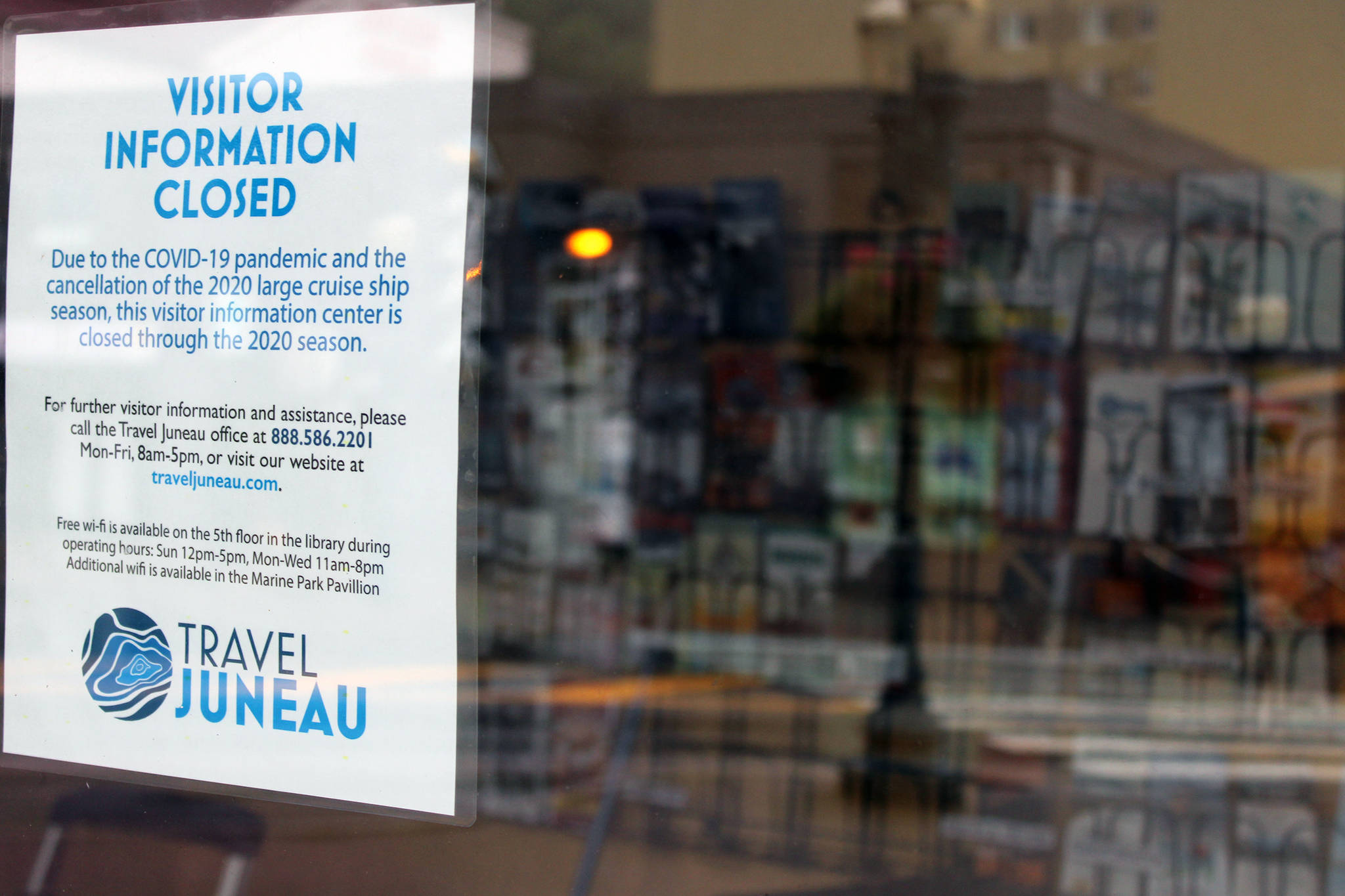
2020 was tough on tourism. Alaska’s cruise industry had the worst year in its history. The pandemic left thousands unemployed and our private-sector economy in shambles. Then, just as vaccinations ramped up and COVID-19 infections subsided, our hopes for some semblance of a visitor industry recovery were dashed with the announcement that Canadian ports would continue to be closed to Alaskan cruises until February 2022.
It was a gut punch.
Under archaic and often misunderstood legislation, the Passenger Vessel Services Act of 1886, or PVSA, cruises between American ports may not transport passengers except on ships that are U.S.-built, owned, and documented. An exception is allowed for foreign vessels departing from and returning to the same U.S. port, provided the ship visits a foreign port. This makes at least one Canadian port call mandatory on almost every Alaskan cruise.
Cruise critics have hammered large cruise lines for years, faulting them for building and flagging ships in foreign countries. There are, however, no shipyards in the U. S. that can build large cruise ships of the size used in Alaska. Even if flagged in America, the ships wouldn’t qualify unless U.S. built.
The cruise industry must now rely largely on other forces to overcome two major obstacles in their efforts to resurrect the 2021 season — if there’s any chance of cruise ships sailing in Alaska this year.
First, the industry needs to receive clear guidelines from the Centers for Disease Control and Prevention on safety protocols so they can acquire equipment and train crews as well as secure agreement from all the affected Alaska port communities. CDC has had almost a year to prepare for this and they have yet to clarify workable guidance.
Second, the provisions of the PVSA could be waived at the congressional level (or perhaps by presidential executive order) so Canadian stops would not be required for foreign-flagged ships. Alternatively, a negotiated agreement with the Canadian government may secure an early termination of their cruise ship ban. It is doubtful Canada would agree to this unless the aforementioned CDC guidelines were in place.
Gov. Mike Dunleavy and our congressional delegation are working on both issues full time but there is no guarantee of success.
Time is rapidly running out.
According to industry insiders, it will take at least 60 days to get ships ready and crews onboard and trained. The longer it takes to resolve health protocols and the Canadian cruise ban issue, the longer it takes before a decision can be made to salvage any part of the season. At some point, the cost of running ships in a shortened season will be greater than leaving them mothballed with a skeleton crew. In a recent Southeast Conference presentation, Howard Sherman, Norwegian Cruise Line executive vice president, stated that if a path to resolving these issues was not found by May 1, then it would likely mean cancellation of the 2021 season.
Needless to say, the worst-case scenario with major cruise line cancellations would be an unmitigated disaster for hundreds of small businesses and our port communities. Another round of COVID-19 relief funding is likely, but it may not be enough. Some have suggested ramping up independent tourism, by ferry, for instance. It’s hard to see how current frequency, capacity, and cost of Alaska ferries could be significantly modified to attract many travelers. The one-way fare for two people with a stateroom (without a vehicle) on AMHS for the three-day voyage from Bellingham to Haines is $1,441. Add a motor home and the fare is around $4,900. Double that for the return trip due to problematic Canadian border restrictions.
Regardless, the options being considered wouldn’t come close to offsetting the decline in commercial and municipal revenues caused by a shortened or canceled cruise season.
Alaskan communities with economies dependent on cruise visitors are all hoping for the best but are bracing themselves for the worst.
Even before the Canadian cruise ban extension, the City and Borough of Juneau was facing a $9.9 million deficit this year and an $18.4 million deficit in FY2022. Yet, the Assembly has yet to consider any serious operating spending reductions.
It would seem now is the time.
• Win Gruening retired as the senior vice president in charge of business banking for Key Bank in 2012. He was born and raised in Juneau and is active in community affairs as a 30-plus year member of Juneau Downtown Rotary Club and has been involved in various local and statewide organizations. Columns, My Turns and Letters to the Editor represent the view of the author, not the view of the Juneau Empire. Have something to say? Here’s how to submit a My Turn or letter.
