
The recent announcement of a potential merger between Union Pacific and Norfolk Southern railroads has prompted renewed reflection on Alaska’s own transportation infrastructure. While Glenfarne and the State continue to evaluate a one-way gas pipeline from the North Slope to tidewater, Alaska should use this time frame to consider a broader alternative.
We should seriously consider the construction of a 450-mile rail extension from Fairbanks to the North Slope — a project with far greater long-term economic benefit than a single purpose gas line.
The estimated costs for a two-way rail line is in the neighborhood of $10.5 billion. It could unlock the full economic potential of the North Slope. Liquid natural gas (LNG) could be transported in ISO containers as well as transfer points along the route. In addition, the railroad could deliver cleaner, cheaper energy to remote communities along the Yukon River. This could displace high-cost diesel and lower residential energy costs.
The benefits extend far beyond energy distribution:
Construction materials and goods could move more efficiently and affordably than current trucking options.
The extension would provide year-round access to the North Slope, overcoming seasonal obstacles that hinder current transportation methods. This reliability is crucial for timely resource extraction and transportation.
North Slope oil producers could reduce exploration and operational costs, enabling access to previously uneconomic reserves.
The rail corridor would help support development of the North Slope’s vast oil shale deposits, which cover approximately 30,000 square miles — three times larger than the West Texas basin that helped fuel the United States’ rise to become the world’s top oil producer.
The railroad would also reduce transportation costs for critical minerals exploration, so important in positioning Alaska to lead in supplying essential materials and precious metals.
It could serve strategic interests for the U.S. military, while also supporting a potential petrochemical manufacturing industry — building long-term value beyond raw resource export.
Most importantly, this vision is financially achievable, unlike the proposed $40-$50 billion (and now some say $70 billion) gas line. The Fairbanks-North Slope rail line could be financed through revenue bonds. The Alaska Railroad has the existing authority to issue tax exempt bonds, making this project more feasible without direct taxpayer burden. Repayment would come from the users: oil producers, mining companies, support services, the military, and future industries that benefit from access.
For these reasons, I strongly encourage the State of Alaska, the Alaska railroad and relevant federal partners to conduct a thorough cost-benefit comparison between extending the railroad from Fairbanks to the North Slope and the proposed costs of constructing the gas line. Rail offers a more flexible, resilient, and multipurpose solution that can serve Alaska’s economy and its communities for generations.
It’s time we invest in attainable infrastructure that delivers value, versatility, and vision.
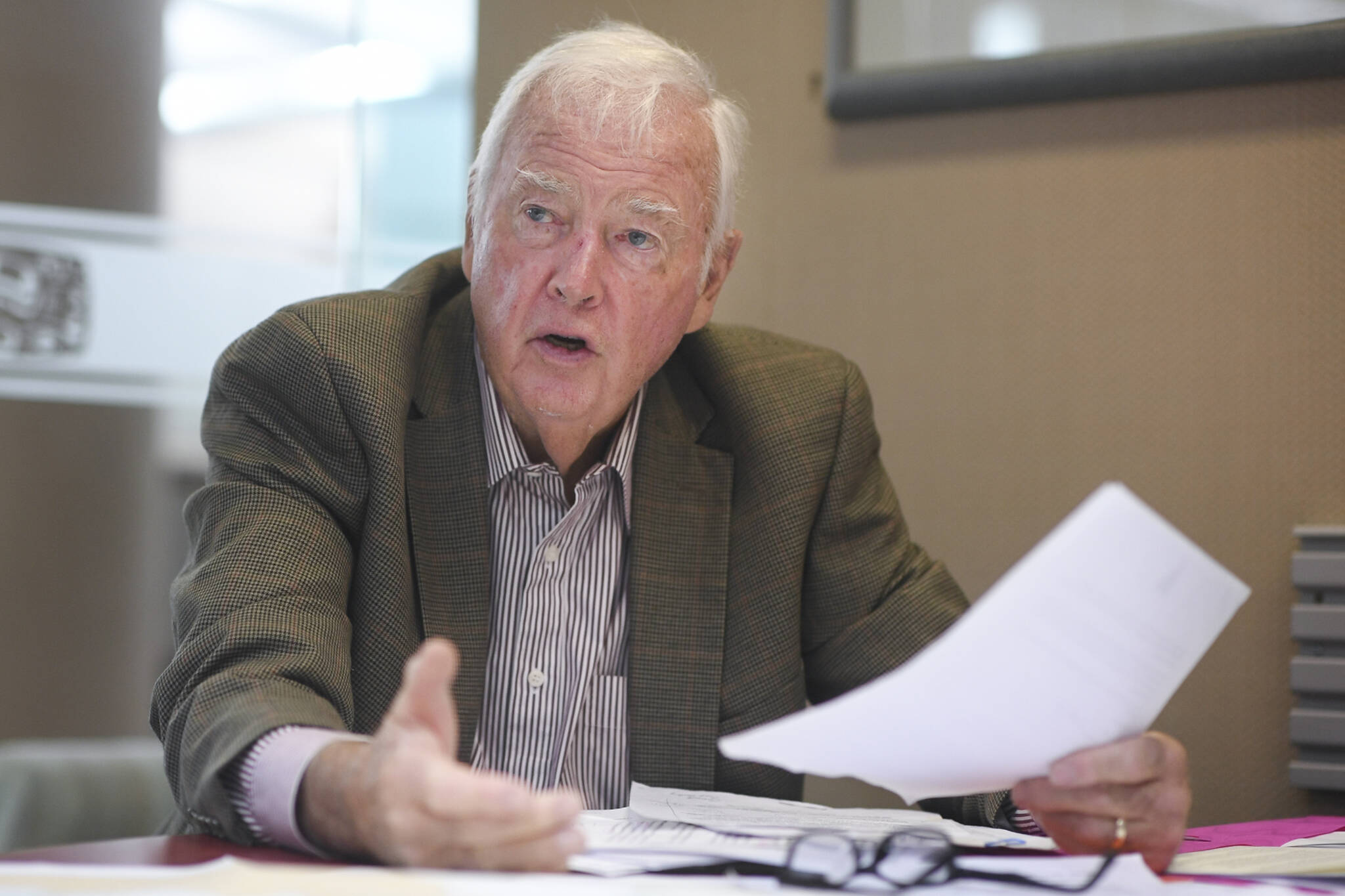
Frank H. Murkowski is a former U.S. senator and Alaska governor.
