
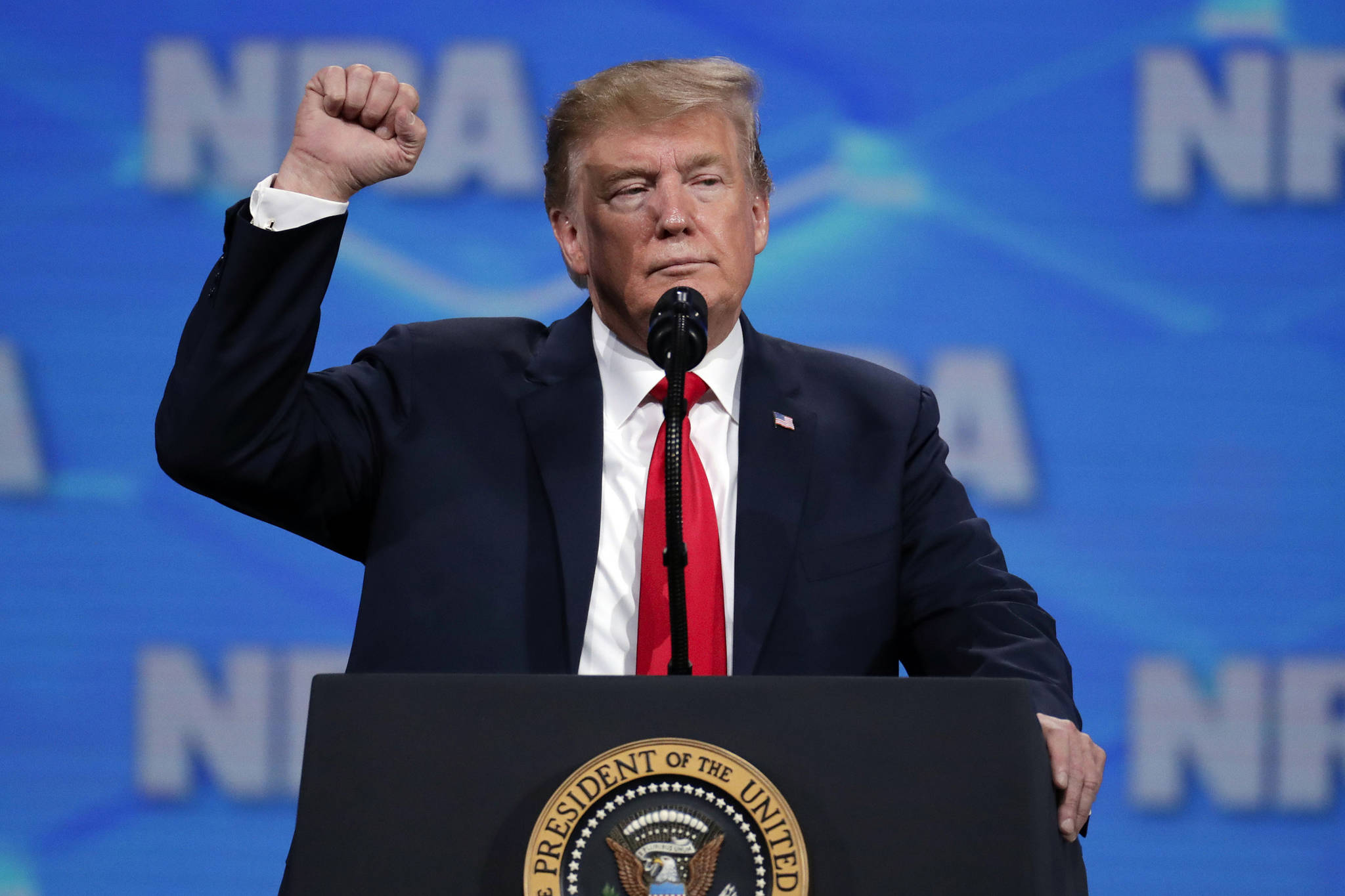
Democrats in U.S. House haven’t impeached President Donald Trump. But soon after the redacted Mueller report was released, a Guardian news article asked if the eight current Republican senators who voted to convict President Bill Clinton for obstructing justice will apply the same standards to Trump.
Sen. Ted Stevens is another Republican who found Clinton guilty of that charge. The insightful reasoning behind our late senator’s decision offers both parties an honorable path forward as they consider the evidence of obstruction presented by Mueller.
In one important regard, Stevens differed from most of his Republican colleagues. He didn’t believe Clinton’s guilt warranted removing him from office. The context in which he defended that position began with imploring the Senate “not denigrate the role of oaths and truth in our society.”
[Opinion: Doing nuclear energy right requires global paradigm shift]
The truth was never in question. The case presented to Congress by the independent counsel became the basis for a joint resolution proposed by Democrats. Stevens noted they agreed Clinton had “egregiously failed” in his obligation “to set an example of high moral standards and conduct himself in a manner that fosters respect for the truth.” That he “made false statements” to the grand jury and “wrongfully took steps to delay discovery of the truth.” And that his conduct deserved “censure and condemnation” by Congress and the American people.
House Republicans rejected the resolution and instead passed two of the four articles impeachment they drafted.
“The action of the House of Representatives was not partisan,” Stevens argued. “But it is obvious from the final vote that future generations could reach such a conclusion.” That’s because on not one charge did more than five Democrats support impeachment.
A party line vote like that in the Senate, Steven warned, would undermine the two oaths they swore to uphold.
The first — to “support and defend the constitution of the United States” — he explained as a principle obligation “to protect the separation of powers of our three branches of Government.” In other words, Congress must act as an independent check on presidential power, not a partisan extension of or enemy of the executive branch.
[Opinion: Override Trump’s veto of US involvement in Yemeni war]
Democrats failed that test. On both charges, they all voted to acquit Clinton.
The second oath was to hand down “impartial justice according to the Constitution and laws.” That, however, was an impossibly high threshold. The prosecutors were all Republican members of the House Judiciary Committee. The 100 senator jurists were all biased by their party affiliation. And they all had extensive prior knowledge about the subject matter, the parties and the prospective witnesses that would be grounds for removal from a normal jury.
Stevens wasn’t immune to such judicial prejudice. But having served as a defense attorney, U.S. attorney and solicitor of the Interior Department, he believed the Senate’s impeachment trial must abide by the spirit of the law and rules of civil procedure in federal court cases. Therefore, to the best of his ability, he weighed the evidence independent of the political advantage it offered his party.
On the obstructing justice charge, Stevens was among the 49 Republicans who found Clinton guilty. But he explained he wouldn’t have done so if he’d been casting the deciding vote to remove the president from office. Referring to external threats, he said that “could destabilize our nation — leaving him in office will not.”
Stevens believed his decision honored the truth expressed by the joint congressional resolution to censure Clinton that was offered by Democrats. And in a defiant but honorable fashion he proclaimed “To hell with the politics … I have done my best to live by the oaths that I took, and to do what I think is right for the nation.”
What would Stevens say about impeaching Trump? I’m sure he’d fulfill his constitutional duty to examine the credible evidence that the president wrongly attempted to obstruct justice. And I think he’d expect the Senate to acquit him along partisan lines. But he’d be more concerned it would further divide the country and allow the Russians to turn that into a destabilizing force against our democracy.
With Stevens as their guide, Congress can find a bipartisan way to formally condemn Trump. Doing so will go a long way to restoring dignity to the oaths and truths that Americans aspire to live by.
Rich Moniak is a Juneau resident and retired civil engineer with more than 25 years of experience working in the public sector.
• Rich Moniak is a Juneau resident and retired civil engineer with more than 25 years of experience working in the public sector.
