
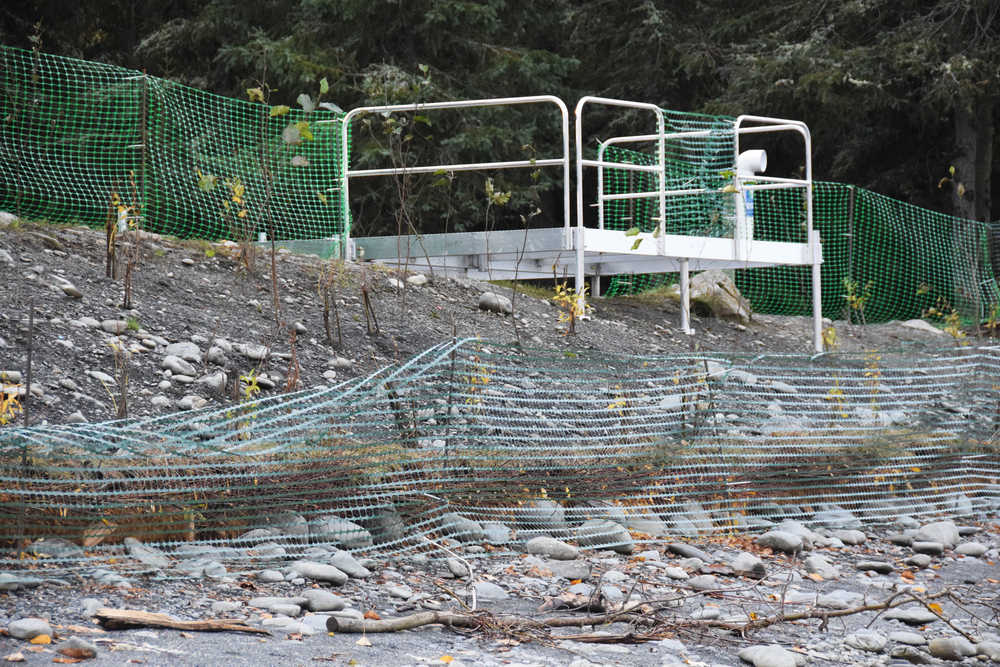
Photo by Megan Pacer/Peninsula Clarion Protective fencing holds back recently-planted vegetation along the river bank on the south side of the Kenai River and Russian River confluence Wednesday, Sept. 28, 2016 near Cooper Landing, Alaska. Light-penetrating staircases and vegetation planted along the banks are part of a U.S. Fish and Wildlife Service to stabalize erosion and protect habitat.

Photo by Megan Pacer/Peninsula Clarion Protective fencing holds back recently-planted vegetation along the river bank on the south side of the Kenai River and Russian River confluence Wednesday, Sept. 28, 2016 near Cooper Landing, Alaska. Light-penetrating staircases and vegetation planted along the banks are part of a U.S. Fish and Wildlife Service to stabalize erosion and protect habitat.

Work progresses on Kenai, Russian riverbank restoration

Work to restore the riverbank along a section of the confluence of the Kenai and Russian rivers is in full swing.

The Kenai National Wildlife Refuge through the U.S. Fish and Wildlife Service began the project to stabilize the banks in 2006-07, upstream of the Russian River Ferry landing. Now, vegetation and light-penetrating stairways are being installed downstream on the Kenai River’s south shore to provide anglers access to the water in a less damaging way.

To some extent, all rivers move and change shape over time due to erosion because natural erosion is indifferent, said Matt Conner, visitor services manager at the refuge.

“The only time erosion becomes an issue is when it affects … plans, civilizations and roads, things like that,” he said. “So in this case when we say we’re trying to reduce the erosion, what we’re trying to do is reduce the rate of erosion because we’ve lost the vegetation because it’s such a heavily used area.”

Vegetation has been planted on the bank and the platforms of the stairways have been placed.

“So once we say, ‘Yep, this is exactly where we want them,’ they’re going to set the platforms and they’re going to get a tape measure out and then custom-build the steps,” Conner said.

Though much of the work will be done this fall and winter, Conner said the steps won’t likely be installed until the spring because they would have to be taken out over winter.

Fish and Wildlife staff will have to either take the stairs out every year and move them up the bank or lock them in place because of their precarious position on the river.

The planted vegetation should take less maintenance, Conner said.

“Within about five to 10 years, I think that’s going to look like it does upstream,” he said.

A goal of restoring the bank plant life is to improve fish habitat in the area. The project’s environmental assessment in 2006 showed the project would improve fish habitat, mostly for king and coho salmon fry along the bank, and stop further erosion. This would encourage increased salmon returns in the future.

Around 70,000 people, most of them fishermen, visit the Kenai River and Russian River confluence each year.

“That’s what we refer to as that shoulder-to-shoulder fishing experience,” Conner said. “… while people are doing that, they’ll have less disturbance on the land.”

From what Conner hears from anglers who notice or ask about the ongoing bank stabilization, he said most fishermen want to do right by the riverbanks and are supportive of the work.

Funding for the stabilization project comes from an account made up of recreation fees paid by refuge users for activities like staying in cabins or crossing the river on the ferry, Conner said.

“So money that goes to campgrounds, money that … is brought back from the ferry operations … money from visitor use days that our guides pay us for every time they take someone out in the river,” he said. “It’s a piggy bank project is the best way to describe it, and we let that kind of build up.”

The project should be finished up by next June in time for the next season, Conner said.


Reach Megan Pacer at megan.pacer@peninsulaclarion.com.
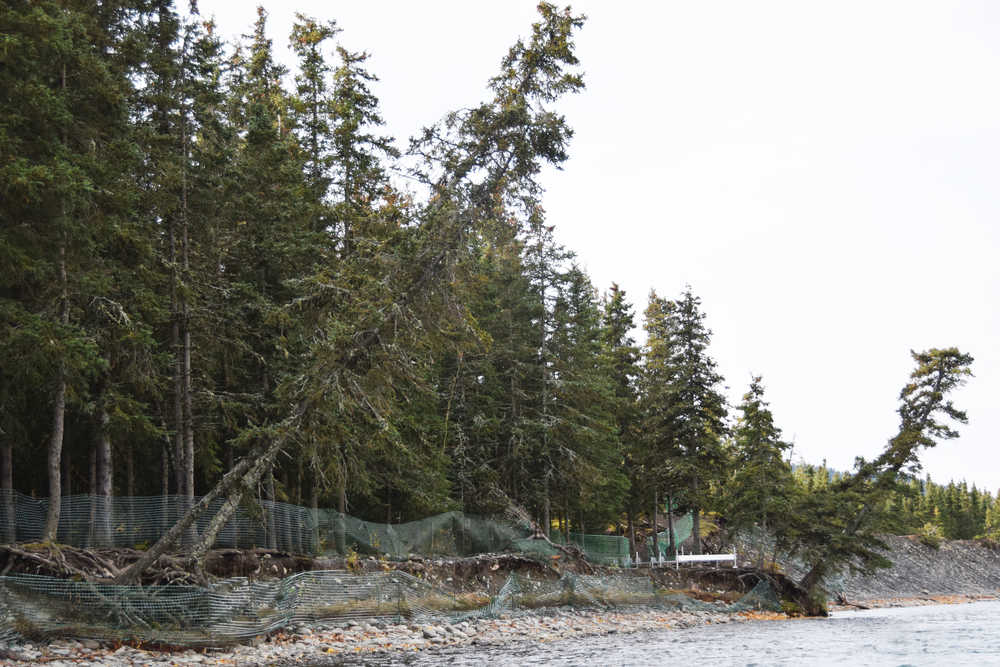
Photo by Megan Pacer/Peninsula Clarion A platform for light-penetrating stairs sits atop the river bank on the south side of the Kenai River and Russian River confluence Wednesday, Sept. 28, 2016 near Cooper Landing, Alaska. The staircases and vegetation planted along the banks are part of a U.S. Fish and Wildlife Service to stabalize erosion and protect habitat.

Photo by Megan Pacer/Peninsula Clarion A platform for light-penetrating stairs sits atop the river bank on the south side of the Kenai River and Russian River confluence Wednesday, Sept. 28, 2016 near Cooper Landing, Alaska. The staircases and vegetation planted along the banks are part of a U.S. Fish and Wildlife Service to stabalize erosion and protect habitat.

More in News

Jake Dye / Peninsula Clarion
Kenai Peninsula Borough Mayor Peter Micciche speaks during a meeting of the Borough Assembly in Soldotna, Alaska, on Tuesday, May 21, 2024.
Assembly will ask state legislature for authority to enact caps on real property tax assessments

Mayor Peter Micciche said a 34% increase over three years has created “real financial hardships” for many in the borough.

Ryan Tunseth speaks during a meeting of the Kenai Peninsula Borough Assembly in Soldotna, Alaska, on Tuesday, April 1, 2025. (Jake Dye/Peninsula Clarion)
Assembly accepts state funding for community assistance program

The funding will be disbursed to unincorporated communities in the Kenai Peninsula Borough for projects under the state Community Assistance Program.

tease
Soldotna artist awarded Rasmuson Foundation grant

Lester Nelson-Gacal will use the funds to create a handmade, illustrated book about his father’s final year.

State of Alaska Department of Law logo. Photo courtesy of the State of Alaska Department of Law
Kenai man sentenced for sexual abuse of minor, possession of child pornography

Joshua Aseltine was sentenced on Dec. 4 to serve 28 years in prison.

Alaska Department of Natural Resources logo (graphic)
State proposes changes to material sales regulations

The Department of Natural Resources is proposing changes to regulations related to material sales and conveyances to state agencies.

A map depicts the Cook Inlet Area state waters closed to retention of big skates through Dec. 31, 2025. Photo courtesy of the Alaska Department of Fish and Game
Cook Inlet area closed to big skate bycatch retention

The closure is effective in Cook Inlet Area state waters through Dec. 31.

A diagram presented by Seward City Manager Kat Sorenson during a Kenai Peninsula Borough Assembly meeting on Dec. 2, 2025, shows the expected timeline for the Port of Seward Vessel Shore Power Implementation Project. Screenshot
Seward shore power project moves into preliminary design phase

The project will create jobs, reduce cruise ship emissions and provide a backup power grid.

The U.S. Forest Service Porcupine Campground offers gorgeous views of the Kenai Mountains and Turnagain Arm, as seen here on July 20, 2020, near Hope, Alaska. (Photo by Michael Armstrong/Homer News)
Department of Natural Resources seeks public input on proposed Kenai Peninsula State Forest

DNR is gathering community perspectives during several meetings this week.

David Ross is sworn in as Kenai Police Chief on Tuesday, May 31, 2016 at Kenai City Hall. The Alaska Association of Chiefs of Police named Ross the 2025 Police Chief of the Year, recognizing over two decades of service. Photo by Megan Pacer/Peninsula Clarion
Kenai police chief named 2025 Police Chief of the Year

The Alaska Association of Chiefs of Police recognized David Ross for his more than two decades of leadership.

Most Read