
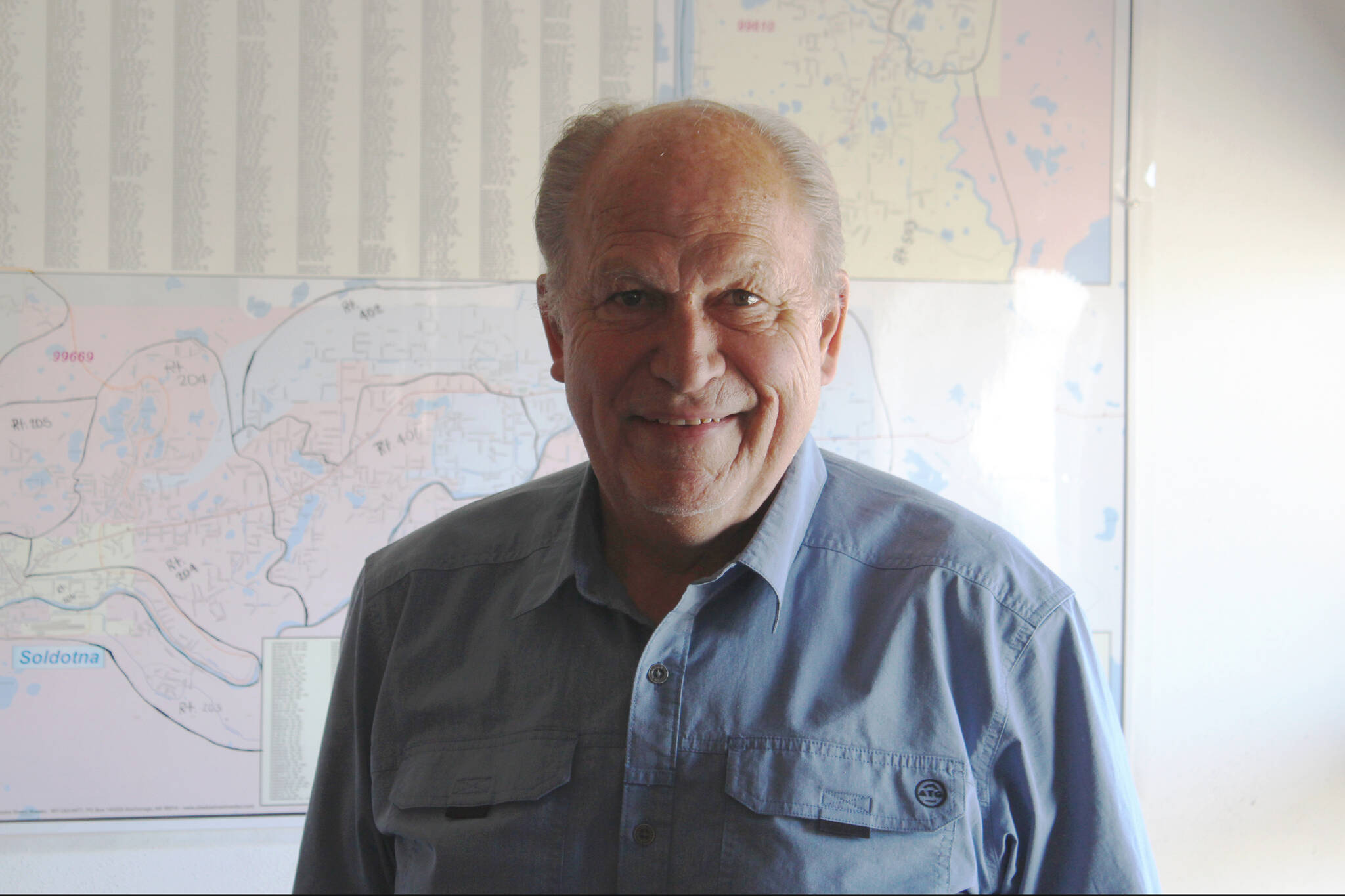
Former Alaska governor and current Alaska gubernatorial hopeful Bill Walker brought his bid for Alaska’s highest office to the Kenai Peninsula last week, where he spent time meeting voters and learning more about peninsula communities. Walker is the only nonpartisan candidate vying for the position currently held by Gov. Mike Dunleavy, and said he’d take a proactive approach to governing.
Walker served as governor from 2014 and 2018, during which time he was the only independent governor in the United States. Born in Fairbanks, Walker is also a former mayor and city attorney for the City of Valdez, where he took odd jobs before working on the trans-Alaska oil pipeline.
Running with Walker to become Alaska’s next lieutenant governor is Heidi Drygas. Also born in Fairbanks, Drygas holds a bachelor’s degree in history from the University of Alaska Fairbanks and a juris doctorate from the Willamette University College of Law. She worked for 10 years as general counsel to the Alaska District Council of Laborers and served as commissioner of the Alaska Department of Labor and Workforce Development under Walker.
Walker told the Clarion during a May 6 interview that he thinks his status as an independent candidate distinguishes him from other people running. He said he was approached about potentially running for governor before running, but was spurred to action by the passage of infrastructure legislation at the federal level and by Alaska’s need for a comprehensive fiscal plan.
The passage of the federal Infrastructure Investment and Jobs Act, which includes $550 billion in new federal spending on infrastructure over the next five years, represents a “transformational opportunity” for Alaska, Walker said. He said he is worried, however, that current Dunleavy will squander that opportunity.
Walker recalled certain Alaska legacy projects, such as the construction of the Alaska-Canadian Highway during WWII and the trans-Alaska pipeline and described funding opportunities under the infrastructure bill as the “third leg of our stool.” He criticized Dunleavy for not mentioning the infrastructure bill during the governor’s State of the State address and said he worries the issue has become partisan.
“The big reason I’m running is the opportunity Alaska has that we’re not taking advantage of,” Walker said. “Certainly this infrastructure money is a one-time issue. … My team will be extremely aggressive in bringing as much of that money home as we possibly can.”
As far as the Alaska Permanent Fund dividend is concerned, Walker said he wants to have a dividend that is as large as possible, but that is also sustainable and does not overdraw the permanent fund. He said he “applauds” current legislative efforts toward a dividend formula that Alaskans can depend on, but reiterated that any solution needs to be sustainable.
“I think the Legislature is on the right track to find a formula that is sustainable and can be predictable going forward,” Walker said.
When asked where he would like to see Alaska be in the next five or 10 years, Walker said he wants infrastructure to catch up to other states, more affordable housing opportunities, for Alaska’s energy opportunities to be the lowest in the nation and more career and technical education opportunities.
“As I paint the picture of Alaska, I want to be a state where, when someone graduates from high school, they’re excited about what they’re going to do here and not moving to another state for different opportunities and whatnot,” Walker said. “I’m bullish on Alaska and that’s not going to change. I think we lack vision, we lack enthusiasm about the future.”
When it comes to reproductive rights, including abortion access, Walker said as governor he would defend citizens’ right to privacy as outlined in the Alaska Constitution. Walker said he is personally “pro-life” while his running mate is “pro-choice” and that he is committed to not changing any of the rights described by Alaska’s constitution.
“We have sort of a double protection (and) have had double to protection,” Walker said. “If that changes in the U.S. Supreme Court (and) it falls back to the states, we need to do nothing because we have that level of protection. So, nothing would change in that regard.”
Walker said that while he is concerned that Alaska won’t take full advantage of the infrastructure opportunities available right now, campaigning in different communities makes him excited about the future of the state.
“We need to invest in ourselves,” Walker said. “We tend to invest in lots of other things elsewhere around but it’s a matter of creating the economy. … We have all the resources (and) all the tools, we just need the vision and we need the leadership.”
Incumbent Gov. Mike Dunleavy, Kenai Peninsula Borough Mayor Charlie Pierce, Alaska House Rep. Christopher Kurka, Libertarian candidate William Toien, Republican Bruce Walden and former Gov. Bill Walker are also vying for the position of governor.
The 2022 state election primary will be held on Aug. 16. Alaska’s general election is on Nov. 8. More information about the election can be found at elections.alaska.gov.
Reach reporter Ashlyn O’Hara at ashlyn.ohara@peninsulclarion.com.
