
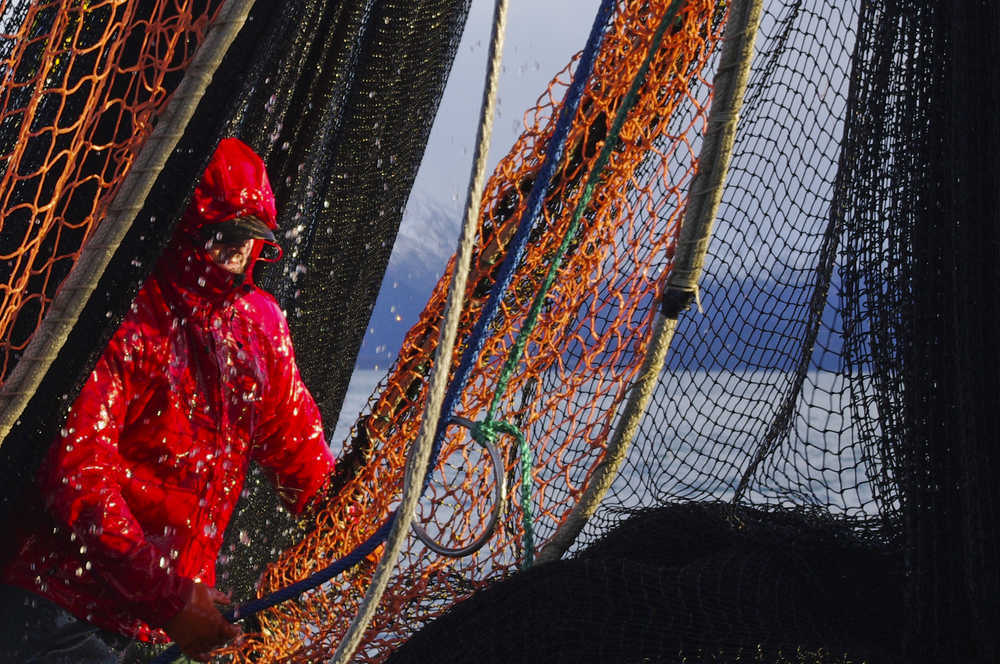
Despite more than thirty years of fishing around Alaska, Kasilof fisherman Rob Nelson had never let out a net hoping to catch pollock before December.
But the long-time seiner has been learning how to catch the groundfish in Kachemak Bay as part of an experimental fishery this winter.
In most of Alaska, pollock are caught by trawlers. But Nelson and other fishermen are hoping that seines could provide a way to safely catch the fish, without worrying about bycatch. Seining is “one of the better methods to release anything undesirable that you do catch,” he said, because fish are alive until they’re hauled on deck.
Each day of fishing is a learning experience, he said January 11 while making his fifth pollock trip since the experimental fishery opened December 1.
“It’s a big learning experience for everyone, really,” he said.
Even finding the fish can be a challenge. During the winter, fish seem to slide back into deep areas. In the summer, they’re often in shallower waters and near the beaches.
“With salmon you see them jump, and herring sort of school,” he said. But there’s no indication of where pollock are, he said. Time of day and tide seem to influence the pollock, he said.
They’re less active than salmon, so more prone to be carried by the current.
That day, his first haul returned just a few hundred pounds of pollock.
Nelson said the tide seemed different than usual, perhaps pushing the fish in an unusual pattern.
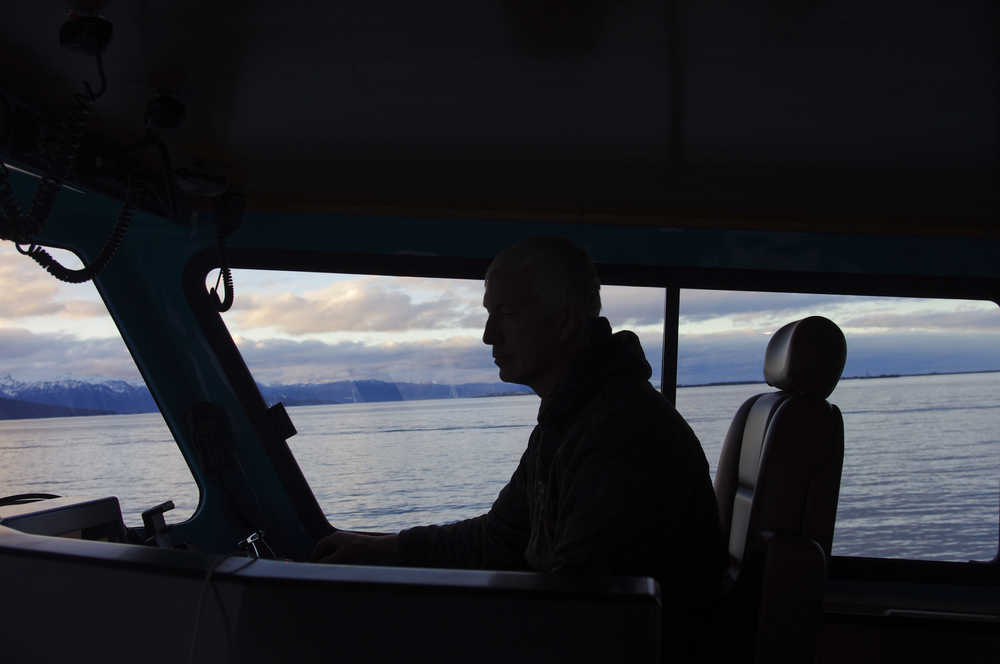
Typically, Nelson uses a fish finder to help him locate the pollock. That sends an echo down, and shows individual fish and schools on a screen he can monitor while driving the boat. When he’s fishing for herring, Nelson said it will show what direction the school is moving.
That morning, the ones he could see were swimming deeper than 100 feet. But not every fish shows up on the finder. His best haul of the day came after few had shown on the radar. In addition to his equipment, Nelson had a little extra help finding pollock during the opener.
A voice coaxed him into moving away from his position.
“Right over here, closer to Derrick,” said Jake Weiss, the only other participant in the fishery. Weiss wasn’t actively fishing, but he motored his skiff out into the bay, looking for pollock in the area where Nelson was fishing and helping to direct the tow.
Nelson considered the new information.
“Keep doing what we’re doing, sounds like,” he said.
Both fishermen use herring seine gear in the experimental fishery.
Nelson’s net hangs at about 180 feet deep and fishes at about 150. It isn’t deep enough to go out in the middle of the bay, where he thinks the largest concentrations of pollock might be. If the fishery receives an allocation and becomes a regular fixture in the bay, he’ll consider investing in a new net, he said. It would have to be specially-made for catching pollock, and could cost up to $100,000, he said.
It’s a large investment, but just the next step in a long fishing career for Nelson.
“My dad was a fisherman back when I was real little,” he said.
By age 20, in 1986, he had his own skiff and camped on the beach while fishing for salmon.
He’s bought bigger boats over the years, and in 2012, the newest Sea Prince was built. It’s a 58-foot boat that Nelson uses to seine for salmon in Prince William Sound and herring in Sitka.
For each haul, Nelson drove the Sea Prince around the bay, looking for fish and trying to understand the current. When he was ready to start towing, he nodded his head.
On deck, two of his crew got the seine ready to be deployed. A third crewmember took off in a skiff, pulling the seine away from the main boat and eventually making a large circle, bringing the end back to the side of the Sea Prince after about 35 minutes of towing. Then the seine was hauled from the water, with a purse formed to hold in the pollock.
The net catches most everything that’s above the seine’s depth, that doesn’t swim away. Once the haul was brought onboard, Nelson and his crew sorted the fish. Pollock were loaded into fish totes to be delivered to a processor in Homer; Pacific cod were separated out, also to be sold or retained for personal use.
Bycatch from the fishery is also monitored, said Elisa Russ, Alaska Department of Fish and Game assistant area management biologist for commercial groundfish fisheries in the Cook Inlet area. King salmon were counted and returned alive to the ocean if possible.
Herring and other species were also returned to the water.
During the six tows made during that fishing period, six king salmon were caught, and all were released alive.
Russ said that when dead kings were hauled in on a previous trip, they were delivered to the Homer food bank.
At the end of the day, Russ also sampled the pollock to start getting more information for Fish and Game on the pollock in the bay. It’s another benefit of the new fishery, Russ said.
The fishery was created by the Fish and Game last year. No one registered for an experimental pollock seine fishery in Kodiak, in part because of the timing of the fishery, but Cook Inlet fisherman expressed interest, so the department offered commissioner’s permits for Kachemak Bay, Russ said.
Under the terms of the permit, each trip is limited to 10,000 pounds of pollock, fishermen must record their catch in a logbook and must carry a mandatory Fish and Game observer.
Through Dec. 31, the catch was limited to 220,000 pounds. From Jan. 1 to Feb. 28, another 220,000 pounds is available for the fishery, Russ said.
In 2014, Nelson made four trips and the other fishery participants – Jake Weiss – made three, catching a combined total of 11.4 thousand pounds.
The impetus for the experimental fisheries came as fisherman around the state look at how to deal with pending Gulf of Alaska rationalization, a federal move that could slow down groundfish fisheries, including pollock, and reduce bycatch, but also make it harder for new entrants to participate in those fisheries.
Although the federal managers have not yet made a final decision on how or if to rationalize the gulf, fishery participants in 2013 asked the state to consider how it will respond, and the state’s Board of Fisheries created a pollock working group to look at the issue.
In February, the work group will meet in Anchorage to discuss the experimental fisheries so far and whether providing state-waters pollock fishing opportunity could be practical.
Federal management isn’t the only reason Cook Inlet fishermen are interested in the new fishery.
Nelson grew up on Kachemak Bay, and over the last several decades, he’s seen a shift in area. When he was a kid, salmon and shellfish were more predominant than they are now.
“30 years ago, there weren’t really any pollock here in the bay,” Nelson said.
The largest concentrations of pollock started showing up 10 years ago, and in the last five years, he said, there are so many that “you can’t shake ‘em fast enough when fishing for kings.”
Finding the fish and figuring out where to catch them is not the only challenge in the fishery.
Nelson has also been trying to develop sources to sell them to.
“We’ve got a handful of markets we’re exploring,” he said.
On the first trip of the new year, Jan. 11, Nelson was catching pollock for two bait markets.
“New automatic longline systems are loving pollock,” Nelson said.
That day, it was all delivered to The Auction Block in Homer for custom processing, where it would be separated by size for the two different bait markets.
At other times during the season, he’ll also sell pollock to a processor in Seward that uses it for fillets, and to South Korea, where the fish is desirable fresh and unprocessed.
That’s one of the more complicated markets.
After the fish is caught in Kachemak Bay, the shipment has to go through a customs process in South Korea before it gets passed along for sale. That can take from three days to a week, he said.
Molly Dischner writes about state and federal fisheries. Contact her at mollydischner@yahoo.com.
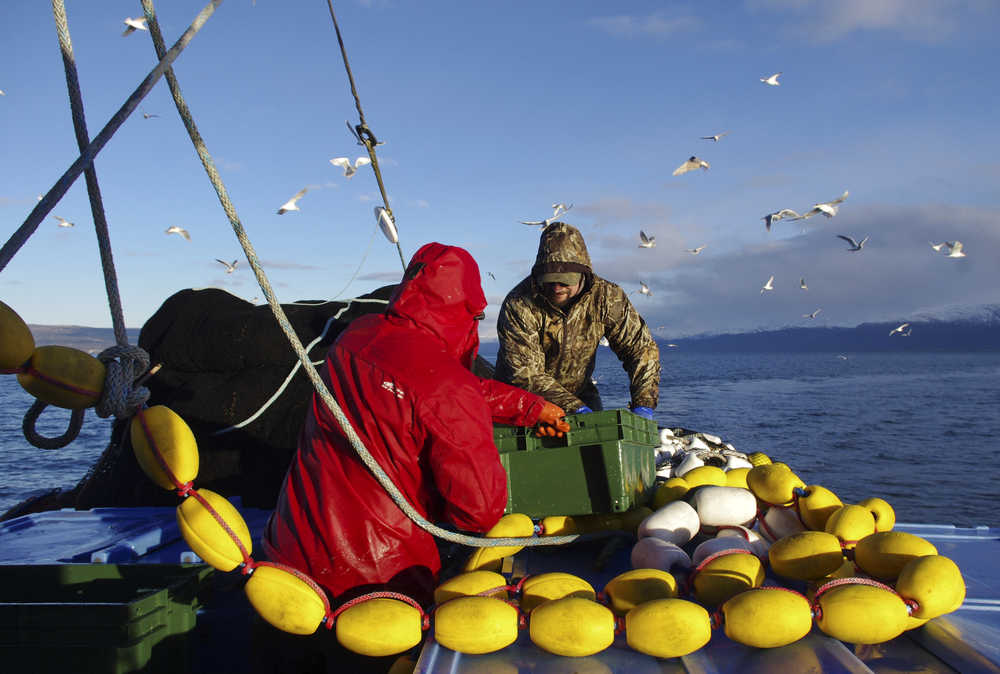
Gregory Bosick and Derek Ball load pollock into fish totes after hauling in a tow onboard the Sea Prince January 11, 2015 as part of an experimental seine fishery.
Jake Weiss, Rob Nelson, Kib Rogers and Gregory Bosick inspect a tow of pollock January 11, 2015 in Kachemak Bay.
