
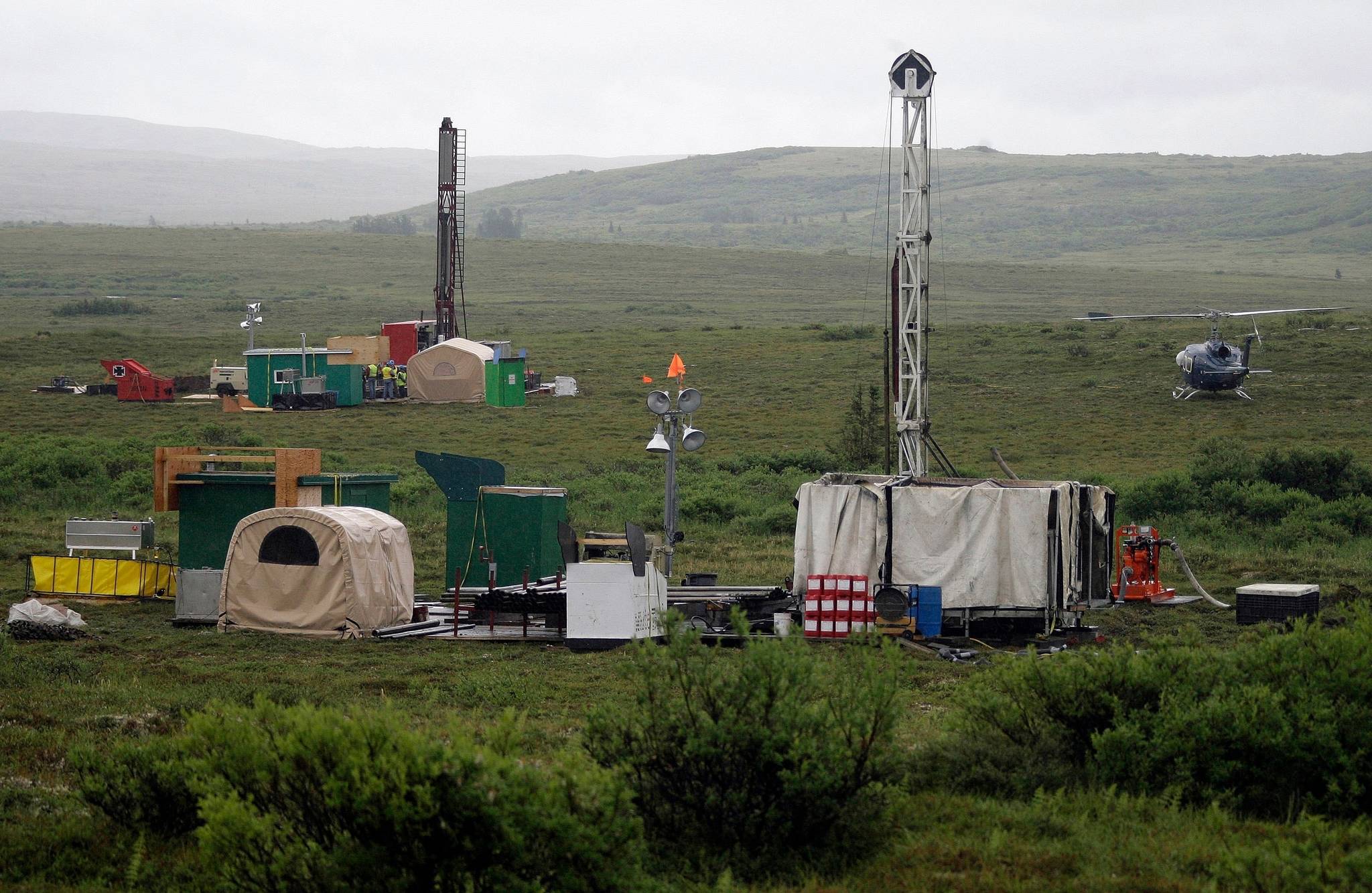
ANCHORAGE — The Trump administration on Wednesday effectively killed a contentious proposed mine in Alaska, a gold and copper prospect once envisioned to be nearly as deep as the Grand Canyon and could produce enough waste to fill an NFL stadium nearly 3,900 times — all near the headwaters of the world’s largest sockeye salmon fishery.
The Army Corps of Engineers “concluded that the proposed project is contrary to the public interest” and denied a permit to build the Pebble Mine under both the Clean Water Act and the Rivers and Harbors Act, the agency said in a statement.
The rejection was a surprise. It’s at odds with President Donald Trump’s efforts to encourage energy development in Alaska, including opening up part of the Arctic National Wildlife Refuge to drilling, and other moves nationwide to roll back environmental protections that would benefit oil and gas and other industries.
The Corps of Engineers also seemed to signal just a few months ago that after almost two decades of political wrangling, Pebble Mine was on a fast track to approval, a reversal from what many had expected under the Obama administration.
But unlike drilling elsewhere in Alaska, the mine proposed for the southwestern Bristol Bay region could have negatively affected the state’s billion-dollar fishing industry. Conservationists and even Trump’s eldest son, Donald Trump Jr., sounded the alarm on the project before the administration changed course again.
The CEO of the Pebble Limited Partnership, the mine’s developers, said he was dismayed by the decision, especially after the corps had indicated in an environmental impact statement in July that the mine and fishery could coexist.
“One of the real tragedies of this decision is the loss of economic opportunities for people living in the area,” CEO John Shively said in a statement. The environmental review “clearly describes those benefits, and now a politically driven decision has taken away the hope that many had for a better life. This is also a lost opportunity for the state’s future economy.”
He said they are considering their next steps, which could include an appeal of the corps’ decision.
“Today Bristol Bay’s residents and fishermen celebrate the news that Pebble’s permit has been denied; tomorrow we get back to work,” said Katherine Carscallen, executive director of the group Commercial Fishermen for Bristol Bay.
The group wants Congress to pass laws protecting the region. “We’ve learned the hard way over the last decade that Pebble is not truly dead until protections are finalized,” Carscallen said.
In July, the Corps of Engineers released an environmental review that the mine developer saw as laying the groundwork for key federal approvals. The review said that under normal operations, Pebble Mine “would not be expected to have a measurable effect on fish numbers and result in long-term changes to the health of the commercial fisheries in Bristol Bay.”
However, in August, the corps said it had determined that discharges at the mine site would cause “unavoidable adverse impacts to aquatic resources” and laid out required steps to reduce those effects.
Canada-based Northern Dynasty Minerals Ltd., which owns Pebble Limited Partnership, said it had submitted a mitigation plan on Nov. 16.
Even if the corps had approved the project, there was still no guarantee it would have been built. It would have needed state approval, and President-elect Joe Biden has expressed opposition to the project.
Critics saw Pebble Mine as getting a lifeline under the Trump administration. Last year, the Environmental Protection Agency withdrew restrictions on development that were proposed — but never finalized — under the Obama administration and said it planned to work with the corps to address concerns.
However, Trump’s eldest son was among those who voiced opposition earlier this year. After senior Trump campaign adviser Nick Ayers tweeted in August that he hoped the president would direct the EPA to block Pebble Mine, Trump Jr. responded: “As a sportsman who has spent plenty of time in the area I agree 100%. The headwaters of Bristol Bay and the surrounding fishery are too unique and fragile to take any chances with.”
The president later said he would “listen to both sides.”
“The credit for this victory belongs not to any politician but to Alaskans and Bristol Bay’s Indigenous peoples, as well as to hunters, anglers and wildlife enthusiasts from all across the country who spoke out in opposition to this dangerous and ill-conceived project,” said Adam Kolton, executive director of the Alaska Wilderness League.
Alaska’s two Republican U.S. senators, who support oil and gas development and mining, hailed the rejection of the Pebble Mine permit. Sen. Lisa Murkowski said the decision affirmed her position that it’s the wrong mine in the wrong place.
“It will help ensure the continued protection of an irreplaceable resource — Bristol Bay’s world-class salmon fishery,” she said.
Sen. Dan Sullivan said he would remain an advocate for good-paying jobs derived from resource development.
“However, given the special nature of the Bristol Bay watershed and the fisheries and subsistence resources downstream, Pebble had to meet a high bar so that we do not trade one resource for another,” he said. “Pebble did not meet that bar.”
