
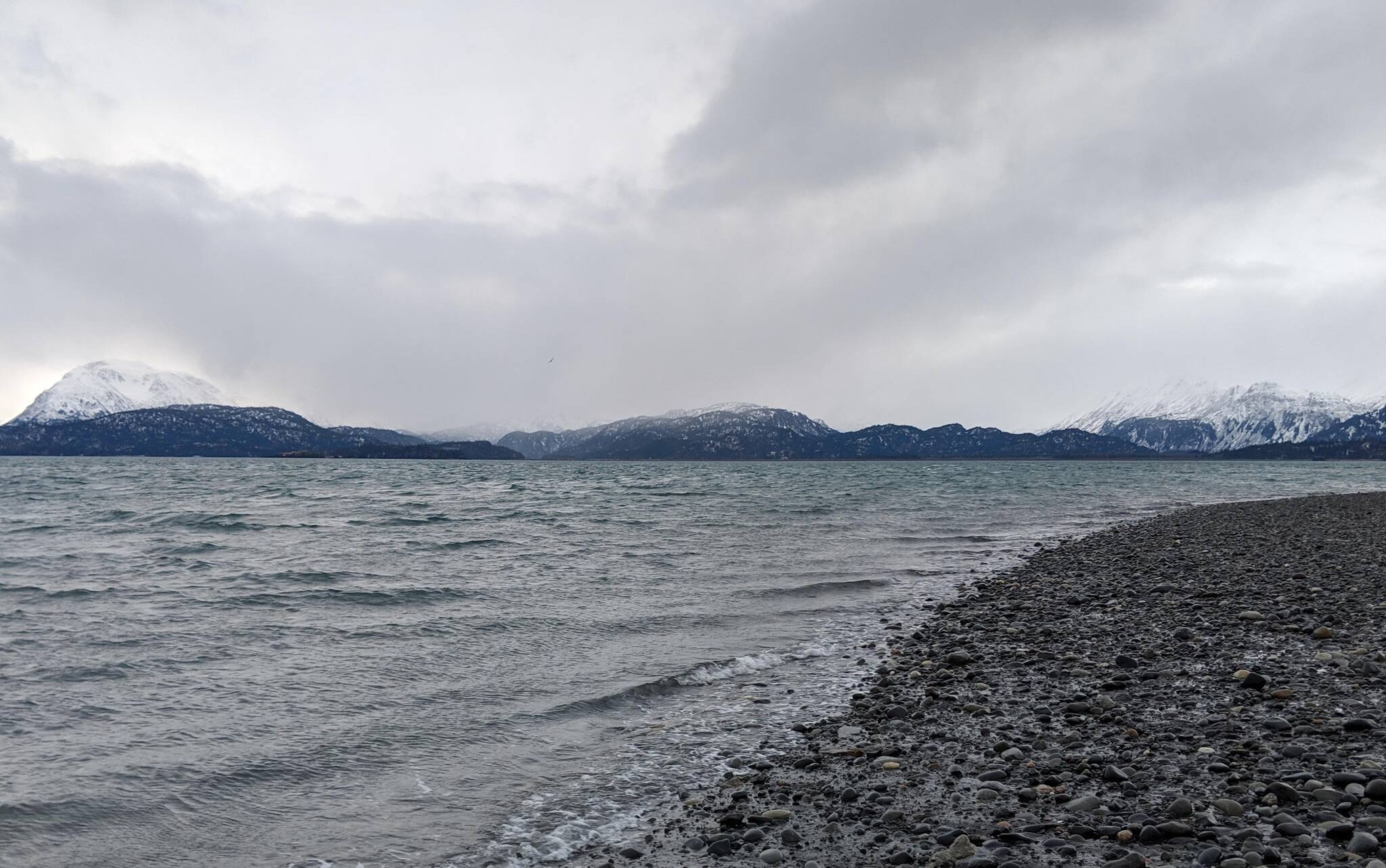
Recent bird deaths, marine mammal strandings, and phytoplankton blooms in Kachemak Bay have sparked community concern about the potential presence of toxic algae blooms in Kachemak Bay.
This week, Kachemak Bay mussel samples were collected by Kachemak Bay National Estuarine Research Reserve and local partners and analyzed by the Alaska Department of Environmental Conservation, part of KBNERR’s annual seasonal monitoring.
A July 25 press release from KBNERR states that no domoic acid toxin, which is associated with amnesic shellfish poisoning, was detected in the provided samples. However, the press release also states that mussels tend to expel the toxin quickly, meaning that the negative test result “does not indicate if there is or is not DA toxin present in other species in the food web.”
The Alaska Harmful Algal Bloom Network is continuing to investigate the situation. The Alaska Department of Health is also aware of and monitoring the situation from a public health angle. The cause of the recent bird deaths and marine mammal strandings in Kachemak Bay remains unknown. KBNERR wrote that coordinated sampling and testing are underway with numerous federal, state and tribal partners to assess possible causes.
