
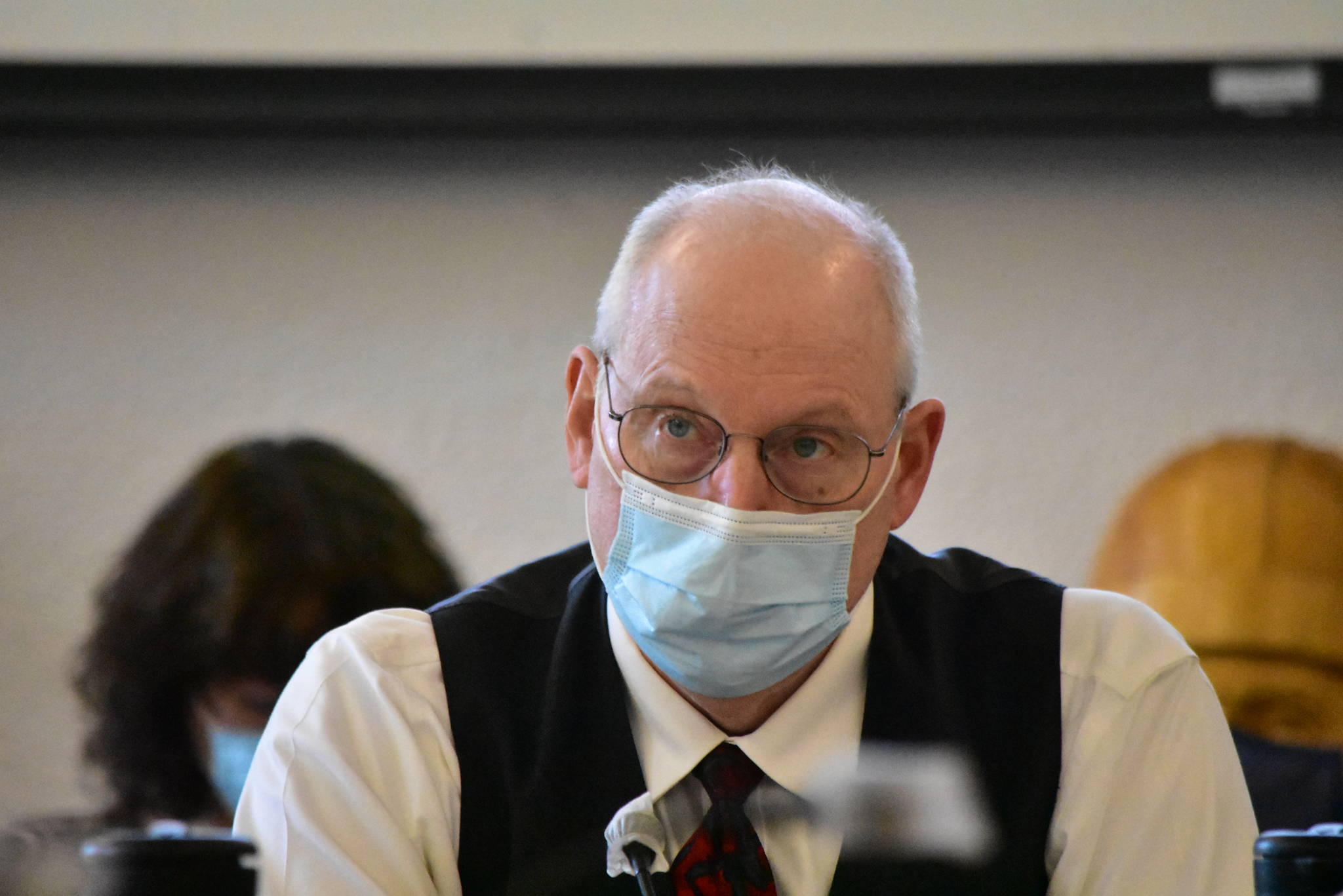
Time is running out, and Alaskans are going to have to decide what to do with their unsustainable budget. That was the message Sen. Bert Stedman, R-Sitka, chair of the Senate Finance Committee, wanted the public to understand as he and other lawmakers worked through projections of the state’s fiscal future.
“There’s a lot of moving parts and time is running out. It’s going to be easier to fix this year, next year than three to four years from now,” Stedman said Thursday. “The longer it takes to fix this, my concern is the smaller the dividend will be for the people.”
Despite years of trying to trim the budget, the state’s spending has stayed at about $4 billion, Stedman said.
His assessment was agreed to by Legislative Finance Division Director Alexei Painter, who told the committee reductions in certain areas had been offset in increases in other departments. The University of Alaska had reduced its budget by roughly $60 million between fiscal years 2018 and 2022, Painter said, but at the same time, the Department of Corrections budget increased by about the same amount resulting in a largely flat budget.
“Reductions we made to these agencies counter balances expenses elsewhere,” Painter said.
It’s a problem that’s spanned two governors and three legislatures, Stedman said, and no one has yet found a comprehensive solution. The state needs to make statutory changes to make sure that Alaska’s agencies get funded, he said.
[Lawmakers cautious of governor’s budget]
Painter walked the committee through projections for various funding scenarios through the next 10 years, including different payment amounts for the Alaska Permanent Fund dividend. With no PFD, or one of $500, the state has no budget deficit, and the Earnings Reserve Account remains mostly steady through 2030, according to Legislative Finance projections. According to Painter, a PFD using 50% of the annual draw from the ERA would amount to roughly $2,400 a year.
According to state records, dividends typically range between $1,000 and $2,000, with some deviations. Last year’s dividend was $992.
The projections don’t create a rosy picture for Gov. Mike Dunleavy’s budget, which proposes drawing $6 billion from the ERA in one year. Legislative Finances’ projection of the governor’s budget shows the ERA being completely drained by 2030.
Office of Management and Budget Director Neil Steininger, who was in the audience at the meeting, said he didn’t necessarily disagree with the projections but said a lot was missing. Legislative Finance was attempting to show the impacts of current spending levels on the Earnings Reserve account if no meaningful action is taken to change that, Steininger said.
The governor’s proposed constitutional amendments, which include a spending cap and combining the two accounts of the Alaska Permanent Fund into one, would prevent those scenarios projected by Legislative Finance from playing out. Dunleavy’s proposed budget would also be prohibited under his proposed amendments as the governor has suggested using $6 billion in ERA funds.
Dunleavy has said his proposal is a one-time measure meant to boost the state’s economy after the COVID-19 pandemic.
The governor’s budget proposal seeks to mitigate some of the fiscal issues the state faces in this and next fiscal year by using tools such as COVID relief, lapsing funds and bonding, Steininger said.
“Looking forward we have proposed constitutional amendments to address key pieces of our fiscal structure but, as our 10-year plan illustrates, there is more work to be done,” he said.
Constitutional amendments must first be passed by the Legislature and then approved by a vote of the people. Dunleavy has said he hopes the amendments will be on ballots this year.
Much of the state’s spending is set in statute, Stedman said, and the Legislature each year decides to override certain statutes and simply not fund state agencies to the amounts set by law. The presentation Thursday gave four examples where the governor’s budget did not fund certain agencies to the statutory level, including school debt reimbursement and community assistance grants.
Sen. Natasha Von Imhof, R-Anchorage, who joined the meeting telephonically, said there has been a lot of discussion from the governor about following state statute when it comes to the PFD, but not other areas.
The presentation also included a brief section from Legislative Legal Services Director Megan Wallace, who showed the legal justifications affirming the Legislature as the appropriating body and the PFD as an appropriation.
The point of Thursday’s presentation was not meant to advocate one position or another, Stedman said at the meeting, but was meant to be more informational.
“We can’t fix the hole with all the work we’ve done at the table,” he said. “We need statutory changes. We have had significant budget reductions since 2018, and we’ve struggled and haven’t made much forward progress.”
