
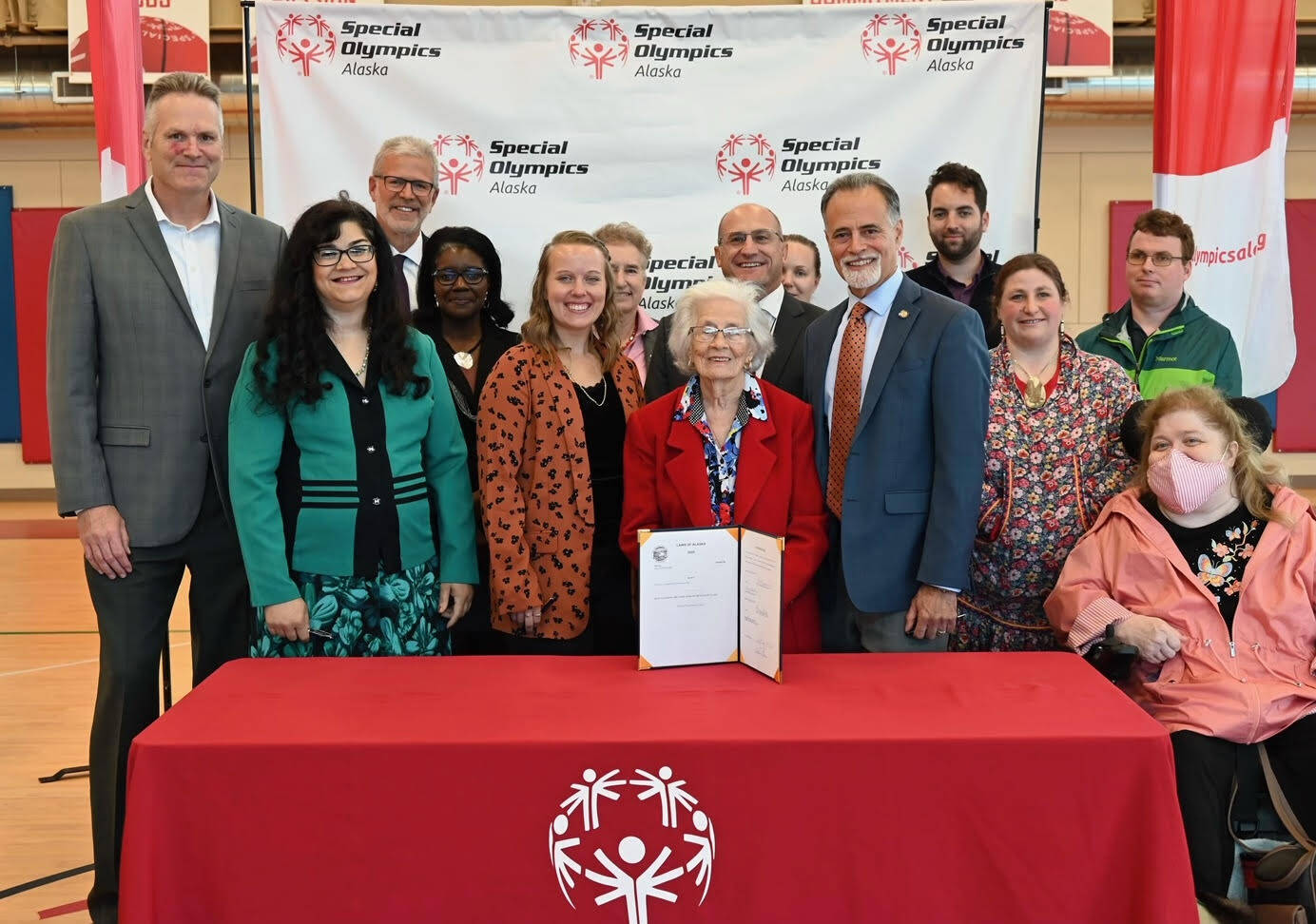
Alaska Gov. Mike Dunleavy on Tuesday signed into law a Senate bill repealing a state statute that said employers could pay Alaskans with physical or mental disabilities subminimum wages.
The signing ceremony was held at Special Olympics Alaska in Anchorage.
“Alaskans with disabilities play a valuable role throughout our state,” Dunleavy said in a release. “By signing Senate Bill 185, we can show our fellow Alaskans with disabilities that we support them and will continue to advocate for them in the workplace and beyond.”
The bill was sponsored by Senate President Peter Micciche, R-Soldotna.
Micciche, in an interview with the Clarion, said the issue was brought to his attention by a member of the Governor’s Council on Disabilities & Special Education. During a speech at the signing ceremony, he said the bill was quickly assembled and completed before the end of the legislative session.
Micciche said in the interview that he had previously worked on legislation that used regulation to prevent workers with disabilities from being underpaid, and that he was shocked to see statute still included language that allowed the practice.
The Alaska Department of Labor repealed regulation in 2018 that allowed employers to pay subminimum wages to disabled workers.
That regulation change should have prevented the practice, though Micciche said there was still value in repealing the statute.
“Statute does demonstrate the values of a society,” he said during his speech. “It instantly struck me as being wrong.”
The bill passed nearly unanimously — with only two against. Micciche said the other members of the Senate to whom he highlighted the statute were as surprised as he was.
Disability advocate Garrett Dominick, a Soldotna City Council candidate who serves as vice president of Peer Power Alaska and as a committee member of the State Vocational Rehabilitation Committee, said he was in strong support of the bill, though he had reservations about the language in the bill that allows the Alaska Department of Labor Commissioner to approve exceptions to the minimum wage.
Dominick said he had known individuals with disabilities in the community who were paid less than minimum wage.
“It’s not fair,” he said.
Micciche said in the interview that he hoped repealing the statute would be a gesture toward disabled workers.
Especially now with a shortage of workers impacting businesses throughout the state, it’s important to recognize the work done and the value brought by disabled Alaskans in the workforce, he said.
“Many Alaskans with disabilities are actively and productively employed in workplaces throughout Alaska,” Micciche wrote in a press release about the bill. “It is unfair for people to be discriminated against where their performance is most often equal or superior to their counterparts not experiencing a disability.”
Alongside preventing workers with disabilities from being paid below the minimum wage, the bill also provides guidelines for wages at certain residential facilities like summer camps where employees receive room and board in addition to pay.
Micciche said during the interview that it made sense to handle this issue in the same bill, a “two birds” scenario.
“Alaska is really at the forefront of encouraging those with disabilities to reach their full potential,” Micciche told the Clarion.
Dominick said, looking forward, the biggest issues facing workers with disabilities in the state are affordable housing, affordable transportation and person-directed support. He also said federal legislation expanding Social Security is an important goal for disability advocates.
Person-directed support, Dominick said, is the practice of empowering people with disabilities to manage their own goals and support programs.
“My care team still has the ability to say ‘this is a good idea,’ or help out, but when it comes to the end, it’s my words,” Dominick said. “The person that’s receiving the support is able to direct their own life.”
Dominick said that disability advocates are emboldened by the progress being made. “I think with this, Alaska Legislators are beginning to show their full support,” Dominick said.
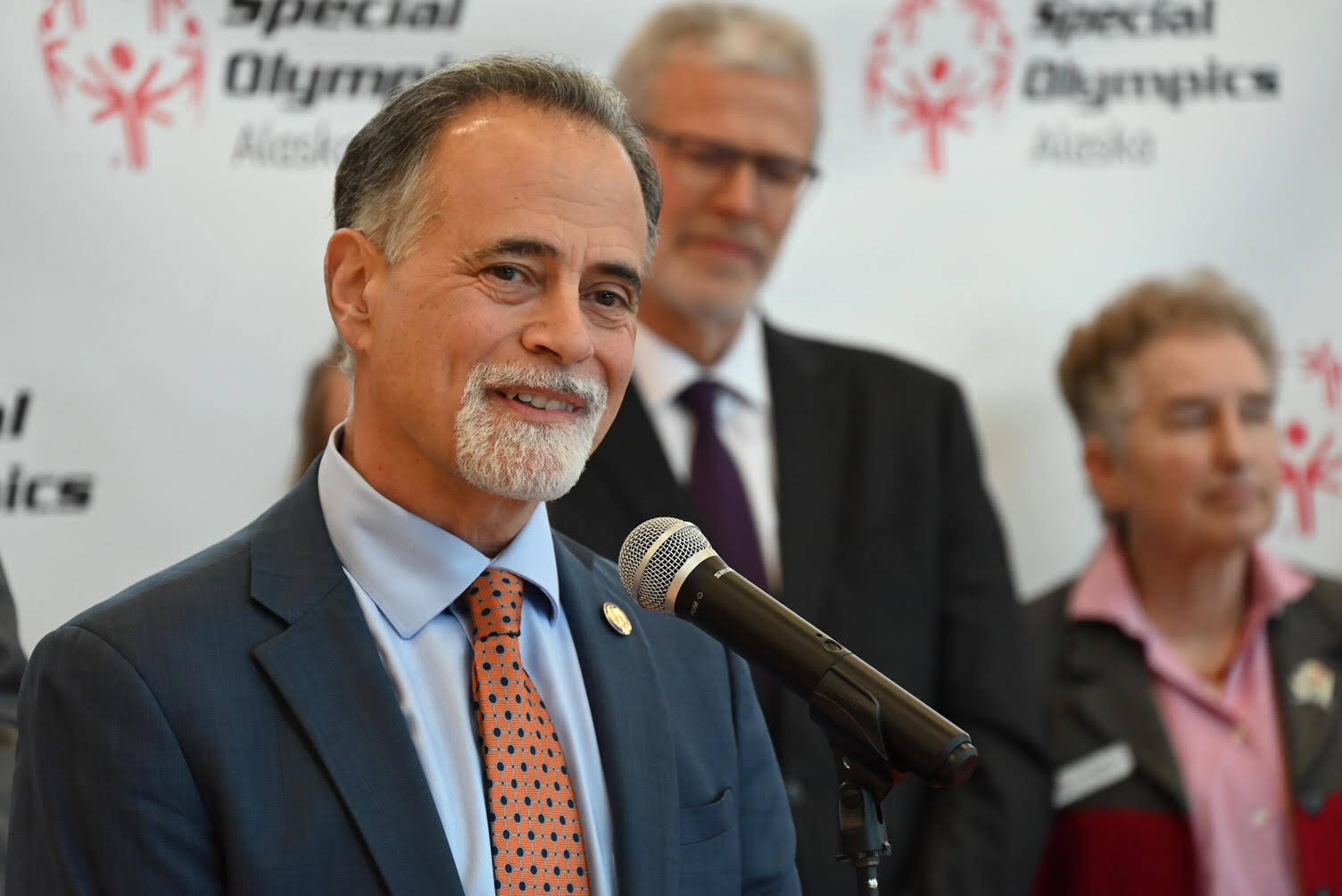
Peter Micciche speaks at the ceremony for the signing of Senate Bill 185 into law at Special Olympics Alaska in Anchorage, Alaska, on Tuesday, Sept. 13, 2022. (Photo courtesy Alaska Office of the Governor)
