Study says pipeline would be better for economy than gas imports, cost $11 billion
Published 9:30 pm Monday, December 9, 2024
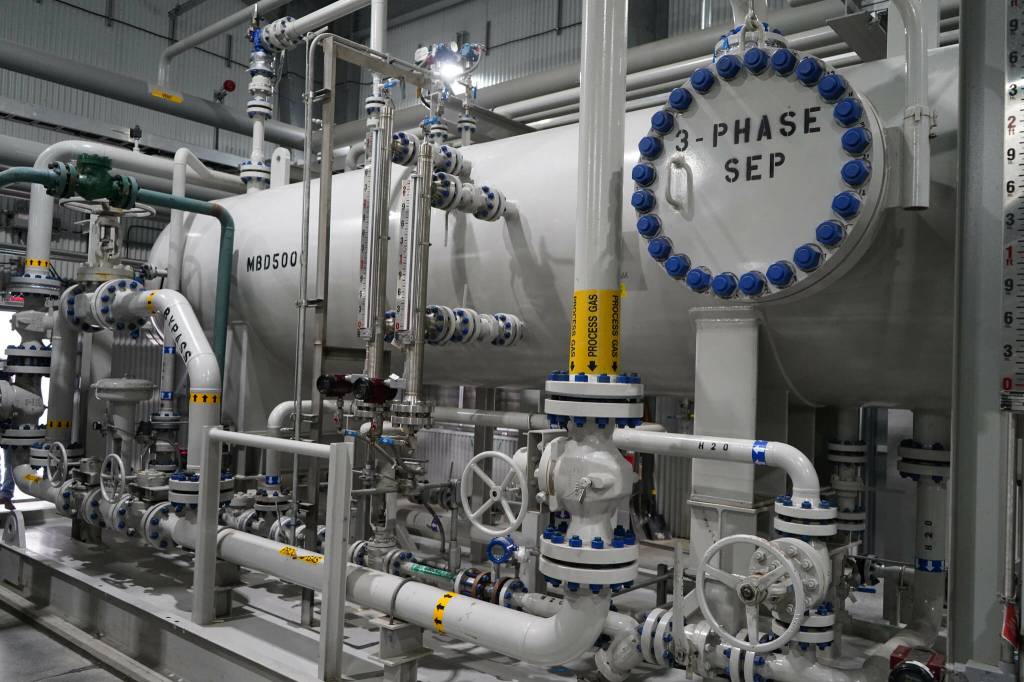
A study by Wood Mackenzie is being touted by the Alaska Gasline Development Corporation as indication that the long-gestating Alaska LNG pipeline project should move forward, and the corporation earlier this month received backstop funding for design from another state-owned corporation.
The Wood Mackenzie report says that a completed pipeline would deliver natural gas at a cost lower than imported gas and lower than current production, while generating “additional industrial and economic benefits to the state.”
A memo by Gov. Mike Dunleavy, attached to the final report and dated Nov. 12, says the study was triggered by a request from the Legislature for an “independent third-party review of a project proposal.” That request included “intent language” saying that if the analysis showed “a positive economic value to the state, all parties would work toward … a pipeline project.”
The report describes “Phase 1” of a gas pipeline project that would stretch from the North Slope to Southcentral Alaska. It says that a 765-mile pipeline with a diameter of 42 inches would cost $10.8 billion, but could provide gas as soon as 2031 at a cost lower than importing gas, also providing more jobs than an importing terminal.
The report doesn’t describe how the cost of creating a pipeline will be met or how gas needs in Cook Inlet will overcome shortfalls projected as soon as next year by Enstar.
A preliminary draft of the report was shared with the corporation during a board meeting on Sept. 12. There, President Frank Richards and others espoused it as evidence that the pipeline should move forward — citing that same language. The report doesn’t say to where in Southcentral the pipeline would be connected, though Richards said it would terminate at a new Alaska LNG liquefaction facility in Nikiski.
Tim Navarre, chair of the corporation’s community advisory council, called the report indication of “light at the end of the tunnel” for a project “long overdue.”
The final report was presented to the Alaska Legislature’s House Resources Committee on Nov. 19.
Costa Swift, vice president of consulting at Wood Mackenzie, said that his firm’s analysis of the state of Cook Inlet gas production is that there are “two viable alternatives” for long-term supply. Those are importing gas or building the pipeline. Under the pipeline scenario, Swift said also that he expects Fairbanks to begin generating electricity via natural gas, rather than wood and other fuels.
The price of constructing a pipeline in Alaska, Swift said, would be more expensive than in other comparable projects because of the weather and conditions in the state. Though the pipeline would cost around $10.8 billion, the “total project cost” would instead be “somewhere close to over $14 billion.”
The gas from the line, he said, is projected to cost as little as a quarter of current gas prices if the pipeline were running at full capacity.
Alternatively, looking at importing, Swift said the costs will be greater because the gas will need to be purchased at cost, shipped at cost, regassed at cost and moved through a connecting facility from a floating terminal. That gas, he said, is projected to cost around 20-25% more than the current supply.
Imported gas also doesn’t, Swift said, benefit from economies of scale like a pipeline would — “if you’re moving more LNG through your system, it does not have the same impact on price because your molecule price stays the same.”
Rep. Dan Saddler, R-Chugiak, said that he understood the conclusion “you’re leading us to” is that there are greater benefits to the pipeline over importing natural gas. But, he said, the price tag for creating a pipeline may be prohibitively high while importing gas requires “a lower hurdle.”
“Pipeline gas is competitive to the imported LNG,” Richards told the committee after Wood Mackenzie’s presentation. “We hope that this report, which shows what we believe is positive economic value, or gross value added to the state of Alaska, will allow the Legislature to work with us in moving forward.”
The next step, he said, would be completion of front-end engineering and design. That design work would be built from previous work completed by both the Alaska Gasline Development Corporation and former-partner ExxonMobil to update cost estimates for construction and for projected deliverable gas. Long-term agreements from utilities to purchase gas from the pipeline can be used for debt financing of construction.
An unnamed pipeline operator is in talks to complete that design work, but they need an assurance that they’ll be repaid “up to $150 million” if the project doesn’t go forward.
It’s to that end that the Alaska Industrial Development and Export Authority on Dec. 4 resolved to extend a $50 million debt issuance backstop to facilitate that design work.
A release from the gasline development corporation on the same day says that money will “unlock” funds needed to move the project through the “remaining development stage that must be completed before a final investment decision can be made.” They wrote that they’re “in advanced discussions” with “potential project partners” who are intended to privately fund the development work, and that the authority’s letter of credit will only be used if no partners decide to carry the project forward.
Rep. Kevin McCabe, R-Big Lake, said during the hearing on Nov. 19 that he would be asking “a lot in the next two years” where money for the pipeline will come from.
“Who’s going to pay for this?” he asked. “Is it going to come out of the PFD? Is it going to come out of defined benefits? Is it going to come out of the BSA increase that everybody wants? Who is going to pay for his and how is it going to affect other programs?”
House Resources Chair Tom McKay, R-Anchorage, closed the hearing by saying that he favors “any projects that contribute to the state treasury and the permanent fund.”
“There’s going to be a lot of demands for defined benefits, for increased funding through the BSA for education, and we need all the revenue sources we can put together that does not involve taxing Alaskans,” he said.
The full Wood Mackenzie report on Alaska LNG Phase 1, with the attached memo by Gov. Dunleavy, can be found at agdc.us.
Reach reporter Jake Dye at jacob.dye@cmg-northwest2.go-vip.net/peninsulaclarion.