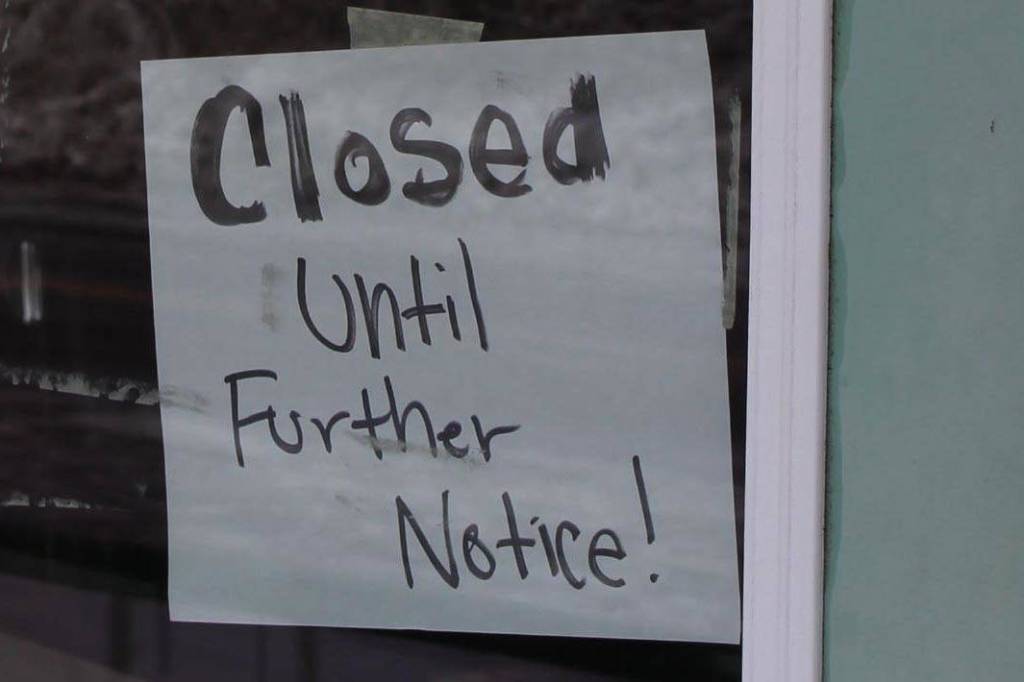
A sign outside of RD’s Barber Shop indicating that they are closed can be seen here in Kenai, Alaska on March 25, 2020. (Photo by Brian Mazurek/Peninsula Clarion)

A sign outside of RD’s Barber Shop indicating that they are closed can be seen here in Kenai, Alaska on March 25, 2020. (Photo by Brian Mazurek/Peninsula Clarion)

State expands unemployment benefits

Workers may be eligible for up to 13 additional weeks of unemployment benefits.

Alaskans who have lost their job due to the COVID-19 pandemic may be eligible for up to 13 additional weeks of unemployment benefits, according to a May 1 press release from the state’s Department of Labor and Workforce Development.

“Reopening Alaska’s economy responsibly and getting Alaskans back to work will take some time,” labor department commissioner Tamika Ledbetter said in the release. “It’s important that we help Alaskans out of work through no fault of their own, by extending unemployment benefits so they can meet their basic needs until they are able to return to work.”

The Pandemic Emergency Unemployment Compensation program is providing the additional payments as part of the Federal CARES Act, which was signed into law on March 27.

The benefits will be payable to people who have exhausted their regular unemployment benefits on claims that ended July 6, 2019 or later. The additional payments are available during the weeks ending April 4 through Dec. 26, 2020.

The weekly benefits and dependent allowance will remain the same, and additional payments are subject to IRS tax withholding. Standard unemployment benefits in Alaska last between 16 and 26 weeks, according to the state’s UI handbook.

People who meet the criteria for these additional payments will be mailed notification of potential eligibility and should contact their nearest claim center to complete an application.

People who are ineligible for regular state or federal unemployment benefits may qualify for pandemic unemployment assistance, also available through the CARES Act.

This includes workers who are self-employed, independent contractors, gig economy workers and others who are not working due to the COVID-19 pandemic, according to an April 27 department of labor press release.

Applicants must apply for regular unemployment insurance before filing for pandemic unemployment assistance. Both applications can be filed online by going to my.alaska.gov and clicking on the “Unemployment” tab. People on the Kenai Peninsula without internet access may also contact the claim center by phone at 888-252-2557.

More than 32,000 Alaskans filed a claim for unemployment benefits in March, which is an increase of 637% when compared to March of 2019, according to the department of labor.

For more information on unemployment assistance in Alaska, visit labor.alaska.gov.

More in News

File.
Soldotna aims to change short-term rental tax and permitting

Public hearings for two ordinances addressing existing short-term rental regulations will occur during the next city council meeting on Jan. 14.

Low clouds hang over Cook Inlet north of Anchor Point on Oct. 23, 2025. (Photo by Yereth Rosen/Alaska Beacon)
Inletkeeper condemns federal management of Cook Inlet oil lease sale

The agency alleges an environmental study by the Bureau of Ocean Energy Management was conducted with a “serious” lack of transparency.

The Kenai Chamber of Commerce announced the winners of the 13th annual gingerbread house competition on Dec. 20, 2025. This creation by Sierra won the 2-5 year old age category. Photo courtesy of the Kenai Chamber of Commerce
Wrapping up the holiday season

The Kenai Chamber of Commerce’s Angel Tree program and gingerbread house competition spread Christmas cheer to hundreds locally.

The Challenger Learning Center is seen here in Kenai<ins>, Alaska,</ins> on Sept. 10, 2020. (Photo by Brian Mazurek/Peninsula Clarion)
Kenai City Council considers possible uses for Challenger Center

One option would assess the facility’s potential as the new public safety building.

A snowmachine rider takes advantage of 2 feet of fresh snow on a field down Murwood Avenue in Soldotna, Alaska, on Monday, Dec. 12, 2022. (Jake Dye/Peninsula Clarion)
Ice fishing opens on some Kenai National Wildlife Refuge lakes

Snowmachines are permitted for ice fishing access on Hidden, Kelly, Petersen, Engineer and Watson lakes.

The waters of Cook Inlet lap against Nikishka Beach in Nikiski, Alaska, where several local fish sites are located, on Friday, March 24, 2023. (Jake Dye/Peninsula Clarion)
Kenai asks for fishery economic disaster declaration

The Kenai City Council requested that Gov. Dunleavy declare a disaster and support a recovery plan for the Upper Cook Inlet East Side Set Net fishery.

The Kenai Peninsula Borough School District logo. (Photo courtesy of Kenai Peninsula Borough School District)
District superintendent dispels rumors about student construction

Superintendent Clayton Holland said student involvement in Seward High School construction is “based on rumor, not fact.”

Anchorage-based singer and songwriter Keeley Boyle is pictured in Anchorage<ins>, Alaska,</ins> on Sept. 26, 2023. Boyle, who was raised on the Kenai Peninsula, will use a $10,000 grant she received from the Rasmuson Foundation to create an album of songs about her grandparents’ home in Nikiski. Photo courtesy of Jovell Rennie
Musician hailing from Kenai receives Rasmuson grant

Keeley Boyle will record an album of songs about her grandparents’ Nikiski home.

Commercial fishing and recreational vessels are docked in the Homer harbor on Oct. 23, 2025. The commercial fishing industry endured a series of challenges over the year, some of them imposed by the new Trump administration. (Photo by Yereth Rosen/Alaska Beacon)
Alaska fisheries in 2025: turmoil, economic and environmental challenges and some bright spots

NOAA cuts, economic headwinds and invasive species pose problems, but there was some recovery in crab stocks and salmon harvests.

Most Read