
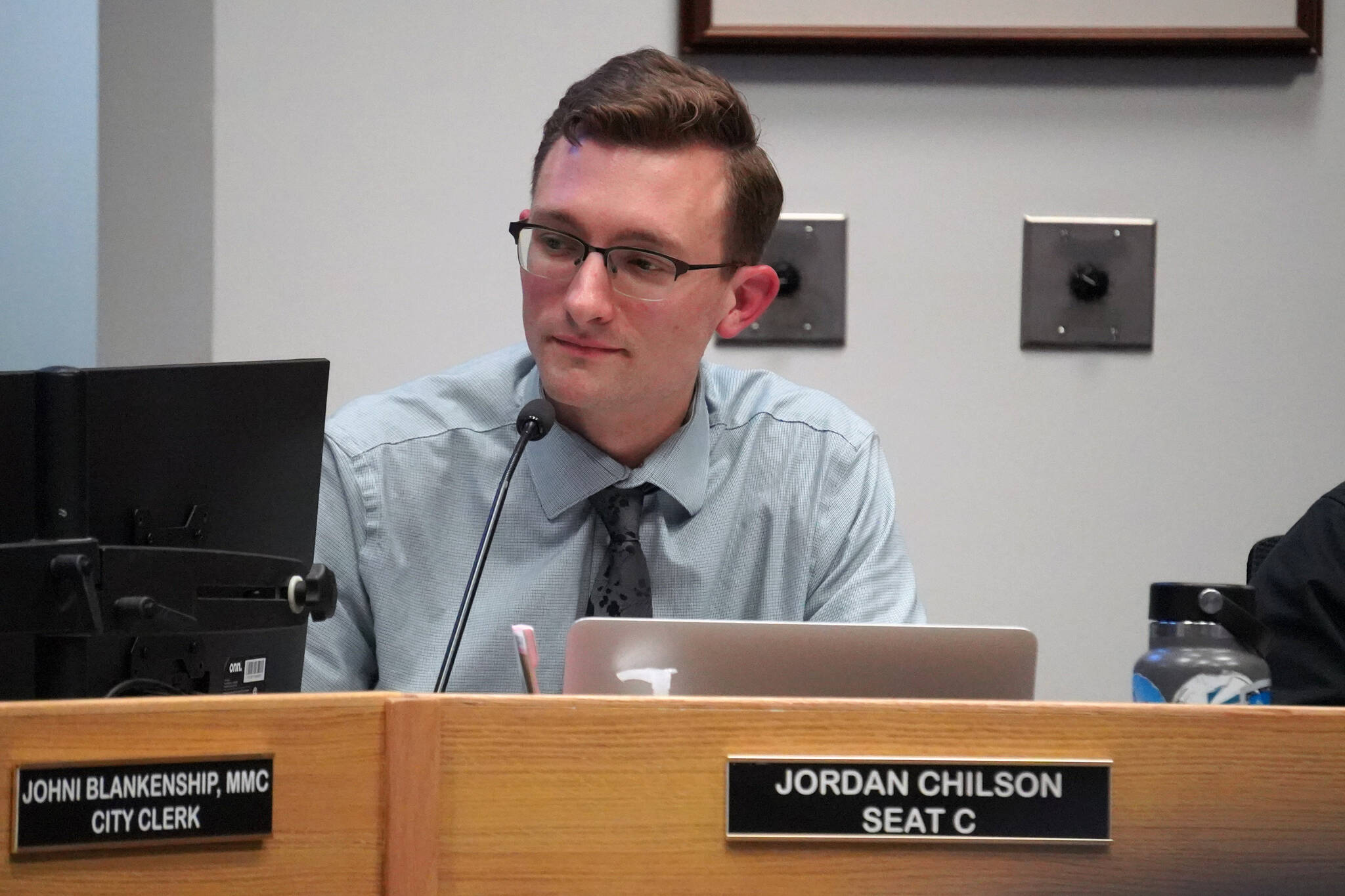
Soldotna businesses will need to switch to a fully plastic-free shopping bag model starting Jan. 1, 2025, following unanimous approval of changes to the city’s plastic bag policy by city council members Wednesday.
The ordinance, sponsored by Vice Mayor Lisa Parker and council member Jordan Chilson, cites the environmental harm caused by disposable shopping bags. Disposable shopping bags also “frequently escape” from trash receptacles and from landfills, which the ordinance says creates a burden for the residents and city staff who must then clean up the bags.
The ordinance also cites a study conducted by the Alaska Environment Research and Policy Center, which found microplastics present in all 39 bodies of water tested in Southcentral Alaska. Microplastics are pieces of plastic debris that are less than 5 millimeters long and come from larger plastics that have degraded.
“The use of disposable plastic shopping bags in the City of Soldotna burdens the environment, endangers wildlife, and has been shown to be harmful to bodies of water and problematic for solid waste management,” the ordinance says.
To decrease the number of disposable bags that end up as litter in Soldotna and the surrounding areas, the ordinance says, “it is necessary to restrict general use” of the bags.
The Soldotna City Council in 2018 outright banned single-use disposable plastic shopping bags in city limits. The ordinance passed Wednesday expands the definition of the kind of bags prohibited in city limits to include any bag designed to carry goods from a vendor’s premises, even if the bag is labeled as biodegradable or compostable.
The new policy does not apply to the plastic bags available inside stores to hold products not otherwise packaged, such as the bags made available to hold fruit and nuts, or to bags needed to contain dampness from frozen foods. Plastic bags used by pharmacists to hold prescription drugs, and those used to carry newspapers, laundry, dry cleaning or waste are also exempt.
Chilson wrote in an April 3 memo accompanying the ordinance that Soldotna prides itself on being “Alaska’s Kenai River City,” and benefits economically and socially from having a healthy environment.
“Although not a complete solution, limiting disposable plastic bag use where reasonable and encouraging the use of reusable bags is one small step we can take as city to support better environmental health and a cleaner city all members of our community will continue to benefit from,” Chilson wrote.
Chilson during Wednesday’s meeting of the Soldotna City Council highlighted another aspect of the ordinance, which removes from city code reference to bag thickness. Existing city code defined reusable plastic bags as those more than 2.25 millimeters thick. Chilson says that definition has allowed the litter problem to continue, just with thicker bags.
“I think it had good intentions, but the reality is that, unfortunately, when those thicker plastic bags were distributed in the community with the intent of being reusable, the unfortunate outcomes was that people were still continuing to use them in a disposable manner,” he said.
The ordinance passed Wednesday removes references to thickness and newly defines a “reusable bag” as one designed and produced to withstand repeated use over time. The code also says a reusable bag is one made from material that can be cleaned regularly.
Making the policy effective Jan. 1, 2025, Chilson said, allows stores to burn through their existing stock of bags and prepare logistically for the change.
Pamela Hayes was one of two people who testified in favor of the ordinance during Wednesday’s council meeting. Hayes read a statement on behalf of Kelsey Shields, who owns Lucy’s Market in Soldotna and supports a total ban on plastic bags.
“As a community member and business owner, I was thrilled when I first heard of the plastic bag ban and soon disappointed as even more robust plastic bags began popping up in stores,” Hayes read. “It felt like the problem was worse instead of better.”
Ben Boettger, an energy policy analyst for the environmental group Cook Inletkeeper, said he also supports a total ban. He called the changes to existing policy a “common-sense measure” to achieve the intent of Soldotna’s 2018 policy.
“Anyone who has seen these thicker, reusable plastic shopping bags continue to litter the brush near Tsalteshi or Slikok trails or the (Kenai National Wildlife) Refuge or washed up on our riverbanks — it should be pretty clear that the minimum thickness definition is lacking and leaves open a significant loophole,” he said.
Wednesday’s full city council meeting can be streamed on the City of Soldotna’s YouTube channel.
Reach reporter Ashlyn O’Hara at ashlyn.ohara@peninsulaclarion.com.
