Soldotna council greenlights new city housing type
Published 10:30 pm Wednesday, October 12, 2022
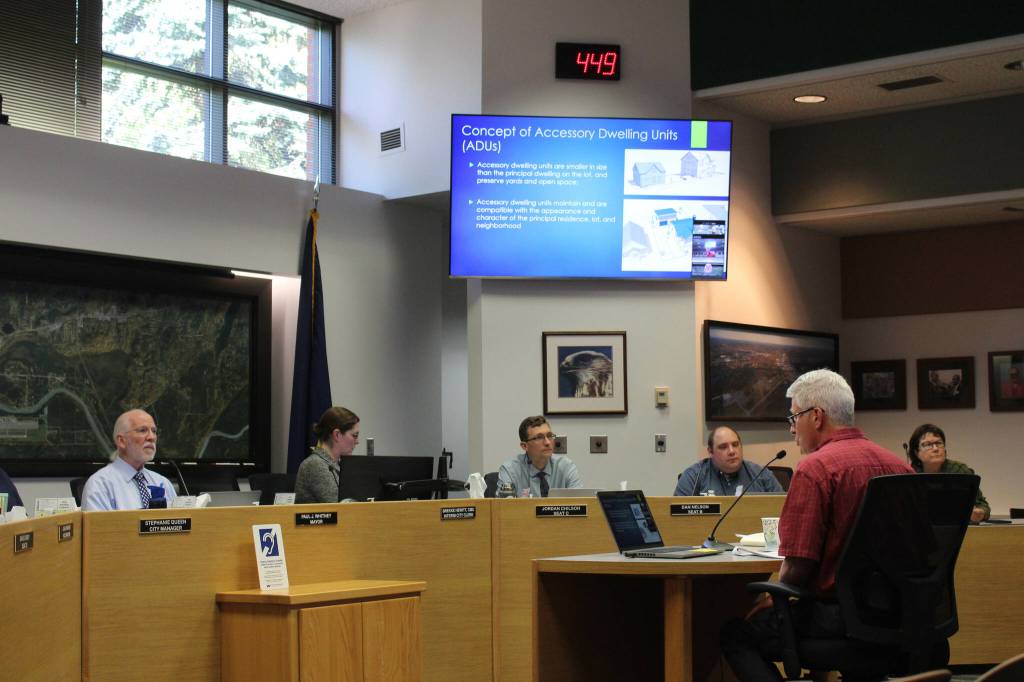
More tiny homes and other alternative housing options could be coming to Soldotna following approval by the Soldotna City Council on Wednesday of a new section of city code regulating accessory dwelling units.
Accessory dwelling units, sometimes called ADUs, refer to subordinate, detached units that provide “basic requirements” for living, sleeping, cooking and sanitation and are located on a lot or parcel with an existing residence. That’s per the addition approved Wednesday, which appears in Soldotna’s Code of Ordinances as 17.10.390.
City officials say allowing ADUs in city limits is a way to expand housing opportunities in spite of Soldotna’s small geographic footprint while also fulfilling a stated goal of promoting housing diversity, as outlined in the city’s comprehensive plan. The City of Soldotna prior to Wednesday allowed accessory dwelling units in a limited capacity.
In Soldotna’s single-family and single-family/two-family residential districts, a single detached building that provides housing for relatives or temporary guests was allowed, however, the owners of the additional unit could not charge people to stay in the unit, and the unit could only have one bedroom.
Under the changes approved Wednesday, owners of the primary dwelling unit can charge rent on accessory units. Both units are required to be located on the same parcel of land and must each have its own address and off-street parking place. An accessory unit may not be sold independently of the principal residence.
Accessory units are not allowed in the Kenai River Overlay District and must be connected to the utilities of the primary dwelling unit. Those interested in establishing an accessory unit must submit a site plan to and obtain a zoning and building permit from the City of Soldotna. ADUs must be built to the city’s building code standards and shall be no more than 750 square feet.
Council members convened with Soldotna Director of Economic Development and Planning John Czarnezki last month for a work session to talk about the new section of code, during which some council members expressed concerns about the potential for people to use accessory dwelling units as short-term rentals.
Under the changes approved Wednesday, one of the dwelling units on a parcel — either the accessory unit or the principal unit — may be used as a short-term rental, such as through Airbnb or Vrbo. Mobile homes, RVs and travel trailers may not be used as accessory units, which are required to have a permanent building foundation.
The council’s approval of the code changes came after the city’s Planning and Zoning Commission unanimously recommended that the city adopt standards for accessory dwelling units. That’s per a Sept. 8 memo from Czarnezki to council members, in which he outlined the reason for the proposed changes.
“Accessory dwelling units typically serve smaller households, can offer new housing options, provide neighborhood stability, and should increase property values,” Czarnezki wrote. “They may be especially needed considering changing demographics, family needs and current economic conditions.”
Wednesday’s full meeting of the Soldotna City Council can be streamed on the city’s website at soldotna.org.
Reach reporter Ashlyn O’Hara at ashlyn.ohara@cmg-northwest2.go-vip.net/peninsulaclarion.