Slow sales leads Black Dog Firearms to close
Published 5:08 am Monday, April 4, 2016
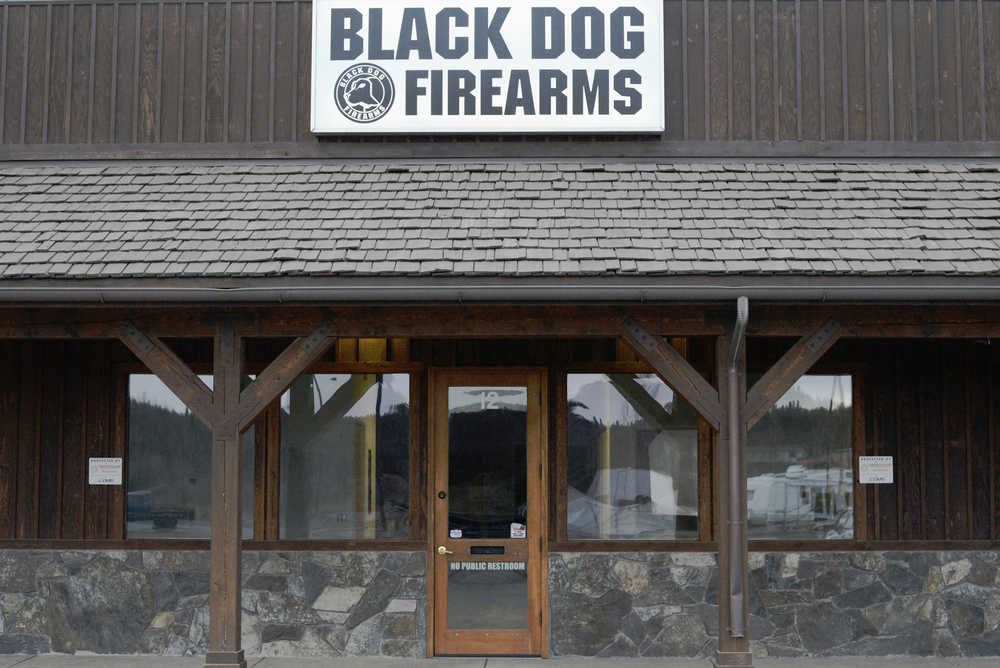
There were days this winter when no one came through the doors of Black Dog Firearms in Soldotna. The slowdown led to the business’s closure at the beginning of March.
Owner Kevin Rich said the slow sales were the only reason for the closure — the company still had a store and a manufacturing facility in Idaho.
“It was just one of those things, we just kept watching (the economy), watching it, (and) it wasn’t getting better,” Rich said. “If you go weeks at a time and you’re doing dollars in business, it doesn’t make sense to stay open.”
The store had been open in Soldotna for approximately five years. While business was good for the first three years or so, sales went into a freefall about two years ago. Rich related it directly to the drop in oil prices and the corresponding layoffs.
He said many customers were saddened to see the store close, primarily because of its ability to handle state-to-state gun transfers. Black Dog Machines, Rich’s other company, will still handle any pending transactions, he said.
Gun sales nationally are still on the upswing and have more than doubled nationwide in the last decade, according to FBI background check statistics. More than 23 million background checks for gun purchases were conducted last year, with 85,621 in Alaska, according to the FBI.
However, Alaska’s numbers have decreased for the last couple of years. From 93,405 in 2013, the number of checks decreased to 87,623 in 2014 and 85,621 in 2015. That does not actually document the total number of sales in Alaska, as the state does not require background checks for private sales of handguns or long guns.
Rich said he thinks Soldotna is in for rougher economic times in the future. Each year, when Alaska Permanent Fund dividends were distributed, Black Dog Firearms used to see a spike in sales; for the last two years, the upswing didn’t come.
“Not this October, nor the one before,” Rich said. “A lot of people were holding on to their money. A lot of people were wanting to sell stuff too, which is an indicator for what’s going on.”
Rich said the hits to the oil industry particularly struck gun sales because oil industry workers tend to purchase guns with their disposable income. With more layoffs in that industry, fewer people were purchasing guns and others were looking to sell them, he said.
He also said the increasing number of big-box stores like Walmart and Sportsman’s Warehouse on the central Kenai Peninsula have made a dent on small stores’ sales because they are able to offer lower prices. A Walmart representative said the company does not disclose individual item sales figures, and a Sportsman’s Warehouse representative could not be reached as of press time.
Gun sales are a fairly low-margin business, said Walter Ward, the owner of Wild Way Guns in Sterling. Ward said when he used to own Wilderness Way, which has since been sold and moved to Soldotna, the store sold guns as well as other outdoor equipment. Because of high shipping costs for guns, the profits are minimal, he said.
“There’s never been any money in it, really, except in big cities,” Ward said. “The money is in ammunition and gunsmithing. The nature of it is that there’s not any money in it, at least in the common (types of guns).”
Big-box stores like Walmart and Sportsman’s Warehouse are able to take out some of the overhead of shipping guns as well as offer far lower prices than small stores can, sometimes selling guns for less than Ward said he could buy them. That makes it more difficult for small retailers to compete in the retail sales market.
These days, Ward said he mostly handles transfers, running Wild Way as a sideline business to his main job, and only does it by appointment. Handguns cannot be driven through Canada and so must be shipped to Alaska, even if the person already owns them, and Ward said he can receive the guns.
Rifles and other long guns can sometimes pass the border if travelers say they plan to use the gun for hunting, Ward said.
Reach Elizabeth Earl at elizabeth.earl@cmg-northwest2.go-vip.net/peninsulaclarion.