
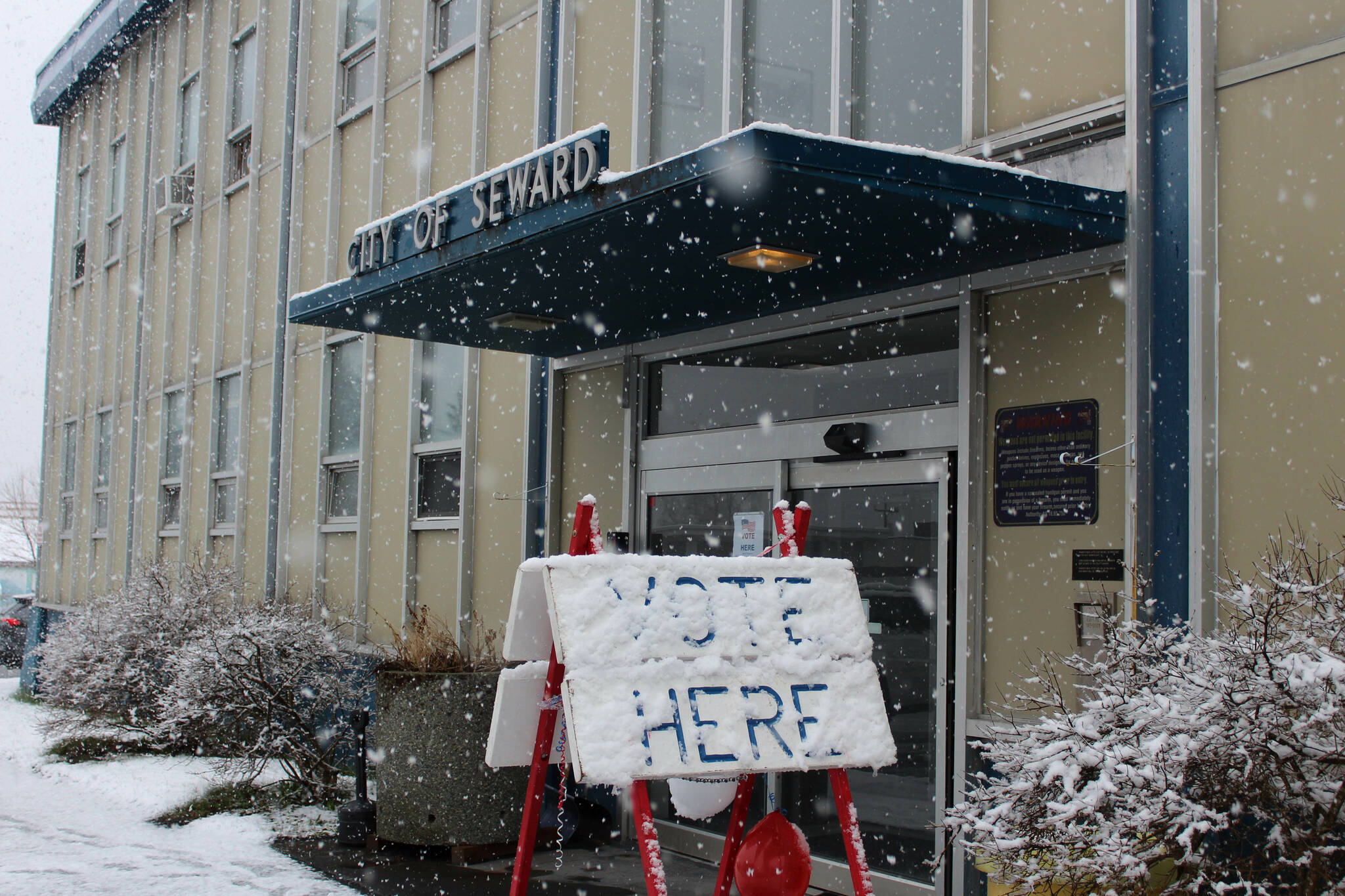
Seward voters in October will get another crack at the question of whether or not to sell the city’s electric utility — and this time, it may be easier to push the sale through.
The Seward City Council on Monday voted to put two items on the city’s Oct. 3 municipal ballot: the question of whether or not to sell the city’s electric utility to Homer Electric Association and the question of whether or not to lower the threshold needed to make such a sale possible.
Monday’s council votes came less than three months after city voters in a special election defeated by just seven votes the sale of Seward Electric to HEA. Although a majority of voters — 58% — supported the sale, votes in favor failed to meet the 60% threshold needed to move the sale forward.
The council first voted 4-2 in favor of asking voters whether they want to change the city’s rules when it comes to what is required to sell the city’s municipal utilities, with Seward Mayor Sue McClure and council member Robert Barnwell voting in opposition.
Currently, the city charter requires a three-fifths majority vote in order to sell, lease or dispose of a city utility. Under the resolution passed Monday, city voters would decide in October whether to change that threshold to a simple majority, or more than 50%.
City Attorney Sam Severin told council members Monday that, of the more than one dozen communities he represents in a legal capacity, he is not aware of any other community that requires a supermajority to authorize the sale of a city utility.
McClure said that whoever wrote the supermajority threshold into Seward’s charter must have had a reason to do so, and that she no longer thought it was a good idea to put both the utility sale and the change to city charter on the same city ballot.
“Obviously the people who put this in the charter back in the old days valued the utility and the decisions that people made about it pretty strongly, or they wouldn’t have put that in there,” she said.
Council member Michael Calhoun pointed out that the May 2 special election was not the first time a simple majority of Seward voters supported selling the city’s electric utility, and that an even larger proportion of the population supported the sale this year.
“Now we’re at almost 58 and a half percent, which is almost 19% higher than the people that voted ‘no,’” Calhoun said. “In any other forum — I understand what the charter says — but in any other forum, that is a landslide.”
A simple majority of voters during a city election held in 2000 voted to sell Seward’s electric utility, however, voters failed to meet the 60% threshold described by the city charter.
Council members on Monday then voted to put the sale back on this year’s regular ballot. That means, just as they did during May’s special election, Seward voters will say whether or not they support the sale of Seward Electric to HEA. Per the ballot language approved by council, the sale terms and conditions previously negotiated by council members would still stand.
Multiple council members said they’ve received feedback from both people who support the sale and want to see it back on the ballot, and from those who think the city is rushing the process and don’t support another vote.
Council member Randy Wells, who voted in favor of putting the question back on the ballot, said HEA has previously communicated to the city that the previously negotiated sale terms would not carry over beyond October, suggesting that the upcoming city election may be the last chance residents get the chance to vote on the sale as already negotiated by the city.
“I am not against postponing this … but we’d just have to end up, then, starting the entire process all over again,” Wells said. “In the meantime, we have a utility that’s falling apart.”
Severin confirmed for council members Monday that both ballot initiatives, if passed, would become effective immediately. That means that, if voters approve the changes to the city charter regarding the utility sale threshold, only a simple majority would be required to advance the sale.
Similarly, if voters decide not to lower the sale threshold, a supermajority would still be required to approve the sale. Council members were generally in agreement that the outcome of both ballot questions should not affect the operation of an ad hoc committee established earlier this year that is tasked with evaluating the future of the city electric utility.
Seward’s Electric Utility General Manager Rob Montgomery tendered his resignation earlier this month. He told the council during a presentation in July that the city will struggle if it maintains the status quo in regards to its electric utility.
The struggle will come from paying for maintenance and capital projects, to be funded by implementing higher electric rates on Seward’s already small customer base. During the same presentation, Montgomery also proposed putting the question back on the ballot, rebuilding the utility or contracting out electric services for the city.
Monday’s Seward City Council meeting can be streamed on the city’s YouTube channel.
Reach reporter Ashlyn O’Hara at ashlyn.ohara@peninsulaclarion.com.
