
The heads of Alaska’s Railbelt utilities said Wednesday that clean energy projects and new natural gas solutions are among the ways they plan to fill the gap between demand and supply of Cook Inlet natural gas, which a new state report says is getting smaller.
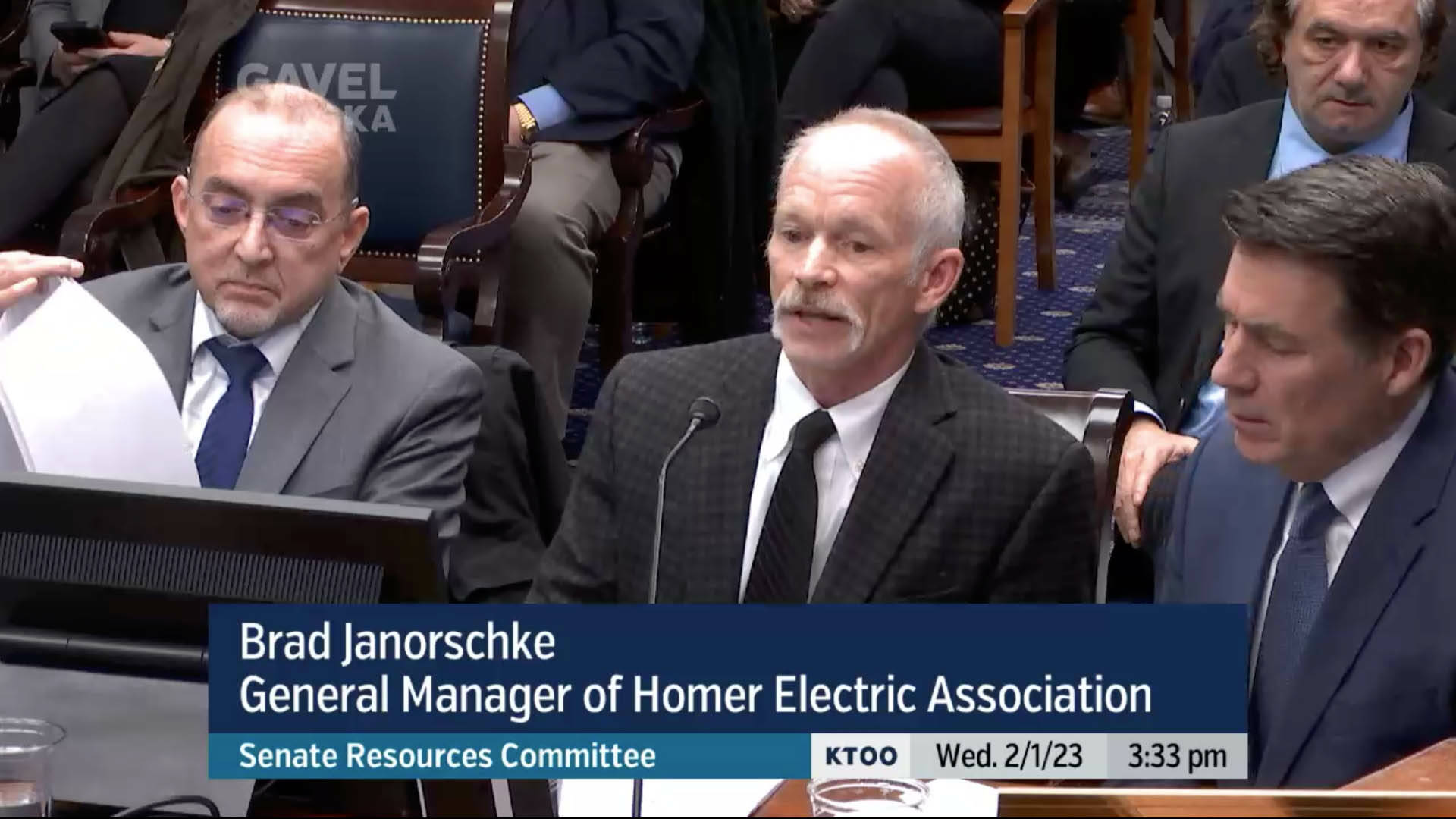
Homer Electric Association General Manager Brad Janorschke, Chugach Electric Association CEO Arthur Miller, Matanuska Electric Association CEO Tony Izzo, and Golden Valley Electric Association President and CEO John Burns presented Wednesday to the Alaska Senate Resources Committee. The City of Seward is also included in the Railbelt region, but did not have a representative in attendance.
The 2022 Cook Inlet Gas Forecast, which was released last week by the Alaska Department of Natural Resources’ Division of Oil and Gas, found that demand for Cook Inlet gas could outpace supply as soon as 2027 without additional development and investment in the basin’s active fields.
DNR Commissioner-Designee John Boyle, who presented the report to the same Senate committee on Monday, told committee members that the report is a “snapshot in time.” The report, he said, assumes demand for natural gas will remain flat, at 70 billion cubic feet per year, and does not take into consideration potential increases in demand over time or the effect of energy substitutes or efficiencies.
“Fundamentally, we have to remember that, ultimately, oil and gas is a finite resource,” Boyle said Monday. “It doesn’t continue indefinitely and the Cook Inlet basin has been producing oil and natural gas now for more than 60 years.”
Alaska’s Railbelt electric system spans 700 miles and provides power to more than 75% of the people in Alaska. Per the Alaska Department of Natural Resources, the Cook Inlet basin has been the “exclusive source of natural gas for over six decades,” for communities on the railbelt.
Even though the report found that there are 820 billion cubic feet of proved gas reserves that would be “economic to develop,” key uncertainties include production costs and the rate of return companies require to invest in new projects.
Jhonny Meza, a commercial analyst with the Alaska Department of Natural Resources, told committee members Monday that Hilcorp Alaska LLC accounts for about 85% of gas production and about 78% of oil production in Cook Inlet. Hilcorp was the sole bidder in separate state and federal oil and gas lease sales held in late 2022 and early 2023.
The Railbelt utilities said Wednesday that they have a few things that can help “fill the gap” between predicted supply and demand, such as by diversifying their energy portfolio.
“Certainly a critical issue facing the Railbelt utilities is the continued decline of Cook Inlet gas reserves, and there’s no question utilities have benefited significantly over the last 60 years of really a reliable, very affordable supply of natural gas,” Miller said Wednesday. “But the situation is changing.”
That may include pursuing clean energy projects and exploring solutions to natural gas. Clean energy projects could look like solar or hydro power, while natural gas solutions may include expanding gas lines from the North Slope and import opportunities.
“That’s not the direction we want to take,” Miller said regarding the import of natural gas. “We think that … would be a very unfortunate situation, (for) a state as rich as Alaska is with natural gas to have to import LNG. However, we recognize we need gas, we want to have a competitive price for that gas, and, if that’s what it will take to get gas then we will pursue that.”
HEA in November celebrated the completion of a battery energy storage system capable of storing 93 megawatt hours of power that can be used in the event of lost power generation. The Kenai Peninsula Borough also last year approved new tax exemptions for independent power producers after one expressed interest in building a solar farm near Sterling that would sell power to HEA.
Alaska State Senate hearings can be streamed on the Alaska Legislature website at akleg.gov.
Reach reporter Ashlyn O’Hara at ashlyn.ohara@peninsulaclarion.com.
