
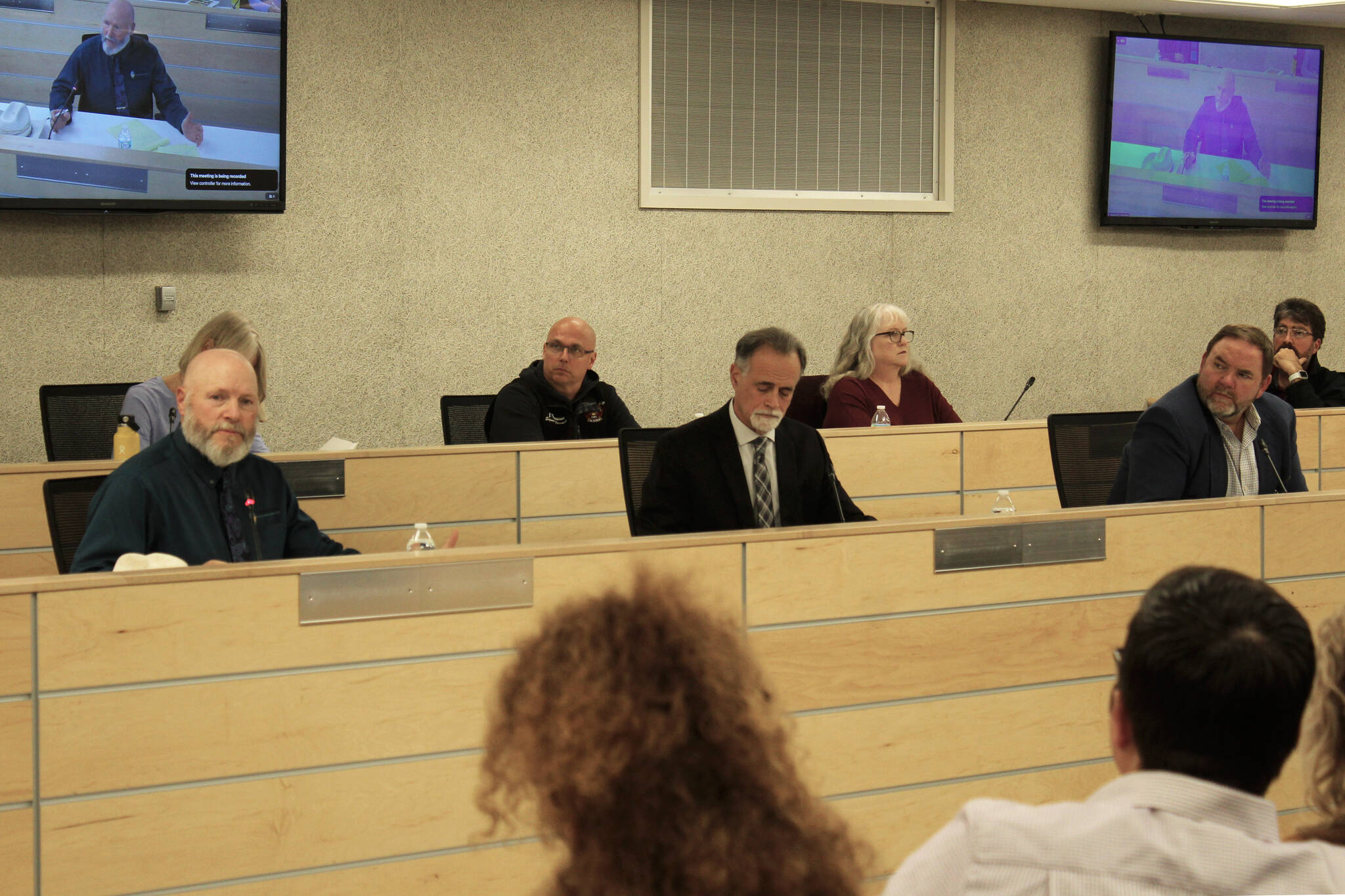
An effort to resolve the issue of state allotments for correspondence schools after a superior court judge ruled them unconstitutional was made by the Senate Education Committee on Monday as it a heard a bill intended to legalize and regulate the payments.
Senate Bill 266 would put new limits on how families with students attending state correspondence programs can spend the money they receive from the state’s allotment program.
Legislators supporting S.B. 266 and House Bill 400, which would also limit allotment spending, are hoping to resolve the issue before the scheduled end of the session May 15. Some other lawmakers are instead seeking a stay in the ruling that would allow the funding provisions in effect for the past decade to continue at least through the next school year.
Both bills were introduced almost three weeks after the judge’s ruling, which is based on a provision in the state constitution prohibiting public money for private or religious schools.
Alaska’s allotment program for correspondence schools — which annually makes up to $4,500 per student available to families per school year — has been around since 2014 and pays out money annually for students attending state-funded public correspondence schools. The Kenai Peninsula Borough School District currently matches the Interior Distance Education of Alaska (IDEA) allotment amount at $2,700 per student per school year.
If passed, the bills would put new, specific limits on how those allotments may be spent. State law would clearly say the allotments may not be spent on, among other things, services provided to a student by a family member, services or materials provided by a private or religious education institution, family travel, clothing or uniforms, pets and other animals or furniture.
Existing state law says allotment money may be spent on education materials like books and curriculum that are also approved by the school district and align with state standards. Materials purchased must be sectarian, but may be purchased from a public, private or religious organization.
The bill would also take away from parents the ability to opt their children out of statewide assessments and would change the word allotment to “student fund accounts” in state law.
Anchorage Democrat Sen. Löki Tobin, who chairs the Senate Education Committee, said during Monday’s committee meeting that lawmakers “worked quickly” to bring legislation forward in response to the ruling.
“The Alaska Legislature does not want to take the risk of not having these programs available for our correspondence families,” she said.
Correspondence programs are different than home-school programs.
Correspondence schools give students the chance to be educated outside of traditional brick-and-mortar schools while still operating under the umbrella of a larger school district. Correspondence programs differ from home-schooling, through which students are educated outside of traditional brick-and-mortar schools and are not affiliated with a school district.
Correspondence allotments, Superior Court Judge Adolf Zeman wrote in an April 12 ruling, violate the section of the Alaska Constitution that says public funds cannot be used to directly benefit religious or private educational institutions.
The Alaska Constitution, minutes from Alaska’s Constitutional Convention and state case law, he wrote, “unequivocally demonstrate” that sections of state law addressing allotments are “facially unconstitutional.”
On the Kenai Peninsula, roughly one in four school-aged children attend a correspondence program through which they are eligible for state allotments. Most attend either IDEA, affiliated with the Galena School District, or Connections Homeschool, affiliated with the KPBSD.
KPBSD Superintendent Clayton Holland said Monday that he expects Zeman’s ruling to be appealed to the Alaska Supreme Court.
Holland wrote in an April 15 letter to Connections families that the district is not yet sure what the impact of the ruling on district students will be.
“I ask that you be patient and understanding while this process continues to play out in the courts,” he wrote. “Our hope is that Connections (Homeschool) and other correspondence programs in Alaska will be able to continue to support and partner with families in educating your children.”
Holland said Monday that he’s in communication with the state and lawmakers, and keeping tabs on the two bills that have been introduced since the ruling was handed down.
“We want to provide stability to our families,” he said.
With less than three weeks to go until lawmakers’ May 15 deadline to get bills across the finish line, the two bills are getting expedited consideration.
S.B. 266 is scheduled to be heard in committee again on Wednesday at 3:30 p.m.
Reach reporter Ashlyn O’Hara at ashlyn.ohara@peninsulaclarion.com.
