
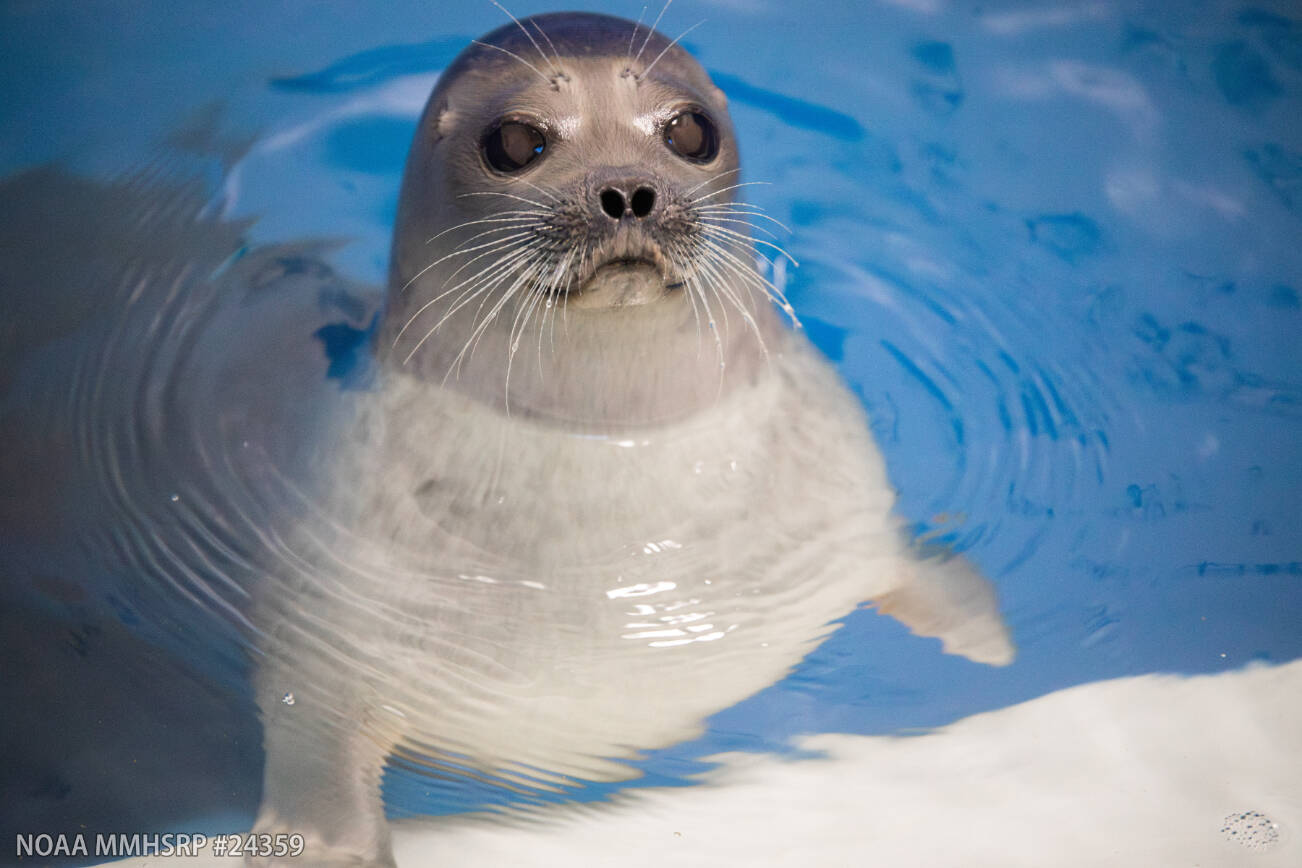
The Alaska SeaLife Center recently announced that they have taken in and continue to provide care for a male ringed seal that was rescued on the North Slope in December. The seal’s rescue marks the center’s first ringed seal response in more than four years. ASLC also called the case an “exceptional” event for their Wildlife Response Program, as the seal is also one of only 30 ringed seals admitted to the center in its 28-year history.
The Arctic subspecies of ringed seals are listed as “threatened” under the Endangered Species Act. According to a Jan. 30 press release, the seal was found out of his habitat on an oilfield in the Beaufort Sea on Dec. 17. Oilfield operators who first observed the seal contacted NOAA fisheries for guidance, as the agency manages the Marine Mammal Health and Stranding Response Program. NOAA Fisheries coordinated with ASLC, the local oilfield operators and Alaska Clean Seas, an oil spill response cooperative, to bring the young ringed seal back to the ice. However, the seal “repeatedly” returned to the oilfield.
According to the release, the nature of the ice extending along the coast of Alaska’s Beaufort Sea — a “remote Arctic region where winter sea ice extends miles from shore and is often stacked by high winds” — made it unlikely that people could safely escort the ringed seal to open water. Oilfield workers used an auger to drill breathing holes in the ice to encourage the seal to access the sea, but although the seal placed his head in the open holes, he did not swim away. The seal was later placed into a crate to prevent accidental injury from vehicles after he was found moving into areas on the oilfield with heavy machinery. This move, the release notes, also took into account the seasonal low light conditions.
“With continued risk to the animal, NOAA Fisheries authorized transport to the ASLC for rehabilitation,” the release states.
ASLC further notes in the release that any response involving ice seals in Alaska requires careful consideration of regulatory policy and respect for the Indigenous communities that rely on these animals for subsistence. In rehabilitation situations involving Alaska’s four ice seal species — ringed, spotted, bearded and ribbon — ASLC follows a precautionary non-release policy developed by NOAA Fisheries, an Alaska Native organization, and the Ice Seal Committee.
“Ice seals transported outside of their natural range for treatment and care are not eligible for release,” the release states. “This policy eliminates the risk of disease transmission between marine ecosystems from these individuals, particularly for animals originating from remote and culturally significant regions. In this case, the collaborative decision to admit this ringed seal was not made lightly, as it shapes this seal’s future.”
ASLC Wildlife Response Curator Jane Belovarac said that this ringed seal response “reflects the complexity of wildlife response in Alaska.”
“Our priority with live animals is always to rehabilitate, release, and see animals thrive in the wild,” she said in the release. “When relocation efforts in situations like this are unsuccessful, and the animal remaining in place is not safe, we are prepared to provide the specialized care needed to ensure their well-being.”
Currently, only ASLC and two other facilities in the U.S. care for ringed seals. As one of the very few ringed seals in human care and a member of the Arctic subspecies listed as threatened under the Endangered Species Act, the release says, the young ringed seal rescued in December will serve as an “important ambassador” for his species and “teach us more about the challenges that his species faces as Arctic conditions continue to change.”
A Jan. 30 post on the ASLC Facebook page said that “while the ringed seal has been receiving care at the Alaska SeaLife Center for more than a month, his case remains complex, and he continues to require ongoing veterinary care as his treatment progresses.”
Find more updates on the ringed seal on the Alaska SeaLife Center Facebook page or at alaskasealife.org.
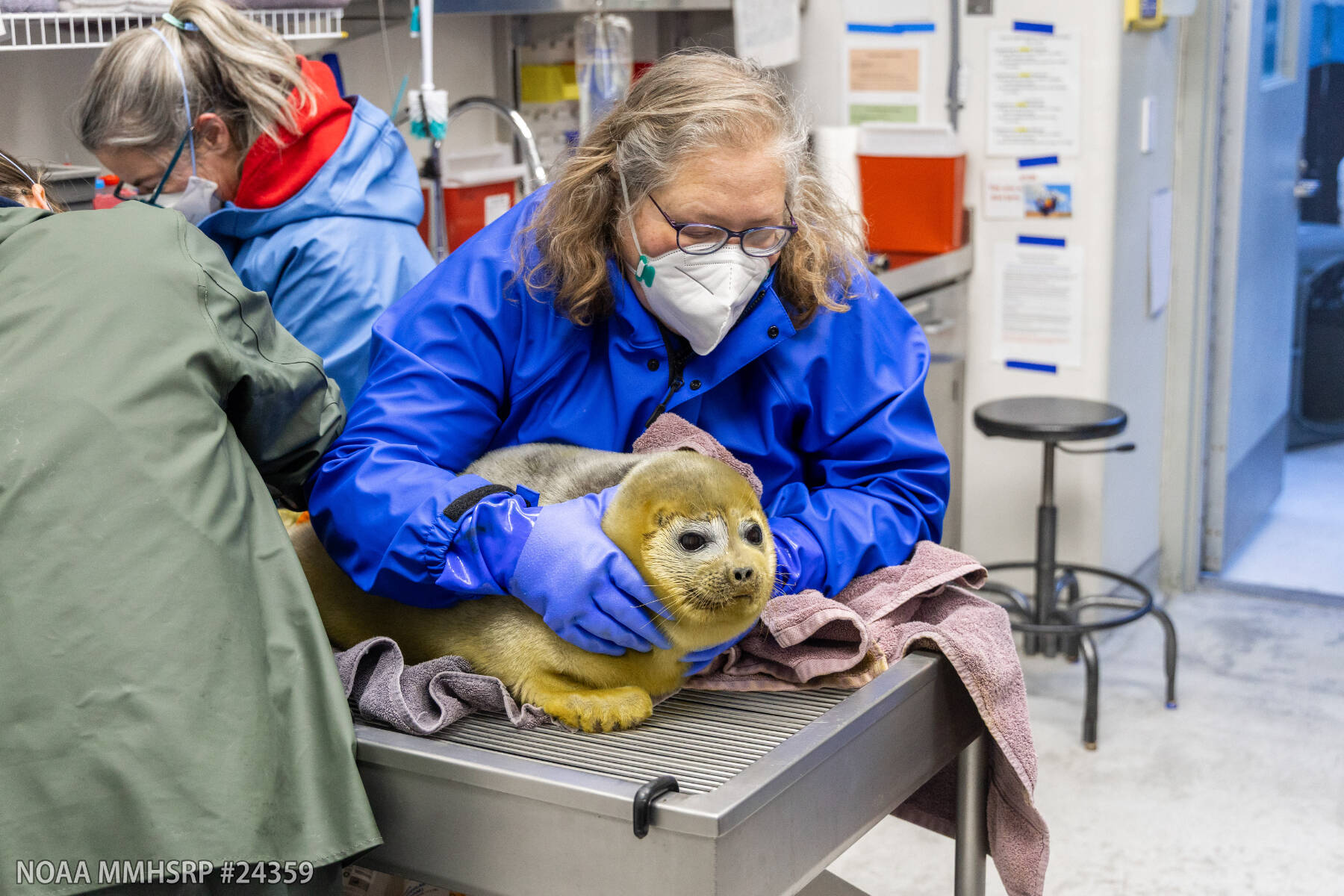
The Alaska SeaLife Center in Seward, Alaska, is rehabilitating a young male ringed seal, rescued from an oilfield on the North Slope on Dec. 17, 2025. Photo courtesy Kaiti Grant/Alaska SeaLife Center
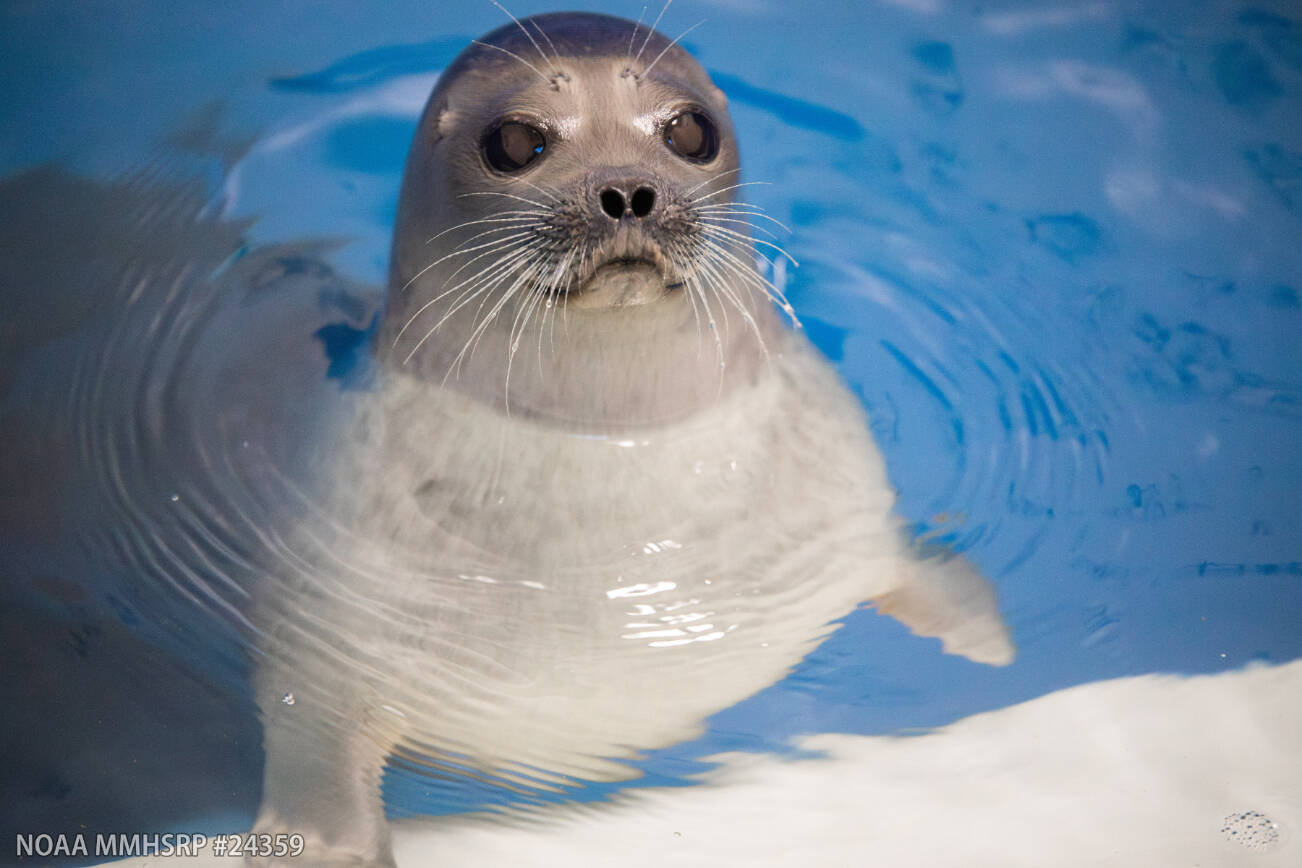
The Alaska SeaLife Center in Seward, Alaska, is rehabilitating a young male ringed seal, rescued from an oilfield on the North Slope on Dec. 17, 2025. Photo courtesy Kaiti Grant/Alaska SeaLife Center
