
After a record year of otter strandings, the Alaska SeaLife Center’s veterinarians are gearing up for another busy year.
The Seward nonprofit received 300 reports of sea otters sick, dead or unresponsive on beaches in 2015 and has recorded 80 so far in 2016, without having entered the summer season yet, according to a news release from the SeaLife Center. The veterinarians have predicted a busy upcoming season.
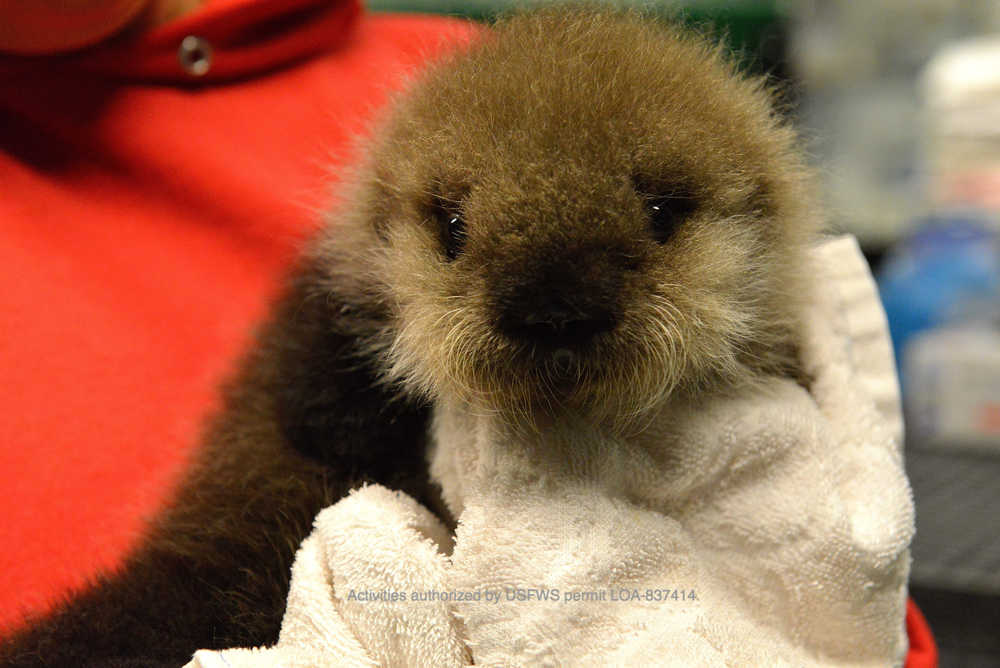
The center is currently boarding six otters, including two newly admitted pups — one from Cordova and one from Kachemak Bay near Homer. Both otters are younger than six months old and require 24-hour surveillance. The SeaLife Center will admit animals for boarding when they are judged to have a chance of survival and whether treatment will do any good, as with young pups.
Usually, the SeaLife Center only keeps staff on for 24-hour periods during the summer stranding season. However, there have been more cases than usual, so the center has kept the staff on for 24-hour watches for the last 10 months except for 21 days, according to the news release.
Keeping staff around for longer means higher costs, but donations have helped support the program, said Jennifer Gibbins, the director of communications and marketing for the SeaLife Center.
“We have had some corporate support for these programs, but we’ve also really been generously supported by individual Alaskans around the state,” Gibbins said. “That’s what makes that program possible. We just really appreciate it and encourage people … to please continue supporting us.”
Gibbins said the pups are doing well and the younger one is growing quickly.
The SeaLife Center was directly involved in 116 of the strandings from last year. During a rash of them in September, when three or four were being reported each day, veterinarians both from the SeaLife Center and the U.S. Fish & Wildlife Service investigated what could be causing so many otters to wash up ill or dead.
Test results showed that many of the deaths were likely due to a streptococcus bacterial infection. Streptococcus is considered endemic to the population and a certain number of deaths due to the disease are expected, said Carrie Goertz, the staff veterinarian for the SeaLife Center. Overall reports from the Homer area have slowed some but are still coming in more often than the average, she said.
A similar situation played out nearly a decade ago in Kachemak Bay. Fish & Wildlife declared an unusual mortality event among the Kachemak Bay sea otter population in 2006 when the public began noticing a spike in strandings and dead animals. After investigations, the agency attributed most of the mortality to streptococcus infantarius infections among a growing population.
The Kachemak Bay otter population has grown rapidly in the past few decades. Between 2002 and 2008, the population there grew approximately 26 percent annually, according to a 2014 stock analysis from Fish & Wildlife. The populations in other areas of Southcentral Alaska, the Kenai Fjords National Park and Prince William Sound, also grew but not as rapidly. Some of the increase in population in Kachemak Bay could be due to immigration from other areas, according to the analysis.
In typical years, most human-caused otter mortalities occur because of boat strikes, although some die after being caught in commercial fishing nets.
However, the 2014 stock analysis states that although trauma was the direct cause of death, a disease or biotoxin exposure likely made otters more vulnerable to a boat strike.
The El Nino weather pattern may be playing a role — warmer ocean surface temperatures are likely affecting food availability, Goertz said. An increasing number of algal blooms along the entire Pacific Coast may also be affecting the ecosystem, she said.
There has not been a direct link made between them, but it is curious that there was a spike in deaths among otters, large whales and common murres all within a relatively short time period, Goertz said. She said if the population is large enough, any outside influence could tip the balance against the otter and murre populations.
“(The Kachemak Bay otters and the common murres) are very large, robust populations,” Goertz said. “If those populations were at carrying capacity for their local environment, any food limitation would result in a number of incidents.”
The SeaLife Center has not made it a point to respond to reports of common murres, as the bird is not considered at risk. However, if someone rescues a bird and brings it to the SeaLife Center, the veterinarians will have a look at it and euthanize it humanely if it has a broken limb or is otherwise incapacitated. If it only needs to be fed or treated, they will do so and release it in a safe place, Goertz said.
Over the summer, the SeaLife Center staff will respond to otter stranding calls normally, though for the safety of staff the center will not respond when the conditions are dark or slick.
If the current rate keeps up, the center is on track to have its second-highest rate of responses to otter strandings ever, Goertz said.
“We’ll take it as it comes,” she said. “We do pride ourselves on being adaptive. If needed, we’ll adjust our schedule.”
Reach Elizabeth Earl at elizabeth.earl@peninsulaclarion.com.
