
Fur-trapping in Alaska will officially begin in three weeks, November 10th when wolverine comes into season.
In preparation for the season, the Kenai Wildlife Refuge held its annual orientation class on Saturday for fur trappers intending to use its land.
The 40 trappers who gathered in the Environmental Education Center were briefed on the refuge’s special regulations as a requirement for their trapping permits.
Refuge biologist Nate Olson, who lead sections of the class, said that trappers in the Refuge have to follow rules beyond those set by the state of Alaska. For instance, traps must be tagged with the owner’s name, and trappers must check their traps every four days.
Additional reporting is also required at the end of the season, when permit holders complete a summary of every animal they’ve captured. This helps the refuge maintain data on its animal population and on the recreational usage of its resources.
Another purpose of the refuge’s increased regulation is to prevent non-target animals from being trapped.
One rule forbids sight-exposed bait.
“The reason we do that is to keep incidental bird-harvest down — specifically eagles and ravens,” said Olsen.
Because birds of prey hunt by sight, Olson said this rule makes them less likely to be caught.
Olson also explained how the refuge protects moose by suggesting the use of break-away snares, in which the cable meant to catch the target by the neck has a clasp designed to break under a certain amount of force.
A moose would be able to free itself from a break-away snare, while weaker animals, such as the wolves for which snares are often intended, would be caught, he said.
Although the refuge doesn’t require break-away snares, it encourages them by increasing the trap-check time from four days to seven for trappers using them.
A moose caught in a conventional snare could starve in four days unless released, so those snares must be checked more often, he said.
Joe Williams, a wildlife officer at the refuge, estimated that a third of the participants were experienced trappers, and the others novices.
“The class is geared for beginners,” he said. “It’s meant to be informative, and to allow our refuge and other agencies and state coordinators to come and talk, or just show their faces and address concerns, issues, or give words of advice.”
In addition to outlining the specific rules of the Kenai wildlife refuge, instructors provided information on trapping techniques, safety, and equipment.
One of the novices is Randy Coleman, who moved to Soldotna from Florida two years ago. Although he’s an avid hunter, Coleman described himself as a complete greenhorn when it comes to trapping.
“It gets me out,” he said of his interest in the sport. “It’ll let me hike around in the winter, see Alaska, and I’ll set a few traps and see what comes of it.”
Coleman was glad for the introduction provided by the class.
“When you’re totally green, everything they offer you is good information,” he said. “And without education, I don’t think there’d be any control out there. I say this as someone coming from Florida, where over the last six years there’s been such a influx of people that they decimated the animal population, but the wildlife commission, by putting controls in there, created a better hunting-animal population than we’ve ever had.”
“The rules here are more complex than in Florida, but I’m willing to learn them,” Coleman said. “That’s why I’m here.”
One experienced trapper, Travis Smith of Soldotna, looks forward to trapping in the refuge this winter.
Last winter he caught a wolf, and hopes for another one this year. He said he’s interested in predators because “they’re so much tougher to trap than your average weasel. You’re trying to get an animal that walks so many miles and miles a year into a place that’s snare-sized, or to get them into a little trap. It’s tough but it’s definitely fun.”
This will be Smith’s first year trapping on the refuge.
Although prospective trappers are only required to take the orientation once in order to qualify for refuge permits, Amanda Alaniz of Kenai attended for a second year. Last year she didn’t do any trapping due to lack of time, but this year she plans to catch marten, mink, or muskrat. The sport of trapping compliments another of her hobbies, fur sowing, as well as her career — she has a degree in wildlife biology.
“There’s nothing I’d like more than to trap something, then tan it, and make it into something,” she said.
As a biologist with a special interest in mammal management, Alaniz came for both the instruction on trapping technique and to learn how the Refuge controls its natural resources.
“Done responsibly, trapping can be an important tool for wildlife regulators,” she said. “Hunters and trappers are one of the only real resources that wildlife managers have to control populations over time.”
“I like responsible natural resource utilization,” she said. “The refuge is really trying to preserve animal populations so they’ll persist into the future. I’m all about that.”
Ben Boettger can be reached at news@peninsulaclarion.com
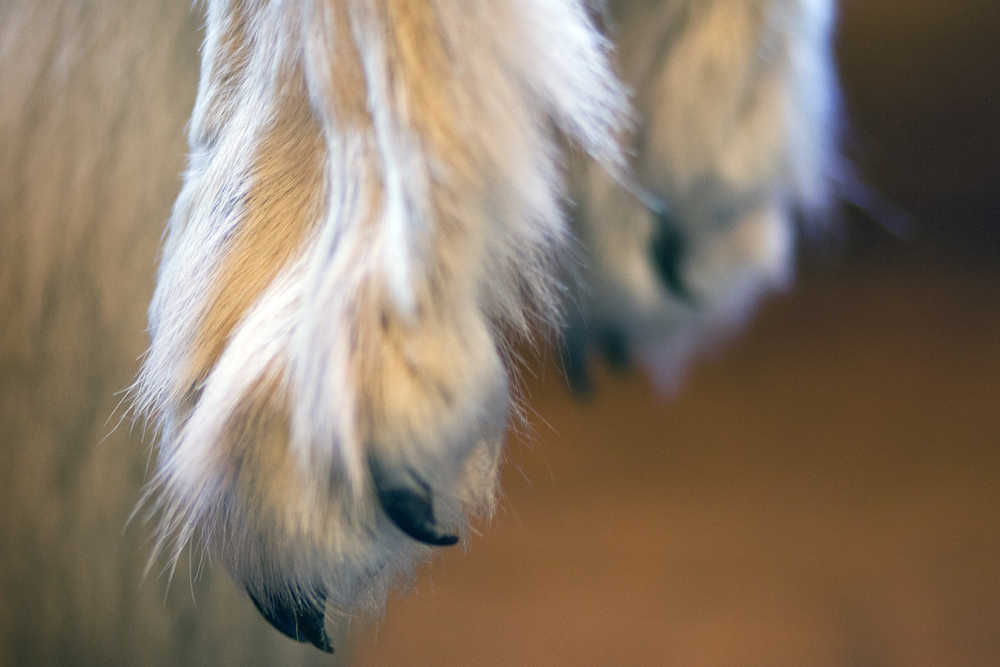
Photo by Rashah McChesney/Peninsula Clarion Nate Olson, wildife biologist and pilot for the Kenai National Wildlife Refuge displays pelts of several animals he successfully trapped at tthe refuge’s Environmental Education Center during a class for trappers seeking permits on the refuge Saturday October 25, 2014 in Soldotna, Alaska.
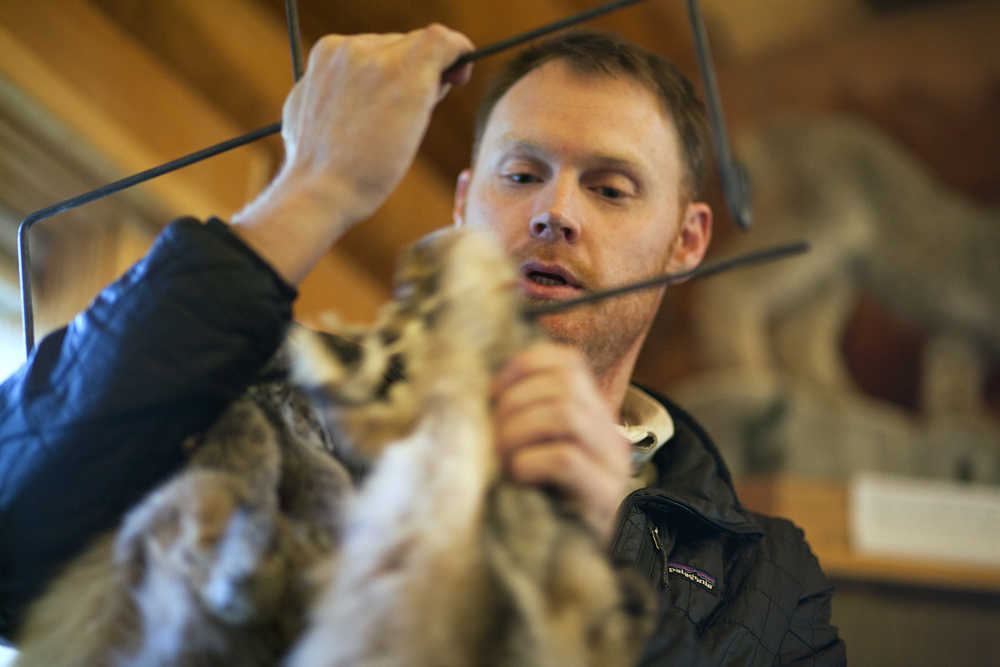
Photo by Rashah McChesney/Peninsula Clarion Nate Olson, wildlife biologist and pilot for the Kenai National Wildlife Refuge talks about the type of equipment needed to trap a wolf during a class for trappers seeking permits on the refuge Saturday October 25, 2014 in Soldotna, Alaska.
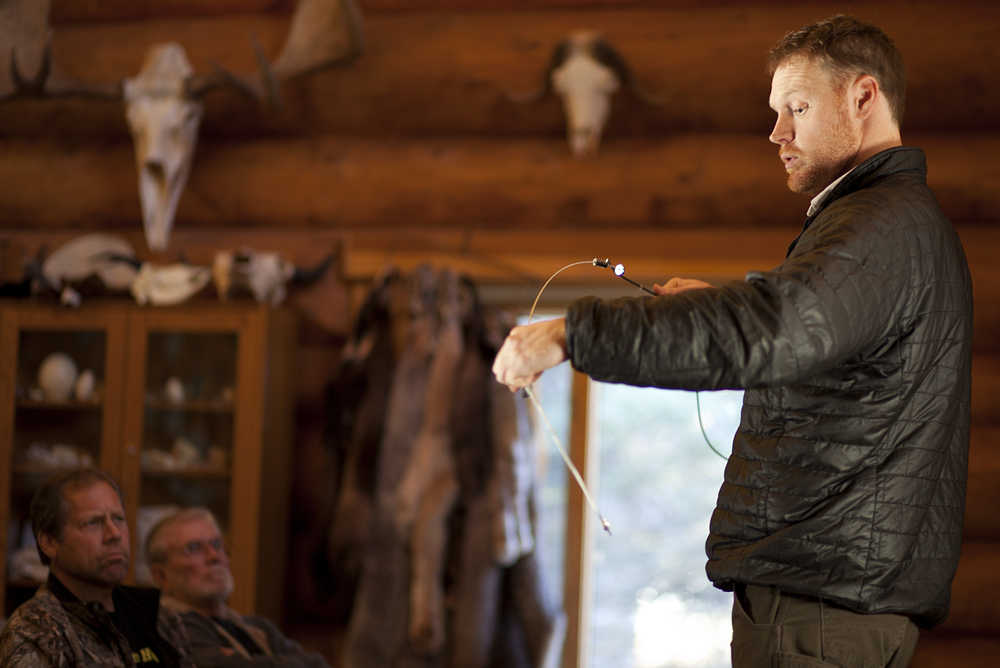
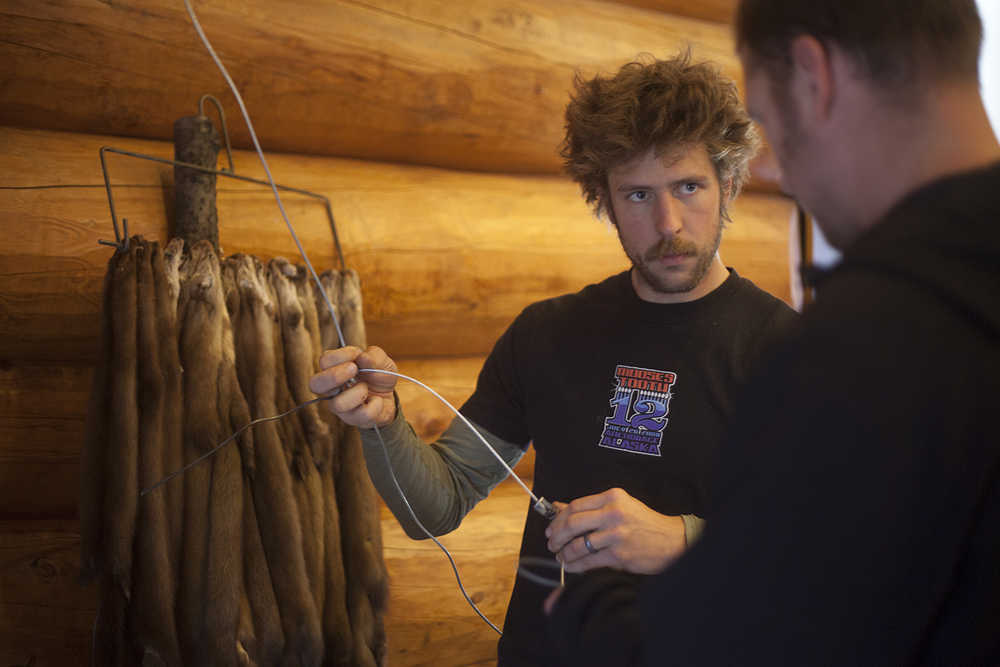
Photo by Rashah McChesney/Peninsula Clarion Christian de Schweinitz, of Anchorage, talks to a friend about trapping gear during a break from a class on the Kenai National Wildlife Refuge for prospective trappers seeking permits on Saturday October 25, 2014 in Soldotna, Alaska.
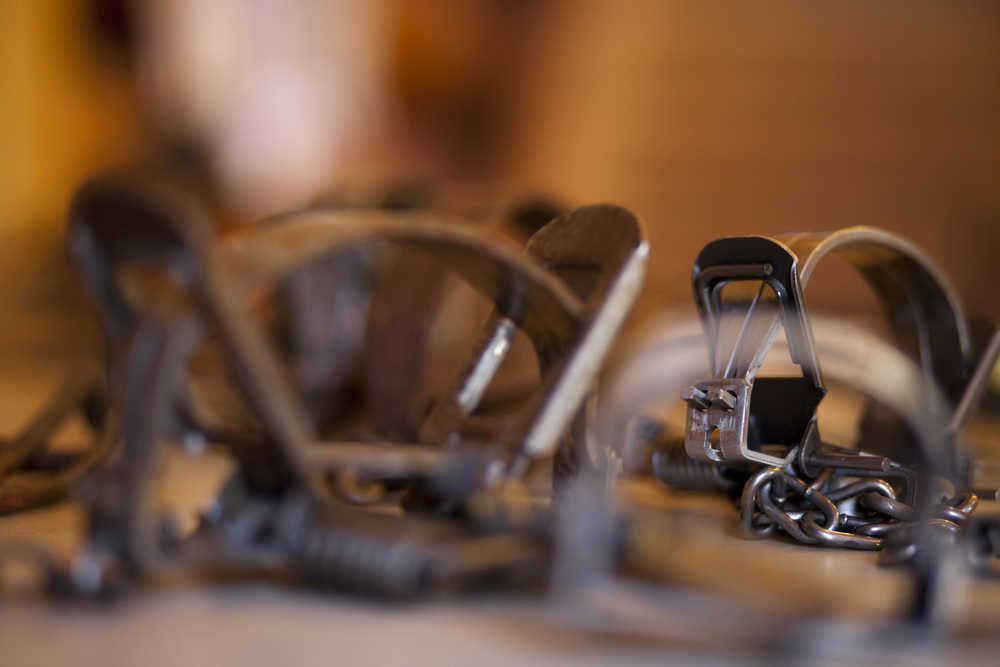
Photo by Rashah McChesney/Peninsula Clarion Several types of traps were laid out on a table during a class for people seeking trapping permits on the Kenai National Wildlife Refuge on Saturday October 25, 2014 in Soldotna, Alaska.
